If you have been searching for a Fisker EV to buy in 2026, you have likely noticed the landscape looks very different than it did a few years ago. Henrik Fisker's second automotive venture, Fisker Inc., navigated a turbulent path through production ramp-ups, supply-chain challenges, and a shifting incentive landscape. This guide breaks down exactly where the Fisker EV lineup stands today, focusing on the Fisker Ocean SUV and the highly anticipated compact Fisker Pear.
Fisker Ocean: The Flagship EV SUV
The Fisker Ocean remains the brand's most recognizable vehicle. Designed as a premium all-electric SUV, it aimed to compete directly with the Tesla Model Y, Ford Mustang Mach-E, and Hyundai Ioniq 5. While production volumes and corporate stability have been points of concern for buyers, the hardware itself offers compelling specifications on paper.
| Spec | Ocean Sport (FWD) | Ocean Ultra / Extreme (AWD) |
|---|---|---|
| EPA Range | 250 miles | 360 miles |
| Battery Capacity | ~80 kWh (LFP) | 113 kWh (NMC) |
| Horsepower | 275 hp | 550 hp |
| 0-60 mph | 6.9 sec | 3.7 sec |
| Max DC Charge Rate | ~150 kW | ~250 kW |
| Base MSRP | $38,999 | $61,499 |
Real-World Range and Efficiency
The EPA numbers for the Fisker Ocean look competitive, particularly the 360-mile estimate for the Ultra and Extreme trims using the larger NMC battery. However, real-world efficiency tells a more nuanced story.
Efficiency hovers around 32–35 kWh/100mi for the AWD models, which is respectable for its class but trails the more aerodynamic Hyundai Ioniq 5 or Tesla Model Y. The MPGe rating sits in the low 100s combined, according to fueleconomy.gov.
Charging Speed and Infrastructure
Charging speed is where the Fisker EV story gets complicated. The Ocean uses a standard CCS1 connector in North America (with NACS adapters becoming necessary for Tesla Supercharger access). The peak charge rates are adequate but not class-leading.
- DC Fast Charging (Ultra/Extreme): Peaks at 250 kW, but the charge curve tapers significantly after 60%. A 10–80% session takes approximately 30–34 minutes on a 350 kW charger.
- DC Fast Charging (Sport): Peaks around 150 kW; 10–80% takes roughly 38–42 minutes.
- Level 2 Home Charging: The onboard charger accepts up to 10.5 kW (48A), adding about 30–35 miles of range per hour. A full charge from 10% takes roughly 11–12 hours for the large pack.
Driving Dynamics and Tech
The Ocean Ultra and Extreme deliver genuine performance with 550 hp and a sub-4-second 0-60 time. The torque vectoring AWD system provides confident grip, though the steering feel is often described as numb compared to a Porsche Macan EV or even a well-tuned Model Y Performance.
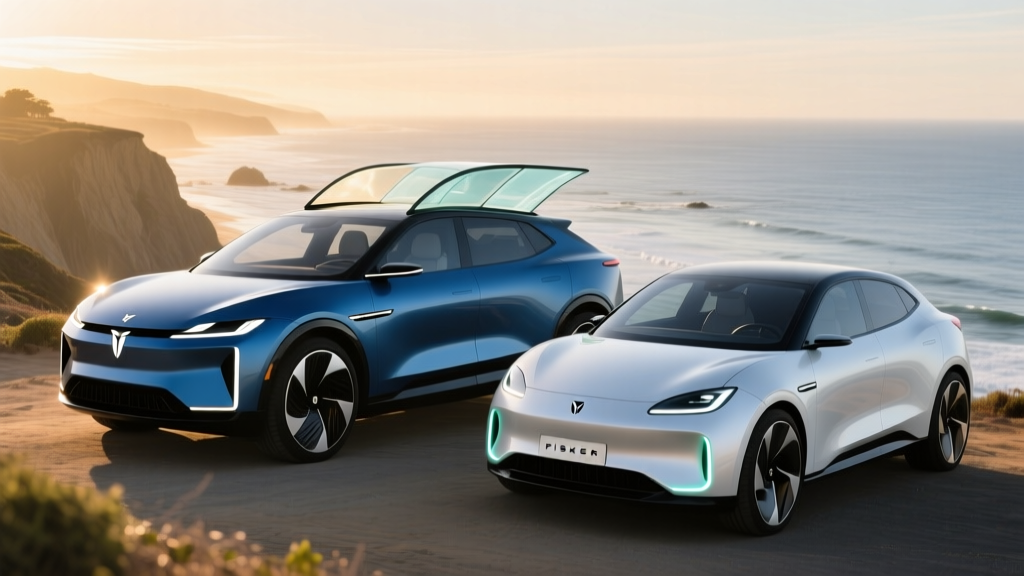
The standout feature is the California Mode, which rolls down all windows and opens the solar roof shade with one button press, creating an open-air experience. The 17.1-inch rotating infotainment screen is visually striking, though early software builds suffered from lag and bugs—a critical consideration for used buyers in 2026.
Pricing, Tax Credits, and Ownership
Fisker's pricing strategy was aggressive, but the federal §30D tax credit eligibility has been a moving target. The Ocean Sport was originally priced to qualify, but battery sourcing requirements and MSRP caps mean buyers must verify current status before purchase.
- MSRP Cap: Vans/SUVs must be under $80,000 (Ocean qualifies).
- Income Cap: $150k single / $300k joint AGI.
- Battery Sourcing: Critical minerals and battery components must meet escalating percentage thresholds from North America or FTA partners.
- Point-of-Sale Transfer: Available if the dealer/manufacturer is registered with the IRS.
Because Fisker Inc. has faced financial restructuring, the availability of new inventory is limited. Most buyers in 2026 are looking at the used market, where the Used EV Credit (up to $4,000) may apply if the vehicle is purchased from a licensed dealer for under $25,000 and meets income requirements.
Fisker Pear: Status and Outlook
The Fisker Pear was announced as a compact, urban-focused EV starting around $29,900. It featured a unique "Frunk" (front trunk) designed for grocery delivery and a highly recyclable interior. However, as of 2026, the Pear remains an unreleased/announced model. Production timelines have been pushed back repeatedly due to the company's financial headwinds. Buyers should treat Pear specifications as preliminary and not factor it into immediate purchase decisions.
Pros and Cons
Pros
- Distinctive design and California Mode open-air experience.
- Competitive EPA range on Ultra/Extreme trims (360 mi).
- Spacious interior with a flat floor and generous rear legroom (38+ inches).
- Solar roof adds a modest 1–2 miles of range per day in optimal conditions.
Cons
- Corporate stability and long-term parts/service support are major concerns.
- Software reliability issues in early production models.
- Charging curve tapers heavily above 60% SoC.
- Resale value has depreciated faster than Tesla or Hyundai/Kia rivals.
FAQ: Fisker EV Questions Answered
Is Fisker still in business in 2026?
Fisker Inc. has undergone significant financial restructuring. While the Ocean is on the road, new production is limited, and buyers should be cautious about long-term service network viability.
Does the Fisker Ocean qualify for the $7,500 tax credit?
It depends on the specific battery pack and current IRS sourcing rules. The Sport trim was designed to qualify, but you must verify the VIN against the IRS's current eligible vehicle list at the time of purchase.
How reliable is the Fisker Ocean's battery?
The NMC pack in the Ultra is liquid-cooled and has shown decent thermal management. The LFP pack in the Sport is inherently more stable and offers a longer cycle life, though it is heavier and less energy-dense.
What is the warranty on a used Fisker Ocean?
Original warranties included 6 years/60,000 miles bumper-to-bumper and 10 years/100,000 miles on the battery. However, with the company's financial status, honoring these warranties may be challenging for subsequent owners.