The Rise and Fall of Fisker Inc.: A 2026 Post-Mortem
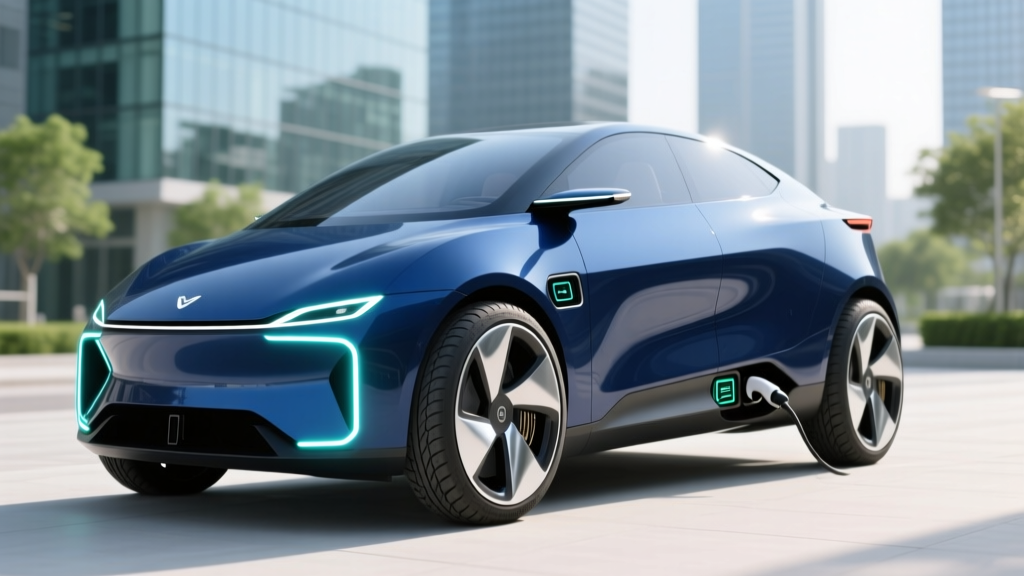
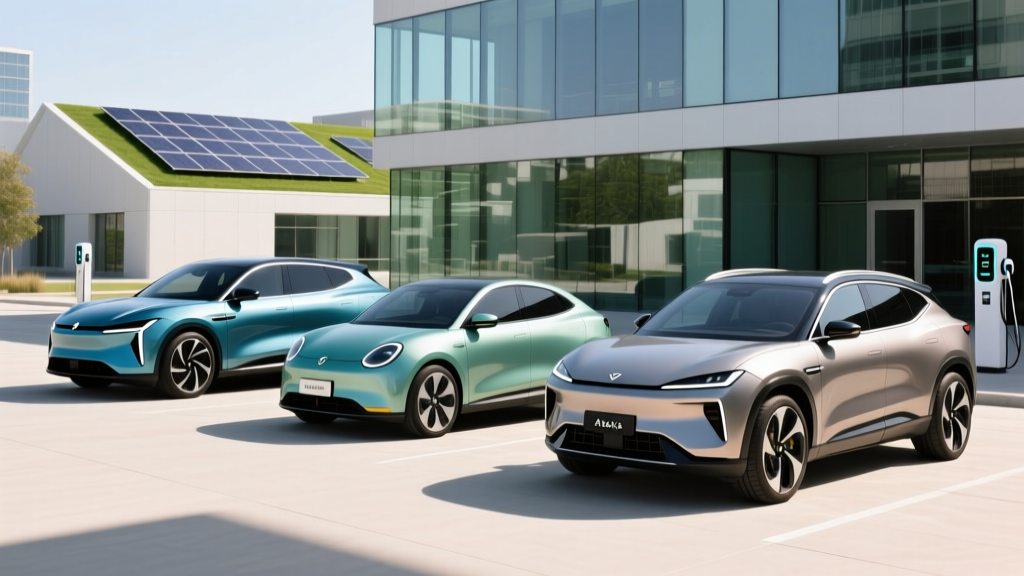
If you've been searching for Fisker automotive cars in 2026, you've likely encountered a confusing mix of sleek concept renders, enthusiastic pre-order announcements, and then — silence. The Fisker Ocean SUV was supposed to be the American EV startup's flagship, a premium electric crossover with standout design and competitive specs. The Fisker Pear was pitched as an affordable urban EV. The Fisker Alaska was a lifestyle pickup concept. None of them made it into sustained production or into buyer driveways at meaningful scale.
Fisker Inc. — the Henrik Fisker-led venture distinct from the earlier Fisker Automotive that built the Karma plug-in hybrid — filed for Chapter 11 bankruptcy in June 2024 after burning through capital, struggling with manufacturing through Magna Steyr, and failing to secure sustainable order volumes. By early 2025, remaining assets were being liquidated or acquired piecemeal. As of 2026, no new Fisker-branded electric vehicle is available for purchase, and the company no longer operates as a going concern.
This article breaks down what happened, what the specs promised, whether any used Fisker Oceans are worth considering, and which current-production EVs actually deliver on the promises Fisker made.
What Fisker Promised: The Ocean, Pear, and Alaska at a Glance
Before the bankruptcy, Fisker published detailed specifications for its lineup. Here's what the company announced — keeping in mind these figures were preliminary and, for most trims, never independently EPA-certified at scale.
| Specification | Fisker Ocean (Sport/AWD) | Fisker Ocean (Extreme/Ultra) | Fisker Pear (Announced) | Fisker Alaska (Concept) |
|---|---|---|---|---|
| EPA Range (Claimed) | ~250 mi (est.) | ~360 mi (claimed, uncertified) | ~250 mi (target) | ~340 mi (target, extended range) |
| Battery Capacity | ~80 kWh (LFP, BYD) | ~113 kWh (NMC, CATL) | ~55 kWh (LFP, target) | ~113 kWh (NMC, target) |
| Drivetrain | Dual-motor AWD | Dual-motor AWD | RWD / AWD options | Dual-motor AWD |
| Horsepower | ~275 hp | ~550 hp | ~200 hp (est.) | ~550 hp (target) |
| 0-60 mph | ~6.9 sec | ~3.7 sec | ~6.5 sec (est.) | ~4.0 sec (est.) |
| DC Fast Charge (Peak kW) | ~150 kW (claimed) | ~250 kW (claimed) | ~150 kW (target) | ~250 kW (target) |
| 10-80% Charge Time | ~35 min (claimed) | ~30 min (claimed) | ~25 min (target) | ~30 min (target) |
| Level 2 Home Charging | ~11 kW (est.) | ~11 kW (est.) | ~7.2 kW (target) | ~11 kW (target) |
| Base MSRP (Announced) | $38,999 (Sport, later raised) | $68,999 (Extreme) | $29,900 (target, before incentives) | $39,700 (target) |
| Production Status | Limited production (~10,000+ built by Magna) | Limited production | Never entered production | Never entered production |
A few critical notes on these numbers: the Ocean Extreme's claimed 360-mile range used a larger NMC pack from CATL, but very few were delivered before production halted. The Pear and Alaska remained in pre-production and concept stages, respectively. The Ocean Sport used a lithium iron phosphate (LFP) battery from BYD — a chemistry known for longer cycle life and lower cost but reduced energy density compared to NMC.
The Fisker Ocean's Real-World Reality: Range, Charging, and Ownership
For the roughly 10,000-12,000 Fisker Oceans that were built by Magna Steyr in Austria before the bankruptcy, owners now face a difficult reality. Software updates have ceased. The Fisker mobile app, which controlled remote features like preconditioning and charge scheduling, has been unreliable since the company's collapse. Some third-party shops can service the mechanical and electrical components (Magna built the vehicle on a proven platform), but proprietary parts — body panels, the revolving "California Mode" roof mechanism, the 17.1-inch rotating infotainment screen — are increasingly scarce.
Charging Speed in Practice
The Ocean's DC fast-charging performance was middling compared to 2026 benchmarks. The Extreme trim's claimed 250 kW peak was rarely sustained; real-world charge curves showed a taper well before 80%, with 10-80% sessions typically taking 30-38 minutes at a 350 kW-capable station. The Sport trim's ~150 kW peak meant 10-80% in roughly 35-42 minutes. For context, the 2026 Hyundai Ioniq 5 achieves 10-80% in approximately 18 minutes at a capable charger, and the Tesla Model Y (with NACS) leverages the Supercharger network for consistent, reliable sessions.
Home Level 2 charging at 11 kW (48 amps on a 60-amp circuit) added roughly 30-35 miles of range per hour for the Ocean — adequate for overnight replenishment but unremarkable for the segment.
Fisker's Tax Credit Situation: What Applied and What Didn't
During its brief production run, the Fisker Ocean's eligibility for the federal §30D clean vehicle credit was uncertain and ultimately moot for most buyers:
- MSRP Cap: SUVs must have an MSRP at or below $80,000. The Ocean Extreme at $68,999 cleared this threshold; higher-optioned configurations may not have.
- Buyer Income Cap: Modified adjusted gross income must not exceed $150,000 (single), $225,000 (head of household), or $300,000 (joint filers).
- Battery Sourcing Requirements: The §30D credit requires that critical minerals and battery components meet escalating North American sourcing thresholds. Fisker's use of BYD (Chinese-manufactured) LFP cells in the Sport trim and CATL (Chinese-manufactured) NMC cells in the Extreme trim likely disqualified the vehicle from the full $7,500 credit under 2024-2026 sourcing rules, as Chinese-sourced battery components trigger a reduction or elimination of the credit.
- Point-of-Sale Transfer: The option to transfer the credit to the dealer at purchase was available in theory, but Fisker's direct-to-consumer model and rapid financial collapse made this impractical.
Bottom line: most Fisker Ocean buyers did not receive the full federal tax credit, and the company's bankruptcy eliminated any post-purchase recourse.
Should You Buy a Used Fisker Ocean in 2026?
A small number of Fisker Oceans are circulating on the used market, often at steep discounts — some selling for $18,000-$28,000 depending on trim and mileage, far below their original MSRP. That price drop reflects real risk:
Potential Upsides (Used Ocean)
- Depreciated price makes it one of the cheapest large electric SUVs on the used market
- Distinctive design with features like the solar roof (on Extreme trim) and California Mode open-air configuration
- Magna Steyr build quality is generally solid on the mechanical side
- Spacious interior: approximately 32 cu ft cargo behind rear seats, competitive midsize-SUV legroom
Significant Risks (Used Ocean)
- No manufacturer support: No warranty claims, no software updates, no recalls addressed by Fisker
- Proprietary parts scarcity: Body panels, screen assemblies, and roof mechanisms are not available through standard channels
- App and connectivity loss: Remote features, OTA updates, and telematics are unreliable or non-functional
- Insurance complications: Some insurers decline to write new policies on orphaned- brand vehicles
- Resale value uncertainty: Further depreciation likely as parts become harder to source
- Charging network compatibility: CCS1 connector works at most public stations, but no NACS adapter support from the manufacturer
For a bargain-hunting EV enthusiast willing to accept these risks, a used Ocean could serve as a secondary vehicle. For a primary daily driver where reliability and support matter, it's a gamble we cannot recommend.
What to Buy Instead: EVs That Deliver on Fisker's Promises
The market segments Fisker targeted are well-served by production vehicles with proven reliability, active software support, and full tax-credit eligibility. Here's how current alternatives compare to what Fisker promised:
| Attribute | Fisker Ocean Extreme (Discontinued) | 2026 Tesla Model Y Long Range AWD | 2026 Hyundai Ioniq 5 Limited AWD | 2026 Ford Mustang Mach-E Premium AWD (Ext. Range) |
|---|---|---|---|---|
| EPA Range | ~360 mi (claimed, uncertified) | 320 mi (EPA est.) | 290 mi (EPA est.) | 320 mi (EPA est.) |
| Battery | ~113 kWh NMC | ~78 kWh NMC | ~84 kWh NMC | ~91 kWh NMC |
| Peak DC Charge | ~250 kW (claimed) | 250 kW (NACS) | 240 kW (CCS/NACS adapter) | 150 kW (CCS/NACS adapter) |
| 10-80% Charge | ~30 min (claimed) | ~25 min | ~18 min | ~36 min |
| 0-60 mph | ~3.7 sec | 4.8 sec | 4.5 sec | 5.1 sec |
| Base MSRP | $68,999 (was) | ~$48,990 | ~$54,000 | ~$49,995 |
| Federal Tax Credit | Unlikely eligible | Up to $7,500 (eligibility varies) | Up to $7,500 (eligibility varies) | Up to $7,500 (eligibility varies) |
| Warranty | Void (company defunct) | 4 yr/50k mi basic; 8 yr/120k mi battery | 5 yr/60k mi basic; 10 yr/100k mi battery | 3 yr/36k mi basic; 8 yr/100k mi battery |
| Charging Network | CCS public only | Tesla Supercharger (native NACS) | CCS + NACS adapter for Superchargers | CCS + NACS adapter for Superchargers |
The Tesla Model Y remains the default choice for buyers who wanted what the Ocean promised: a spacious, efficient electric SUV with a reliable charging network. The Hyundai Ioniq 5 offers the fastest charging in the segment and a 10-year battery warranty. The Ford Mustang Mach-E provides a compelling blend of range, performance, and Ford dealer support.
For buyers specifically interested in the affordable-EV space the Pear targeted (~$29,900), the Chevrolet Equinox EV (starting around $33,000) and the Volvo EX30 (starting around $36,000) offer production-ready alternatives with full warranty backing and EPA-certified efficiency ratings.
The Broader Lesson: Startup Risk in the EV Market
Fisker Inc.'s collapse is part of a pattern. Lordstown Motors, Arrival, and several other EV startups failed between 2022 and 2025. The capital requirements of automotive manufacturing — even with contract manufacturing partners like Magna — are staggering. Henrik Fisker's previous venture, Fisker Automotive (the Karma plug-in hybrid, 2011-2012), also ended in bankruptcy, making this the designer's second high-profile EV company failure.
For EV shoppers, the takeaway is practical: pre-orders and reservations for unproven startups carry real financial risk. Established automakers — Tesla, Hyundai/Kia, Ford, GM, BMW, Volkswagen — offer production certainty, dealer networks, warranty infrastructure, and ongoing software support that startups cannot guarantee.
Frequently Asked Questions
Is Fisker still making cars in 2026?
No. Fisker Inc. filed for Chapter 11 bankruptcy in June 2024 and ceased operations. No Fisker-branded vehicle is in production or available for new purchase in 2026. The company's assets were liquidated or acquired during bankruptcy proceedings.
Can I still buy a Fisker Ocean?
Only on the used market. A limited number of Fisker Oceans (estimated 10,000-12,000 total built) are available through private sales and some dealerships, often at steep discounts. However, buying one carries significant risk due to lack of manufacturer support, parts scarcity, and software/connectivity issues.
Did the Fisker Ocean qualify for the $7,500 federal EV tax credit?
Most likely not. The IRS §30D credit requires battery components and critical minerals to meet North American sourcing thresholds. Fisker's use of BYD (China) and CATL (China) battery cells likely disqualified the Ocean from the full credit under current sourcing rules. The question is now moot since the vehicle is no longer sold new.
What happened to the Fisker Pear and Alaska?
Neither entered production. The Pear (an affordable compact EV targeted at ~$29,900) was planned for production via Foxconn in Ohio, but the partnership dissolved before manufacturing began. The Alaska pickup remained a concept vehicle with no production timeline before the bankruptcy.
Is Fisker Inc. the same company as the original Fisker Automotive?
No. Fisker Automotive (2007-2014) produced the Fisker Karma plug-in hybrid sedan and also went bankrupt. Its assets were acquired by Wanxiang Group and later became Karma Automotive. Fisker Inc. (2016-2024) was a separate company founded by Henrik Fisker, focused on battery-electric vehicles like the Ocean SUV. Both companies ultimately failed.
What's the best alternative to the Fisker Ocean in 2026?
For a premium electric SUV, the Tesla Model Y Long Range, Hyundai Ioniq 5, and Ford Mustang Mach-E all deliver competitive range (290-320 miles EPA), reliable charging networks, full warranties, and potential federal tax-credit eligibility — everything the Ocean promised but couldn't sustain.