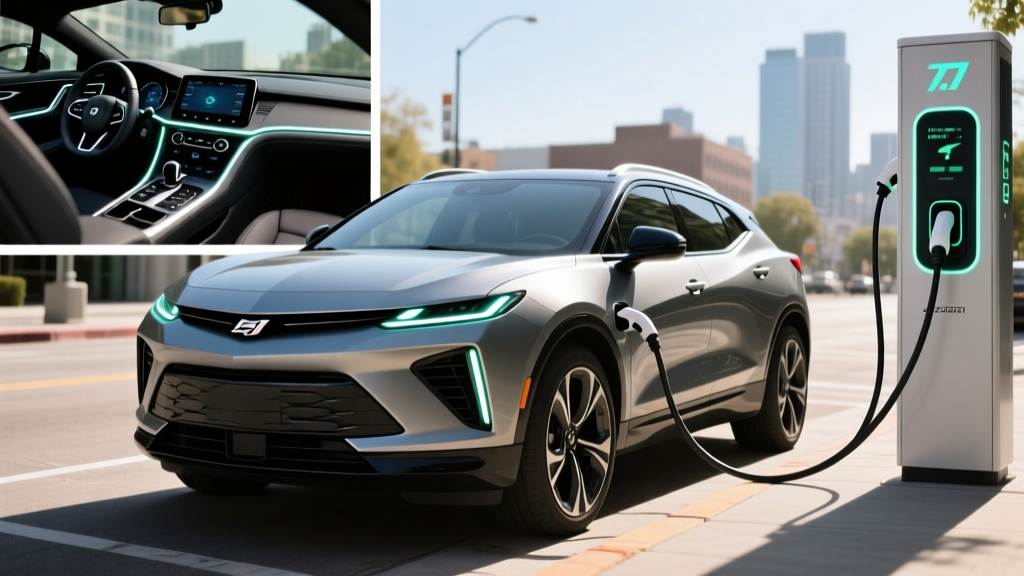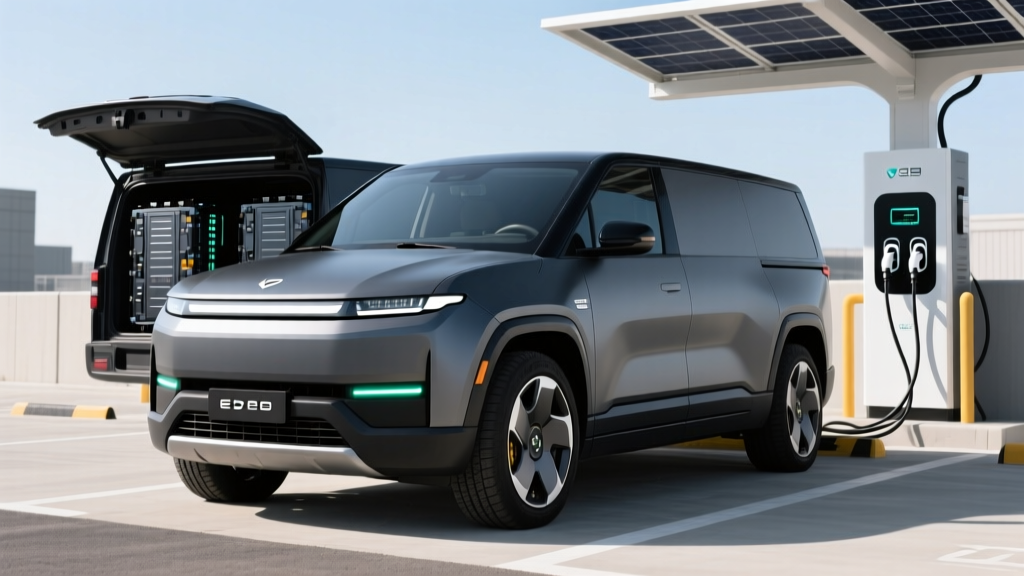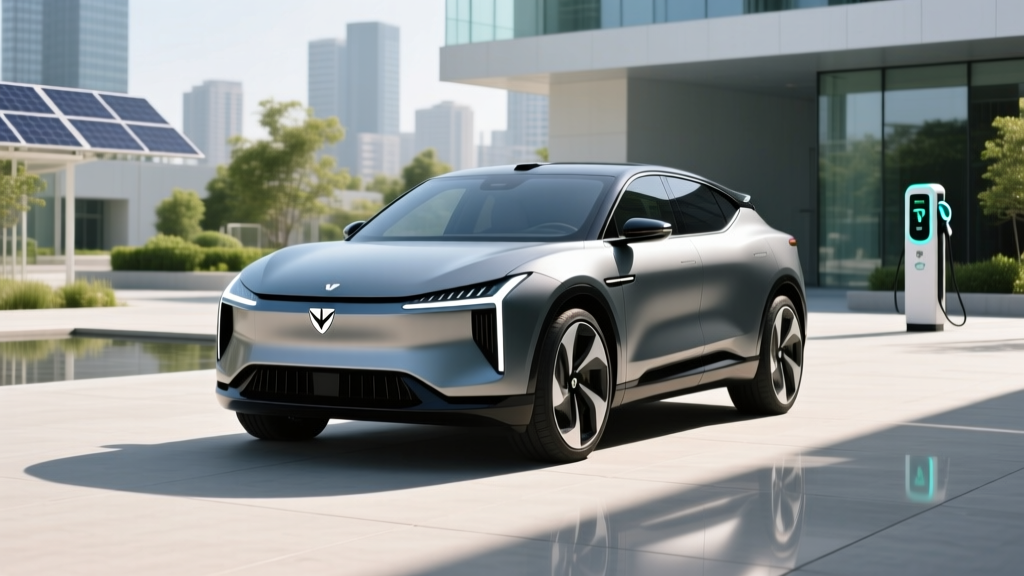
If you've been searching for the Fisker auto logo while researching your next electric vehicle, you've likely noticed something unusual: the brand behind the Fisker Ocean SUV is no longer operating as a going concern. Fisker Inc. ceased production in 2024 and entered bankruptcy proceedings, leaving a small fleet of Ocean SUVs on the used market and a legacy that deserves honest evaluation.
This guide explains what the Fisker brand represented, breaks down the Ocean SUV's real-world specifications — range, charging, performance, and pricing — and gives you the data you need to decide whether a used Fisker Ocean is a smart buy or a risk too far in 2026.
The Fisker Auto Logo and Brand: A Brief History
The Fisker name has appeared on two distinct automotive ventures. The original Fisker Automotive (founded 2007) produced the Karma extended-range electric sedan and used a stylized logo featuring overlapping curved forms that evoked motion and luxury. That company filed for bankruptcy in 2013, and its assets were acquired by China's Wanxiang Group, later rebranded as Karma Automotive.
Henrik Fisker, the Danish designer behind the original Karma, launched Fisker Inc. in 2016 as a separate entity. This second iteration adopted a cleaner, more minimalist wordmark logo — the "Fisker" name in a sans-serif typeface, often rendered in white against dark backgrounds or in a signature oceanic blue. It was this logo that appeared on the Fisker Ocean, the company's sole production vehicle, an all-electric SUV that began deliveries in mid-2023.
Fisker Inc. filed for Chapter 11 bankruptcy in June 2024 after producing roughly 11,000 Ocean SUVs. By early 2025, the company's assets were being liquidated. For buyers in 2026, this means the Fisker Ocean is available only on the used market, with significant implications for warranty coverage, parts availability, and software support.
Fisker Ocean Specs: Range, Battery, and Efficiency
| Specification | Ocean Sport (FWD) | Ocean Ultra / Extreme (AWD) |
|---|---|---|
| EPA Range | 250 miles | 360 miles (Ultra) / 283 miles (Extreme w/ 22" wheels) |
| Battery Capacity | ~113 kWh usable (NMC) | ~113 kWh usable (NMC) |
| Battery Chemistry | NMC (Nickel Manganese Cobalt) | NMC |
| MPGe (Combined) | 80 MPGe | 65-72 MPGe |
| kWh / 100 mi | ~42 kWh | ~47-52 kWh |
| 0-60 mph | 6.9 sec | 3.7 sec (Ultra AWD) |
| Horsepower | 275 hp | 564 hp |
| Drivetrain | Single-motor FWD | Dual-motor AWD |
| Cargo Volume (rear seats up) | 32.5 cu ft | 32.5 cu ft |
| Cargo Volume (seats folded) | 67.5 cu ft | 67.5 cu ft |
| Base MSRP (at launch) | $37,499 | $68,999 (Ultra) |
Charging Speed: DC Fast Charging and Home Level 2
Charging infrastructure compatibility is one of the most important considerations for any used Fisker Ocean purchase in 2026, especially given the brand's dissolution.
| Charging Level | Power / Rate | Time / Speed |
|---|---|---|
| Level 1 (120V household) | ~1.4 kW | ~3-4 miles per hour of charging |
| Level 2 (240V home/public) | Up to 11 kW (onboard charger) | ~25-30 miles per hour; full charge in ~11 hours |
| DC Fast Charging (CCS) | Peak ~250 kW (Ultra) / ~150 kW (Sport) | 10-80% in ~30 min (Ultra); ~35 min (Sport) |
The Ocean Ultra supported CCS1 DC fast charging at up to 250 kW under ideal thermal conditions. In practice, peak charging rates were sustained only between roughly 10-40% state of charge, with significant tapering above 60%. A typical 10-80% session at a high-power charger took approximately 30 minutes, though charger reliability and ambient temperature affected this.
Critical 2026 note: The Fisker Ocean uses the CCS1 connector, not the newer NACS (Tesla) standard. As the industry has shifted toward NACS through 2025-2026, CCS chargers remain widely available but are no longer being prioritized for new installations by some networks. Ocean owners can use NACS-to-CCS adapters at Tesla Superchargers, though compatibility should be verified per vehicle VIN, as Fisker's software integration was incomplete at the time of the company's bankruptcy.
Technology, Safety, and Standout Features
The Fisker Ocean was designed to compete with the Tesla Model Y, Ford Mustang Mach-E, and Hyundai Ioniq 5 on technology. Here's what it offered:
- California Mode: All windows, including the rear hatch glass and a rear quarter-panel "California" window, could lower simultaneously for an open-air experience — a genuinely unique feature in the EV segment.
- SolarSky Roof (Extreme trim): A full-length solar panel roof that Fisker claimed could add up to 1,500 miles of range per year under ideal conditions. Real-world gains were closer to 500-800 miles annually in sunny climates.
- 17.1-inch Rotating Touchscreen: The center display could rotate from landscape ("Control Mode") to portrait ("Hollywood Mode") for media consumption while parked.
- ADAS: Fisker Intelligent Pilot with adaptive cruise control, lane centering, and automatic emergency braking. This is an SAE Level 2 driver-assistance system — the driver must remain fully engaged and supervise at all times. It is not self-driving.
- Recycled Materials Interior: Fisker emphasized sustainability with vegan leather, recycled plastic trim, and carpeting made from discarded fishing nets.
Pricing, Tax Credits, and Used-Market Value
Because Fisker Inc. is defunct, the Ocean is available only as a used vehicle in 2026. This changes the incentive landscape significantly.
| Trim | Original MSRP | Est. Used Price (2026) | Federal Credit Eligibility |
|---|---|---|---|
| Ocean Sport | $37,499 | $18,000 - $24,000 | Up to $4,000 used-EV credit (§25E) |
| Ocean Ultra | $68,999 | $28,000 - $38,000 | Up to $4,000 used-EV credit (§25E) |
| Ocean Extreme | $61,999 | $26,000 - $35,000 | Up to $4,000 used-EV credit (§25E) |
Federal tax credit note: The original §30D new-vehicle credit of up to $7,500 is no longer applicable since the Ocean cannot be purchased new. However, the §25E used clean vehicle credit may apply: it offers 30% of the sale price up to $4,000 for qualifying used EVs sold for $25,000 or less through a licensed dealer, subject to buyer income caps (AGI ≤ $75,000 single / $150,000 joint). Because many Ocean Ultra and Extreme trims sell above $25,000 even used, only the Ocean Sport is likely to qualify. Always verify current rules at IRS.gov and consult a tax professional.
Depreciation reality: The Fisker Ocean has experienced some of the steepest depreciation in the EV segment. Early Ultra models that sold for $69,000+ now trade for roughly half that value. This is devastating for original owners but creates a potential value opportunity for used buyers willing to accept the risks.
Pros and Cons: The Honest Assessment
Pros
- Class-leading EPA range (360 mi on Ultra) at a competitive original price
- Unique California Mode open-air experience
- Strong straight-line performance (3.7 sec 0-60 on Ultra AWD)
- Sustainable/recycled interior materials
- Significant used-market depreciation creates value for buyers
- Spacious cargo area (67.5 cu ft with seats folded)
Cons
- Company is bankrupt — no warranty support, no OTA updates, uncertain parts supply
- ADAS quality was below competitors at launch; no improvement path
- CCS connector requires adapter for Tesla Supercharger access
- Build quality inconsistencies reported by early owners
- Insurance may be costly or difficult to obtain for a defunct brand
- Resale value likely to continue declining
- Software bugs unresolved and unresolvable
Who Should Consider a Used Fisker Ocean?
Choose the Fisker Ocean if: You want maximum range per dollar on the used market, you're mechanically resourceful (comfortable with independent repair shops), you live in a mild climate where cold-weather range loss is minimal, and you have reliable home Level 2 charging so you're not dependent on public infrastructure.
Choose a competitor instead if: You need reliable warranty coverage, you want the latest ADAS technology, you depend on Tesla Supercharger access without adapters, you plan to keep the vehicle 8+ years, or you want predictable long-term resale value. Better-supported alternatives in a similar price range include the used Tesla Model Y, Hyundai Ioniq 5, or Ford Mustang Mach-E.
Warranty and Long-Term Ownership Concerns
At launch, Fisker offered a 6-year/60,000-mile basic warranty and a 6-year/75,000-mile battery and powertrain warranty with a capacity retention threshold of 70%. However, with Fisker Inc. dissolved, these warranties are effectively unenforceable. No entity is currently honoring Fisker factory warranty claims.
The 113 kWh NMC battery pack is large and, based on industry averages for NMC chemistry, should retain roughly 85-90% of its capacity after 100,000 miles under normal use. But if a battery module fails or the thermal management system requires service, sourcing replacement parts will be challenging and potentially expensive. Independent EV repair shops may eventually support the platform, but as of 2026, the service ecosystem is extremely limited.
Frequently Asked Questions
What is the real-world range of the Fisker Ocean?
The Ocean Ultra's EPA rating is 360 miles, but expect approximately 280-310 miles in real-world highway driving and 220-260 miles in cold weather. The Ocean Sport delivers roughly 200-220 miles in mixed use from its 250-mile EPA rating.
How fast does the Fisker Ocean charge?
DC fast charging peaks at approximately 250 kW (Ultra) or 150 kW (Sport), achieving a 10-80% charge in roughly 30-35 minutes under good conditions. Home Level 2 charging at 11 kW adds about 25-30 miles per hour.
Does the Fisker Ocean qualify for any federal tax credit?
Not the §30D new-vehicle credit. However, the Ocean Sport may qualify for the §25E used-EV credit (up to $4,000) if purchased for $25,000 or less through a dealer and buyer income is within limits. Ultra and Extreme trims typically exceed the $25,000 price cap even on the used market. Verify at IRS.gov.
Is a used Fisker Ocean worth buying vs. competitors?
It depends on risk tolerance. The Ocean offers exceptional range and performance for the money on the used market, but the lack of warranty support, uncertain parts availability, and frozen software make it a higher-risk purchase than a used Model Y, Ioniq 5, or Mach-E from active manufacturers.
What does the Fisker auto logo represent?
The Fisker Inc. logo (2016-2024) was a minimalist sans-serif wordmark, distinct from the original Fisker Automotive emblem used on the 2012 Karma. Both represent Henrik Fisker's design ventures, but they are legally and operationally separate entities. The wordmark appeared on the Ocean SUV's steering wheel, grille badge, and wheel centers.
Can I charge a Fisker Ocean at Tesla Superchargers?
The Ocean uses the CCS1 connector. You may be able to use a NACS-to-CCS adapter at Tesla Superchargers, but compatibility depends on the vehicle's firmware, which Fisker was unable to fully update before ceasing operations. Test with an adapter before relying on Supercharger access.
Sources: EPA fuel economy data via fueleconomy.gov; IRS used clean vehicle credit rules at irs.gov; Fisker Inc. bankruptcy filings and production data from public court records and automotive industry reporting.