Quick Answer: Is There an EV Ferrari You Can Buy Right Now?
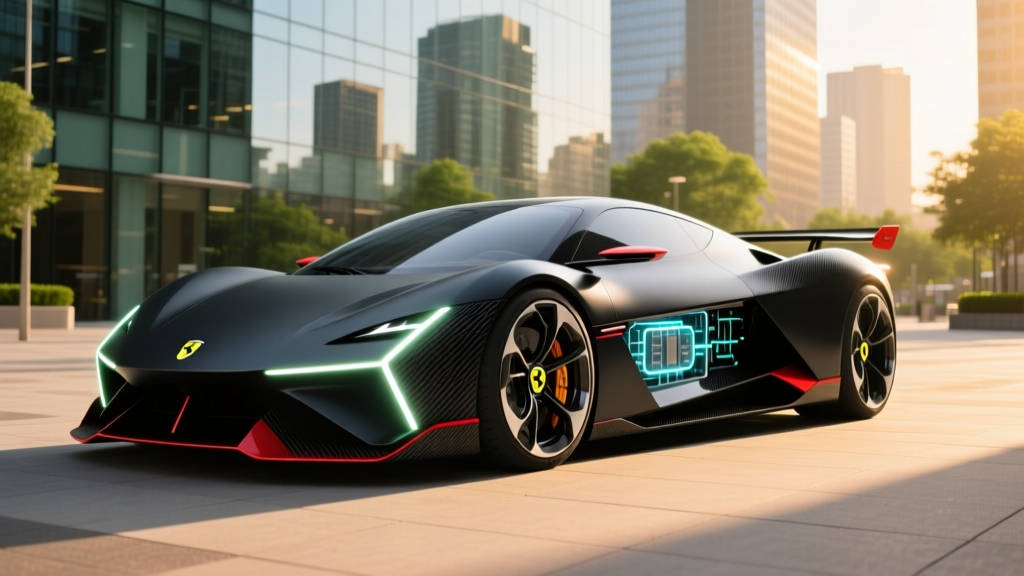
As of early 2026, Ferrari has not yet delivered a production battery-electric vehicle. The brand's first EV — internally referred to during development and officially unveiled in late 2025 — is expected to begin customer deliveries in late 2026 or early 2027. Ferrari CEO Benedetto Vigna has confirmed the car will be a four-door, four-seat grand tourer built on a dedicated EV platform at the new "e-building" in Maranello. Expect a starting price well above $500,000, a targeted range in the 300+ mile EPA neighborhood, and 800V-class architecture for rapid DC charging. If you're researching an "EV Ferrari" today, you're either planning ahead for allocation or comparing Ferrari's electric direction against current high-performance EVs from Porsche, Lotus, and Rimac.
What We Know About Ferrari's First Electric Car
Ferrari's EV project has been one of the most closely watched developments in the automotive world. Unlike brands that rushed to electrify existing platforms, Ferrari invested in an entirely new architecture. The Maranello e-building, a dedicated facility for electric and hybrid assembly, signals that electrification is not a one-off experiment but a long-term product pillar.
Here's what has been confirmed or strongly indicated by Ferrari leadership and industry reporting:
| Attribute | Expected / Confirmed Detail |
|---|---|
| Body Style | Four-door, four-seat grand tourer (not an SUV) |
| Platform | Dedicated EV skateboard architecture |
| Battery Chemistry | Likely high-nickel NMC for energy density + performance |
| Estimated Battery Capacity | ~100–120 kWh usable (preliminary) |
| Targeted EPA Range | 300+ miles (estimated, not yet EPA-certified) |
| Voltage Architecture | 800V-class (enabling 350+ kW peak DC charging) |
| 10–80% DC Fast Charge | Estimated ~18–22 minutes at 350 kW charger |
| Performance Target | Sub-2.5 sec 0–60 mph; 1,000+ hp (multi-motor AWD likely) |
| Starting Price (Est.) | $500,000+ before options |
| First Deliveries | Late 2026 or early 2027 |
Important caveat: These are preliminary figures based on Ferrari's public statements and credible industry analysis. Final EPA range, battery capacity, and pricing will not be confirmed until the production vehicle undergoes certification. We'll update this guide when official numbers drop.
Ferrari's Current Electrified Lineup: The Hybrid Bridge
While the full EV is still forthcoming, Ferrari is no stranger to electrification. The current lineup includes several plug-in hybrid (PHEV) models that offer a taste of electric performance:
- SF90 Stradale / SF90 Spider: 2.5-mile EV-only range, 7.9 kWh battery, combined 986 hp with three electric motors. This is a performance hybrid, not an efficiency play.
- 296 GTB / 296 GTS: ~15.5-mile EV-only range, 7.45 kWh battery, 818 hp combined. More usable electric-only driving around town, but still a short leash.
These models demonstrate Ferrari's philosophy: electrification serves performance first, efficiency second. The full EV will likely follow the same ethos — range and charging speed will be engineered to support the driving experience, not to maximize MPGe for its own sake.
EV Ferrari vs. Current High-Performance Electric Cars
Since you can't buy an EV Ferrari today, the practical question for buyers in this segment is: what can you buy that delivers exotic-car performance on electrons? Here's how the expected Ferrari EV stacks up against real, purchasable competitors:
| Spec | Ferrari EV (Est.) | Porsche Taycan Turbo GT | Lotus Eletre R | Rimac Nevera |
|---|---|---|---|---|
| 0–60 mph | ~2.3 sec | 2.1 sec | 2.9 sec | 1.85 sec |
| Horsepower | 1,000+ | 1,019 | 905 | 1,914 |
| EPA Range | ~300+ mi (est.) | 269 mi | ~270 mi (est.) | ~287 mi (WLTP-adjusted) |
| Battery (usable) | ~100–120 kWh | 97 kWh | 112 kWh | 120 kWh |
| Peak DC Charge | ~350 kW (est.) | 320 kW | ~350 kW | ~250 kW |
| 10–80% Time | ~18–22 min | ~18 min | ~20 min | ~25 min |
| Starting Price | $500,000+ | $230,000 | $120,000 | $2,200,000 |
The Porsche Taycan Turbo GT is the closest analogue in terms of combining daily usability, charging infrastructure compatibility, and supercar-rivaling performance — at a fraction of the expected Ferrari price. The Rimac Nevera is the hypercar benchmark but is a limited-production, two-seat machine. Ferrari's EV will likely slot between these: exotic prestige and four-seat practicality at a Maranello premium.
The Real Cost of Owning an Electric Ferrari
Ownership economics at this price tier operate differently than mainstream EVs, but the numbers still matter. Here's a projected cost breakdown for the first few years of ownership, compared with a V12 Ferrari like the 812 Superfast:
| Cost Factor (Annual Est.) | Ferrari EV (Projected) | Ferrari 812 Superfast (Gas V12) |
|---|---|---|
| Purchase Price | $500,000+ | ~$400,000 (pre-discontinuation) |
| Fuel / Electricity | $800–$1,200 (home charging, ~3,000 mi/yr) | $2,500–$3,500 (premium fuel, ~13 mpg) |
| Insurance | $8,000–$15,000+ | $7,000–$12,000 |
| Maintenance | $1,500–$3,000 (fewer fluids, brake regen savings) | $3,000–$6,000 (oil, belts, plugs, clutch) |
| Depreciation (Year 1) | Unknown — exotic EV depreciation is uncharted | ~10–15% typical for limited V12 models |
| Federal Tax Credit (§30D) | Not eligible (MSRP exceeds $55K cap for sedans; buyer income limits apply regardless) | N/A |
Key takeaway: The §30D federal EV tax credit is essentially irrelevant at this price point. The IRS rules cap eligible sedan MSRP at $55,000 and impose buyer income limits — neither of which applies to a $500,000+ Ferrari. Don't factor any tax incentive into this purchase decision.
Where the EV Ferrari saves money is in fuel and maintenance. Charging at home on a residential rate of ~$0.15/kWh with a 110 kWh battery costs roughly $16.50 for a full charge. That's a dramatic reduction versus filling a V12 tank with $6/gallon premium. However, insurance for a first-year exotic EV could carry a premium — insurers have limited loss data, and repair costs for carbon-fiber-bodied, high-voltage vehicles are steep.
Charging Reality: What Owners Will Actually Experience
Ferrari's 800V architecture (expected) positions the EV for some of the fastest public charging available. But real-world charging is never as simple as the peak kW number suggests.
Home charging (Level 2): With a 48-amp, 11.5 kW Level 2 home charger — the kind most exotic car owners will install in their garages — expect a full charge from empty in roughly 10–11 hours. For a car driven 30–50 miles a day, overnight top-ups take 2–4 hours. Home charging access is essentially a prerequisite at this price tier; public-only charging for a half-million-dollar car is impractical and risky.
DC fast charging: At a 350 kW-capable station (Electrify America, Ionity in Europe), the charge curve matters more than peak speed. Expect the battery to pull peak power from roughly 10% to 40% SoC, then taper progressively. A realistic 10–80% session will take 18–22 minutes, adding roughly 200+ miles of range. Above 80%, charging slows dramatically to protect battery health — plan to unplug at 80% on road trips rather than waiting for 100%.
Cold-weather impact: Lithium-ion batteries lose efficiency in cold temperatures. Expect 15–25% range reduction in sustained sub-freezing driving, even with a heat pump and battery preconditioning. A 300-mile EPA rating might deliver 225–255 real-world miles in January in the Northeast. For a grand tourer intended for cross-country drives, route planning around charging stops becomes more critical in winter.
Common Misconceptions About an EV Ferrari
| Myth | Fact |
|---|---|
| "Ferrari will never go electric — it betrays the brand." | Ferrari has confirmed its first EV and built a dedicated EV factory. Hybrid models (SF90, 296) already use electric motors for performance enhancement. |
| "An EV Ferrari will sound boring." | Ferrari has patented multiple acoustic systems. Expect engineered sound design — whether synthetic or amplified — to preserve emotional engagement. Whether it satisfies purists is another question. |
| "You'll get the $7,500 EV tax credit." | The §30D credit has a $55,000 MSRP cap for sedans and income limits for buyers. A $500,000+ Ferrari qualifies for none of it. See IRS guidelines. |
| "It'll charge as fast as a Tesla." | Peak kW matters less than sustained charge curve. Tesla's V4 Superchargers peak around 325 kW for non-Tesla vehicles. Ferrari's 800V system may match or exceed this, but real-world charging depends on station availability, battery temperature, and SoC. |
| "Electric means zero maintenance." | EVs eliminate oil changes, spark plugs, and transmission fluid. But tires (heavy EV + high torque = faster wear), cabin air filters, brake fluid, coolant loops, and 12V battery replacement still apply. |
Decision Framework: Should You Wait for the EV Ferrari?
Wait for the Ferrari EV if:
- You're a Ferrari collector or brand loyalist who wants a first-edition allocation and can absorb first-year depreciation risk.
- You want a four-door, four-seat exotic that makes a statement and can serve as a daily driver.
- You have reliable home Level 2 charging and access to 350 kW DC fast chargers on your common routes.
- You're comfortable with preliminary specs and a delivery timeline that could slip into 2027.
Buy a Porsche Taycan Turbo GT now if:
- You want a proven, deliverable high-performance EV with verified EPA range (269 mi), 320 kW charging, and a $230,000 starting price.
- You value the established Porsche dealer and service network over Maranello exclusivity.
- You want real-world ownership data, reliability track records, and known depreciation curves.
Consider the Ferrari 296 GTB (PHEV) if:
- You want Ferrari badging with some electric capability today — 15.5 miles of EV-only driving covers short city errands silently.
- You're not ready to commit to full electric for a six-figure exotic.
- You value the V6 engine note and mid-engine dynamics that a front-skateboard EV may not replicate.
What First-Time Exotic EV Buyers Should Know
If you've owned gas Ferraris, Lamborghinis, or McLarens but never an EV, the ownership transition involves real adjustments:
- Home electrical infrastructure: A 48-amp Level 2 charger requires a dedicated 60-amp circuit. Most luxury homes have 200-amp panels that can accommodate this, but a licensed electrician should confirm capacity. Installation typically runs $1,500–$4,000 including the charger unit, wiring, and permits. If your panel is maxed out, a service upgrade to 400 amps can add $3,000–$7,000.
- Tire costs: High-performance EVs are heavy (expect 5,000+ lbs for the Ferrari) and deliver instant torque. Rear tires on a 1,000+ hp AWD EV may last 8,000–12,000 miles under spirited driving. Budget $2,000–$4,000 per set for OEM-spec rubber.
- Depreciation uncertainty: The used market for exotic EVs is almost nonexistent. The Rimac Nevera and early Taycan Turbo S are the only data points, and both have shown steeper first-year depreciation than comparable gas exotics. Ferrari's brand cachet may cushion this, but it's uncharted territory.
- Software and OTA updates: Modern EVs receive over-the-air software updates that can alter throttle mapping, range estimates, and charging behavior. Ferrari's software ecosystem is unproven at this scale. Expect a learning curve with the infotainment and vehicle-settings interface.
- Service network: Ferrari's dealer network is small by design. High-voltage service requires specialized training and equipment. Confirm that your nearest Ferrari dealer is equipped for EV diagnostics and battery service before committing.
Frequently Asked Questions
When will the EV Ferrari be available to buy?
Ferrari unveiled its first EV concept details in late 2025, with production customer deliveries targeted for late 2026 or early 2027. Allocation will likely be prioritized for existing Ferrari owners and VIP clients. Walk-in purchases at launch are improbable.
Will the EV Ferrari qualify for any tax credits?
No. The federal §30D clean vehicle credit caps eligible sedan MSRP at $55,000 and imposes buyer income limits ($150K single / $300K joint). A $500,000+ Ferrari exceeds every threshold. Some states offer separate EV incentives, but none meaningfully offset a half-million-dollar purchase. Consult a tax professional for your specific situation.
How does the EV Ferrari compare to the Tesla Model S Plaid?
The Model S Plaid delivers 1,020 hp, a 1.99-second 0–60 time, and 396 miles of EPA range starting around $90,000 — a fraction of the Ferrari's expected price. On paper, the Tesla matches or exceeds the Ferrari in straight-line performance and range. The difference is brand prestige, bespoke craftsmanship, exclusivity, and the intangible value of the Prancing Horse badge. These are not competing on specs alone.
What battery chemistry will Ferrari use?
Ferrari has not officially confirmed chemistry, but high-nickel NMC (nickel manganese cobalt) is the most likely choice for a performance-focused EV. NMC offers higher energy density than LFP (lithium iron phosphate), which matters when packaging a large battery into a low-slung grand tourer. LFP is heavier and better suited to cost-optimized, standard-range vehicles. NMC's trade-off is slightly faster long-term degradation and higher raw material cost.
Will the EV Ferrari have a frunk (front trunk)?
This hasn't been confirmed. A dedicated EV skateboard platform typically allows a front trunk where the engine would sit in a gas car. However, Ferrari may use that space for electronics, cooling systems, or structural rigidity. Don't count on frunk space until official cargo specs are released.
Can I reserve an EV Ferrari now?
Ferrari typically manages allocation through its dealer network and existing client relationships. There is no public online reservation system like Tesla or Rivian. Contact your local Ferrari dealer to express interest and inquire about allocation priority. Existing Ferrari owners with recent purchase history will likely receive first access.