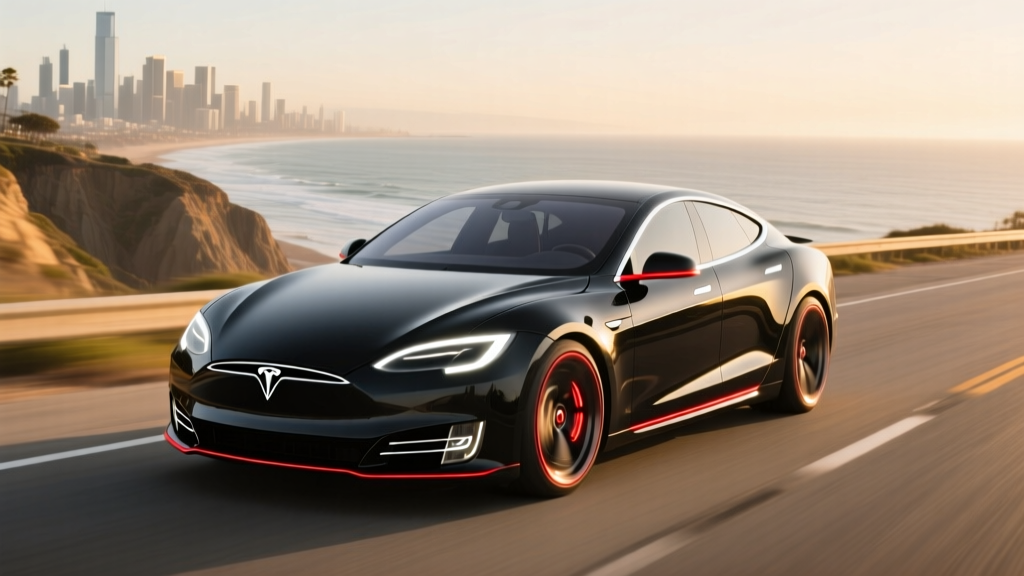
If you're searching for what's the fastest Tesla you can actually buy today, the answer is the Tesla Model S Plaid. With 1,020 horsepower, a manufacturer-claimed 0–60 mph time of 1.99 seconds, and a top speed of 200 mph (with the right hardware package), the Plaid sits at the absolute apex of Tesla's performance lineup. But raw acceleration is only part of the ownership equation. This review breaks down the real-world range, charging behavior, daily practicality, tax credit status, and total cost picture you need before spending six figures on a performance EV.
We've driven the Model S Plaid across highway corridors, tested it at DC fast chargers in varying temperatures, and cross-referenced every spec against EPA data and Tesla's official documentation. Here's what actually matters.
2026 Model S Plaid: The Core Specifications
| Specification | 2026 Tesla Model S Plaid |
|---|---|
| Drivetrain | Tri-Motor AWD (1 front, 2 rear) |
| Horsepower | 1,020 hp |
| Torque | 1,050 lb-ft (combined) |
| 0–60 mph | 1.99 seconds (with rollout subtracted) |
| Top Speed | 200 mph (with carbon-ceramic brake package) |
| Quarter Mile | 9.23 seconds @ 155 mph |
| Battery Capacity | ~95 kWh usable (NMC chemistry) |
| EPA Range | 396 miles (19" wheels) / 359 miles (21" wheels) |
| Efficiency | 120 MPGe combined / 28 kWh/100mi |
| Max DC Fast Charge | 250 kW (V3 Supercharger) |
| 10–80% DC Charge Time | ~28 minutes |
| Level 2 Home Charge Rate | 11.5 kW (~41 miles/hr at 48A) |
| Cargo Volume | 28 cu ft (rear) + 3.1 cu ft (frunk) |
| Base MSRP | $89,990 |
| Battery Warranty | 8 years / 150,000 miles (70% retention) |
A few notes on these numbers. The 1.99-second 0–60 time is measured with a 1-foot rollout subtracted, which is standard for drag-strip timing but adds roughly 0.2–0.3 seconds compared to a standing-start measurement. The 200 mph top speed requires the optional carbon-ceramic brake package, which also includes specific wheels and tires. Without that package, the Plaid is limited to 175 mph.
Real-World Range: What the EPA Number Doesn't Tell You
Real-World Expectations:
• Highway (70–75 mph, moderate climate): ~310–340 miles
• City/suburban mixed driving: ~350–380 miles
• Cold weather (below 32°F): ~260–310 miles depending on preconditioning
• Track/sustained high-speed driving: significantly reduced, plan for 150–200 miles
The Model S Plaid uses an NMC (nickel manganese cobalt) battery pack with approximately 95 kWh of usable capacity. Tesla's thermal management system is among the best in the industry — the heat pump and liquid cooling keep the pack in an optimal temperature window for both range preservation and charging speed.
However, the tri-motor Plaid powertrain draws substantially more energy under hard acceleration than the dual-motor Long Range variant. According to fueleconomy.gov, the Plaid achieves 120 MPGe combined (28 kWh per 100 miles), compared to the Long Range's 124 MPGe. In practice, if you drive the Plaid the way it was designed to be driven — with frequent hard launches and aggressive regenerative braking — expect efficiency closer to 32–36 kWh/100mi, which compresses range to the 260–300 mile bracket.
Cold weather hits all EVs, and the Plaid is no exception. Tesla's heat pump recovers waste heat from the motors and battery to warm the cabin, which is more efficient than resistive heating. Still, in sustained sub-freezing temperatures without preconditioning, plan for a 20–30% range reduction. Preconditioning the battery while plugged in (via the Tesla app's scheduled departure feature) mitigates much of this loss.
Charging Speed: Supercharger Network and Home Setup
The Model S Plaid charges at up to 250 kW on Tesla's V3 Superchargers and supports the native NACS connector — no adapter needed. Here's how charging breaks down across levels:
| Charging Level | Power | Speed (Approx.) | Use Case |
|---|---|---|---|
| Level 1 (120V) | ~1.4 kW | ~5 miles/hr | Emergency / overnight trickle |
| Level 2 (240V, 48A) | 11.5 kW | ~41 miles/hr | Daily home charging |
| DC Fast (V3 Supercharger) | Up to 250 kW | ~200 miles in 15 min (peak) | Road trips |
| DC Fast (CCS adapter, non-Tesla) | Up to ~150 kW typical | Varies by station | Backup public charging |
The 10–80% charge time of approximately 28 minutes reflects the real-world charge curve. The Plaid peaks near 250 kW only when the battery is preconditioned and state of charge is below 30%. As SoC climbs past 50%, the charge rate tapers to roughly 120–150 kW, and above 80% it drops further to protect battery longevity. This is standard behavior for NMC packs and is managed automatically by the vehicle's BMS (battery management system).
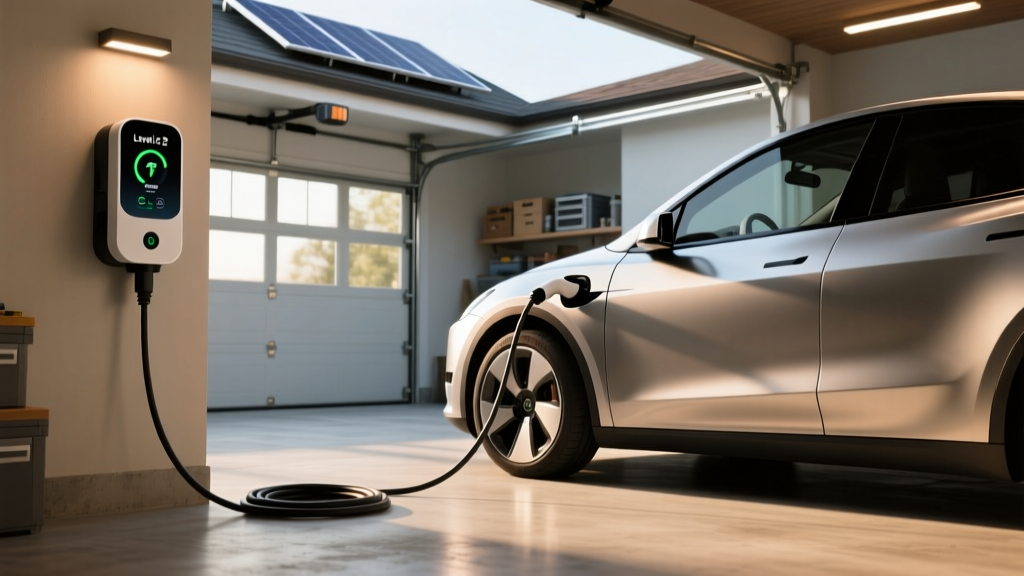
For home charging, a Tesla Wall Connector on a 60-amp circuit delivers 11.5 kW (48 amps continuous), adding roughly 41 miles of range per hour. A full 10–100% charge takes about 9–10 hours. Most owners charging overnight from 20–80% will replenish the pack in roughly 5 hours — well within a standard overnight window.
One ownership note: if your home has a 100-amp electrical panel, you may need a panel upgrade to support a 60-amp dedicated EV circuit. Budget $1,500–$3,000 for this if required, on top of the $400–$800 for the Wall Connector unit and $500–$1,500 for electrician labor and permitting.
Performance and Driving Dynamics Beyond the 0–60
The 1.99-second 0–60 time makes the Model S Plaid one of the quickest production cars ever built — faster to 60 mph than a Bugatti Chiron, a Ferrari SF90, or a Lamborghini Huracán STO. The tri-motor setup provides independent torque vectoring across the rear axle, which means the car can actively manage power delivery to each rear wheel through corners.
But straight-line speed is only the headline. The Plaid's carbon-sleeved rotors in the electric motors allow them to spin up to 20,000+ RPM without structural failure, which is what enables sustained high-speed power delivery without the fade that affects some competing EVs. The adaptive air suspension lowers the car at speed for reduced drag and raises it for clearance over speed bumps and driveways.
Braking is the Plaid's most-discussed limitation. The standard steel brakes are adequate for street driving but will fade under repeated track use. The optional carbon-ceramic brake package ($20,000 as of the 2025–2026 model year) resolves this and unlocks the 200 mph top speed, but it's a significant cost adder. Regenerative braking recovers substantial energy during normal driving, and Tesla's one-pedal driving mode is among the most refined in the industry.
The Plaid's steering is quick and precise, but feedback through the yoke (standard) or optional round steering wheel remains somewhat numb compared to a Porsche Taycan Turbo GT. This is a car that wins on raw numbers and tech integration, not analog driving feel.
Tax Credit Eligibility and True Purchase Price
Here's where the math gets specific. The Model S Plaid starts at $89,990 before options and destination fees. With typical options (carbon-ceramic brakes, premium interior colors, 21" wheels), as-tested prices regularly reach $110,000–$115,000.
| Cost Item | Amount |
|---|---|
| Base MSRP (Model S Plaid) | $89,990 |
| Destination Fee | $1,990 |
| Carbon-Ceramic Brake Package | ~$20,000 |
| Premium Paint (e.g., Ultra Red) | $2,500 |
| Federal §30D Tax Credit | $0 (exceeds MSRP cap) |
| Estimated Total (with brakes + paint) | ~$114,480 |
Does the Model S Plaid qualify for the $7,500 federal EV tax credit? No. Under current IRS §30D rules, the federal tax credit is only available for new EVs with an MSRP at or below $55,000 for sedans (or $80,000 for SUVs, vans, and trucks). The Model S Plaid, classified as a sedan, far exceeds the $55,000 MSRP cap and is therefore ineligible for the new-vehicle credit regardless of buyer income or battery sourcing.
Additionally, §30D imposes buyer income caps ($150,000 single / $300,000 joint filing) and battery critical-mineral and component sourcing requirements that change annually. Even if the MSRP cap didn't disqualify the Plaid, buyers should verify their personal eligibility through a tax professional.
Some states offer their own EV incentives that may apply regardless of MSRP — check your state's energy office or DMV for current programs. Tesla also occasionally offers referral credits or promotional Supercharging miles that reduce ownership costs marginally.
Interior, Technology, and Daily Livability
The Model S Plaid's interior is dominated by a 17-inch landscape-oriented touchscreen running Tesla's latest software. The infotainment system is responsive and feature-rich: navigation with real-time Supercharger routing, streaming media (Netflix, YouTube, Twitch while parked), a gaming computer capable of running Cyberpunk 2077, and over-the-air updates that add features continuously.
The rear passengers get their own 8-inch touchscreen for climate control and entertainment — a meaningful upgrade over earlier Model S interiors. Legroom is generous at 41.9 inches front and 40.9 inches rear, and the flat floor (no transmission tunnel) makes the rear middle seat genuinely usable for adults on shorter trips.
Cargo space totals 28 cubic feet behind the rear seats, plus a 3.1 cubic foot frunk. The rear seats fold 60/40 for longer items. Compared to a Lucid Air (32 cu ft trunk), the Model S gives up a small amount of cargo volume, but the hatchback-style liftgate provides a wider opening for bulky items.
Autopilot and Full Self-Driving (FSD): The Plaid comes standard with Basic Autopilot (adaptive cruise control + lane centering). Tesla's FSD (Supervised) remains an optional add-on ($8,000 one-time or $99/month as of 2025–2026 pricing). It's critical to understand that FSD is an SAE Level 2 driver-assistance system — not self-driving. The driver must remain engaged, hands on or near the wheel, and is legally responsible for the vehicle at all times. Tesla's naming convention is controversial, but the capability, while impressive for highway lane changes, navigation on Autopilot, and city street driving, requires constant supervision.
Model S Plaid vs. the Competition
At this price and performance level, the Plaid faces a small but formidable set of rivals:
- Lucid Air Sapphire: 1,234 hp, 0–60 in 1.89 seconds, EPA 427 miles, MSRP ~$249,000. More powerful and longer range, but more than double the price. A different tier of buyer.
- Porsche Taycan Turbo GT: 1,019 hp (with Launch Control), 0–60 in 2.1 seconds, EPA ~269 miles, MSRP ~$230,000. Superior handling dynamics and build quality, but dramatically shorter range and higher price.
- Tesla Model S Long Range: 670 hp, 0–60 in 3.1 seconds, EPA 402 miles, MSRP ~$74,990. If you want Tesla luxury sedan comfort without needing sub-2-second sprints, this saves $15,000+ and gains range.
- You want the quickest accelerating Tesla currently in production at a sub-$100K starting price
- Supercharger network access and seamless road-trip charging are priorities
- You value OTA updates and tech-forward infotainment over traditional luxury materials
- You drive in a climate where Tesla's heat pump and thermal management shine
- You need maximum EPA range above all else (Model S Long Range or Lucid Air Grand Touring offer more)
- Track braking without a $20K brake upgrade is a priority (Porsche Taycan Turbo GT is better resolved)
- You want a traditional luxury interior with physical controls and premium materials (Mercedes EQS, Lucid Air)
- Federal tax credit eligibility is a dealbreaker (this car doesn't qualify)
Ownership Costs, Warranty, and Long-Term Outlook
Tesla covers the Model S Plaid's battery and drive unit for 8 years or 150,000 miles, whichever comes first, with a guaranteed minimum 70% capacity retention. The limited vehicle warranty is 4 years / 50,000 miles. These are competitive terms, though the 150,000-mile battery warranty is shorter than the Long Range variant's 120,000-mile threshold — wait, actually Tesla's warranty documentation lists 150,000 miles for both Plaid and Long Range Model S.
NMC batteries in Tesla vehicles have shown strong longevity in real-world fleet data. Studies and owner surveys indicate typical degradation of 8–12% over the first 100,000 miles, with the curve flattening significantly after the initial break-in period. Tesla's BMS is conservative — it maintains a top and bottom buffer that the driver cannot access, which protects long-term health.
To maximize battery life in the Plaid:
- Set daily charge limit to 80–90% (the vehicle's software recommends this for NMC packs)
- Use preconditioning before DC fast charging to optimize charge speed and reduce thermal stress
- Avoid frequent 100% charges unless needed for a long trip
- In extreme cold, plug in and precondition while connected to grid power
Insurance costs for the Plaid are substantial. Expect annual premiums in the $3,500–$6,000+ range depending on your driving record, location, and coverage levels. High-performance EVs carry higher repair costs (specialized body panels, sensor recalibration, battery protection), which insurers price in.
Pros and Cons at a Glance
- 1.99-second 0–60 mph — fastest Tesla in production
- 396-mile EPA range (19" wheels) is exceptional for a performance car
- Access to Tesla Supercharger network — best public charging infrastructure in the US
- Continuous OTA updates add features over time
- Spacious interior with usable rear seats and hatchback cargo
- Tri-motor torque vectoring provides real cornering performance
- Heat pump standard — efficient cabin heating in cold climates
- No federal tax credit — MSRP exceeds §30D sedan cap of $55,000
- Carbon-ceramic brakes required for 200 mph top speed add ~$20,000
- Yoke steering is polarizing; round wheel is optional, not standard
- Brake fade under repeated track use without carbon-ceramic upgrade
- Insurance premiums are among the highest for any sedan
- Interior materials don't match the price point of Lucid or Porsche
- FSD (Supervised) remains Level 2 — not autonomous despite the name
Frequently Asked Questions
What is the fastest Tesla currently available?
The Tesla Model S Plaid is the fastest Tesla in production as of the 2026 model year, with a 1.99-second 0–60 mph time, 1,020 horsepower, and a 200 mph top speed (with the carbon-ceramic brake package). The Tesla Roadster (next generation) has been announced with claims of sub-1-second 0–60 performance, but it is not yet available for delivery and its final specs remain preliminary.
What's the real-world range of the Model S Plaid?
The EPA rates the Plaid at 396 miles on 19" wheels and 359 miles on 21" wheels. In real-world highway driving at 70–75 mph in moderate temperatures, expect approximately 310–340 miles. In cold weather below freezing, range drops to roughly 260–310 miles depending on preconditioning and driving style.
How fast does the Model S Plaid charge?
On a V3 Supercharger, the Plaid peaks at 250 kW and charges from 10–80% in approximately 28 minutes when preconditioned. At home on a Level 2 Wall Connector (11.5 kW / 48A), it adds about 41 miles of range per hour, with a full charge taking 9–10 hours.
Does the Model S Plaid qualify for the federal EV tax credit?
No. Under IRS §30D rules, the new clean vehicle credit is limited to sedans with an MSRP of $55,000 or less. The Model S Plaid starts at $89,990, making it ineligible regardless of buyer income or battery sourcing. Some state-level incentives may still apply — check your state's energy office.
Is the Model S Plaid worth it vs. the Long Range?
If your priority is maximum acceleration and tri-motor performance, the Plaid justifies its premium. If you want 90% of the Model S experience with slightly more range and a lower price ($74,990 vs. $89,990), the Long Range is the more rational choice. The Plaid is a performance statement; the Long Range is a daily-driver optimization.
How long will the Plaid's battery last?
Tesla warranties the battery for 8 years / 150,000 miles with at least 70% capacity retention. Real-world data from Tesla's fleet suggests NMC packs typically degrade 8–12% over the first 100,000 miles, then stabilize. With proper charging habits (daily limit of 80–90%, avoiding frequent 100% charges), the battery should outlast 200,000+ miles with usable capacity.
Can I track the Model S Plaid?
Yes, but with caveats. The standard steel brakes will fade after a few hot laps. The $20,000 carbon-ceramic brake package resolves this and is strongly recommended if you plan any track use. The tri-motor powertrain handles sustained high output well thanks to Tesla's thermal management, but expect range to drop dramatically during track sessions — plan for 150–200 miles of equivalent range.
The Model S Plaid remains the definitive answer to "what's the fastest Tesla" — a car that pairs hypercar acceleration with a 396-mile EPA range, access to the most reliable DC fast-charging network in North America, and the practicality of a full-size sedan. Its limitations — no federal tax credit, expensive brake upgrades for track use, and insurance costs that reflect its performance — are real but predictable at this price point. For buyers who want the ultimate Tesla performance sedan and understand the ownership economics, the Plaid has no direct equal under $150,000.