The Quick Answer: Is a Fast Electric Car Right for You?
If you want a vehicle that delivers supercar-level acceleration (0-60 mph in under 4 seconds) while serving as a practical daily driver, a fast electric car is genuinely compelling in 2026. Models like the Tesla Model 3 Performance ($54,990), Hyundai Ioniq 5 N ($68,000), and BMW i4 M50 ($67,900) offer 3.0–3.5 second 0-60 times with 250–300+ miles of EPA range. But speed comes with trade-offs: expect to pay $6,000–$15,000 more than base trims, face higher insurance premiums (often 20–35% above equivalent gas cars), and accept real-world range that drops 15–25% during aggressive driving or cold weather. The practical sweet spot? A dual-motor AWD EV with 300+ hp that hits 0-60 in 4.5–5.5 seconds—quick enough to feel thrilling, efficient enough to keep ownership costs reasonable.
What Makes an EV "Fast"—and What You Actually Get
Electric motors deliver peak torque from 0 RPM, which is why even modest EVs feel punchy off the line. But "fast" spans a wide spectrum in the current market:
| Category | 0-60 mph | Horsepower | Example Models (2026) | Starting MSRP |
|---|---|---|---|---|
| Quick Daily Driver | 5.0–6.5 sec | 250–350 hp | Chevy Equinox EV RS, VW ID.4 AWD | $43,000–$50,000 |
| Performance EV | 3.5–4.9 sec | 400–550 hp | Tesla Model 3 Perf, BMW i4 M50 | $54,990–$68,000 |
| Supercar EV | 2.0–3.4 sec | 600–1,000+ hp | Taycan Turbo GT, Lucid Air Sapphire | $165,000–$250,000 |
The performance tier (3.5–4.9 seconds) is where most buyers find the best balance. You get thrilling acceleration, dual-motor AWD traction, and usable daily range without the six-figure price tag. But here's the ownership reality check: every pound of extra battery and every horsepower spike affects efficiency.
Real-World Range: What the EPA Sticker Doesn't Tell You
A Hyundai Ioniq 5 N carries an EPA-estimated 221 miles of range from its 84 kWh (usable) NMC battery. That's the number on the window sticker. But real-world driving tells a different story:
2026 Hyundai Ioniq 5 N — Range Reality
- EPA Estimate: 221 miles (combined city/highway)
- Highway driving (70–80 mph): ~180–195 miles
- Aggressive/sport driving: ~140–160 miles (heavy regen and acceleration drain)
- Cold weather (below 32°F): ~165–185 miles (battery chemistry slows, cabin heat draws power)
- Optimal conditions (55 mph, 65°F, moderate driving): ~230–240 miles
This isn't unique to the Ioniq 5 N. The Tesla Model 3 Performance (EPA 315 miles, 82 kWh LFP battery in some markets, NMC in others) will realistically deliver 250–275 miles on a highway road trip and potentially 200–220 in sub-freezing temperatures. According to fueleconomy.gov, the Model 3 Performance achieves 113 MPGe combined—but MPGe (miles per gallon equivalent) measures energy efficiency, not real-world distance. Your actual range depends heavily on speed, temperature, terrain, and how often you stomp the accelerator.
Charging Speed: Peak kW vs. What You Actually Experience
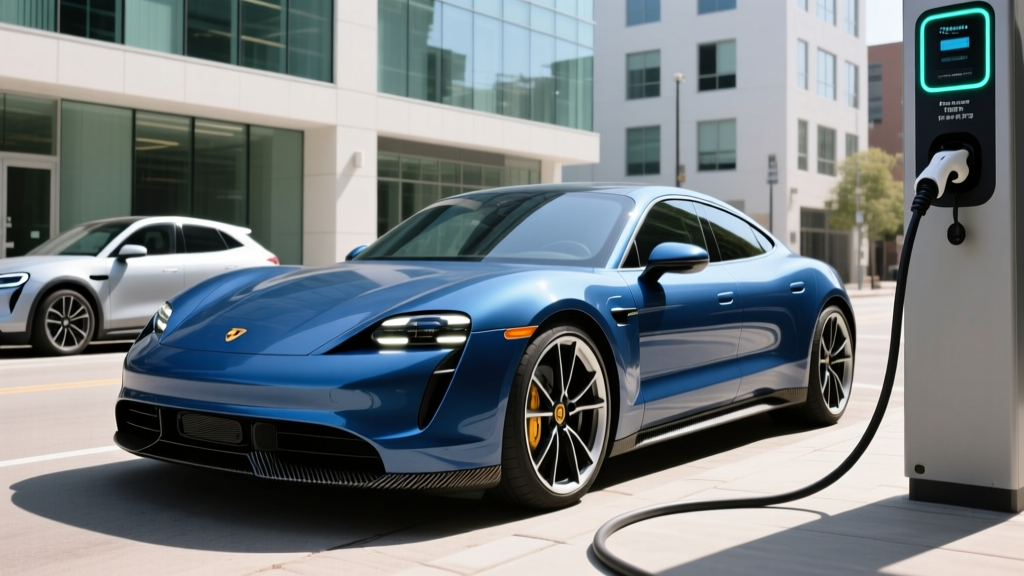
Fast electric cars typically support DC fast charging at 200–350 kW peak. But peak isn't sustained. Here's the charging-curve reality that marketing materials gloss over:
| Charging Level | Power (kW) | Miles Added Per Hour | Typical Use Case |
|---|---|---|---|
| Level 1 (120V outlet) | 1.0–1.4 kW | 3–5 mi/hr | Emergency/trickle only |
| Level 2 (240V home) | 7.2–11.5 kW | 25–45 mi/hr | Daily overnight charging |
| DC Fast (public) | 50–350 kW peak | 150–800+ mi/hr (peak) | Road trips, quick top-ups |
Take the BMW i4 M50: it supports up to 205 kW DC fast charging. BMW advertises "10–80% in about 31 minutes." But that 205 kW is a peak that lasts for perhaps the first 5–10 minutes when the battery is at a low state of charge (SoC) and properly preconditioned. As the battery fills past 50–60%, the charge rate tapers to protect the cells. A realistic 10–80% session on a 150 kW Electrify America charger might take 35–40 minutes, not 31.
Preconditioning matters. If you navigate to a DC fast charger using the car's built-in navigation (Tesla, Hyundai, BMW all support this), the battery thermal management system warms the cells to optimal temperature before you arrive. Skip preconditioning—especially in cold weather—and your peak charge rate might be cut in half for the first 10–15 minutes.
The Real Cost: Purchase, Charging, Insurance, and Maintenance
A fast electric car isn't just about the sticker price. Here's a five-year ownership breakdown comparing a performance EV (Tesla Model 3 Performance) to a comparably quick gas sedan (BMW M340i xDrive):
| Cost Factor | 2026 Tesla Model 3 Performance | 2026 BMW M340i xDrive (gas) |
|---|---|---|
| Base MSRP | $54,990 | $58,500 |
| Federal tax credit (§30D)* | –$7,500 (if eligible) | $0 |
| Effective purchase price | $47,490 | $58,500 |
| Fuel/energy (5 yrs, 60k mi)** | $3,600 (home L2 avg) | $9,000 (premium gas) |
| Maintenance (5 yrs) | $1,200 (tires, cabin filter, fluid top-off) | $4,500 (oil, brakes, filters, spark plugs) |
| Insurance (5 yrs avg) | $12,500 | $9,800 |
| Estimated depreciation | $18,000 | $22,000 |
| 5-Year Total Cost | $82,790 | $103,800 |
*Federal §30D credit eligibility depends on buyer income caps ($150k single / $300k joint AGI), vehicle MSRP caps ($55k for sedans), battery critical-mineral sourcing, and point-of-sale transfer rules. Always verify current-year eligibility at irs.gov and consult a tax professional.
**Energy costs assume $0.14/kWh home charging average and 12,000 miles/year. Gas assumes $4.00/gal premium at 25 MPG combined.
The EV wins on five-year total cost by roughly $21,000—but only if you qualify for the full tax credit, charge primarily at home, and don't face unexpectedly high insurance premiums. Insurance for performance EVs is a real pain point: IIHS data and insurer reports consistently show EV insurance costs 15–35% higher than equivalent gas vehicles due to higher repair costs, specialized parts, and limited body-shop expertise.
EV vs. Gas vs. Hybrid: The Performance Comparison
If your priority is straight-line speed, EVs dominate on paper. But the ownership experience differs sharply:
| Factor | Fast EV (e.g., Model 3 Perf) | Gas Performance Sedan (e.g., M340i) | Performance Hybrid (e.g., BMW M340e PHEV) |
|---|---|---|---|
| 0-60 mph | 3.1 sec | 4.1 sec | 4.5 sec |
| EPA range / MPG | 315 mi / 113 MPGe | ~380 mi / 28 MPG | ~35 mi electric + 32 MPG |
| Refuel/recharge time | 30–40 min (10–80% DC fast) | 5 min (gas station) | 5 min gas / 3.5 hr L2 |
| Home "refueling" | Yes, overnight L2 | No (must visit station) | Yes (electric portion only) |
| Long road trip convenience | Plan charger stops; 30+ min breaks | Quick stops, dense station network | Gas for long trips; electric for city |
| Cold-weather impact | 15–25% range loss | Minimal MPG impact | Reduced electric range; gas compensates |
| Maintenance burden | Low (no oil, fewer brakes via regen) | Moderate (oil, brakes, filters) | Moderate (dual powertrains) |
The plug-in hybrid (PHEV) is the pragmatic middle ground if you lack reliable home charging or frequently drive in extreme cold. You get 30–40 miles of electric-only commuting (enough for most daily driving) plus a gas engine for road trips—no range anxiety, no charger hunting. But you'll sacrifice the instant-torque thrill and lower maintenance costs of a pure EV.
First-Time EV Buyer: What You Must Know Before Buying
1. Home Charging Is Non-Negotiable for Most Owners
Public DC fast charging costs $0.35–$0.55/kWh (sometimes more), while home Level 2 charging averages $0.10–$0.18/kWh depending on your utility. If you can't install a Level 2 charger at home (apartment living, older electrical panels, landlord restrictions), your fuel cost advantage shrinks dramatically—and the convenience of "filling up" overnight disappears.
| Item | Typical Cost Range |
|---|---|
| Level 2 charger hardware (40–48A) | $400–$800 |
| Electrician labor (240V circuit, 50–60A) | $800–$2,500 |
| Electrical panel upgrade (if needed, 100→200A) | $1,500–$4,000 |
| Permit & inspection | $100–$400 |
| Total install (no panel upgrade) | $1,300–$3,700 |
| Total install (with panel upgrade) | $2,800–$7,700 |
2. Battery Degradation Is Real but Manageable
Modern NMC and LFP batteries lose roughly 10–15% capacity over 8–10 years / 150,000 miles under normal use. Federal law mandates a minimum 8-year / 100,000-mile battery warranty (covering defects and excessive degradation, typically defined as dropping below 70% capacity). Tesla, Hyundai, and BMW all meet or exceed this. Full battery replacement outside warranty runs $12,000–$22,000 depending on pack size—a number worth knowing for long-term ownership planning.
3. Tax Credits Have Strings Attached
The §30D federal credit offers up to $7,500 for new EVs, but eligibility in 2026 requires:
- Buyer AGI under $150k (single) or $300k (joint)
- Vehicle MSRP under $55k (sedans) or $80k (SUVs/trucks)
- Battery components and critical minerals meeting domestic-sourcing thresholds (these tighten annually)
- Point-of-sale transfer available at participating dealers (reduces purchase price directly)
Many performance EVs exceed the MSRP cap or fail sourcing requirements. Always check the latest qualified vehicle list at fueleconomy.gov before committing.
Common Misconceptions About Fast Electric Cars
| Myth | Fact |
|---|---|
| "EVs can't handle long road trips" | With 250+ miles of real-world range and a planned 30-minute DC fast stop every 2–3 hours, road trips are very doable. Apps like A Better Routeplanner optimize stops. The real limitation is charging-desert regions (rural Midwest, parts of the Mountain West). |
| "Fast EVs wear out their batteries quickly" | Occasional hard acceleration has minimal impact on battery health. What degrades batteries is chronic fast charging to 100%, extreme heat, and deep discharges. Most owners who charge to 80% daily and DC fast charge only on road trips see <2% degradation per year. |
| "Electricity is always cheaper than gas" | At home, yes—dramatically. On public DC fast chargers at $0.48/kWh, an EV's per-mile cost can approach or exceed that of a 30-MPG gas car. The savings depend on where you charge. |
| "Regenerative braking eliminates brake maintenance" | It dramatically reduces brake pad wear (many EVs go 80,000+ miles on original pads), but brake fluid still needs flushing every 2–3 years, and rotors can corrode from underuse in humid climates. |
Decision Framework: Should You Buy a Fast Electric Car?
Buy a Fast EV If:
- You have home Level 2 charging (or can install it)
- Your daily commute is under 80 miles round-trip
- You value instant torque, low maintenance, and quiet operation
- You qualify for the §30D tax credit (or your state offers EV incentives)
- You're willing to plan charging stops on road trips 2–4 times per year
- Your household has a second gas/hybrid car for worst-case scenarios (optional but helpful)
Choose a Performance Hybrid or Gas Car Instead If:
- You live in an apartment or can't install home charging
- You regularly drive 300+ miles in a day through charging-desert regions
- You live in extreme cold (frequent sub-10°F winters) and lack a garage
- Your budget can't absorb higher insurance premiums ($2,000–$4,000/year more)
- You want maximum range flexibility without any trip planning
Consider a Quick-but-Efficient EV (5–6 sec 0-60) If:
- You want EV benefits without the performance-trim price premium
- Range and efficiency matter more than 0-60 bragging rights
- You want lower insurance costs and longer real-world range per charge
Frequently Asked Questions
What's the cheapest fast electric car available in 2026?
The Tesla Model 3 Long Range AWD starts around $47,990 and hits 0-60 in 4.2 seconds with an EPA-estimated 341 miles of range. After the $7,500 federal credit (if eligible), effective price drops to ~$40,490—making it the value leader in the "quick EV" segment. The Hyundai Ioniq 6 SEL AWD (~$47,000, 5.1 seconds, 316 miles EPA) is a strong runner-up.
Does a fast EV use more electricity than a slower one?
Yes. Performance trims with larger motors and heavier batteries consume more kWh per mile. The Ioniq 5 N averages about 2.1 kWh/mile under mixed driving, while the standard Ioniq 6 SE RWD uses roughly 1.6 kWh/mile. Over 12,000 miles, that's a difference of ~600 kWh/year, or about $84–$120 in extra electricity costs.
Can I daily-drive a performance EV without destroying range?
Absolutely. Most "performance" EVs have multiple drive modes. Use Eco or Normal for commuting and save Sport/Track mode for weekends. Real-world range in Normal mode is typically within 5–10% of the EPA estimate. Aggressive sport-mode driving can cut range by 30–40%.
Are fast EVs safe?
Yes. Performance EVs consistently earn top ratings from NHTSA (5-star overall) and IIHS (Top Safety Pick+). The low center of gravity from floor-mounted battery packs reduces rollover risk, and the heavy mass provides crash-energy advantages. Advanced driver-assist systems (Level 2 SAE automation—meaning you must remain engaged) like Tesla Autopilot, BMW Driving Assistant Professional, and Hyundai Highway Driving Assist 2 add active safety layers, but none are "self-driving."
How does cold weather affect a fast EV's battery and range?
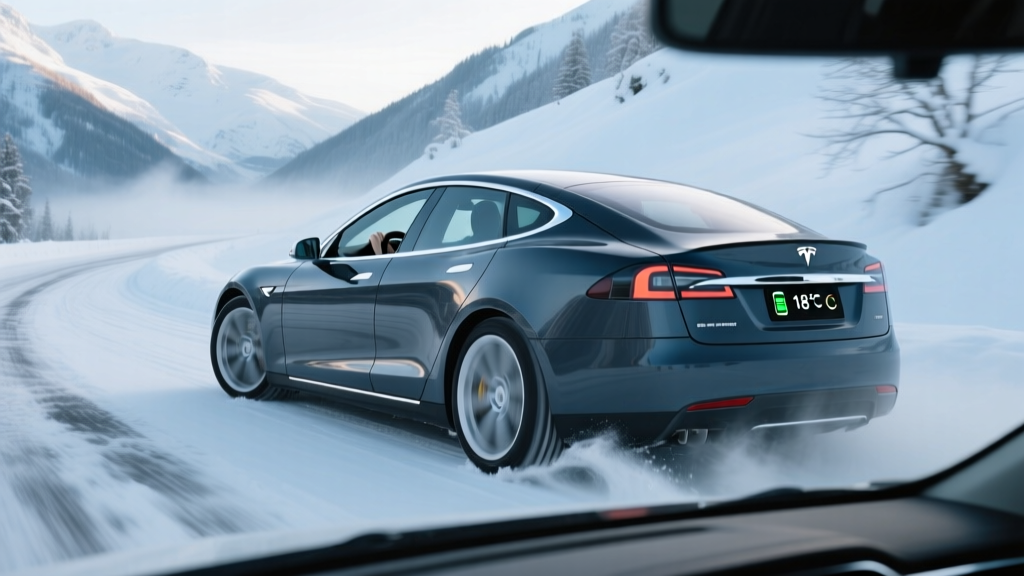
Below 32°F, expect 15–25% range loss due to increased battery internal resistance and cabin heating demands. Below 10°F, loss can reach 30–40%. Performance isn't affected—the car still delivers full torque—but you'll charge more often. Mitigation: precondition the battery before driving (most EVs do this automatically when you set a departure time), use seat/steering wheel heaters instead of cabin air, and garage the car when possible.