The Short Answer on Fast and Cheap Electric Scooters
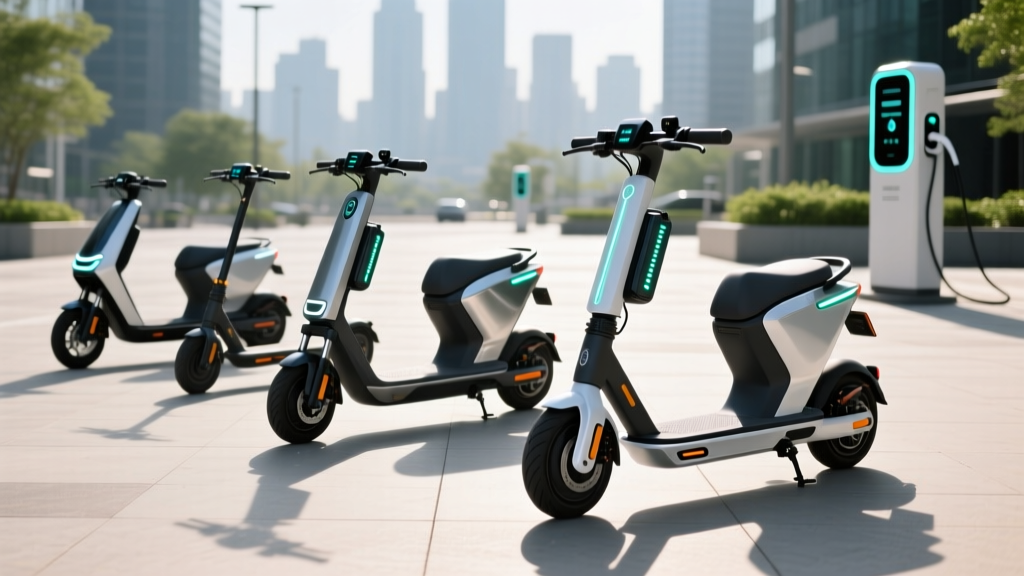
Most "fast and cheap" electric scooters (priced $400–$900) advertise top speeds of 15–25 mph and ranges of 20–35 miles on a single charge. In real-world commuting, expect 60–75% of those claimed ranges due to rider weight, terrain, temperature, and throttle usage. A $650 scooter with a claimed 30-mile range will realistically deliver 18–22 miles per charge in mixed conditions. For comparison, a used Nissan Leaf or Chevrolet Bolt EV delivers 150+ EPA-rated miles, qualifies for up to a $4,000 federal used-EV tax credit under IRS §25E, and provides weather protection, crash safety structure, and highway capability that no scooter can match. Scooters fill a micro-mobility niche — last-mile transit, campus travel, fair-weather urban errands — but they are not automobile replacements.
Where Electric Scooters Fit in the Electrified Transport Landscape
Electric scooters occupy a distinct category from the battery-electric vehicles (BEVs) and plug-in hybrids (PHEVs) we typically cover at Auto Edge View. They use small lithium-ion battery packs (typically 0.3–1.0 kWh of energy capacity) and hub motors rated between 250W and 800W. To put that in perspective, a Tesla Model Y carries roughly 75 kWh of usable battery energy — about 100 times more — and a Chevrolet Bolt EV carries about 65 kWh.
The appeal is obvious: low purchase price, no insurance requirement in most states, foldable portability, and zero tailpipe emissions for short urban trips. But the limitations are equally real, and buyers searching for "fast and cheap" often encounter a triangle of trade-offs they can't escape:
- Fast (25+ mph) requires a larger motor and battery, which increases cost and weight
- Cheap (under $500) means smaller batteries, slower charge times, and lower build quality
- Long range (30+ real miles) demands battery capacity that pushes price above $800
You can pick two. You cannot have all three in a single scooter at budget prices.
Real-World Range and Speed: What the Spec Sheet Doesn't Tell You
Manufacturers test scooters under ideal conditions: a 165-lb rider on flat pavement at moderate temperatures with conservative throttle use. Real commuting rarely matches those parameters.
| Claimed Spec | Real-World Expectation | Why the Gap |
|---|---|---|
| 30-mile range | 18–22 miles | Heavier riders, hills, headwinds, full-throttle use |
| 25 mph top speed | 18–22 mph sustained | Speed drops as battery depletes below 50% SoC |
| 4-hour charge time | 4.5–6 hours | Charge rate tapers significantly above 80% SoC |
| 500W motor | 300–350W sustained | Peak rating vs. continuous thermal-limited output |
This mirrors a pattern we see across all electric vehicles: EPA range stickers on cars also overestimate compared to cold-weather highway driving. The difference is that a 20% range shortfall on a 300-mile EV still leaves 240 miles. A 20% shortfall on a 30-mile scooter leaves you at 24 miles — potentially not enough for a round-trip commute with errands.
Cost Breakdown: Scooter vs. Budget EV vs. Gas Car
The purchase price of a scooter looks irresistible next to any automobile. But total cost of ownership requires examining charging costs, maintenance, replacement parts, and what you're giving up in capability.
| Cost Factor | E-Scooter ($650) | Used EV (2022 Bolt, ~$16,000 after credit) | Used Gas Car (2019 Civic, ~$16,000) |
|---|---|---|---|
| Purchase price | $650 | $20,000 – $4,000 §25E credit = $16,000 | $16,000 |
| Fuel/energy per mile | ~$0.005 (home charging) | ~$0.04 (home L2, $0.14/kWh) | ~$0.12 ($3.50/gal, 30 MPG) |
| Annual fuel (5,000 mi) | $25 | $200 | $600 |
| Insurance (annual) | $0–$150 (optional) | $1,200–$1,800 | $1,000–$1,500 |
| Maintenance (annual) | $30–$80 (tires, brakes) | $200–$400 | $500–$900 |
| Battery replacement | $150–$300 (year 2–4) | Covered under 8-yr/100k-mi warranty | N/A |
| Year 1 total | ~$705–$880 | ~$17,400–$18,400 | ~$17,100–$17,900 |
The scooter wins on raw cost by a massive margin — but only if it can actually replace the trips you need to make. A scooter cannot carry groceries for a family, drive on the highway, operate safely in rain or snow, or protect you in a collision with a 4,000-lb vehicle.
Safety, Legality, and the Gaps Most Buyers Overlook
According to NHTSA data and emergency room studies, electric scooter injuries have risen sharply since 2018, with head injuries, fractures, and road rash being the most common outcomes. Unlike automobiles, scooters have no airbags, no crumple zones, no stability control, and no mandatory federal crash-test standards.
Key legal and practical considerations:
- Helmet laws vary by state and municipality — some require helmets for all e-scooter riders, others only for minors
- Where you can ride differs: some cities allow scooters on sidewalks, others restrict them to bike lanes or roads with speed limits under 25 mph
- Insurance gaps: most auto insurance policies do not cover e-scooter accidents, and homeowner's/renter's policies may exclude motorized vehicles
- Theft vulnerability: a $650 scooter locked to a bike rack is a far easier target than a car with an alarm and immobilizer
- Weather limitations: most budget scooters carry IP54 or IP55 water resistance ratings, meaning light rain only — not sustained downpours or puddle submersion
Common Misconceptions About Budget E-Scooters
| Myth | Fact |
|---|---|
| "A 500W scooter goes 25 mph easily" | 500W is often a peak rating; sustained power is 300–350W, yielding 18–22 mph for a 180-lb rider on flat ground |
| "The battery will last 5+ years" | Budget scooter batteries (typically small 36V or 48V packs with generic cells) degrade noticeably after 300–500 full charge cycles — roughly 1.5–3 years of daily use |
| "I can ride in any weather" | Budget scooters lack adequate sealing for heavy rain; wet brakes (especially mechanical discs) lose significant stopping power |
| "It replaces my car for commuting" | Only if your one-way commute is under 10 miles, entirely on protected bike lanes, in fair weather, with no cargo or passenger needs |
| "Charging is free" | Charging is cheap (~$0.03–$0.08 per full charge at residential rates) but not free; public charging options for scooters are essentially nonexistent |
Battery Chemistry and Longevity: What Scooter Buyers Should Understand
Most scooters in the "fast and cheap" category use either generic lithium-ion cells (often 18650-format NMC chemistry) or, in some newer models, lithium iron phosphate (LFP) cells. The trade-offs mirror those in full-size EVs:
- NMC (Nickel Manganese Cobalt): Higher energy density (lighter, more compact pack), but shorter cycle life (~500–800 cycles to 80% capacity) and greater thermal sensitivity
- LFP (Lithium Iron Phosphate): Lower energy density (heavier pack for same range), but longer cycle life (~1,500–2,000 cycles) and better thermal stability
Budget scooters almost universally use NMC or unbranded cells. The battery is typically the first major component to fail, and replacement costs ($150–$300) can represent 30–50% of the original purchase price. This is a crucial ownership reality: a scooter that costs $650 today may require a $250 battery in year three, effectively making it a $900 scooter.
For comparison, a new EV battery pack carries a federally mandated warranty of at least 8 years/100,000 miles (10 years/150,000 miles in CARB states), with capacity retention thresholds typically set at 70% of original capacity. No scooter manufacturer offers comparable battery coverage.
Decision Framework: Is a Scooter Right for Your Situation?
Choose an Electric Scooter If:
- Your round-trip commute is under 15 miles with access to protected bike lanes
- You live in a mild climate with 200+ fair-weather riding days per year
- You already own or have access to a car for inclement weather, long trips, and cargo hauling
- You have secure indoor storage to protect the scooter from theft and weather
- Your budget for transportation is strictly under $1,000 and you cannot access home Level 2 EV charging
Choose a Budget EV (Used Leaf, Bolt, or similar) If:
- You need all-weather, year-round transportation
- Your commute includes highways or roads with speed limits above 35 mph
- You qualify for the §25E used-EV credit (up to $4,000, income caps apply: $75K single / $150K joint)
- You can install or access Level 2 home charging (a standard 240V outlet delivers ~25 miles of range per hour of charging)
- You need to carry passengers, groceries, or cargo regularly
Choose a PHEV (Prius Prime, RAV4 Prime) If:
- You want electric-only commuting (25–42 miles EPA) with gas-engine backup for road trips
- You have uncertain charging access but want to reduce fuel consumption
- You need the versatility of an SUV or larger vehicle with electric daily driving
Charging Realities for E-Scooters vs. Electric Cars
One area where scooters genuinely shine is charging simplicity — but the numbers reveal important limitations:
| Charging Metric | E-Scooter (36V, 10Ah battery) | EV on Level 1 (120V) | EV on Level 2 (240V) |
|---|---|---|---|
| Battery capacity | ~0.36 kWh | 60–100 kWh | 60–100 kWh |
| Charge power | ~0.08–0.12 kW | ~1.4 kW | 7.2–11.5 kW |
| Full charge time | 3.5–5 hours | 40–70 hours | 6–12 hours |
| Charge outlet | Standard 120V wall outlet | Standard 120V wall outlet | 240V (dryer-style) outlet, professionally installed |
| Cost per full charge | ~$0.04–$0.06 | ~$8–$14 | ~$8–$14 |
Scooters charge from any wall outlet with their included brick charger — no electrician, no permit, no panel upgrade. This is a genuine advantage for apartment dwellers or anyone without garage access. However, the included chargers are typically slow, single-speed units with no thermal management or charge-curve optimization. Fast aftermarket scooter chargers exist but can reduce battery lifespan by accelerating cell degradation.
The Bottom Line on Fast and Cheap Electric Scooters
At $400–$900, a budget electric scooter is an inexpensive, fun, and practical tool for specific use cases: last-mile commuting from transit, campus travel, or fair-weather urban errands under 10 miles. The per-mile energy cost is nearly negligible, and the convenience of folding and storing indoors solves the parking and charging-access problems that challenge many prospective EV owners.
But "fast and cheap" is a marketing promise that physics cannot fully deliver. A $650 scooter will not sustain 25 mph for its full claimed range, will require a battery replacement within two to four years, offers minimal crash protection, and cannot function as a primary vehicle for most American commuters. Buyers who approach scooters as a supplement to — not a replacement for — a primary vehicle will be satisfied. Buyers expecting automobile capability at scooter prices will be disappointed.
If your transportation needs extend beyond fair-weather solo trips under 15 miles, the smarter financial move in 2026 is often a used EV leveraging the §25E credit: a $20,000 Chevrolet Bolt EV drops to $16,000 after the credit, delivers 259 EPA-rated miles of range, and provides the safety, weather protection, and versatility that no two-wheeled platform can match.
What is the fastest electric scooter under $1,000?
Several models in the $700–$950 range claim top speeds of 25–30 mph with dual-motor configurations (typically 2×500W peak). Real-world sustained speeds for a 180-lb rider on flat terrain are typically 22–26 mph. Speed drops significantly on inclines and as the battery depletes below 40% State of Charge.
How long do cheap electric scooter batteries last?
Budget scooter batteries using generic NMC cells typically retain usable capacity for 300–500 full charge cycles, translating to approximately 1.5–3 years of daily commuting use. Signs of end-of-life include noticeably reduced range, slower acceleration, and longer charge times. Replacement packs cost $150–$300 depending on voltage and capacity.
Can I ride an electric scooter in the rain?
Most budget scooters carry IP54 or IP55 water resistance ratings, which protect against splashing water but not sustained rain or standing water. Riding in heavy rain risks electrical damage to the controller, reduced braking performance (especially on mechanical disc brakes), and personal safety hazards from reduced visibility and traction. Purpose-built commuter scooters with IP67 ratings exist but typically cost $1,200+.
Do electric scooters qualify for any tax credits?
No. The federal §30D new clean vehicle credit and §25E used clean vehicle credit apply only to four-wheeled motor vehicles with a gross vehicle weight rating under 14,000 lbs that are primarily for use on public roads. Electric scooters, e-bikes (in most cases), and similar micro-mobility devices do not qualify. Some local utility companies offer small rebates for e-mobility devices — check with your provider.
Is an electric scooter cheaper than a used EV for commuting?
On pure cost, yes — a $650 scooter costs far less upfront than even a credit-discounted used EV. But the comparison only holds if the scooter can actually replace the trips you need to make. For commuters with sub-10-mile one-way trips on protected bike lanes in mild climates, the scooter saves thousands. For anyone needing highway capability, weather protection, cargo space, or passenger capacity, the used EV is the more practical and ultimately more economical choice when factoring in safety and versatility.