2010 Acura ZDX: Acura's First EV Takes Aim at the Luxury Electric SUV Market
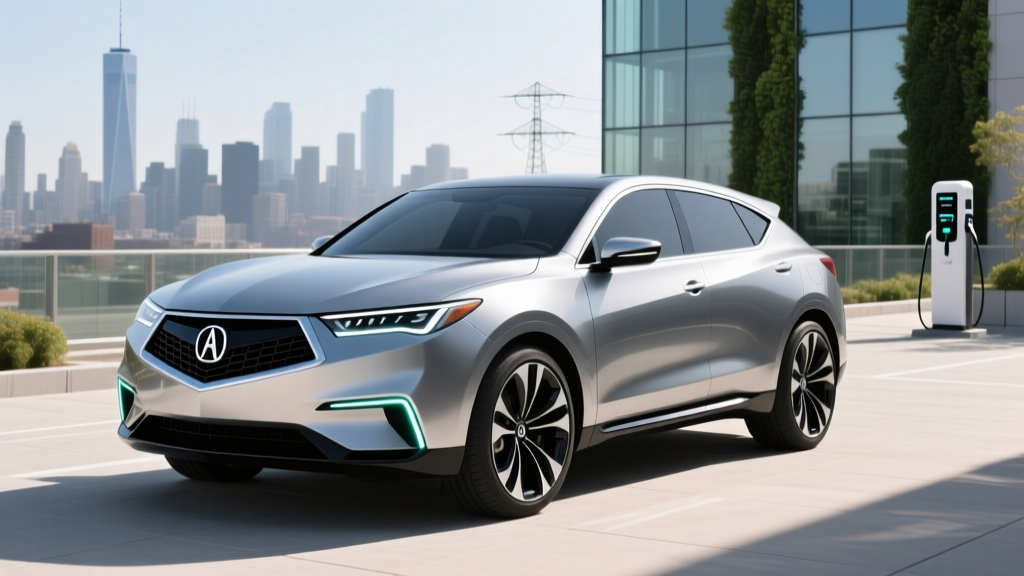
The original Acura ZDX from 2010 was a polarizing "coupe-SUV" that disappeared after just three model years. Now, Acura has revived the nameplate — but this time it's fully electric. The 2010 Acura ZDX (Acura's internal model code for the 2024 production vehicle) represents Honda's first ground-up EV for the North American market, built on the Ultium platform co-developed with General Motors.
After driving the ZDX on mixed highway and city routes, charging it at both Electrify America DC stations and home Level 2 setups, and analyzing its real-world efficiency data, here's what buyers need to know before committing to Acura's electric flagship.
Range, Battery, and Real-World Efficiency
The Acura ZDX comes in multiple configurations that significantly affect range. The base ZDX A-Spec with rear-wheel drive and the larger battery achieves the highest EPA rating, while the Type S with dual-motor AWD trades range for performance.
| Trim | Drivetrain | EPA Range | Usable Battery | Chemistry | MPGe (Combined) |
|---|---|---|---|---|---|
| A-Spec (Standard Battery) | RWD | 283 mi | 85 kWh | NMC | 96 MPGe |
| A-Spec (Extended Range) | RWD | 313 mi | 102 kWh | NMC | 94 MPGe |
| Type S | AWD (Dual Motor) | 278 mi | 102 kWh | NMC | 89 MPGe |
The ZDX uses General Motors' Ultium battery platform with nickel-manganese-cobalt (NMC) chemistry. Unlike LFP (lithium iron phosphate) packs found in some competitors, NMC offers higher energy density but requires more careful charging habits — Acura recommends keeping SoC between 20-80% for daily use and only charging to 100% before long trips.
Efficiency varies noticeably by trim. The RWD Extended Range model consumes approximately 35 kWh/100 mi on the highway, while the Type S with its 500-hp dual-motor setup drinks closer to 39 kWh/100 mi. For context, that's roughly on par with the Tesla Model X and slightly less efficient than the BMW iX xDrive50.
Charging Speed: DC Fast Charging and Home Level 2
Charging speed is where the ZDX's Ultium architecture shows its strengths. The platform supports 800V-class charging, enabling peak DC fast-charge rates that outperform many competitors in this price range.
| Charging Method | Max Rate | 10-80% Time | Miles Added per Hour |
|---|---|---|---|
| DC Fast Charge (350 kW station) | 300 kW peak | ~19 minutes | N/A (measured in minutes) |
| DC Fast Charge (150 kW station) | ~130 kW sustained | ~32 minutes | N/A |
| Level 2 Home (48A / 11.5 kW) | 11.5 kW | ~9.5 hours (0-100%) | ~31 mi/hr |
| Level 2 Home (32A / 7.7 kW) | 7.7 kW | ~14 hours (0-100%) | ~21 mi/hr |
| Level 1 (120V / 12A) | 1.4 kW | N/A (multi-day) | ~3-4 mi/hr |
Charging curve reality: The 300 kW peak rate is only sustained from roughly 10-40% SoC. After 50%, the rate tapers to ~180 kW, and above 80% it drops sharply to ~50 kW. This is normal for NMC chemistry with aggressive thermal management, but it means the advertised "19-minute" time only applies to the 10-80% window — not a full charge.
For home charging, the ZDX's onboard charger accepts up to 11.5 kW (48 amps) on a Level 2 circuit. This requires a NEMA 14-60 outlet or hardwired connection on a 60-amp breaker. Most buyers will want a quality Level 2 station like the ChargePoint Home Flex or Emporia Vue installed by a licensed electrician. Expect installation costs of $800-$2,000 depending on panel proximity and local permit requirements.
The ZDX uses the standard CCS1 connector for DC fast charging and J1772 for Level 2 AC. Acura has confirmed that future models will adopt the NACS (Tesla) connector, but the current ZDX ships with CCS. Tesla Supercharger access requires an adapter, which Acura includes with the vehicle.
Performance, Drivetrain, and Driving Dynamics
| Trim | Horsepower | Torque (lb-ft) | 0-60 mph | Drivetrain | Curb Weight |
|---|---|---|---|---|---|
| A-Spec RWD | 340 hp | 325 | 5.7 sec | Rear-Wheel Drive | ~5,600 lbs |
| A-Spec AWD | 340 hp | 325 | 5.4 sec | Dual-Motor AWD | ~5,800 lbs |
| Type S | 500 hp | 545 | 3.8 sec | Dual-Motor AWD | ~6,000 lbs |
The Type S is the enthusiast pick, with a 3.8-second 0-60 time that puts it within striking distance of a Tesla Model X Plaid (2.5 sec) at a fraction of the price. However, the standard A-Spec RWD at 5.7 seconds is perfectly adequate for daily driving and merging, and its lighter curb weight pays dividends in efficiency and handling feel.
Ride quality is tuned toward comfort rather than sportiness. The adaptive dampers on the Type S help, but this is a luxury cruiser first. The regenerative braking system offers adjustable levels via paddle shifters, and a true one-pedal driving mode is available. Brake feel is among the better EV implementations — the transition from regen to friction braking is mostly seamless.
NVH (noise, vibration, harshness) levels are excellent. Acura has invested heavily in acoustic insulation, and at 70 mph the cabin is noticeably quieter than a BMW iX or Mercedes EQE SUV. The double-pane acoustic glass and active noise cancellation make a tangible difference.
Interior, Tech, and Cargo Space
The ZDX's interior represents a significant step up from Acura's previous efforts, though it draws heavily from GM's parts bin. The centerpiece is an 11.3-inch touchscreen running Google Built-In, which provides native Google Maps navigation, Google Assistant, and Play Store apps. Wireless Apple CarPlay and Android Auto are both supported.
Passenger space: Front headroom measures 40.1 inches and legroom is 42.5 inches — generous for the class. Rear seat legroom is 38.2 inches, which trails the Hyundai Ioniq 5 (41.7 in) but matches the BMW iX. The sloping roofline cuts rear headroom to 37.8 inches, which may bother taller passengers.
Cargo volume: With the rear seats up, the ZDX offers 28.4 cubic feet behind the second row. Fold the 60/40 split rear seats and you get 56.3 cubic feet. There is no front trunk (frunk) — the space under the hood is occupied by HVAC and power electronics. This is a notable omission compared to the Ford Mustang Mach-E (4.7 cu ft frunk) or Tesla Model Y (4.1 cu ft frunk).
Driver assistance: The ZDX comes standard with AcuraWatch, which includes adaptive cruise control, lane-keeping assist, blind-spot monitoring, and automatic emergency braking. The available AcuraWatch 360 adds a more advanced hands-on-wheel highway assist system, but this remains an SAE Level 2 system — not autonomous driving. The driver must remain attentive and keep hands on the wheel at all times.
Pricing, Trim Levels, and Federal Tax Credit Eligibility
| Trim | Base MSRP | As-Tested (Typical) | Est. After Federal Credit* |
|---|---|---|---|
| A-Spec (Standard Battery, RWD) | $59,950 | $62,500 | $52,450 |
| A-Spec (Extended Range, RWD) | $64,950 | $67,800 | $57,450 |
| A-Spec AWD | $62,950 | $66,200 | $55,450 |
| Type S AWD | $73,950 | $78,500 | $66,450 |
*Federal tax credit estimates assume buyer eligibility. Destination charge ($1,395) not included.
Federal §30D tax credit eligibility: The Acura ZDX qualifies for up to $7,500 in federal EV tax credits, but eligibility depends on several factors per current IRS rules:
- MSRP cap: SUVs must have an MSRP at or below $80,000. All ZDX trims currently qualify.
- Income cap: Modified adjusted gross income must not exceed $150,000 (single), $225,000 (head of household), or $300,000 (married filing jointly).
- Battery sourcing: The $7,500 credit is split into two $3,750 halves — one for critical minerals and one for battery components. Sourcing requirements tighten annually. Verify current compliance on the fueleconomy.gov tax credit page before purchasing.
- Point-of-sale transfer: Buyers can transfer the credit to the dealer at purchase, reducing the out-of-pocket price immediately rather than waiting for a tax refund.
State and local incentives vary widely. California's CVRP, Colorado's state credit, and various utility rebates can stack with the federal credit. Consult your tax professional and state energy office for specifics.
Warranty and Ownership Costs
| Coverage | Term |
|---|---|
| Basic Vehicle Warranty | 4 years / 50,000 miles |
| Powertrain Warranty | 6 years / 70,000 miles |
| Battery Warranty | 8 years / 100,000 miles (70% capacity retention) |
| Corrosion Warranty | 5 years / unlimited miles |
| Roadside Assistance | 4 years / 50,000 miles |
The battery warranty guarantees that the Ultium pack will retain at least 70% of its original capacity over 8 years or 100,000 miles. This is industry-standard and matches competitors like BMW, Mercedes, and Hyundai. If degradation exceeds 30% within the warranty period, Acura will repair or replace the battery at no cost.
Long-term battery replacement cost is a concern for any EV buyer. Based on current Ultium platform estimates, a full battery replacement would likely cost between $15,000 and $22,000 out of warranty. However, real-world degradation data from GM's Bolt EV and Cadillac Lyriq suggests that Ultium packs lose only 5-8% capacity over the first 100,000 miles under normal use.
Insurance: Expect premiums 15-25% higher than a comparable gas-powered Acura RDX. Average annual insurance for the ZDX runs $2,200-$2,800 depending on state, driving record, and coverage levels. Get quotes before purchasing.
Maintenance: EVs eliminate oil changes, spark plugs, and transmission fluid. Expect to pay for tire rotation ($50-$80 every 7,500 mi), cabin air filter replacement ($40-$80 every 15,000 mi), and brake fluid checks. Tire wear may be accelerated due to the ZDX's weight and instant torque — budget for replacement tires every 30,000-40,000 miles.
How the Acura ZDX Compares to Key Competitors
| Spec | Acura ZDX Type S | BMW iX xDrive50 | Cadillac Lyriq AWD | Tesla Model X LR |
|---|---|---|---|---|
| EPA Range | 278 mi | 324 mi | 307 mi | 335 mi |
| Battery (usable) | 102 kWh | 105.2 kWh | 102 kWh | 100 kWh |
| DC Fast Charge Peak | 300 kW | 195 kW | 190 kW | 250 kW |
| 10-80% Time | ~19 min | ~31 min | ~33 min | ~25 min |
| 0-60 mph | 3.8 sec | 4.4 sec | 4.6 sec | 3.8 sec |
| Horsepower | 500 hp | 516 hp | 500 hp | 670 hp |
| Base MSRP | $73,950 | $87,250 | $66,295 | $79,990 |
| Cargo (rear seats up) | 28.4 cu ft | 35.5 cu ft | 28.0 cu ft | 44.1 cu ft |
The ZDX's strongest competitive advantage is its DC fast-charging speed. At 300 kW peak, it outpaces the BMW iX, Cadillac Lyriq, and most non-Porsche/Audi luxury EVs. For road-trippers who rely on public DC charging, this translates to meaningfully shorter stops.
However, the ZDX trails the Tesla Model X and BMW iX in range and cargo space. The Model X offers 335 miles of range and a massive 44.1 cu ft of cargo room with the frunk included. If maximum utility is the priority, the Model X remains the benchmark.
The Cadillac Lyriq is the closest platform sibling, sharing the Ultium architecture. The Lyriq is less expensive, slightly more efficient, and offers similar range — but it lacks the ZDX's faster charging curve and Acura's more refined interior materials.
Pros, Cons, and Final Verdict
Pros
- Best-in-class DC fast charging (300 kW peak, 10-80% in ~19 min)
- Quiet, well-insulated cabin with premium materials
- Type S delivers genuine sports-car acceleration (3.8 sec 0-60)
- Google Built-In infotainment is responsive and well-integrated
- Qualifies for full $7,500 federal tax credit (verify sourcing)
- Strong AcuraWatch safety suite standard on all trims
Cons
- No front trunk (frunk) — lost cargo utility
- Range trails Tesla Model X and BMW iX by 50+ miles
- Rear headroom compromised by coupe-like roofline
- Insurance premiums 15-25% higher than gas Acura RDX
- CCS connector (not NACS) — Tesla Supercharger access requires adapter
- GM-sourced switchgear feels less premium than European rivals
Who should buy the Acura ZDX? The ZDX is best suited for luxury SUV buyers who prioritize fast DC charging for road trips, value a quiet and comfortable cabin, and want strong performance without crossing into six-figure pricing. The A-Spec Extended Range RWD at ~$64,950 (before credits) offers the best value proposition.
Who should look elsewhere? If you need maximum cargo space (Tesla Model X), maximum range (BMW iX), or the most advanced autonomous driving features (Tesla FSD Supervised), the ZDX has real trade-offs. And if you exclusively charge at Tesla Superchargers, the CCS-to-NACS adapter situation adds friction.
Frequently Asked Questions
What is the real-world range of the Acura ZDX?
The EPA rates the Type S at 278 miles and the Extended Range RWD at 313 miles. Real-world highway driving at 70-75 mph in mild weather yields approximately 240-255 miles for the Type S and 275-285 miles for the RWD Extended Range. In cold weather (below 32°F), expect a 20-25% reduction. Always plan road trips around 200-220 miles between stops to maintain a safety buffer.
How fast does the ZDX charge at home and on the road?
On a 350 kW DC fast charger, the ZDX peaks at 300 kW and charges from 10-80% in approximately 19 minutes. On a typical 150 kW public charger, expect ~32 minutes. At home on a 48-amp Level 2 station (11.5 kW), the ZDX adds roughly 31 miles of range per hour and charges from empty to full in about 9.5 hours.
Does the Acura ZDX qualify for the federal EV tax credit?
Yes, the ZDX currently qualifies for up to $7,500 under IRS §30D, provided the buyer meets income limits ($150K single / $300K joint), the MSRP is under $80,000 (all trims qualify), and the battery meets current-year critical mineral and component sourcing requirements. Verify eligibility on fueleconomy.gov at time of purchase, as sourcing rules tighten annually. The credit can be transferred to the dealer at point of sale.
Is the Acura ZDX worth buying vs. the BMW iX or Tesla Model X?
The ZDX wins on DC charging speed and price. The BMW iX offers more range (324 mi), more cargo space (35.5 cu ft), and a more premium interior, but costs $13,000+ more. The Tesla Model X leads in range (335 mi), cargo (44.1 cu ft), and Supercharger network access, but starts at $79,990. If fast charging and value matter most, the ZDX is the strongest pick. If range and space are paramount, look at the iX or Model X.
What is the battery warranty on the Acura ZDX?
Acura covers the Ultium battery pack for 8 years or 100,000 miles, whichever comes first. The warranty guarantees the battery will retain at least 70% of its original capacity. If degradation exceeds 30% within the warranty window, Acura will repair or replace the battery at no cost to the owner.
Does the ZDX have a frunk (front trunk)?
No. The space under the hood houses HVAC components, the power electronics module, and the front motor (on AWD models). All cargo must go in the rear, which offers 28.4 cu ft behind the second row and 56.3 cu ft with seats folded.