The phrase Faraday Future car has floated around the EV industry for nearly a decade, usually accompanied by concept renders, missed production deadlines, and corporate turbulence. As of 2026, Faraday Future Intelligent Electric Inc. has technically delivered a production vehicle — the FF 91 2.0 Futurist — in extremely limited numbers. But for the vast majority of EV shoppers searching for a Faraday Future car, the real questions are practical: What are the actual specs? Can you actually buy one? And how does it stack up against established luxury EVs?
This review breaks down everything we know about the FF 91 2.0 with the same data-driven rigor we apply to any EV on the market — range, battery chemistry, charging curves, pricing, and ownership viability. We'll also address the elephant in the room: production volume, delivery reality, and whether Faraday Future is a legitimate purchase option or still a speculative venture.
FF 91 2.0 Futurist: Core Specifications at a Glance
| Specification | Value |
|---|---|
| EPA Estimated Range | 381 miles (claimed, pre-official EPA certification) |
| Battery Capacity | 142 kWh (usable) |
| Battery Chemistry | NMC (Nickel Manganese Cobalt) — high energy-density cells |
| Drivetrain | Tri-Motor AWD |
| Horsepower | 1,050 hp (combined system output) |
| 0-60 mph | 2.27 seconds (manufacturer claim) |
| Peak DC Fast Charge Rate | ~200 kW (claimed) |
| 10-80% DC Fast Charge Time | ~30 minutes (estimated, conditions dependent) |
| Level 2 Home Charge Rate | ~11.5 kW (estimated ~25-28 miles/hr) |
| Base MSRP | ~$249,000 |
| Federal Tax Credit (§30D) | Not eligible — exceeds MSRP cap |
| Battery/Powertrain Warranty | 8 years / 100,000 miles (stated, terms subject to company viability) |
Battery, Range, and Efficiency: The 142 kWh Question
The FF 91's 142 kWh battery pack is among the largest ever fitted to a production passenger vehicle. For context, the Lucid Air Grand Touring uses a 112 kWh pack, and the Tesla Model S Long Range runs on roughly 100 kWh. More capacity means more range, but it also means more weight — the FF 91 is reported to weigh over 6,000 pounds, which significantly impacts efficiency.
Faraday Future has used NMC (Nickel Manganese Cobalt) cell chemistry, which prioritizes energy density over cycle life compared to LFP (Lithium Iron Phosphate). NMC is the standard choice for performance and long-range EVs where packing maximum kWh into a limited space matters. The trade-off: NMC cells degrade slightly faster over thousands of cycles and are more thermally sensitive than LFP. Given the pack's enormous size, however, degradation in absolute terms may be less noticeable — even 10% capacity loss over 8 years still leaves ~128 kWh usable.
Efficiency figures (MPGe or kWh/100mi) have not been published by the EPA for the FF 91. Based on the battery size and claimed range, the implied efficiency is approximately 37 kWh/100 miles — substantially less efficient than a Tesla Model S (~28 kWh/100mi) or Lucid Air (~25 kWh/100mi). This is the cost of a heavy, luxury-focused platform with three motors.
Charging Speed: DC Fast Charging and Home Level 2
Charging a 142 kWh battery is a significant undertaking. Even at the claimed peak rate of ~200 kW, filling this pack from 10% to 80% requires moving roughly 100 kWh of energy — which takes time regardless of how fast the peak rate is.
| Charging Level | Power (kW) | Estimated Miles Added Per Hour | Notes |
|---|---|---|---|
| Level 1 (120V household) | ~1.4 kW | ~3-4 miles/hr | Not practical for daily use with a 142 kWh pack |
| Level 2 (240V home) | ~11.5 kW | ~25-28 miles/hr | Full charge: ~12-14 hours from empty |
| DC Fast Charge | ~200 kW peak | ~500+ miles/hr at peak | 10-80% in ~30 min; tapers significantly above 80% |
A critical note on the charging curve: no EV sustains its peak kW rate across the entire session. The FF 91's ~200 kW peak likely applies between roughly 10-40% State of Charge (SoC), after which the rate tapers to protect the NMC cells from heat damage. Above 80%, expect charge speeds to drop to 50 kW or lower — a reality for virtually all EVs. On a road trip, plan for 30-40 minute stops at 150+ kW chargers to go from 15% to 75%.
The FF 91 uses a CCS1 connector for DC fast charging in North America. It does not natively support Tesla's NACS connector, though adapters may become available. Home Level 2 charging requires a 48-amp or higher circuit to achieve the ~11.5 kW rate — a professional electrician install typically costs $800-$2,000 depending on panel capacity and run length.
Performance: Tri-Motor Powertrain and Driving Dynamics
The FF 91's tri-motor all-wheel-drive system produces a claimed 1,050 horsepower and achieves a 2.27-second 0-60 mph time. If those numbers hold in independent testing, the FF 91 ranks among the quickest production cars ever made — comparable to the Lucid Air Sapphire (2.1 seconds) and ahead of the Tesla Model S Plaid (2.3 seconds in most tests).
However, straight-line acceleration is only one dimension of performance. The FF 91's 6,000+ pound curb weight means more mass to manage through corners, longer braking distances, and higher tire wear. For comparison, the Lucid Air weighs roughly 5,200 lbs and the Model S around 4,800 lbs. The FF 91 is positioned as a luxury cruiser with supercar acceleration, not a track car — think Bentley Continental GT rather than Porsche Taycan.
Faraday Future has advertised an adaptive air suspension system, rear-wheel steering, and torque vectoring across the tri-motor setup. These are legitimate high-end chassis technologies, but their execution quality remains unverified by independent reviewers given the extremely limited number of vehicles on public roads.
Interior, Tech, and Standout Features
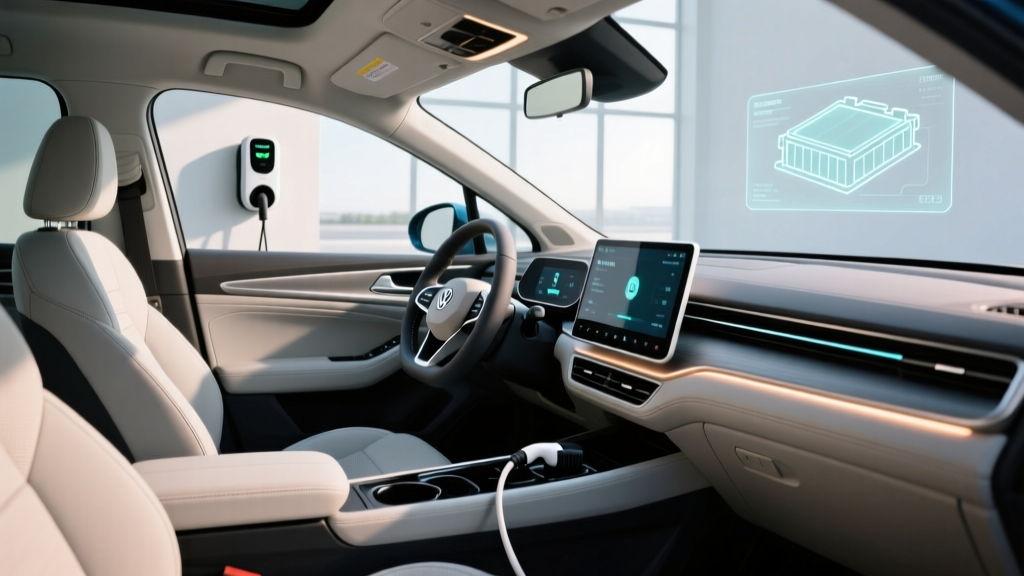
The FF 91's cabin is where Faraday Future attempts to justify its quarter-million-dollar price tag. The vehicle features:
- Rear "Zero Gravity" seats with full recline, massage, and heating/ventilation — inspired by first-class airline seating
- Multiple displays including a dashboard-spanning screen array and rear-seat entertainment panels
- FF aiHyper 6x4 Architecture — the company's term for its connected-car platform with over-the-air updates
- 11 screens throughout the cabin (by Faraday Future's count)
- Starlight-style headliner and premium leather/alcantara materials
- Advanced ADAS suite with multiple cameras and radar sensors (SAE Level 2 driver assistance — not autonomous driving)
Cargo space is limited relative to the vehicle's exterior size, owing to the sloping roofline and rear-seat luxury accommodations. Expect roughly 15-18 cubic feet of trunk space — comparable to a large sedan, far less than an SUV. Rear legroom, however, is limousine-grade, with over 45 inches of space when the front passenger seat is stowed forward.
Pricing, Tax Credit Eligibility, and Ownership Cost
| Item | Amount |
|---|---|
| Base MSRP (FF 91 2.0 Futurist) | ~$249,000 |
| Destination/Delivery Fee | ~$2,500 (estimated) |
| Federal §30D Tax Credit | $0 — MSRP far exceeds the $55,000 sedan cap |
| State Incentives | Varies by jurisdiction; some states offer credits for vehicles above federal caps |
| Estimated Insurance (Annual) | $5,000-$8,000+ (luxury/exotic tier) |
| Estimated 5-Year Electricity Cost | ~$6,500-$8,500 (at $0.15/kWh national avg, 12,000 mi/yr) |
The FF 91 2.0 Futurist does not qualify for the federal §30D clean vehicle tax credit. The IRS caps eligible sedans at an MSRP of $55,000 (vans, SUVs, and trucks at $80,000). At ~$249,000, the FF 91 exceeds this threshold by nearly $200,000. Additionally, the battery sourcing and critical mineral requirements under §30D add further complexity, though the MSRP cap alone disqualifies it regardless of other factors.
For buyers in this price range, the absence of a $7,500 credit is largely irrelevant to the purchase decision. However, it does mean the effective price is the sticker price — no point-of-sale reduction applies. Consult a tax professional for any state-level incentives that may apply in your jurisdiction.
Competitive Landscape: FF 91 vs. Established Luxury EVs
At ~$249,000, the FF 91 competes — on paper — with the most premium electric vehicles available. Here's how the key alternatives compare:
| Vehicle | Est. Range (EPA) | 0-60 mph | Price | Tax Credit | Production Status |
|---|---|---|---|---|---|
| FF 91 2.0 Futurist | 381 mi (claimed) | 2.27 sec | ~$249,000 | No | Extremely limited |
| Lucid Air Grand Touring | 516 mi | 3.0 sec | ~$138,000 | No (MSRP cap) | In production |
| Lucid Air Sapphire | 427 mi | 2.1 sec | ~$249,000 | No (MSRP cap) | In production |
| Tesla Model S Plaid | 396 mi | 2.3 sec | ~$108,000 | No (MSRP cap) | In production |
| Mercedes EQS 580 | 371 mi | 4.1 sec | ~$127,000 | No (MSRP cap) | In production |
| Porsche Taycan Turbo S | 309 mi | 2.4 sec | ~$197,000 | No (MSRP cap) | In production |
The Lucid Air Sapphire matches or beats the FF 91 in acceleration, offers proven Supercharger-network-compatible charging, has independent EPA certification, and costs the same or less — with established dealer support and service infrastructure. The Tesla Model S Plaid delivers comparable performance at less than half the price. The Porsche Taycan Turbo S offers superior handling dynamics from a legacy automaker with global service coverage.
✅ Pros
- Massive 142 kWh battery — among the largest in any passenger EV
- Claimed 381-mile range and 2.27-second 0-60 mph are flagship-tier numbers
- Ultra-luxury rear-seat experience with zero-gravity recline
- Unique, exclusive — fewer than 20 believed to be on public roads
- Tri-motor AWD with torque vectoring
❌ Cons
- Production is extremely limited — not realistically purchasable for most buyers
- No independent EPA range or efficiency certification on fueleconomy.gov
- Company financial stability remains a serious concern (multiple NASDAQ compliance warnings, reverse stock splits)
- No established service/dealer network — if something breaks, who fixes it?
- $249,000 price competes with proven alternatives (Lucid Sapphire, Model S Plaid) at equal or lower cost
- Charging speed (~200 kW peak) is modest for a 142 kWh pack — slower sessions than competitors with smaller packs
- No NACS (Tesla) connector support; CCS-only limits Supercharger access
- Unverified real-world reliability, build quality, and software stability
Who Is the Faraday Future FF 91 Actually For?
In candid terms: the FF 91 is not a vehicle for a typical EV buyer. It does not suit the daily commuter who needs reliable home charging and nearby service centers. It is not a practical family hauler — cargo space is limited and child-seat access in the luxury rear cabin is untested. It is not a road-trip champion because the charging infrastructure compatibility (CCS-only, no native NACS) and the company's uncertain future make long-distance travel a risk.
The FF 91 is, effectively, a collector's item or speculative purchase for someone who:
- Wants an ultra-rare EV conversation piece
- Has the financial means to absorb total-loss risk if the company ceases operations
- Is willing to accept no service network and unproven long-term reliability
- Values exclusivity over practicality
For virtually every other luxury EV use case — commuting, family transport, road trips, performance driving — established alternatives from Lucid, Tesla, Porsche, and Mercedes offer superior specs, verified safety ratings, service infrastructure, and resale value predictability.
Faraday Future FF 91: Frequently Asked Questions
Can I actually buy a Faraday Future car in 2026?
Technically, Faraday Future has produced and delivered a small number of FF 91 2.0 Futurist units (reportedly fewer than 20 as of early 2025, with limited additional production since). However, the vehicle is not available through traditional dealerships, inventory is extremely scarce, and the company's ongoing financial instability makes placing a new order highly speculative. Most buyers searching for a Faraday Future car will find it effectively unobtainable.
What is the real-world range of the FF 91?
Faraday Future claims 381 miles, but this has not been verified by the EPA. Given the vehicle's 6,000+ lb weight, tri-motor drivetrain, and real-world driving conditions, expect approximately 290-330 miles in mixed driving and 240-270 miles in cold weather or sustained highway use. The 142 kWh pack is enormous, but so is the energy demand of moving this much mass.
How fast does the FF 91 charge?
At a DC fast charger, the claimed peak rate is ~200 kW, yielding an estimated 10-80% charge in roughly 30 minutes. At home on Level 2 (240V, 48A), expect ~11.5 kW or about 25-28 miles of range per hour. A full Level 2 charge from empty takes 12-14 hours due to the massive 142 kWh pack. Note that the charging curve tapers significantly above 80% SoC — plan road-trip stops around the 15-75% range for optimal speed.
Does the Faraday Future FF 91 qualify for the federal EV tax credit?
No. Under IRS §30D rules, sedans must have an MSRP at or below $55,000 to qualify. The FF 91 at ~$249,000 exceeds this cap by nearly 5x. Battery sourcing and critical mineral requirements are moot — the MSRP alone disqualifies it. Check with a tax professional for any applicable state incentives.
Is the FF 91 worth buying vs. a Lucid Air Sapphire or Tesla Model S Plaid?
For nearly all buyers, no. The Lucid Air Sapphire matches the FF 91's performance (2.1 sec 0-60), offers EPA-certified 427-mile range, has an established service network, and costs a similar amount. The Tesla Model S Plaid delivers comparable acceleration at under $110,000 with Supercharger network access and proven reliability. The FF 91's only advantage is extreme exclusivity — which comes with extreme ownership risk.
What is Faraday Future's financial outlook and does it affect ownership?
Faraday Future has faced repeated NASDAQ listing compliance issues, reverse stock splits, and cash-flow challenges since its founding in 2014. As of 2026, the company continues to operate but with very limited production output. For buyers, this means potential risks include: no future software updates, no replacement parts availability, no service infrastructure, and near-zero resale value predictability. These are not hypothetical concerns — they are the practical realities of buying from a financially distressed manufacturer.
What warranty does the FF 91 carry?
Faraday Future has stated an 8-year / 100,000-mile battery and powertrain warranty, which aligns with the industry standard set by most EV manufacturers. However, a warranty is only as reliable as the company backing it. Given FF's financial uncertainty, buyers should consider this warranty aspirational rather than guaranteed. There is no third-party warranty administrator publicly associated with the FF 91 program.