Quick Verdict: The Lightning Tows Hard but Plan Your Charging Stops
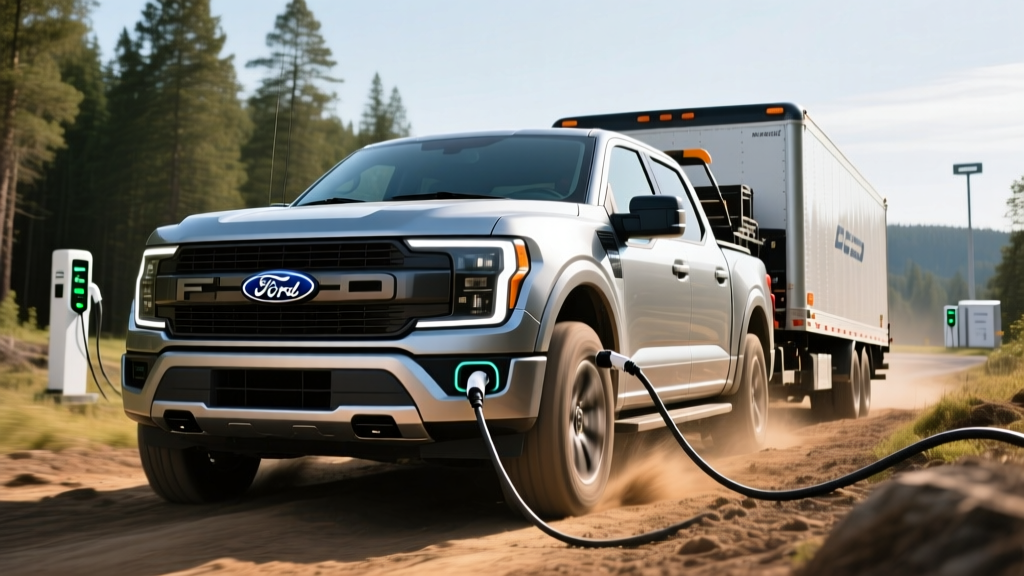
The Ford F-150 Lightning remains one of the most capable electric pickups on the market, and its headline tow rating — up to 10,000 pounds with the Max Trailer Tow Package and Extended Range battery — genuinely competes with many gas-powered half-tons. But if you're researching F-150 Lightning tow capacity, the number on the spec sheet is only half the story. Towing at max capacity cuts range roughly in half, and DC fast-charging infrastructure along rural and highway corridors still lags behind what gas stations offer. This review breaks down the real numbers — towing range, charging speeds under load, battery chemistry, tax credit eligibility, and total ownership cost — so you can decide whether the Lightning fits your hauling needs in 2026.
| Spec | Standard Range (SR) | Extended Range (ER) |
|---|---|---|
| Battery Usable Capacity | 98 kWh (NMC) | 131 kWh (NMC) |
| EPA Estimated Range | ~240 miles | ~320 miles |
| Horsepower / Torque | 452 hp / 775 lb-ft | 580 hp / 775 lb-ft |
| 0–60 mph | ~4.5 sec | ~3.8 sec |
| Drivetrain | Dual-motor AWD | Dual-motor AWD |
| Max Tow Capacity | 7,700 lbs | 10,000 lbs (w/ Max Tow Pkg) |
| Max Payload | ~2,235 lbs | ~1,952 lbs |
| Max DC Fast Charge | 120 kW | 150 kW |
| 10–80% DCFC Time | ~44 min | ~41 min |
| Level 2 Home Charge Rate | 11.3 kW (~26 mi/hr) | 19.2 kW (~30 mi/hr) w/ 80A charger |
| MPGe (Combined) | 68 MPGe | 70 MPGe |
| Efficiency (kWh/100 mi) | ~49 kWh | ~48 kWh |
| Battery/Powertrain Warranty | 8 years / 100,000 miles | |
| Base MSRP (Pro trim) | ~$54,995 | ~$69,995 (Lariat ER) |
Real-World Range — Especially While Towing
The Extended Range F-150 Lightning carries an EPA-estimated 320 miles of range. In real-world mixed driving (55–70 mph highway, moderate temps), expect approximately 260–285 miles. In cold weather (below 32°F), range can drop to 210–240 miles due to battery resistance and cabin heating demands.
While towing: Hitch up a 5,000–7,000 lb trailer and expect range to fall to 130–170 miles depending on trailer aerodynamics, terrain, and speed. At the full 10,000-lb max tow rating on a flat interstate at 65 mph, some owners report as little as 100–120 miles before needing a charge. Towing is where the Lightning's physics show: a boxy truck pulling a boxy trailer at highway speed demands enormous energy.
Ford's onboard range calculator adjusts dynamically when a trailer is connected via the available Pro Trailer Hitch Assist and Smart Hitch systems. The truck reads trailer weight and recalculates estimated range accordingly — a feature that prevents the nasty surprise of watching your range estimate collapse 50 miles into a trip. Source: fueleconomy.gov EV technology overview.
The Standard Range model's 240-mile EPA rating translates to roughly 195–215 miles in real-world highway driving and approximately 90–110 miles when towing near its 7,700-lb limit. If towing is your primary use case, the Extended Range battery isn't optional — it's essential.
Charging Speed: DC Fast, Level 2, and What Towing Does to Your Stops
| Charging Level | Power | Standard Range | Extended Range |
|---|---|---|---|
| Level 1 (120V household) | ~1.4 kW | ~2 mi/hr | ~2 mi/hr |
| Level 2 (240V, 32A mobile) | 7.7 kW | ~16 mi/hr | ~16 mi/hr |
| Level 2 (240V, 48A Wall Connector) | 11.3 kW | ~26 mi/hr | ~23 mi/hr |
| Level 2 (240V, 80A Ford Charge Station Pro) | 19.2 kW | N/A (SR caps lower) | ~30 mi/hr |
| DC Fast Charge (peak) | 120 kW (SR) / 150 kW (ER) | 10–80% ~44 min | 10–80% ~41 min |
The Extended Range Lightning peaks at 150 kW on a DC fast charger, which is respectable but not class-leading. Competitors like the Rivian R1T and Chevrolet Silverado EV (with its Ultium architecture supporting up to 350 kW on certain trims) charge significantly faster. The Lightning's charging curve is relatively flat through 60% state of charge, then tapers noticeably above 80% — a common NMC chemistry behavior designed to protect cell longevity.
What this means for towing trips: If you arrive at a charger with 10% battery and need to reach 80%, plan on 40–45 minutes at a 150+ kW station. That's one or two charging stops per 200–250 miles of towing — manageable for planned trips, but a real limitation for all-day hauling in areas with sparse DC fast-charging coverage.
At home, the 80-amp Ford Charge Station Pro is the gold standard for Lightning owners, adding roughly 30 miles of range per hour and fully replenishing the Extended Range pack overnight in about 8 hours. Installation requires a 100-amp dedicated circuit — many homes will need an electrical panel upgrade (typically $1,500–$3,000 on top of the $1,200–$1,800 charger and wiring cost). Always consult a licensed electrician for final specs.
Towing Tech and On-Board Features That Matter
Ford didn't just bolt a battery into an F-150 and call it electric. The Lightning includes a suite of towing-specific technologies that genuinely reduce the stress of hauling:
- Pro Trailer Hitch Assist: The truck autonomously backs up to align the hitch ball with the trailer coupler. You monitor; the truck steers.
- Smart Hitch: Available tongue-weight measurement displayed on the center screen — critical for safe load distribution.
- Onboard Scales: Estimates payload weight and displays it on the tailgate LED indicators and SYNC screen.
- Trailer Reverse Guidance: Multi-camera views specifically designed for backing a trailer into tight spots.
- Pro Power Onboard: Up to 9.6 kW of exportable power via bed-mounted 120V and 240V outlets. This alone is a jobsite game-changer — run power tools, welders, or campsite appliances directly from the truck.
The SYNC 4A infotainment system runs on a 15.5-inch vertical touchscreen (Lariat and above) with wireless Apple CarPlay and Android Auto. The available BlueCruise hands-free driving system (SAE Level 2 — driver must remain attentive) works on over 130,000 miles of divided highways and reduces fatigue on long towing runs. BlueCruise is not autonomous driving; you must keep your eyes on the road, and the system will prompt you if it detects inattention.
Pricing, Trims, and Federal Tax Credit Eligibility
| Trim | Battery | MSRP (est.) | §30D Credit Potential | Effective Price |
|---|---|---|---|---|
| Pro | Standard Range | ~$54,995 | Up to $7,500* | ~$47,495 |
| XLT | Standard Range | ~$59,995 | Up to $7,500* | ~$52,495 |
| Lariat | Extended Range | ~$69,995 | Up to $7,500* | ~$62,495 |
| Extended Range | ~$84,995 | Up to $7,500* | ~$77,495 |
*Federal §30D credit eligibility depends on buyer income caps, battery critical-mineral sourcing, and MSRP limits. Trucks with MSRP above $80,000 are ineligible. Verify current rules at IRS.gov and consult a tax professional.
The F-150 Lightning qualifies as a truck/SUV under §30D rules, meaning the MSRP cap is $80,000 — the Pro, XLT, and most Lariat configurations clear this threshold. The Platinum trim's base MSRP may exceed the cap depending on options. Income limits apply: modified adjusted gross income cannot exceed $150,000 (single), $225,000 (head of household), or $300,000 (joint). Additionally, the credit is split into two $3,750 halves — one for battery-component sourcing (North America) and one for critical-minerals sourcing. Full $7,500 eligibility requires meeting both criteria, which shifts as supply chains evolve. The point-of-sale transfer option allows dealers to apply the credit as a discount at purchase rather than waiting for tax filing.
Cargo, Passenger Space, and Practical Dimensions
The Lightning retains the full F-150 SuperCrew cab and a 5.5-foot bed. Key dimensions:
- Front legroom: 43.9 inches
- Rear legroom: 43.6 inches
- Bed length: 67.1 inches (5.5 ft)
- Bed cargo volume: 52.8 cu ft
- Front trunk (frunk): 14.1 cu ft — lockable, weather-sealed, with a 400-lb payload capacity and a drain plug for use as a cooler
- Total passenger volume: ~136 cu ft (SuperCrew)
The frunk is one of the Lightning's most practical differentiators versus competitors. It's large enough for two carry-on bags or a full set of power tools, and because it sits where the engine normally would, it's at waist height — no bending into a deep bed.
How It Compares: Lightning vs. Rivian R1T vs. Silverado EV
If you're cross-shopping electric trucks for towing, three names dominate:
- Ford F-150 Lightning: Best for traditional truck buyers who want familiar F-150 ergonomics, a massive dealer network, Pro Power Onboard, and the lowest starting price. Tow rating up to 10,000 lbs.
- Rivian R1T Dual-Motor: More expensive (~$75,000+), shorter bed, but offers up to 11,000 lbs tow rating on certain configurations, faster DC charging (~200+ kW), and a more refined ride. Smaller service network.
- Chevrolet Silverado EV (4WT / Trail Boss): Available in work-truck and consumer trims. The 4WT targets fleets with a 10,000+ lb tow rating and 200 kW+ DC fast charging on Ultium. Consumer trims (LTZ, High Country) are priced higher and availability is still ramping.
The Lightning wins on value, dealer support, and Pro Power Onboard. It loses on DC fast-charge speed (150 kW vs. 200–350 kW for competitors) and towing range (a function of its aerodynamics and battery size). If you tow frequently on long highway corridors, the Silverado EV's faster charging may save you 15–20 minutes per stop — meaningful over a full day's drive.
- Up to 10,000-lb tow rating with Max Tow Package
- Pro Power Onboard (9.6 kW) — unmatched jobsite utility
- Massive frunk (14.1 cu ft)
- Familiar F-150 driving dynamics and dealer network
- BlueCruise reduces highway fatigue
- Competitive starting MSRP with §30D credit potential
- Towing cuts range by 50–60%
- 150 kW DC fast charging lags competitors
- Heavy battery = lower payload vs. gas F-150
- Extended Range trims push toward §30D MSRP cap
- Public DC charging in rural/towing corridors remains sparse
- No NACS port standard on early builds (adapter required for Tesla Superchargers)
Who Should Buy the F-150 Lightning (and Who Shouldn't)
Buy it if: You need a full-size truck for moderate towing (boat, camper, utility trailer under 7,000 lbs for weekend trips), you can charge at home overnight, you value Pro Power Onboard for jobsite or tailgate use, and you want a familiar truck experience with EV operating-cost savings on daily driving.
Look elsewhere if: You tow at or near max capacity daily over long distances (200+ miles between stops), you lack access to home or depot charging, or you need the fastest possible DC charging for high-mileage commercial use. In those cases, the Silverado EV or a diesel Super Duty may better fit the mission profile.
Frequently Asked Questions
What is the maximum F-150 Lightning tow capacity?
The maximum tow rating is 10,000 pounds for the Extended Range model equipped with the Max Trailer Tow Package (available on Lariat and above). The Standard Range model is rated for up to 7,700 pounds.
How far can the F-150 Lightning go while towing?
Expect approximately 130–170 miles with a 5,000–7,000 lb trailer on the Extended Range battery. At the full 10,000-lb limit at highway speeds, range may drop to 100–120 miles. Always plan charging stops before departing.
Does the F-150 Lightning qualify for the federal EV tax credit?
Most trims qualify for up to $7,500 under IRS §30D, provided the buyer meets income limits ($150K single / $300K joint), the truck's MSRP stays under $80,000, and battery sourcing requirements are met. The credit can be transferred at point of sale. Always verify current rules at IRS.gov.
How fast does the F-150 Lightning charge at home?
With the available 80-amp Ford Charge Station Pro (19.2 kW), the Extended Range model adds approximately 30 miles of range per hour, fully charging overnight in about 8 hours. A standard 48-amp Level 2 charger adds roughly 23–26 miles per hour.
Is the F-150 Lightning worth buying over a gas F-150 for towing?
For daily driving and moderate towing, the Lightning saves significantly on fuel and maintenance. For heavy daily towing over long distances, a gas or diesel F-150 still offers faster refueling and greater range between stops. The decision hinges on your specific towing frequency, distance, and home-charging access.
What is the battery warranty on the F-150 Lightning?
Ford covers the battery and electric powertrain for 8 years or 100,000 miles, whichever comes first. The warranty guarantees the battery will retain a minimum percentage of its original capacity (typically 70%) during the coverage period.