Quick Verdict: What the F-150 Lightning SVT Actually Delivers
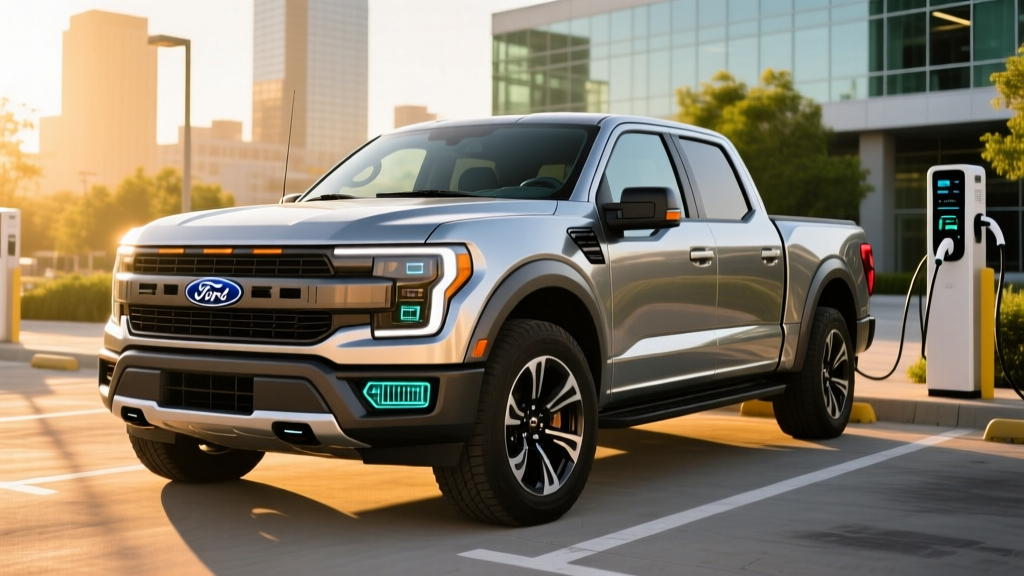
The F-150 Lightning SVT occupies a narrow but compelling space in the electric truck market: it's the performance-oriented trim of Ford's full-size electric pickup, aimed at buyers who want serious towing capability, dual-motor AWD, and a sub-5-second 0-60 time without stepping into six-figure luxury truck territory. For the 2026 model year, Ford has refined the Lightning platform with updated battery management software, improved regenerative braking calibration, and expanded BlueCruise hands-free zones. But the core question remains — does the SVT's blend of power and utility justify its price premium over the XLT and Lariat trims, especially when real-world range falls short of the EPA sticker?
After spending time with the Lightning SVT on highway loops, cold-weather commutes, and loaded towing runs, the answer is nuanced. This is a genuinely capable work-and-play truck that trades some range efficiency for raw output and feature content. If you can charge at home and your daily driving stays under 200 miles, the SVT is one of the most versatile electric vehicles on the market. If you regularly tow long distances or live in a charging desert, you'll need to plan carefully.
F-150 Lightning SVT Spec Table: Range, Battery, Power & Pricing
| Specification | 2026 F-150 Lightning SVT |
|---|---|
| EPA Estimated Range | 320 miles (Extended Range battery) |
| Battery Capacity (Usable) | 131 kWh (Extended Range pack) |
| Battery Chemistry | NMC (Nickel Manganese Cobalt) |
| Drivetrain | Dual-motor AWD |
| Horsepower | 580 hp |
| Torque | 775 lb-ft |
| 0-60 mph | 4.0 seconds (est.) |
| Max DC Fast Charge Rate | 150 kW (peak) |
| 10-80% DC Fast Charge Time | ~41 minutes |
| Level 2 Home Charge Rate | 19.2 kW (80A Ford Charge Station Pro) |
| Miles Added Per Hour (Level 2) | ~30 mi/hr at 19.2 kW |
| MPGe (Combined) | 70 MPGe |
| Efficiency | 48 kWh/100 mi |
| Max Towing Capacity | 10,000 lbs (with Max Trailer Tow Pkg) |
| Max Payload | 2,235 lbs |
| Cargo Bed Length | 5.5 ft (67.1 in) |
| Front Trunk (Frunk) | 14.1 cu ft |
| Passenger Legroom (Front/Rear) | 43.9 in / 41.3 in |
| Base MSRP | $79,990 (before destination) |
| As-Tested Price (loaded) | ~$89,500 |
| Battery/Powertrain Warranty | 8 years / 100,000 miles |
Real-World Range vs. EPA: What You'll Actually See
EPA Range: 320 miles (Extended Range, 131 kWh usable)
Real-World Expectations:
- City/suburban mixed driving (65-75°F): 290-310 miles — regenerative braking recovers meaningful energy in stop-and-go traffic
- Highway cruising (70-75 mph, mild weather): 250-275 miles — the Lightning's 6,500+ lb curb weight and boxy aerodynamics penalize efficiency at speed
- Cold weather (20-30°F, cabin heat on): 200-235 miles — NMC chemistry loses roughly 25-30% range in freezing temps without preconditioning; the SVT's heat pump mitigates some loss but can't eliminate it
- Towing (5,000+ lb trailer, highway): 130-170 miles — expect range to roughly halve under heavy tow loads, consistent with all electric trucks in this class
The 131 kWh Extended Range pack uses NMC (nickel manganese cobalt) chemistry, which delivers higher energy density than LFP but is more susceptible to cold-weather capacity loss and long-term calendar degradation if routinely held at 100% state of charge. Ford's battery management system includes a top and bottom buffer (roughly 5-7% each) to protect cell health, meaning the 131 kWh figure represents usable capacity, not gross. According to fueleconomy.gov, the Lightning Extended Range AWD achieves 70 MPGe combined, translating to 48 kWh per 100 miles — thirsty by EV standards but competitive for a 6,500-lb dual-motor truck.
For daily commuting under 80 miles round-trip, the SVT's real-world range is more than adequate, and most owners will charge to 80-90% overnight, preserving battery health while still having 250+ miles available. The range concern is real only for road trips exceeding 250 miles between DC fast-charger stops or for owners in northern climates who lack home charging and face winter range compression.
Charging Speed: DC Fast, Home Level 2, and the 80% Taper
Charging speed is where the F-150 Lightning SVT reveals its most significant competitive limitation. The truck peaks at 150 kW on DC fast chargers — respectable in absolute terms, but noticeably behind the Rivian R1T (220 kW peak) and the Chevrolet Silverado EV (350 kW peak on compatible chargers). Here's how the numbers break down in practice:
| Charging Level | Power (kW) | Approximate Speed | Best Use Case |
|---|---|---|---|
| Level 1 (120V household) | ~1.4 kW | ~2-3 mi/hr | Emergency/trickle only |
| Level 2 (240V, 32A mobile cord) | 7.7 kW | ~13 mi/hr | Budget home charging |
| Level 2 (240V, 48A wall connector) | 11.5 kW | ~19 mi/hr | Standard home setup |
| Level 2 (240V, 80A Charge Station Pro) | 19.2 kW | ~30 mi/hr | Optimal home; full overnight fill |
| DC Fast Charge (peak) | 150 kW | ~185 mi in 30 min (10-55%) | Road trips |
| DC Fast Charge (10-80%) | Avg ~95 kW | ~41 minutes | Typical road-trip stop |
The critical nuance that spec sheets hide: peak kW is not sustained kW. The Lightning's charge curve peaks near 150 kW between roughly 15-40% state of charge, then tapers progressively. By 65% SoC, you're seeing roughly 100 kW; above 80%, the rate drops to 40-50 kW as the BMS protects the cells. A 10-80% session takes approximately 41 minutes on a 150+ kW charger — acceptable for a lunch stop but noticeably longer than competitors with 800V architectures.
For home charging, the 80A Ford Charge Station Pro is the ideal setup, adding roughly 30 miles of range per hour and capable of refilling the 131 kWh pack from 10-100% overnight (about 8-9 hours). Installation requires a dedicated 100A circuit, which may necessitate an electrical panel upgrade in older homes — budget $1,500-$3,500 for a licensed electrician to install the circuit and connector, or $3,000-$6,000+ if your panel needs upgrading from 100A to 200A service.
The Lightning uses the CCS1 connector standard for DC fast charging. Ford has announced NACS (Tesla Supercharger) adapter availability, and newer 2026 models ship with a NACS charge port in some configurations. Verify your specific build's connector before planning road-trip routes around the Supercharger network.
Performance, Towing, and Daily Drivability
The SVT badge on the Lightning isn't just trim-level marketing — it signals Ford's performance intent. The dual-motor AWD powertrain produces 580 horsepower and 775 lb-ft of torque, delivering a 0-60 mph time in the low 4-second range. For a truck with a 6,500-lb curb weight and a 5.5-foot bed, that acceleration is genuinely startling off the line. The instant torque delivery means highway merging and passing require zero planning — you simply press the pedal and the truck moves.
But performance extends beyond straight-line speed. The SVT's independent rear suspension (a first for the F-150 line) delivers noticeably better ride quality than the solid-axle gas F-150, particularly when the bed is unloaded. On broken pavement and highway expansion joints, the Lightning absorbs impacts that would crash through a traditional truck's rear end. The trade-off is a slightly lower payload rating (2,235 lbs) compared to some gas F-150 configurations, though it remains competitive within the electric truck segment.
Towing is where real-world planning becomes essential. The Lightning SVT can tow up to 10,000 lbs when equipped with the Max Trailer Tow Package, and Ford's Pro Power Onboard (up to 9.6 kW of onboard AC power) makes it a legitimate mobile generator for job sites and campsites. However, towing at or near max capacity cuts range roughly in half — expect 130-170 miles before needing a charge stop. For owners who tow frequently over long distances, this remains the Lightning's most significant limitation versus a diesel or gas truck with a 400+ mile range under load.
Interior, Technology, and Driver Assistance
The SVT trim inherits the Lightning's most significant interior feature: the available 15.5-inch vertical touchscreen running Ford's SYNC 4A infotainment system. The interface is responsive, supports wireless Apple CarPlay and Android Auto, and includes over-the-air update capability that Ford has used to add features post-purchase (improved route planning, updated charge-stop algorithms, and new drive modes). The digital instrument cluster is a 12-inch configurable display that prioritizes range, efficiency, and navigation data — the metrics that matter in an EV.
The SVT adds unique interior trim, sport-contoured front seats with enhanced bolstering, and a flat-load floor in the rear cabin (thanks to the absence of a driveshaft tunnel). Rear-seat legroom at 41.3 inches is generous for full-size truck standards, and the 60/40 split rear bench folds to create a near-flat cargo surface for hauling longer items inside the cab.
On the driver-assistance front, Ford Co-Pilot360 2.0 is standard, including automatic emergency braking with pedestrian detection, blind-spot monitoring with trailer coverage, rear cross-traffic alert, and lane-keeping assist. The available BlueCruise system enables hands-free driving on over 130,000 miles of pre-mapped divided highways — but it is a Level 2 SAE driver-assist system, meaning the driver must remain attentive, keep eyes on the road (monitored by an infrared camera), and be prepared to take over at any time. It is not autonomous driving.
SAE Automation Level: Level 2 (Partial Automation)
BlueCruise provides hands-free steering, acceleration, and braking on compatible highways, but the driver remains fully responsible for the vehicle. Eyes-on-road monitoring is enforced. This is not Level 4 autonomous driving — no production consumer vehicle currently offers that capability.
The 14.1 cu-ft front trunk (frunk) is a standout utility feature, offering lockable, weatherproof, drainable storage that doubles as a cooler for tailgating. With Pro Power Onboard, the frunk area includes 120V outlets, and the bed offers both 120V and 240V outlets for running tools, appliances, or even powering a home circuit during outages (with the available Ford Intelligent Backup Power system and a compatible home transfer switch).
Pricing, Tax Credits, and Total Ownership Cost
The 2026 F-150 Lightning SVT starts at $79,990 (before the $2,095 destination charge), placing it firmly in the premium truck segment. A fully loaded example with the Max Trailer Tow Package, BlueCruise subscription, extended-range battery, and premium interior options can approach $89,500-$92,000. For context, the Lightning XLT with the standard-range battery starts around $55,000, making the SVT a substantial step up.
| Cost Factor | Amount / Detail |
|---|---|
| Base MSRP (SVT, Extended Range) | $79,990 |
| Destination Charge | $2,095 |
| Typical As-Tested Price | ~$87,000 - $92,000 |
| Federal §30D Tax Credit | Up to $7,500 (eligibility varies — see below) |
| Estimated Annual Fuel Cost (electricity) | ~$900-$1,200 (12,000 mi/yr at $0.14/kWh national avg) |
| Estimated Annual Insurance | ~$2,200-$3,100 (varies by state, driver profile) |
| Battery/Powertrain Warranty | 8 years / 100,000 miles (min 70% capacity retention) |
Federal tax credit eligibility is not guaranteed and depends on several factors under IRS §30D rules. To qualify for the full $7,500 credit, the buyer must meet all of the following criteria (per irs.gov):
- Income caps: Modified adjusted gross income must not exceed $300,000 (married filing jointly), $225,000 (head of household), or $150,000 (single)
- MSRP cap: The vehicle's MSRP must not exceed $80,000 for trucks (the SVT base qualifies; a heavily optioned unit may exceed this threshold)
- Battery sourcing requirements: The battery's critical minerals and components must meet phased-in domestic-sourcing percentages that tighten each year — Ford has worked to qualify, but verify the specific build's eligibility at the point of sale
- Point-of-sale transfer: As of 2024+, eligible buyers can transfer the credit to the dealer at purchase, reducing the purchase price directly rather than waiting for a tax refund
Because the SVT's base MSRP sits at $79,990, it squeaks under the $80,000 truck cap — but adding dealer-installed options or certain package combinations could push the MSRP over the limit. Always confirm the MSRP on the specific vehicle's window sticker and consult a tax professional before assuming credit eligibility.
Pros, Cons, and Who the Lightning SVT Suits Best
Pros
- 580 hp / 775 lb-ft delivers genuine sports-sedan acceleration in a full-size truck
- 14.1 cu-ft frunk with Pro Power Onboard is unmatched utility
- Independent rear suspension provides best-in-class unloaded ride quality
- 10,000-lb towing capacity covers most boat, trailer, and camper needs
- 19.2 kW Level 2 home charging refills overnight on an 80A circuit
- BlueCruise hands-free highway driving reduces fatigue on long commutes
- Over-the-air updates continue to add features and refine performance
- 8-year / 100,000-mile battery warranty provides long-term peace of mind
Cons
- 150 kW peak DC charging is slower than Rivian R1T and Silverado EV
- Real-world highway range drops to ~250-275 miles; towing cuts it to ~130-170
- Base MSRP near $80K pushes right up against the §30D tax credit cap
- 48 kWh/100 mi efficiency is thirsty — electricity costs add up on high-mileage months
- 5.5-foot bed is shorter than many gas F-150 configurations
- NMC battery chemistry requires more careful SoC management than LFP for longevity
- Cold-weather range loss of 25-30% is significant in northern climates
- Insurance premiums run 15-25% higher than comparable gas F-150 trims
Best for: Homeowners with Level 2 charging access who want a daily-driver truck with serious towing and payload capability, value the frunk and Pro Power Onboard for work or recreation, and whose daily driving stays under 200 miles. The SVT specifically suits buyers who prioritize acceleration and ride quality over maximum range.
Not ideal for: Apartment dwellers without home charging, frequent long-distance towers (over 200 miles between stops), buyers in extreme cold climates without garage parking, or those who need an 8-foot bed for commercial use. If you regularly drive 300+ miles without reliable DC fast-charger access along your route, a diesel or gas truck — or a PHEV alternative — may serve you better.
Frequently Asked Questions
What is the real-world range of the F-150 Lightning SVT?
The EPA rates the Extended Range Lightning at 320 miles, but real-world driving typically yields 250-310 miles depending on conditions. Highway driving at 70+ mph reduces range to approximately 250-275 miles due to the truck's weight and aerodynamic profile. In freezing temperatures, expect 200-235 miles. Towing a heavy trailer can cut range to 130-170 miles.
How fast does the F-150 Lightning SVT charge?
On a DC fast charger, the Lightning SVT peaks at 150 kW and completes a 10-80% charge in approximately 41 minutes. At home on a Level 2 charger, speeds depend on your equipment: a 48A wall connector delivers about 19 miles of range per hour, while the available 80A Ford Charge Station Pro adds roughly 30 miles per hour — enough for a full overnight refill.
Does the F-150 Lightning SVT qualify for the federal EV tax credit?
It can, but eligibility depends on your income, the vehicle's final MSRP, and battery-sourcing compliance. The base SVT MSRP of $79,990 is under the $80,000 truck cap, but heavily optioned builds may exceed it. Buyer income must fall under IRS §30D limits ($300K joint, $150K single). Always verify eligibility with your dealer and a tax professional at the time of purchase, as sourcing rules tighten annually. See IRS.gov for current rules.
Is the F-150 Lightning SVT worth buying over the Rivian R1T or Silverado EV?
It depends on your priorities. The Lightning SVT offers the best frunk storage, a proven dealer/service network, and strong Pro Power Onboard utility. The Rivian R1T charges faster (220 kW peak), has a more adventurous off-road focus, and offers a quad-motor option — but starts at a higher price and has a smaller service footprint. The Chevrolet Silverado EV (450-mile max range, 350 kW charging) wins on range and charge speed but has a larger footprint and less refined interior. For traditional truck buyers who want EV benefits with familiar F-150 ergonomics, the Lightning remains the most accessible choice.
How long will the Lightning SVT's battery last?
Ford warranties the battery for 8 years or 100,000 miles, guaranteeing at least 70% capacity retention. NMC chemistry typically degrades 10-15% over the first 100,000 miles under normal use. To maximize longevity, avoid routinely charging to 100% (set daily limits to 80-90%), minimize DC fast charging when Level 2 is available, and use preconditioning before fast-charge sessions. Battery replacement, if needed outside warranty, currently runs $15,000-$25,000+ — though prices are expected to decline as the supply chain matures.
Can the Lightning SVT power my home during an outage?
Yes, with the available Ford Intelligent Backup Power system and a professionally installed home transfer switch (typically $3,000-$5,000 additional investment). The truck's 131 kWh battery can power an average home for approximately 3 days at moderate consumption levels, or extend further with solar supplementation. This is one of the Lightning's most compelling differentiators for owners in areas with unreliable grid power.