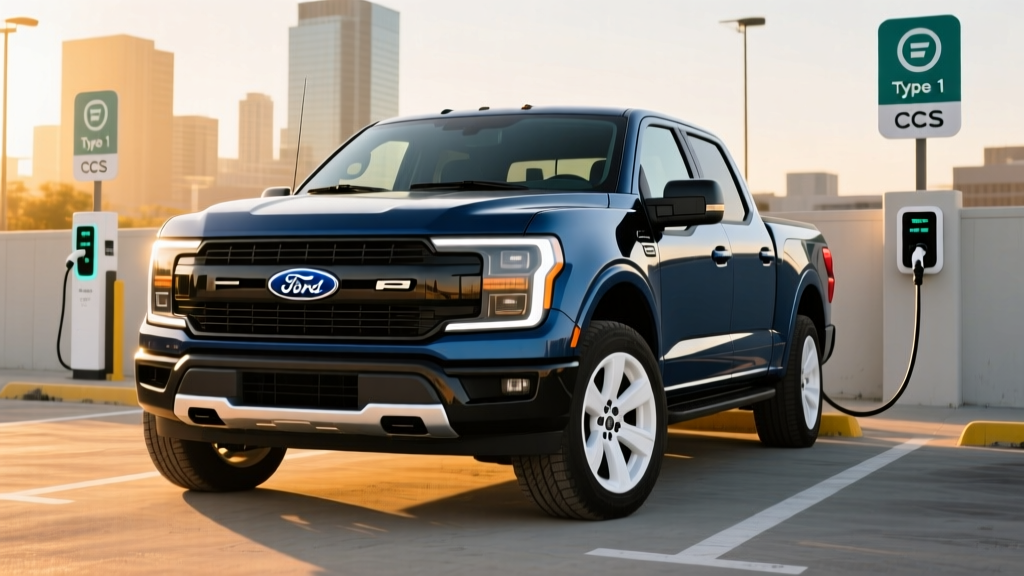
The Ford F-150 Lightning remains one of the few electric pickups that looks, drives, and works like a conventional half-ton truck — which is exactly why it continues to draw buyers who would never consider a Cybertruck or an R1T. For the 2026 model year, Ford has kept the formula largely intact: a body-on-frame architecture adapted for a massive battery pack, a front trunk (frunk) that redefines truck utility, and a towing/payload profile that, while diminished versus the gas F-150, still handles real job-site duty.
But buyers researching the Lightning often land on wheel and fitment questions — specifically the 13 F-150 bolt pattern, which refers to the 2013-model-year F-150's 6-lug, 135mm bolt circle (6×135mm). The good news: the 2026 F-150 Lightning shares this same 6×135mm bolt pattern, meaning the aftermarket wheel ecosystem that has served F-150 owners for over a decade carries forward. Let's break down everything you need to know about the 2026 Lightning, from range and charging to bolt-pattern compatibility and tax-credit math.
2026 F-150 Lightning: Core Specs at a Glance
| Spec | Standard Range (SR) | Extended Range (ER) |
|---|---|---|
| EPA Range | 240 miles | 320 miles |
| Battery (usable) | 98 kWh, NMC | 131 kWh, NMC |
| Drivetrain | Dual-motor AWD | Dual-motor AWD |
| Horsepower | 563 hp | 563 hp |
| Torque | 775 lb-ft | 775 lb-ft |
| 0–60 mph | ~4.0 sec | |
| Max DC Fast Charge | 150 kW | 150 kW (peak) |
| 10–80% DC Time | ~36 min | ~41 min |
| Level 2 Home Charge | 11.3 kW (~22 mi/hr) | 19.2 kW (~38 mi/hr) w/ 80A |
| MPGe (combined) | 68 MPGe | 66 MPGe |
| Efficiency | 49 kWh/100 mi | 51 kWh/100 mi |
| Max Towing | 7,700 lb | 10,000 lb |
| Max Payload | 2,235 lb | 1,800 lb |
| Wheel Bolt Pattern | 6×135mm (same as 2013 F-150) | |
| Base MSRP | ~$54,995 | ~$69,995 |
| Battery Warranty | 8 yr / 100,000 mi (≥70% capacity) | |
Sources: fueleconomy.gov, Ford Motor Company 2026 spec sheets.
Real-World Range: What the EPA Sticker Doesn't Tell You
EPA Sticker: 320 miles (Extended Range) / 240 miles (Standard Range)
Real-World Expectation: Plan for ~250–275 miles on mixed highway driving (70–80 mph) in the Extended Range model. In cold weather (below 30°F), expect a 20–30% reduction — bringing usable range to roughly 200–220 miles before you'll want to find a charger. City and suburban driving with regenerative braking recovers closer to the EPA figure.
The Lightning's 131 kWh Extended Range pack is one of the largest in any production passenger vehicle, and that mass shows up in the efficiency column: 51 kWh per 100 miles is thirsty by EV standards. If you're towing — the scenario many truck buyers care about most — range collapses dramatically. In independent testing with a 5,000–7,000 lb trailer, the Extended Range Lightning has delivered between 100 and 140 miles before needing a charge. That's not a defect; it's physics. A truck pushing 7,000 lb of aerodynamic brick through the air at 65 mph demands enormous energy.
For daily commuting and around-town use, the Standard Range's 240 EPA miles is more than sufficient for most drivers, and the smaller battery charges faster at home. The Extended Range pack makes sense primarily if you take regular highway road trips or need the buffer for cold-climate winters.
Charging Speed: DC Fast, Level 2, and the 13 F-150 Bolt Pattern Wheel Clearance
| Charging Level | Power | Miles Added per Hour | Notes |
|---|---|---|---|
| Level 1 (120V) | ~1.4 kW | ~2–3 mi/hr | Emergency/trickle only |
| Level 2 (240V, 32A) | 7.7 kW | ~15 mi/hr | Standard home outlet (NEMA 14-50) |
| Level 2 (240V, 48A) | 11.3 kW | ~22 mi/hr | SR max onboard charger |
| Level 2 (240V, 80A) | 19.2 kW | ~38 mi/hr | ER w/ Ford Charge Station Pro |
| DC Fast (CCS) | 150 kW peak | ~150+ mi in 30 min | 10–80% in ~36–41 min |
The Lightning's 150 kW peak DC fast-charging rate is the truck's most-cited criticism. Competitors like the Rivian R1T and the GMC Sierra EV push 200+ kW. In practice, the Lightning's charge curve holds near 150 kW from roughly 15–55% state of charge, then tapers progressively. On a 350 kW Electrify America or Tesla Supercharger (with NACS adapter), you'll still max out at the truck's 150 kW ceiling. A 10–80% session on the Extended Range pack takes approximately 41 minutes — adequate for a lunch stop, but not class-leading.
At home, the story is better. The Extended Range model, paired with Ford's 80-amp Charge Station Pro and a hardwired 100-amp circuit, can accept 19.2 kW — refilling the 131 kWh pack in roughly 8 hours overnight. The Standard Range model caps at 11.3 kW, needing about 10 hours for a full charge on a 48-amp Level 2 circuit.
The 13 F-150 Bolt Pattern (6×135mm) and Wheel Fitment
If you're shopping aftermarket wheels — whether for winter tires, all-terrain setups, or aesthetic upgrades — the 13 F-150 bolt pattern is your reference point. The 2013 Ford F-150 used a 6-lug, 135mm bolt circle (6×135mm), and Ford has maintained this pattern through every subsequent F-150 generation, including the 2026 Lightning. This means the vast catalog of 6×135 wheels built for 2004–2025 F-150s will physically bolt on to the Lightning.
Key fitment considerations for the Lightning specifically:
- Center bore: 87.1mm — match or use hub-centric rings
- Lug nut thread: M14 × 1.5
- Offset: The Lightning sits heavier than the gas F-150 (curb weight ~6,500–6,800 lb). Choose wheels rated for the Lightning's gross axle weight ratings (GAWR). Many standard F-150 wheels are load-rated for lighter curb weights.
- Clearance: The Lightning's front axle packaging (independent suspension, no front differential in the traditional sense) provides similar clearance to the gas F-150, but verify caliper clearance if moving to smaller-diameter wheels.
Always confirm load rating and offset with your wheel supplier. The Lightning's 6,500+ lb curb weight demands wheels rated accordingly — don't simply carry over a wheel spec from a 2013 F-150 gas model without checking.
Performance and Drivetrain: 563 hp, Dual-Motor AWD
Every 2026 Lightning comes with dual electric motors and standard all-wheel drive. The Standard Range model produces 563 horsepower and 775 lb-ft of torque, hitting 0–60 mph in roughly 4.5 seconds. The Extended Range model delivers the same torque figure but reaches 60 mph in approximately 4.0 seconds thanks to the larger battery's higher discharge capability.
That's genuinely quick for a full-size truck, but the Lightning's character isn't sporty — it's authoritative. The instant torque makes merging, passing, and low-speed maneuvering effortless. Ride quality benefits from the independent rear suspension (a departure from the gas F-150's solid rear axle), which smooths out highway expansion joints and rough pavement noticeably better than the live-axle gas truck.
Off-road, the Lightning is capable but not a dedicated trail rig. Ground clearance sits at 8.9 inches, and the available off-road package adds skid plates and terrain modes. Approach and departure angles are adequate for fire roads and moderate trails, but the Lightning's weight is a liability in deep sand or technical rock crawling.
Pricing, Trims, and Federal Tax Credit (IRS §30D)
| Trim | Battery | MSRP | Est. After §30D Credit |
|---|---|---|---|
| Pro | Standard Range | ~$54,995 | ~$47,495* |
| XLT | Standard Range | ~$59,995 | ~$52,495* |
| XLT | Extended Range | ~$69,995 | ~$62,495* |
| Lariat | Extended Range | ~$77,995 | ~$70,495* |
| Platinum | Extended Range | ~$96,874 | Ineligible (over MSRP cap) |
*Assumes full $7,500 federal credit eligibility. Individual results vary.
The federal EV tax credit under IRS §30D can reduce your tax liability by up to $7,500 — and as of 2024, it can be transferred to the dealer at point of sale, effectively reducing your purchase price upfront. However, eligibility is not automatic. Here's the checklist:
- MSRP cap: Trucks/vans/SUVs must have an MSRP ≤ $80,000. The Platinum trim exceeds this and is ineligible.
- Buyer income cap: Modified AGI ≤ $300,000 (joint), $225,000 (head of household), $150,000 (single).
- Battery sourcing: Critical minerals and battery components must meet phased-in domestic/free-trade sourcing thresholds (increasing annually through 2026).
- Assembly: Vehicle must undergo final assembly in North America (the Lightning is built in Dearborn, MI — qualifying).
Always verify current-year eligibility against IRS §30D guidelines and consult a tax professional before relying on the credit in your purchase decision.
Cargo, Interior, and the Mega Power Frunk
The Lightning's cabin mirrors the 14th-generation gas F-150, meaning you get the same generous interior dimensions:
- Front legroom: 43.9 inches
- Rear legroom (SuperCrew): 43.5 inches
- Bed length: 5.5 ft (SuperCrew only)
- Bed volume: 52.8 cu ft
- Frunk (Mega Power Frunk): 14.1 cu ft, 400 lb payload capacity, drainable, lockable, with 120V outlet
The frunk is the Lightning's signature feature. Four hundred pounds of lockable, weather-sealed, lighted storage with a power outlet transforms the nose of the truck into a mobile toolbox, cooler, or job-site power distribution hub. On the Lariat and Platinum trims, the frunk includes a powered tailgate that opens via key fob or the FordPass app.
The 5.5-foot bed is shorter than the gas F-150's available 6.5- and 8-foot options — a trade-off of the SuperCrew-only configuration. If you regularly haul long lumber or full sheets of plywood, this will be a constraint. The onboard scales feature (available on XLT and above) estimates payload weight in real time via the infotainment screen — a practical touch for contractors.
Technology and Driver Assistance
The 2026 Lightning runs Ford's SYNC 4A infotainment on a 12-inch touchscreen (15.5-inch portrait screen on Lariat/Platinum). Wireless Apple CarPlay and Android Auto are standard. The digital instrument cluster is 12 inches across all trims.
Driver assistance comes via Ford Co-Pilot360 2.0, which includes:
- Adaptive cruise control with stop-and-go
- Lane-centering assist
- Evasive steering assist
- Blind-spot monitoring with trailer coverage
- Pro Power Onboard (2.0 kW standard, 9.6 kW available — turns the truck into a mobile generator via 120V and 240V bed outlets)
SAE Automation Level: Ford's BlueCruise hands-free highway driving (available on select trims) is an SAE Level 2 system. It permits hands-off operation on pre-mapped divided highways, but the driver must remain attentive and ready to resume control at all times. This is not autonomous driving.
BlueCruise works well on long interstate stretches, reducing fatigue significantly. It does not handle city streets, construction zones, or unmapped roads. Ford's subscription model ($75/month or $800/year after the initial trial) has drawn criticism — a one-time purchase option would be more palatable for truck buyers accustomed to owning their hardware outright.
Pros, Cons, and the Verdict
Pros
- Frunk is genuinely transformative for truck utility
- Ride quality exceeds gas F-150 (independent rear suspension)
- Pro Power Onboard replaces a portable generator
- 6×135mm bolt pattern (same as 13 F-150) = massive aftermarket wheel selection
- Quiet, torque-rich daily driving experience
- Built in USA — qualifies for §30D credit (subject to eligibility)
Cons
- DC fast charging peaks at 150 kW — slower than Rivian R1T and GM's Ultium trucks
- Towing range drops to 100–140 miles realistically
- Heavy curb weight (~6,700 lb) affects tire wear and braking distances
- 5.5-foot bed only — no long-bed option
- BlueCruise requires ongoing subscription after trial
- Platinum trim exceeds $80K MSRP cap for tax credit
Who Should Buy the 2026 F-150 Lightning?
Buy the Lightning if: You need a full-size truck for daily commuting, job-site power (Pro Power Onboard), and moderate towing — and you have home Level 2 charging. The frunk alone justifies the purchase for contractors, outdoor enthusiasts, and tailgaters.
Look elsewhere if: You regularly tow over 5,000 lb on long routes (the range hit is severe), you need a long bed for materials, or you rely exclusively on DC fast charging for road trips and can't tolerate 40-minute charge stops. In those cases, the Rivian R1T (faster charging, dual-motor options) or a gas/hybrid F-150 may serve you better.
Frequently Asked Questions
What is the 13 F-150 bolt pattern, and does it fit the 2026 Lightning?
The "13 F-150 bolt pattern" refers to the 2013 Ford F-150's 6-lug, 135mm bolt circle (6×135mm). The 2026 F-150 Lightning uses this same pattern, so wheels built for 2004–2025 F-150s will physically bolt on. Always verify load rating for the Lightning's heavier curb weight (~6,500–6,800 lb).
What is the real-world range of the F-150 Lightning?
The Extended Range model delivers approximately 250–275 miles in mixed highway driving. In cold weather (below 30°F), expect 200–220 miles. The Standard Range model yields roughly 190–210 miles on the highway. Towing cuts range by 50% or more.
How fast does the Lightning charge?
DC fast charging peaks at 150 kW, delivering a 10–80% charge in approximately 36–41 minutes depending on pack size. At home on Level 2, the Extended Range model charges at up to 19.2 kW (~38 mi/hr) with the Ford Charge Station Pro and an 80-amp circuit.
Does the F-150 Lightning qualify for the federal EV tax credit?
Yes, trims with an MSRP at or below $80,000 (Pro, XLT, Lariat) qualify for up to $7,500 under IRS §30D, subject to buyer income limits and battery-sourcing requirements. The Platinum trim exceeds the MSRP cap and is ineligible. Always verify against IRS guidelines.
Is the Lightning worth buying versus the Rivian R1T or gas F-150?
The Lightning wins on value (lower starting price, tax credit eligibility), frunk utility, and Pro Power Onboard. The Rivian R1T charges faster (200+ kW), offers more range options, and is more off-road capable — but starts higher and lacks the tax credit. The gas F-150 wins on towing range and long-bed availability. Your choice depends on whether home charging and daily utility outweigh road-trip charging speed and towing distance.