Quick Verdict: The Electric Truck That Bridges Generations
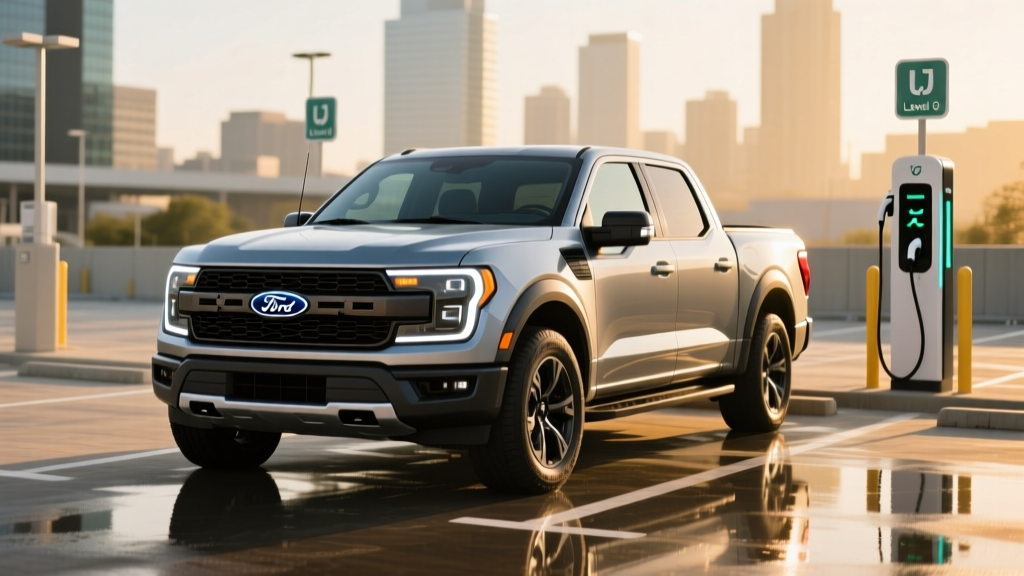
If you've spent years wrenching on a 2001 Ford F-150 and find yourself searching for the bolt pattern 2001 Ford F-150 specs before swapping wheels, you're exactly the buyer Ford had in mind when it built the F-150 Lightning. The 2026 Lightning carries forward the same full-size truck DNA — body-on-frame bones, a work-ready bed, and that familiar F-Series stance — but replaces the 5.4L Triton V8 with a dual-motor electric powertrain producing up to 580 horsepower.
After spending time with the 2026 model year lineup, the Lightning remains the most approachable electric pickup for traditional truck buyers. It's not the longest-range EV truck (that title goes to the Chevrolet Silverado EV at 450 miles EPA) nor the quickest (Rivian R1T Tri-Motor hits 0-60 in under 3 seconds). But the Lightning nails the fundamentals: usable range, practical charging speeds, a massive frunk, and Pro Power Onboard that turns the truck into a rolling generator.
For owners upgrading from a classic F-150 — whether it's a 2001 model with the 5-lug or 7-lug bolt pattern depending on trim — the Lightning's wheel specs are worth noting. The 2026 Lightning uses a 6x135mm bolt pattern (6 lugs, 135mm circle), which differs from the 2001 F-150's 5x139.7mm (5-lug) or 7x150mm (7-lug heavy-duty) configurations. Wheel swaps from your old truck won't carry over directly, but the aftermarket support for the Lightning's 6-lug pattern is robust.
Range, Efficiency & Real-World Expectations
The 2026 Ford F-150 Lightning offers two battery configurations across its four trims (Pro, XLT, Lariat, Platinum):
| Configuration | Battery (Usable kWh) | Chemistry | EPA Range | MPGe (Combined) | kWh/100mi |
|---|---|---|---|---|---|
| Standard Range (SR) | 98 kWh | NMC (Nickel Manganese Cobalt) | 240 miles | 68 MPGe | 49 kWh/100mi |
| Extended Range (ER) | 131 kWh | NMC (Nickel Manganese Cobalt) | 320 miles | 66 MPGe | 51 kWh/100mi |
EPA Sticker: 240 mi (SR) / 320 mi (ER)
Expect in practice: Highway driving at 70-75 mph reduces range by roughly 15-20% — plan for ~195-205 miles (SR) and ~255-275 miles (ER) on road trips. In cold weather (below 32°F), expect an additional 20-30% reduction due to battery heating demands and cabin climate use. A 320-mile ER Lightning in January highway conditions in Minnesota may deliver as little as 180-200 miles. The heat pump (standard on Lariat and Platinum, optional on XLT) helps mitigate this loss.
Best case: City driving with regenerative braking in mild temperatures can meet or slightly exceed EPA figures, especially on the SR model.
The Lightning's efficiency — around 49-51 kWh/100 miles — reflects its aerodynamic profile (a full-size truck pushing air) and its 6,000+ pound curb weight. For comparison, the Tesla Model Y achieves roughly 28 kWh/100mi. This is the trade-off for a truck that can tow up to 10,000 pounds and carry 2,000 pounds of payload. Towing a 5,000-pound trailer will cut range roughly in half — plan charging stops accordingly.
Charging Speed: DC Fast, Level 2 & Home Setup
Charging speed remains one of the Lightning's strongest practical assets, particularly on the Extended Range model with its larger thermal mass and higher charge acceptance.
| Level | Connector | Max Rate | Speed | Notes |
|---|---|---|---|---|
| Level 1 (120V) | J3400 (NACS) | 1.4 kW | ~3 mi/hr | Emergency/trickle only — full charge in 4+ days |
| Level 2 (240V, 48A) | J3400 (NACS) | 11.5 kW | ~22 mi/hr (SR) / ~26 mi/hr (ER) | Full overnight charge in ~10-12 hours (ER) |
| Level 2 (240V, 80A) | J3400 (NACS) | 19.2 kW | ~36 mi/hr (SR) / ~42 mi/hr (ER) | Requires Ford Charge Station Pro; full SR charge in ~5.5 hours |
| DC Fast Charge | J3400 (NACS) | 150 kW (SR) / 150 kW (ER) | 10-80% in ~41 min (SR) / ~45 min (ER) | Peak rate sustained to ~60% SoC, then tapers significantly |
The Lightning switched to the NACS (J3400) connector for the 2025 model year, meaning native access to Tesla Supercharger stations via Ford's partnership — no adapter required. This is a significant advantage over CCS-equipped trucks that still need adapters for Supercharger access.
A critical note on the DC fast-charging curve: the Lightning peaks at 150 kW but doesn't sustain it. Expect roughly 130-150 kW between 10-55% State of Charge, then a taper to ~80 kW through 70%, and further reduction to ~40 kW by 85%. For road-trip planning, budget 45-50 minutes for a 10-80% session at a 150+ kW station. Above 80%, charging slows dramatically — only top off beyond 80% if your destination requires it.
Home charging installation: The Ford Charge Station Pro (80A hardwired) requires a 100A dedicated circuit, which typically means a panel upgrade for homes with 100A or 150A main service. Budget $1,500-$3,000 for the electrician work on top of the $1,299 charger cost. A simpler 48A mobile connector on a NEMA 14-50 outlet (50A circuit) runs $500-$1,200 installed and provides adequate overnight charging for most owners. Always consult a licensed electrician for your specific panel capacity.
Performance & Powertrain
| Spec | Standard Range | Extended Range |
|---|---|---|
| Drivetrain | Dual-Motor AWD | Dual-Motor AWD |
| Horsepower | 452 hp | 580 hp |
| Torque | 775 lb-ft | 775 lb-ft |
| 0-60 mph | ~4.5 seconds | ~3.8 seconds |
| Top Speed | 110 mph (electronically limited) | 110 mph (electronically limited) |
| Max Towing | 7,700 lbs | 10,000 lbs (w/ Max Trailer Tow Pkg) |
| Max Payload | 2,235 lbs | 1,800 lbs |
Every Lightning is all-wheel drive with independent front and rear electric motors. The 580-hp Extended Range model's 3.8-second 0-60 time makes it the quickest F-150 Ford has ever sold — a remarkable statement when you consider the 2001 F-150 SVT Lightning's 5.4L supercharged V8 managed 5.4 seconds with only 380 hp. Electric torque delivery is instant, which matters when merging onto highways with a loaded bed or pulling a trailer up a grade.
The independent rear suspension (a departure from the solid rear axle on gas F-150s) gives the Lightning noticeably better on-road manners, though it slightly limits aftermarket lift-kit options. Ground clearance sits at 8.9 inches — adequate for fire roads and job sites, but this is not a purpose-built off-roader like the Rivian R1T or the gas F-150 Raptor.
Pricing, Trims & Federal Tax Credit Eligibility
| Trim | Battery | MSRP (incl. destination) | Est. After §30D Credit* |
|---|---|---|---|
| Pro | Standard Range | $54,995 | $47,495 |
| XLT | Standard Range | $59,995 | $52,495 |
| XLT | Extended Range | $69,995 | $62,495 |
| Lariat | Extended Range | $76,995 | $69,495 |
| Platinum | Extended Range | $96,995 | $96,995 (over MSRP cap) |
*Federal tax credit estimates assume full eligibility. See §30D requirements below.
The F-150 Lightning qualifies as a truck/SUV under the IRS §30D tax credit rules, meaning the MSRP cap is $80,000 (vs. $55,000 for sedans). The Pro, XLT, and Lariat trims fall under this cap; the Platinum at $96,995 does not qualify.
- MSRP Cap: Vehicle must be under $80,000 (trucks/SUVs) — Platinum trim excluded
- Buyer Income Limits: AGI must not exceed $150,000 (single), $225,000 (head of household), or $300,000 (joint filing)
- Battery Sourcing: Battery components must be manufactured/assembled in North America; critical minerals must meet escalating percentage thresholds from US/free-trade-agreement partners. Ford's battery supply chain for the Lightning (SK On joint venture in Kentucky/Georgia) largely satisfies current requirements, but verify at purchase via the IRS's updated eligible-vehicle list at irs.gov
- Point-of-Sale Transfer: As of 2024, the credit can be transferred to the dealer at purchase, reducing your out-of-pocket cost immediately (rather than waiting for a tax refund)
- Tax Liability: You must have sufficient federal tax liability to claim the credit if not using point-of-sale transfer
Consult a tax professional for your specific situation. State incentives (California, Colorado, etc.) may stack on top — check your state's energy office.
Cargo, Interior Space & Practicality
The Lightning retains the SuperCrew cab configuration with a 5.5-foot bed. Interior dimensions mirror the gas F-150 SuperCrew:
- Front legroom: 43.9 inches
- Rear legroom: 43.6 inches
- Front headroom: 40.8 inches
- Rear headroom: 39.7 inches
- Bed volume: 52.8 cu ft (5.5-ft bed)
- Mega Power Frunk: 14.1 cu ft (400 lbs payload capacity) — lockable, drainable, with 120V outlet
- Total cargo (frunk + bed): ~67 cu ft of enclosed-or-covered space
The frunk is genuinely transformative for truck utility. It replaces the engine bay with a sealed, lockable compartment large enough for four carry-on bags or a full set of power tools. The built-in 120V outlet and drain plug make it useful as a cooler for tailgating. For contractors, the frunk secures expensive equipment that would otherwise sit exposed in the bed.
Interior quality varies by trim: the Pro gets a utilitarian cloth-and-vinyl interior with a 12-inch touchscreen, while the Platinum features massaging leather seats, a 15.5-inch portrait touchscreen (borrowed from the Mustang Mach-E), and a B&O 18-speaker audio system. SYNC 4 software is responsive, supports wireless Apple CarPlay and Android Auto, and handles over-the-air updates for powertrain and infotainment calibration.
Driver Assistance & Standout Technology
The Lightning comes equipped with Ford Co-Pilot360 2.0 as standard on all trims:
- Adaptive cruise control with stop-and-go
- Lane centering assist
- Automatic emergency braking with pedestrian detection
- Blind-spot monitoring with trailer coverage
- Rear cross-traffic alert
The available BlueCruise system (standard on Lariat and Platinum, optional on XLT) enables hands-free highway driving on over 130,000 miles of pre-mapped divided highways. BlueCruise is an SAE Level 2 driver-assistance system — your eyes must remain on the road, monitored by a driver-facing camera. It is not self-driving, and it disengages on secondary roads, in construction zones, and in heavy precipitation.
BlueCruise requires active driver supervision at all times. The system will issue escalating warnings (visual → audible → haptic) if it detects inattention, and will eventually bring the vehicle to a stop if the driver does not respond. It does not navigate intersections, handle roundabouts, or respond to all construction-zone configurations. Keep your hands near the wheel and eyes on the road. This is not an SAE Level 4 autonomous system.
Pro Power Onboard is the Lightning's party trick. Available in 2.4 kW (standard) or 9.6 kW (available on Lariat/Platinum) configurations, it provides 120V and 240V outlets in the bed and cabin. The 9.6 kW version can simultaneously power a job site worth of tools, run a welder, or — during a home power outage — back-feed essential circuits through Ford's Home Integration System (a $3,895 bidirectional charger). A fully charged Extended Range Lightning can power an average home's essential loads for approximately 3 days.
Warranty & Battery Longevity
| Component | Coverage |
|---|---|
| Bumper-to-Bumper | 3 years / 36,000 miles |
| Powertrain (incl. EV motors) | 5 years / 60,000 miles |
| Battery & Electric Components | 8 years / 100,000 miles (retains ≥70% capacity) |
| Corrosion Perforation | 5 years / unlimited miles |
Ford's 8-year/100,000-mile battery warranty guarantees that the high-voltage pack will retain at least 70% of its original capacity. If degradation exceeds 30% within the warranty period, Ford will repair or replace the battery at no cost. Based on data from 2022-2024 Lightning owners (the earliest production models), NMC battery degradation has been moderate — most high-mileage examples show 5-8% capacity loss at 60,000-80,000 miles, well within the warranty threshold.
For longevity, Ford recommends charging to 90% for daily use and only charging to 100% when needed for long trips. The battery's liquid thermal management system actively conditions the pack in extreme heat and cold, which helps mitigate calendar degradation. Avoid repeated back-to-back DC fast-charging sessions when possible, as sustained high-temperature exposure accelerates wear.
Pros, Cons & Who Should Buy
- Massive 14.1 cu ft frunk with 120V power
- Pro Power Onboard (up to 9.6 kW) — best-in-class mobile power
- Native NACS connector — full Supercharger network access
- Competent towing (10,000 lbs ER) with smart trailer integration
- Quick acceleration (3.8s 0-60 ER) for a 6,500-lb truck
- Bidirectional home power capability (V2H)
- Familiar F-150 ergonomics — minimal learning curve for truck buyers
- DC fast charging peaks at 150 kW — slower than Silverado EV (350 kW) and Rivian R1T (200+ kW)
- Real-world highway range on SR model is tight for road trips (~200 mi)
- Cold-weather range loss is significant (20-30%)
- Heavy: 6,000-6,500 lbs curb weight impacts tire wear and efficiency
- Platinum trim exceeds $80K MSRP cap — no federal tax credit
- Independent rear suspension limits serious off-road aftermarket options
- Insurance premiums run 15-25% higher than gas F-150 equivalents
Choose the Lightning if: You need a full-size truck for work (contractor, trades, farm), want home backup power capability, value the frunk for secure storage, have home Level 2 charging, and primarily drive within 200 miles of home with occasional road trips.
Look elsewhere if: You regularly drive 400+ miles between charging stops (consider Silverado EV 450-mi pack), need hardcore off-road capability (Rivian R1T or gas Raptor), want the fastest possible DC charging, or cannot install home charging.
Upgrading from a 2001 F-150? The Lightning's SuperCrew cab is dramatically larger than the 2001 SuperCab, and the 6x135mm bolt pattern means your old wheels won't transfer — but the Lightning's ride quality, acceleration, and running costs (electricity vs. the 2001 5.4L's 12-14 mpg) will feel like a generational leap.
Frequently Asked Questions
What is the real-world range of the 2026 F-150 Lightning?
The Extended Range model's 320-mile EPA estimate translates to roughly 255-275 miles in real-world highway driving at 70-75 mph in moderate temperatures. In cold weather (below freezing), expect 180-220 miles. The Standard Range model delivers about 195-210 miles on the highway in good conditions, and as little as 140-160 miles in harsh winter driving.
How fast does the F-150 Lightning charge at home and on the road?
On a 48A Level 2 home charger, the Lightning adds roughly 22-26 miles of range per hour, fully charging overnight in 10-12 hours (Extended Range). With the 80A Ford Charge Station Pro, that drops to ~5.5-6.5 hours. On a DC fast charger, expect 10-80% in approximately 41-45 minutes at a 150+ kW station. The Lightning's peak 150 kW rate is competitive but not class-leading.
Does the 2026 F-150 Lightning qualify for the $7,500 federal EV tax credit?
Most trims do. The Pro ($54,995), XLT ($59,995-$69,995), and Lariat ($76,995) all fall under the $80,000 MSRP cap for trucks/SUVs. The Platinum ($96,995) exceeds the cap and does not qualify. Buyer income must be under $150K (single) / $300K (joint), and battery sourcing requirements must be met at time of purchase. The credit can be applied as a point-of-sale discount. Verify current eligibility at the IRS clean vehicle credit page before purchasing.
Is the F-150 Lightning worth buying vs. the Silverado EV, Rivian R1T, or Tesla Cybertruck?
It depends on your priorities. The Lightning wins on work utility (frunk, Pro Power Onboard, bidirectional home power) and familiarity for traditional truck buyers. The Silverado EV offers up to 450 miles of EPA range and 350 kW DC charging but starts higher. The Rivian R1T is more capable off-road and charges faster but costs more and has a smaller bed. The Cybertruck has polarizing styling and stainless-steel build but lacks the Lightning's refined ride and dealer service network. For most traditional truck use cases, the Lightning offers the best balance of capability, price, and infrastructure.
What is the bolt pattern on a 2001 Ford F-150, and does it match the Lightning?
The 2001 Ford F-150 uses a 5x139.7mm (5-lug, also expressed as 5x5.5 inches) bolt pattern on most half-ton trims. Heavy-duty versions (F-150 with 7700 GVWR package) use a 7x150mm pattern. The 2026 F-150 Lightning uses a 6x135mm bolt pattern — these are not interchangeable. If you're upgrading from a 2001 F-150 and hoping to transfer aftermarket wheels, you'll need new 6-lug wheels for the Lightning. The good news: the 6x135mm pattern is shared with most 2004+ F-150s, so the aftermarket wheel selection is extensive.
What is the biggest drawback of owning an F-150 Lightning?
The most common owner complaint is DC fast-charging speed on road trips. At 150 kW peak with a taper starting around 60% SoC, the Lightning adds range more slowly than competitors like the Silverado EV (350 kW architecture) or Rivian R1T (200+ kW). If you road-trip frequently and prioritize minimal charging stops, this matters. The second concern is cold-weather range loss, which is inherent to all EVs but magnified by the Lightning's heavy weight and large frontal area.
Sources: EPA range and efficiency data from fueleconomy.gov. Federal tax credit rules from IRS §30D guidance. Ford F-150 Lightning specifications from Ford Motor Company.