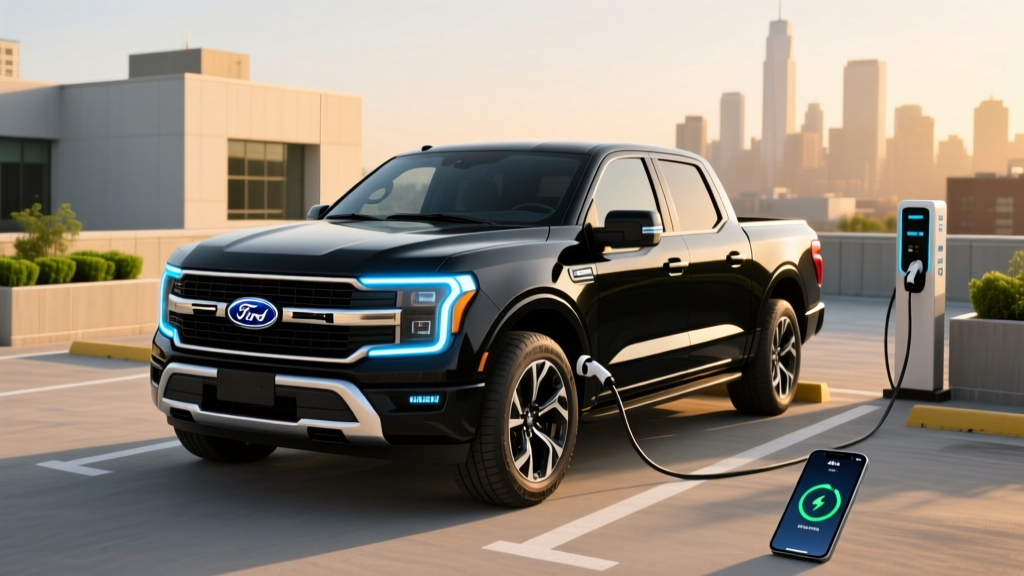
The Ford F-150 Lightning Platinum sits at the top of the electric truck lineup, blending luxury trim with serious utility. But does the flagship price tag deliver where it matters most — range, charging speed, and daily usability? After examining the 2026 model-year specs, real-world efficiency data, and ownership economics, here's the complete picture for buyers considering the Lightning Platinum.
Quick Verdict: Who the Lightning Platinum Is For
The F-150 Lightning Platinum targets buyers who want a full-size electric truck without sacrificing premium comfort. It's best suited for homeowners with Level 2 charging access, light-to-moderate towing needs (under 7,000 lbs regularly), and daily commutes under 200 miles round-trip. If you need maximum range or heavy towing every day, the Platinum's weight and price work against it — but as a daily-driver truck with weekend utility, it's one of the most refined options on the market.
Range, Battery, and Real-World Efficiency
The Lightning Platinum comes equipped with Ford's Extended Range battery pack — a 131 kWh usable lithium-ion NMC (nickel manganese cobalt) battery. The EPA rates it at 320 miles of combined range. Ford does not currently offer an LFP (lithium iron phosphate) chemistry option on the Platinum trim.
EPA 320 miles is the combined city/highway estimate. Expect closer to 260–285 miles on highway-heavy trips at 70+ mph, and 220–250 miles in cold weather (below 32°F) due to battery resistance and cabin heating demands. Towing a 5,000-lb trailer can cut range to 150–180 miles depending on terrain and speed. Plan charging stops accordingly.
| Metric | Value |
|---|---|
| Battery Chemistry | NMC (Nickel Manganese Cobalt) |
| Usable Capacity | 131 kWh |
| EPA Range | 320 miles |
| MPGe (Combined) | 70 MPGe |
| Efficiency | 48 kWh/100 mi |
| Real-World Highway Range | ~260–285 mi |
| Real-World Cold-Weather Range | ~220–250 mi |
The 70 MPGe combined figure (source: fueleconomy.gov) is typical for a full-size electric truck. For comparison, the Rivian R1T Dual-Motor achieves around 73 MPGe combined. Efficiency drops noticeably at sustained highway speeds above 75 mph — the Lightning's large frontal area and 6,500+ lb curb weight mean aerodynamic drag is a major factor.
Charging Speed: DC Fast and Home Level 2
Charging is where Lightning owners need to set realistic expectations. The Platinum supports a peak DC fast-charge rate of 150 kW via its CCS1 connector (NACS adapter available for Tesla Supercharger access). Ford quotes a 10–80% charge time of approximately 41 minutes on a capable 150+ kW station.
The charge curve matters here: the Lightning sustains close to peak rate up to roughly 55–60% state of charge, then tapers progressively. Charging from 80–100% on DC is significantly slower — expect an additional 25–30 minutes if you need a full pack. For road trips, plan to charge from 10–80% and move on rather than waiting for a full top-off.
| Charge Level | Power | Rate / Time |
|---|---|---|
| Level 1 (120V household) | ~1.4 kW | ~3 mi/hr (~90 hrs full) |
| Level 2 (240V, 48A) | 11.5 kW | ~19 mi/hr (~13 hrs 10–100%) |
| Level 2 (240V, 80A — Ford Charge Station Pro) | 19.2 kW | ~30 mi/hr (~8 hrs 10–100%) |
| DC Fast Charge (peak) | 150 kW | 10–80% in ~41 min |
At home, the Lightning's dual onboard chargers accept up to 19.2 kW on Level 2 when paired with Ford's Charge Station Pro (80A circuit, requires a 100A breaker). This is among the fastest Level 2 rates available in any EV and means overnight charging easily replenishes even a depleted battery. On a standard 48A Level 2 setup (60A breaker), expect 11.5 kW — still adequate for overnight replenishment of daily driving.
Preconditioning tip: Use the FordPass app to precondition the battery while plugged in before a DC fast-charge stop. A warm battery charges significantly faster — this can shave 5–10 minutes off your 10–80% time in cooler weather.
Performance, Powertrain, and Towing
The Lightning Platinum comes standard with a dual-motor all-wheel-drive powertrain producing 580 horsepower and 775 lb-ft of torque. Ford's official 0–60 mph time is 4.0 seconds — remarkable for a truck that weighs over 6,500 lbs. The instant torque delivery makes highway merging and passing effortless, even under load.
| Metric | Value |
|---|---|
| Drivetrain | Dual-Motor AWD |
| Horsepower | 580 hp |
| Torque | 775 lb-ft |
| 0–60 mph | 4.0 seconds |
| Max Towing (w/ Max Trailer Tow Pkg) | 8,600 lbs |
| Max Payload | 1,803 lbs |
| Curb Weight | ~6,780 lbs |
Towing is the Lightning's most debated capability. The Platinum's max tow rating of 8,600 lbs (with the Max Trailer Tow package) is respectable on paper, but real-world towing range is the limiting factor. Expect 150–180 miles of range pulling a 5,000-lb camper at 65 mph on flat terrain — and considerably less in hilly or mountainous routes. If you tow more than a few times a year over long distances, a PHEV or diesel truck may still be more practical. For boat launches, utility trailers, and short tows, the Lightning handles the task with smooth, quiet authority.
The Platinum also features Ford's Pro Power Onboard with 9.6 kW of exportable power (240V outlets in the bed and cabin), making it a capable mobile generator for job sites or tailgating. An optional 9.6 kW upgraded system is standard on the Platinum.
Pricing, Trims, and Federal Tax Credit Eligibility
The 2026 F-150 Lightning Platinum starts at an MSRP of approximately $96,874 (including destination). Fully loaded with options like the BlueCruise hands-free driving package and extended tow mirrors, as-tested prices can push past $102,000.
| Trim | Battery | Starting MSRP |
|---|---|---|
| Pro (Standard Range) | 98 kWh | ~$54,995 |
| XLT (Extended Range) | 131 kWh | ~$69,995 |
| Lariat (Extended Range) | 131 kWh | ~$79,995 |
| Platinum (Extended Range) | 131 kWh | ~$96,874 |
Federal Tax Credit (§30D) — Does the Platinum Qualify?
This is where Platinum buyers face a hard truth: the F-150 Lightning Platinum does NOT qualify for the $7,500 federal EV tax credit under IRS §30D. The reason is the MSRP cap — the §30D credit limits eligibility to trucks/vans/SUVs with an MSRP of $80,000 or less (source: IRS.gov). The Platinum's ~$96,874 sticker price exceeds that threshold.
- MSRP Cap: Trucks must be ≤$80,000 — Platinum fails this test
- Buyer Income Cap: AGI ≤$300,000 (joint) / $150,000 (single) — even qualifying buyers can't claim credit on the Platinum
- Battery Sourcing: Critical minerals and component rules apply, but are moot at this price
- Point-of-Sale Transfer: Not available for the Platinum due to MSRP ineligibility
Buyers who want the Lightning with tax credit eligibility should look at the Pro, XLT, or Lariat trims (Extended Range versions under $80,000), which may qualify for the full or partial credit depending on battery-sourcing compliance and buyer income. Always verify current-year eligibility with your tax professional before purchasing.
Interior, Cargo, and Technology
The Platinum trim differentiates itself with premium materials and technology that rival luxury SUVs. Key interior features include:
- 15.5-inch vertical touchscreen with SYNC 4A (wireless Apple CarPlay/Android Auto)
- 12-inch digital instrument cluster
- Leather-trimmed seats with 10-way power, heating, and ventilation (front and rear)
- B&O Unleashed 18-speaker audio system
- Panoramic sunroof
- Power-deployable running boards
- Max Recline front seats (nearly flat — useful for rest breaks during road trips)
Cargo capacity remains a strong point. The Lightning retains a 5.5-foot bed with a payload of up to 1,803 lbs. The front trunk (frunk) offers 14.1 cubic feet of lockable, weatherproof storage — enough for two carry-on bags or a full set of groceries — with a drain plug for use as a cooler.
| Measurement | Value |
|---|---|
| Bed Length | 67.1 in (5.5 ft) |
| Frunk Volume | 14.1 cu ft |
| Rear Legroom (SuperCrew) | 43.6 in |
| Front Headroom | 40.9 in |
| Seating Capacity | 5 passengers |
On the driver-assistance front, the Platinum includes Ford's BlueCruise (SAE Level 2) for hands-free highway driving on pre-mapped divided highways. BlueCruise works well on long interstate stretches but requires the driver to remain attentive — the system monitors eye gaze and will issue warnings and eventually disengage if the driver looks away. This is not autonomous driving; you remain responsible for the vehicle at all times.
Warranty and Long-Term Ownership
Ford backs the Lightning's battery and electric powertrain with an 8-year / 100,000-mile warranty, with a capacity retention threshold of 70%. If the battery drops below 70% of original capacity within the warranty period, Ford will repair or replace it. The bumper-to-bumper limited warranty covers 3 years / 36,000 miles.
| Component | Coverage |
|---|---|
| Battery (≥70% capacity) | 8 years / 100,000 miles |
| Electric Powertrain | 8 years / 100,000 miles |
| Bumper-to-Bumper | 3 years / 36,000 miles |
| Corrosion Perforation | 5 years / unlimited miles |
Long-term NMC battery degradation data from early 2022–2024 Lightning owners suggests an average loss of 3–5% capacity in the first 40,000 miles, with the curve flattening afterward. This is consistent with industry norms for liquid-cooled NMC packs. Ford's 70% threshold is standard but less generous than some competitors (Hyundai/Kia offer 70% at 10 years/100,000 miles; Tesla's threshold is also 70% at 8 years but with varying mileage limits by model).
Insurance costs for the Platinum are notably high — expect annual premiums of $2,800–$3,600 depending on state, driving record, and coverage levels. Get quotes before purchasing, as this is a significant ownership cost that buyers sometimes overlook.
Lightning Platinum vs. Key Competitors
- 19.2 kW Level 2 charging (fastest in class)
- Massive 14.1 cu ft frunk
- Pro Power Onboard 9.6 kW
- Refined, quiet ride quality
- BlueCruise hands-free highway driving
- Strong 0–60 performance (4.0 sec)
- Spacious SuperCrew cabin with Max Recline seats
- No federal tax credit (exceeds $80K MSRP cap)
- 150 kW peak DC rate trails rivals (Rivian R1T: ~200+ kW)
- Range drops sharply when towing
- Heavy curb weight hurts efficiency
- Premium price ($97K+ base)
- High insurance premiums
- 5.5-ft bed is shorter than some gas F-150 configs
Against the Rivian R1T Dual-Motor Max, the Lightning Platinum offers more interior space, a larger frunk, and a more traditional truck experience, but the R1T charges faster (~200+ kW peak), has slightly better efficiency, and offers more adventurous off-road capability. Against the Chevrolet Silverado EV 4WT/RST, the Lightning has a more mature charging ecosystem and better interior refinement, though the Silverado EV offers a longer available bed and GM's Ultium platform.
Choose the Lightning Platinum if: You want a premium daily-driver truck with best-in-class home charging speed, a huge frunk, and Pro Power Onboard for job-site or tailgate use.
Look elsewhere if: You need the federal tax credit (choose XLT/Lariat under $80K), tow frequently over long distances, or prioritize DC fast-charge speed for road trips (consider the Rivian R1T or Silverado EV).
Frequently Asked Questions
What is the real-world range of the F-150 Lightning Platinum?
The EPA rates it at 320 miles combined. In real-world highway driving at 70+ mph, expect 260–285 miles. In cold weather (below 32°F), range can drop to 220–250 miles. Towing significantly reduces range to roughly 150–180 miles depending on trailer weight and conditions.
How fast does the Lightning Platinum charge at home and on the road?
At home on a 240V Level 2 charger, it accepts up to 19.2 kW (with Ford's 80A Charge Station Pro), adding roughly 30 miles of range per hour. On a standard 48A Level 2, it charges at 11.5 kW (~19 mi/hr). On DC fast chargers, it peaks at 150 kW and charges from 10–80% in approximately 41 minutes.
Does the F-150 Lightning Platinum qualify for the $7,500 federal EV tax credit?
No. The IRS §30D credit caps eligible trucks at an MSRP of $80,000. The Platinum's starting price of ~$96,874 exceeds this limit. Lower trims (Pro, XLT, Lariat) priced under $80,000 may qualify depending on buyer income, battery-sourcing compliance, and current-year IRS rules. Consult a tax professional before relying on credit eligibility.
Is the Lightning Platinum worth buying over the Rivian R1T or Silverado EV?
It depends on your priorities. The Platinum excels as a premium daily-driver truck with the fastest home Level 2 charging in its class and excellent cabin comfort. The Rivian R1T charges faster on DC and offers more off-road capability. The Silverado EV offers a longer bed option. If home charging speed and traditional truck ergonomics matter most, the Platinum is compelling. If road-trip DC charging speed or tax credit eligibility are top priorities, explore alternatives.
How much does it cost to charge the Lightning Platinum at home?
At the US average residential electricity rate of ~$0.16/kWh, fully charging the 131 kWh battery from empty costs approximately $21. For a typical daily commute of 40 miles (~19 kWh used), expect roughly $3.00 per day in electricity costs — significantly less than the equivalent gasoline cost for a gas F-150.
Can the Lightning Platinum power my home during an outage?
Yes, when equipped with Ford's Home Integration System (sold separately, requires professional installation), the Lightning can provide up to 9.6 kW of backup power through a bidirectional wall connector. This can sustain essential home circuits for multiple days depending on usage and remaining battery charge.