Can You Actually Buy a Hot Pink Tesla in 2026?
If you've been searching for a hot pink Tesla, you've probably noticed that Tesla's factory color palette doesn't include anything close to hot pink. As of the 2026 model year, Tesla offers five standard paint colors across its lineup: Pearl White Multi-Coat, Solid Black, Deep Blue Metallic, Ultra Red, and Quicksilver (a satin silver available on select trims). Hot pink, magenta, or any vivid pink hue has never been a factory option.
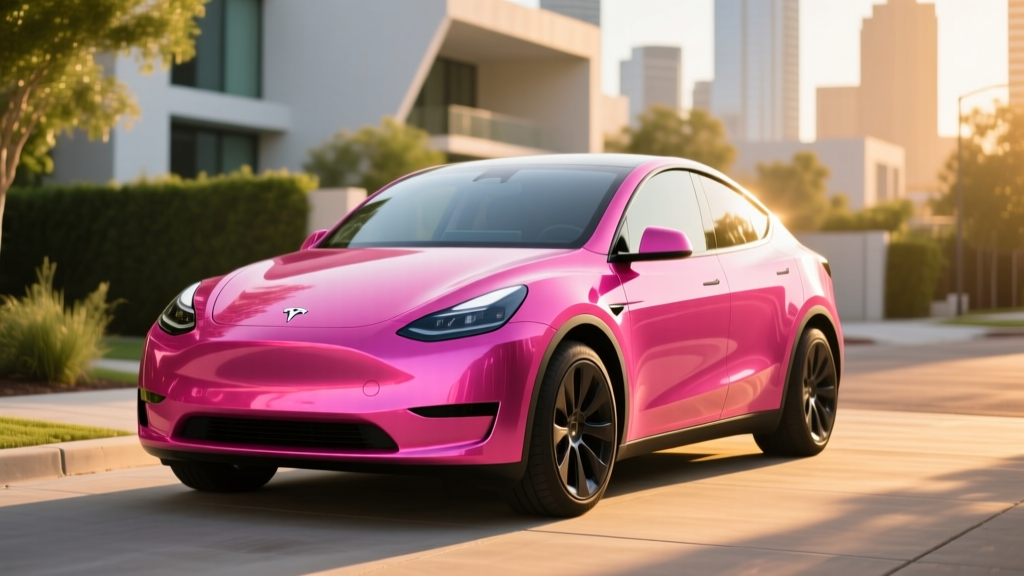
That doesn't mean you can't drive one. Thousands of Tesla owners achieve the hot pink look through professional vinyl wraps — a reversible, paint-protective modification that costs far less than a custom paint job and can be removed without damaging the original finish. This guide breaks down exactly how to get a hot pink Tesla, which model makes the most sense for your needs, and the full performance, range, charging, and pricing specs you need to make an informed purchase.
How to Get a Hot Pink Tesla: Wrap vs. Paint
The overwhelming majority of pink Teslas on the road use a vinyl wrap. Here's why that matters from both a cost and a resale-value perspective:
- Full-body vinyl wrap: $2,500–$5,000 depending on material quality (cast vs. calendared vinyl), finish (gloss, matte, satin, chrome), and shop reputation. A high-gloss hot pink cast vinyl from 3M or Avery Dennison typically runs $3,500–$4,500 installed on a Model 3 or Model Y.
- Custom paint job: $5,000–$12,000+ for quality work. Paint permanently alters the vehicle, can reduce resale value, and may void portions of Tesla's exterior warranty.
- PPF + tinted wrap: Some owners apply paint protection film first, then wrap over it — offering both stone-chip protection and color customization. Expect $5,500–$7,500 total.
A wrap also protects the factory paint underneath, which helps preserve resale value. When you're ready to sell, peel it off and the original color is untouched. Tesla's factory paint — particularly Pearl White and Solid Black — is relatively thin compared to legacy automakers, so a wrap adds a meaningful protective layer against road debris.
Which Tesla Model Should You Wrap Hot Pink?
Every current Tesla model can be wrapped, but your choice should be driven by range needs, passenger space, budget, and tax credit eligibility — not just aesthetics. Here's the full 2026 lineup at a glance:
| Spec | Model 3 RWD | Model 3 Long Range AWD | Model Y Long Range AWD | Model S LR | Model X LR |
|---|---|---|---|---|---|
| EPA Range | 341 mi | 363 mi | 320 mi | 402 mi | 335 mi |
| Battery (usable) | ~60 kWh (LFP) | ~79 kWh (NMC) | ~79 kWh (NMC) | ~100 kWh (NMC) | ~100 kWh (NMC) |
| 0–60 mph | 5.8 sec | 4.2 sec | 4.8 sec | 3.1 sec | 3.8 sec |
| Horsepower | 271 hp | 346 hp | 384 hp | 670 hp | 670 hp |
| Drivetrain | RWD | Dual-Motor AWD | Dual-Motor AWD | Dual-Motor AWD | Dual-Motor AWD |
| Base MSRP | $38,990 | $45,490 | $46,630 | $79,990 | $84,990 |
| MPGe (combined) | 132 MPGe | 125 MPGe | 117 MPGe | 120 MPGe | 105 MPGe |
| Cargo (rear seats up) | 23 cu ft | 23 cu ft | 30 cu ft | 28 cu ft | 44 cu ft |
Range, Battery Chemistry, and Real-World Expectations
The EPA range numbers above are tested under controlled conditions. Real-world results depend heavily on driving style, temperature, and terrain. Tesla's LFP-equipped Model 3 RWD deserves special attention here because its battery chemistry behaves differently from the NMC packs in higher trims.
The EPA sticker is a useful baseline, but plan for less. On sustained highway driving at 70–75 mph, expect roughly 85–90% of EPA range in mild weather. In cold conditions (below 32°F), range drops 20–30% across all Tesla models due to battery resistance and cabin heating demands. A Model 3 Long Range rated at 363 miles may deliver ~255–280 miles on a winter highway trip.
LFP note: The Model 3 RWD's lithium iron phosphate (LFP) battery is more tolerant of frequent 100% charging and degrades more slowly than NMC — but it is more susceptible to cold-weather range loss. Preconditioning the battery before driving in cold weather is essential to preserve range and enable regenerative braking.
LFP (lithium iron phosphate) batteries trade energy density for longevity and safety. They're heavier per kWh, which is why the Model 3 RWD has a smaller usable pack (~60 kWh) and shorter range than the NMC-equipped Long Range variant (~79 kWh). However, LFP cells typically retain 90%+ capacity after 2,000 full charge cycles, compared to roughly 80–85% for NMC at the same cycle count. Tesla recommends charging LFP packs to 100% at least once a week to keep the battery management system calibrated — something you should not do with NMC chemistry on a regular basis.
Charging Speed: DC Fast Charging and Home Level 2
Charging speed is where Tesla still holds a significant advantage over most competitors, thanks to the Supercharger network and efficient thermal management. Here's what to expect across the lineup:
| Metric | Model 3 RWD | Model 3 LR AWD | Model Y LR AWD | Model S LR | Model X LR |
|---|---|---|---|---|---|
| Max DC Fast Charge | 170 kW | 250 kW | 250 kW | 250 kW | 250 kW |
| 10–80% DCFC Time | ~30 min | ~25 min | ~27 min | ~28 min | ~32 min |
| Level 2 Home (kW) | 11.5 kW | 11.5 kW | 11.5 kW | 11.5 kW | 11.5 kW |
| Level 2 Miles/Hour | ~37 mi/hr | ~37 mi/hr | ~34 mi/hr | ~41 mi/hr | ~34 mi/hr |
| Connector | NACS (native) | NACS (native) | NACS (native) | NACS (native) | NACS (native) |
A few important nuances on charging:
- Peak kW is not sustained kW. A Model 3 Long Range may peak at 250 kW at a V3/V4 Supercharger, but the charge curve tapers significantly above 50–60% state of charge. The 10–80% time is a more useful real-world metric than the peak number.
- LFC charging ceiling: The Model 3 RWD's LFP battery caps at 170 kW peak. If you road-trip frequently and value shorter charging stops, the Long Range NMC models recover range noticeably faster.
- Preconditioning matters. Navigate to a Supercharger using the Tesla nav system, and the car will automatically warm the battery en route. Arriving at a charger without preconditioning — especially in cold weather — can double your charging time.
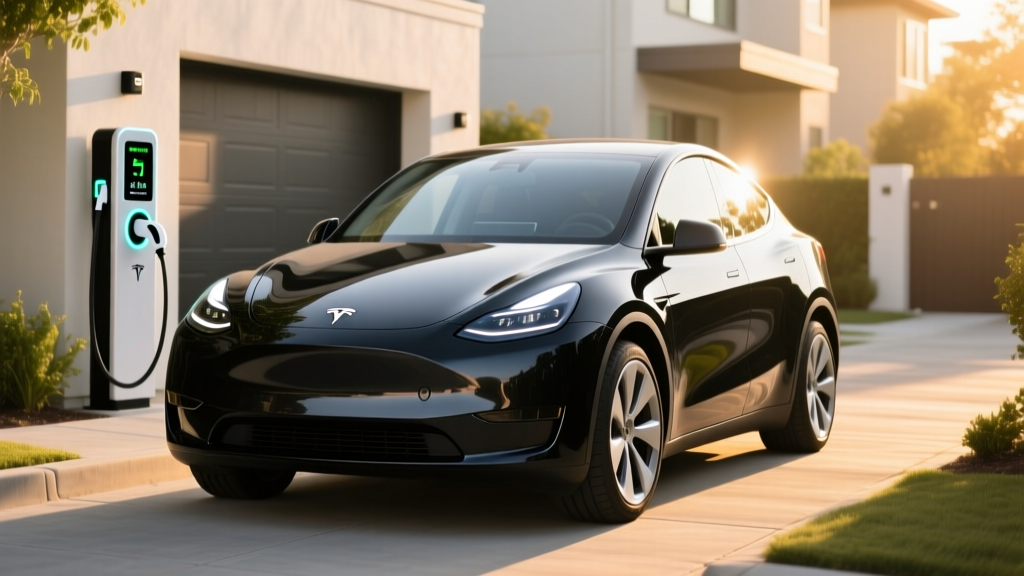
- Home charging: All current Teslas accept up to 11.5 kW on Level 2 (48 amps on a 60-amp circuit). A full overnight charge adds 200+ miles for most models. Installation of a Tesla Wall Connector or equivalent NACS-compatible Level 2 charger typically costs $800–$2,000 depending on electrical panel proximity and local permit fees, per data from Tesla's home charging guide.
Pricing, Tax Credits, and Total Cost
Tesla's pricing has shifted multiple times, but as of early 2026, here's where the lineup stands — and how the federal §30D tax credit applies:
| Model/Trim | Base MSRP | Federal Credit (§30D) | Effective Price (with credit) | Eligible? |
|---|---|---|---|---|
| Model 3 RWD | $38,990 | Up to $7,500 | ~$31,490 | Yes — meets MSRP, sourcing rules |
| Model 3 Long Range AWD | $45,490 | Up to $7,500 | ~$37,990 | Yes — meets MSRP, sourcing rules |
| Model Y Long Range AWD | $46,630 | Up to $7,500 | ~$39,130 | Yes — meets MSRP, sourcing rules |
| Model S Long Range | $79,990 | $0 | $79,990 | No — exceeds $55,000 sedan MSRP cap |
| Model X Long Range | $84,990 | $0 | $84,990 | No — exceeds $80,000 SUV MSRP cap |
Critical caveats on the IRS §30D clean vehicle credit:
- Income caps: Modified adjusted gross income must not exceed $150,000 (single), $225,000 (head of household), or $300,000 (joint filers).
- MSRP caps: Sedans (Model 3) are capped at $55,000. SUVs and trucks (Model Y, Model X) are capped at $80,000. The Model S sedan exceeds the $55,000 cap and does not qualify.
- Battery sourcing: A portion of the credit depends on critical minerals and battery components being sourced from the U.S. or free-trade-agreement partners. Tesla's U.S.-built vehicles have generally met these requirements for the full $7,500, but the IRS updates qualifying vehicle lists periodically. Always verify on the fueleconomy.gov tax credit page before purchasing.
- Point-of-sale transfer: As of 2024, buyers can transfer the credit to the dealer at purchase, reducing the upfront price rather than waiting for a tax refund. Tesla participates in this program.
Performance, Interior, and Technology
Every Tesla in the current lineup delivers strong acceleration, but the character varies significantly by model:
Model 3 (RWD and Long Range): The refreshed "Highland" Model 3 features improved ride quality over pre-2024 versions, with revised suspension tuning and acoustic glass that noticeably reduces cabin noise. The 15.4-inch center touchscreen handles all vehicle controls — there are no physical stalks for turn signals (they're on the steering wheel) or a traditional instrument cluster. Rear legroom is 35.2 inches, adequate for adults on shorter trips but tighter than a Model Y. The 23 cu ft trunk (plus a small frunk) handles weekly groceries but isn't a cargo hauler.
Model Y: The best-selling EV in the U.S. for good reason. The crossover form factor provides 30 cu ft of cargo space behind the second row (76 cu ft with seats folded), 40.5 inches of rear legroom, and an optional third row (though it's best suited for small children). The "Juniper" refresh brought a lighter interior, ventilated front seats, and a rear touchscreen for passengers.
Model S and Model X: These flagship models offer the most range (Model S at 402 miles EPA) and the most power (670 hp dual-motor). The Model X's falcon-wing rear doors remain a distinctive feature but add mechanical complexity. Interior materials and build quality have improved but still draw mixed reviews compared to luxury competitors like the BMW iX or Mercedes EQS.
All Teslas ship with Basic Autopilot (lane centering + adaptive cruise). Full Self-Driving (Supervised) is an $8,000 option or $99/month subscription. Despite the name, FSD is an SAE Level 2 driver-assistance system — the driver must remain fully engaged, hands on or near the wheel, and eyes on the road at all times. It is not autonomous driving. FSD performs well on highways and has improved in city environments, but it still makes errors at complex intersections, construction zones, and unusual road configurations. You are the driver. Treat it accordingly.
Warranty, Ownership Costs, and Longevity
Tesla's warranty structure is straightforward:
- Basic vehicle: 4 years / 50,000 miles
- Battery and drive unit (Model 3 RWD with LFP): 8 years / 100,000 miles, with minimum 70% capacity retention
- Battery and drive unit (Model 3 LR, Model Y, Model S, Model X with NMC): 8 years / 120,000 miles (Model S/X: 150,000 miles), with minimum 70% capacity retention
The 70% retention threshold is important context: Tesla will only replace or repair a battery under warranty if it degrades below 70% of original capacity within the warranty period. Independent fleet data from sources like Recurrent Auto suggest most Tesla packs retain 85–90% capacity at 100,000 miles, with LFP packs showing even less degradation.
Insurance costs for Teslas tend to run 15–30% higher than comparable non-electric vehicles, according to industry data. Get quotes before purchasing — the premium difference can add $400–$800/year depending on your profile and state.
Pros
- Supercharger network — the most reliable DC fast-charging infrastructure in the U.S.
- Strong real-world efficiency (kWh/100mi) vs. competitors
- Over-the-air updates continuously add features
- LFP battery option (Model 3 RWD) offers excellent longevity
- Hot pink wrap is reversible and protects factory paint
- Point-of-sale tax credit reduces upfront cost on eligible models
Cons
- No factory hot pink — wrap adds $2,500–$5,000
- No physical turn signal stalks or traditional gauges (learning curve)
- Insurance premiums above segment average
- Model S/X ineligible for federal tax credit due to MSRP caps
- Service center wait times can be long in some metro areas
- FSD (Supervised) is Level 2 only — not autonomous despite the name
Who Should Buy a (Hot Pink Wrapped) Tesla?
Choose the Model 3 RWD if: You're a commuter who drives under 200 miles daily, wants the lowest entry price (~$31,490 after credit), and values long battery life over maximum charging speed. The LFP pack is ideal if you can charge at home nightly.
Choose the Model 3 Long Range AWD if: You road-trip regularly, need all-wheel drive for snow/rain, and want 250 kW peak charging. The 363-mile EPA range provides comfortable margins on 300-mile trips with one Supercharger stop.
Choose the Model Y Long Range AWD if: You need family-level cargo and passenger space, want the tax credit, and prefer a crossover ride height. It's the volume seller for a reason.
Choose the Model S or Model X if: Budget is flexible (no tax credit), you want maximum range or performance, and you prioritize luxury features. Just know the effective price is significantly higher.
Frequently Asked Questions
Does wrapping a Tesla void the warranty?
A professionally installed vinyl wrap does not void Tesla's basic vehicle warranty or battery warranty. However, if wrap removal damages paint or trim, those specific repairs may not be covered. Choose a reputable installer who uses high-quality cast vinyl (3M, Avery Dennison) and documents the installation.
How much does a hot pink Tesla wrap cost?
Expect $3,000–$5,000 for a full-body gloss or satin hot pink wrap on a Model 3 or Model Y, installed by a professional shop. Chrome-delete wraps (blacking out trim) can be bundled for an additional $500–$800. Matte and color-shift finishes run $500–$1,500 more.
Which Tesla qualifies for the $7,500 federal tax credit?
As of 2026, the Model 3 (both RWD and Long Range AWD) and Model Y Long Range AWD qualify for up to $7,500 under IRS §30D, provided the buyer meets income caps ($150K single / $300K joint) and the vehicle meets battery-sourcing requirements. The Model S and Model X exceed the MSRP cap and do not qualify. Always verify current eligibility on fueleconomy.gov.
How long will a Tesla battery last?
Tesla's battery warranty guarantees at least 70% capacity retention for 8 years / 100,000–150,000 miles depending on the model. Real-world data from fleet analytics firms shows most Tesla batteries retain 85–92% capacity at 100,000 miles. LFP-equipped Model 3 RWD batteries show particularly strong longevity, with some fleet examples exceeding 90% retention at 120,000 miles.
Can I charge a Tesla at non-Tesla chargers?
Yes. All current Teslas use the NACS (North American Charging Standard) connector natively. With the industry-wide adoption of NACS starting in 2024–2025, most new public DC fast chargers from Electrify America, EVgo, and others now include NACS cables. For older CCS-only chargers, Tesla sells a CCS-to-NACS adapter (~$175). Level 2 public chargers with J1772 connectors work with the J1772 adapter included with every Tesla.
Is a hot pink wrap legal everywhere?
Yes — vehicle wraps are legal in all 50 states. However, some jurisdictions have restrictions on reflective or chrome-like finishes that could create glare for other drivers. A standard gloss or matte hot pink wrap has no legal issues. You may also need to update your vehicle registration color in some states after wrapping.