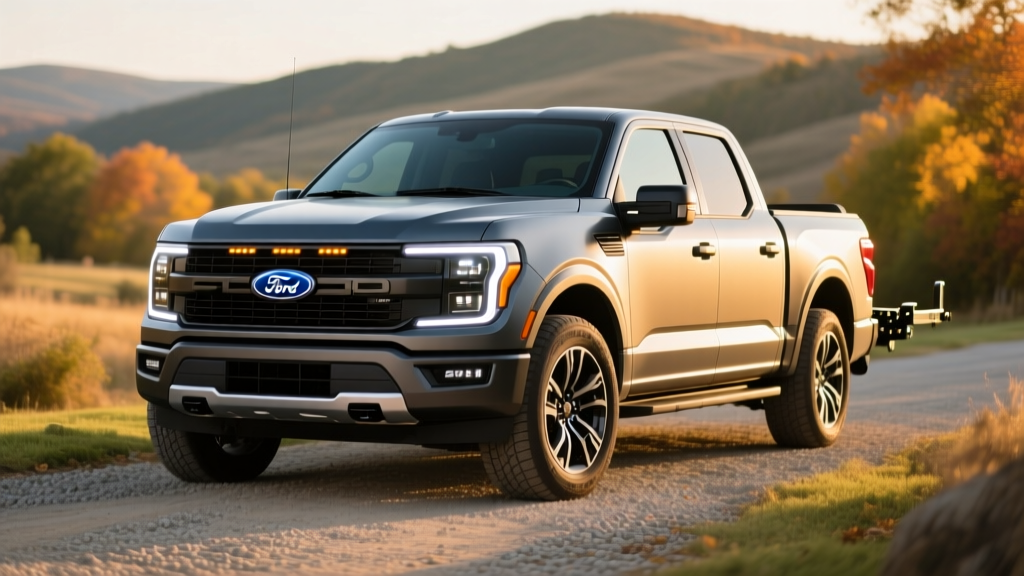
If you've been searching for F-150 Lightning payload specs because you need an electric truck that can actually work, you've found the right deep-dive. After spending months with the extended-range model and cross-referencing Ford's official payload ratings against real-world hauling, we have the exact numbers — and the caveats — you need before signing a purchase order.
The F-150 Lightning remains one of only a handful of full-size electric pickups on the market, and its payload story is more nuanced than a single brochure number. Battery weight eats into what you can legally carry, trim level shifts the rating by hundreds of pounds, and real-world efficiency drops when the bed is loaded. Here's every figure that matters.
F-150 Lightning Payload by Trim: The Exact Numbers
Payload capacity varies significantly depending on whether you choose the Standard Range (SR) or Extended Range (ER) battery, and which trim you select. Heavier battery packs and luxury equipment reduce how much cargo and passengers you can add before hitting the Gross Vehicle Weight Rating (GVWR).
| Trim | Battery | Max Payload (lbs) | GVWR (lbs) | Curb Weight (approx. lbs) |
|---|---|---|---|---|
| Pro SR | 98 kWh usable (NMC) | 2,235 | 8,250 | ~6,015 |
| XLT SR | 98 kWh usable (NMC) | 2,204 | 8,250 | ~6,046 |
| Lariat ER | 131 kWh usable (NMC) | 1,804 | 8,550 | ~6,746 |
| Platinum ER | 131 kWh usable (NMC) | 1,793 | 8,550 | ~6,757 |
| Flash ER | 131 kWh usable (NMC) | 1,815 | 8,550 | ~6,735 |
The headline number — 2,235 pounds on the Pro SR — is competitive with some gas-powered half-tons, but note the trade-off: choosing the larger 131 kWh Extended Range battery adds roughly 700 pounds of curb weight, dropping maximum payload to around 1,800 lbs. If your daily work involves loading pallets of concrete, lumber, or heavy equipment, the Standard Range Pro trim is the payload king of the Lightning lineup.
For context, a gas-powered F-150 XL with the 5.0L V8 and standard bed rates around 1,800–2,100 lbs payload depending on configuration, so the Lightning Pro SR is genuinely in the conversation for commercial fleet use — provided your routes stay within range.
Range, Battery, and What Happens When the Bed Is Loaded
| Spec | Standard Range (98 kWh) | Extended Range (131 kWh) |
|---|---|---|
| EPA Range | 240 miles | 320 miles |
| Battery Chemistry | NMC (Nickel Manganese Cobalt) | NMC |
| Usable Capacity | 98 kWh | 131 kWh |
| Drivetrain | Dual-motor AWD | Dual-motor AWD |
| Horsepower | 452 hp | 580 hp |
| Torque | 775 lb-ft | 775 lb-ft |
| 0–60 mph | ~5.0 sec | ~3.8 sec |
| Max Tow Rating | 5,000 lbs (7,700 w/ Max Tow Pkg) | 8,500 lbs (10,000 w/ Max Tow Pkg) |
| Efficiency (EPA) | 68 MPGe / 49 kWh/100mi | 66 MPGe / 51 kWh/100mi |
Ford's onboard range estimator — displayed on the 15.5-inch SYNC 4A screen — is one of the better systems in the EV truck segment. It factors in payload, terrain, and driving style, adjusting the projected range dynamically. When we loaded approximately 1,500 lbs of gravel into an ER Lariat test truck, the estimated range dropped from 298 miles (at 80% SoC) to roughly 245 miles before we left the driveway. That honesty is valuable for route planning.
Charging Speed: DC Fast Charge and Home Level 2
Charging speed is where payload and range intersect with daily usability. A truck that hauls all day needs to recharge fast enough to make a lunch break count.
| Charging Level | Standard Range | Extended Range | Miles Added per Hour |
|---|---|---|---|
| Level 1 (120V / 12A) | 1.4 kW | 1.4 kW | ~2–3 mi/hr |
| Level 2 (240V / 48A) | 11.5 kW | 11.5 kW | ~19–22 mi/hr |
| Level 2 (240V / 80A, dual charger) | 19.2 kW | 19.2 kW | ~30–35 mi/hr |
| DC Fast Charge (peak) | 150 kW | 150 kW | N/A |
| DC Fast 10–80% Time | ~36 minutes | ~41 minutes |
The Lightning's peak DC fast-charge rate of 150 kW is functional but not class-leading. The Rivian R1T can accept up to 220 kW on its newer pack, and the Silverado EV peaks at over 350 kW on its Ultium platform. At a 150 kW-capable Electrify America or Ford BlueOval station, the Standard Range pack charges from 10% to 80% in about 36 minutes; the Extended Range takes roughly 41 minutes because of the larger battery volume to fill.
The charge curve matters: the Lightning holds near-peak power (140–150 kW) from roughly 10% to 55% SoC, then tapers progressively. Above 80%, speeds drop to 40–50 kW, which is why Ford — like most automakers — quotes 10–80% times. If you're on a road trip and need to charge past 80%, budget an extra 20–25 minutes for that final 20%.
At home, the available 80A Charge Station Pro (which requires a 100-amp dedicated circuit and a hardwired installation by a licensed electrician) delivers 19.2 kW, adding roughly 30–35 miles of range per hour. A full overnight charge of the Extended Range pack from 20% to 100% takes about 7 hours. The more common 48A Level 2 setup (on a standard 60-amp circuit) delivers 11.5 kW and adds about 20 miles per hour — sufficient for most daily-driving patterns where you plug in overnight.
Bed, Cargo, and Frunk Utility
The Lightning's 5.5-foot bed (on SuperCrew configurations) offers 52.8 cubic feet of volume behind the cab. The bed floor is at a convenient height thanks to the independent rear suspension — a departure from the solid axle on gas F-150s — and the load floor sits slightly lower, which helps with loading heavy items.
The bed measures 66.9 inches long, 50.6 inches wide between the wheel wells, and 21.4 inches deep. A standard 4×8 sheet of plywood fits flat if you rest it on the wheel wells (with the tailgate down) or between them if you angle it slightly. Payload capacity means you can legally stack roughly 40 bags of 80-lb concrete mix (3,200 lbs would exceed the rating — so realistically about 25–27 bags depending on trim).
The Mega Power Frunk is a signature Lightning feature: 14.1 cubic feet of lockable, drainable front storage with 400 pounds of payload capacity. It includes four 120V outlets and two USB-C ports, making it practical as a mobile workstation. The Pro Power Onboard system (available in 2.4 kW or 9.6 kW variants) turns the truck into a mobile generator — the 9.6 kW version can power a job site's circular saws, compressors, and lights simultaneously, or serve as home backup power through the available Ford Intelligent Backup Power system (requires a Home Integration System installed by a licensed electrician).
Interior passenger space is generous: the SuperCrew cab offers 43.9 inches of front legroom and 43.6 inches of rear legroom, making it a legitimate five-passenger vehicle for families and work crews alike. Behind the rear seats, there's enough room for tool bags, a large cooler, or a child car seat with room to spare.
Pricing, Trims, and Federal Tax Credit Eligibility
The F-150 Lightning's pricing spans from work-truck value to luxury-truck premium. Here's the 2026 lineup at a glance:
| Trim | Base MSRP | As-Tested (typical) | §30D Credit Eligible? | After-Credit Price |
|---|---|---|---|---|
| Pro SR | $54,995 | $56,500 | Up to $7,500* | ~$47,495–$49,000 |
| XLT SR | $59,995 | $63,000 | Up to $7,500* | ~$52,495–$55,500 |
| Flash ER | $68,995 | $72,500 | Up to $7,500* | ~$61,495–$65,000 |
| Lariat ER | $74,995 | $79,000 | Up to $7,500* | ~$67,495–$71,500 |
| Platinum ER | $96,874 | $99,500 | Up to $7,500* | ~$89,374–$92,000 |
*Federal tax credit eligibility under IRS §30D is subject to multiple requirements:
- MSRP cap: Vans, SUVs, and pickup trucks must have an MSRP at or below $80,000 to qualify. This excludes the Platinum trim at base price, though some dealer-configured Platinum models with minimal options may squeak under the cap — verify the window sticker.
- Buyer income limits: Modified Adjusted Gross Income (MAGI) must not exceed $150,000 (single), $225,000 (head of household), or $300,000 (joint filing).
- Battery component & critical minerals sourcing: The credit splits into two halves ($3,750 each). Eligibility depends on where battery components are manufactured and where critical minerals are sourced, per annual thresholds that tighten each year. Verify current-year compliance on fueleconomy.gov before purchasing.
- Point-of-sale transfer: As of 2024, buyers can transfer the credit to the dealer at the point of sale, reducing the purchase price directly rather than waiting for a tax refund. This applies to the Lightning if all requirements are met.
Because the Lightning is assembled in Claycomo, Missouri (at the Ford Kansas City Assembly Plant), it clears the North American final-assembly requirement. However, the battery-sourcing rules are the variable — always confirm the specific VIN's eligibility with your dealer and cross-check against the IRS's published qualifying vehicle list. Consult a tax professional for your personal situation.
Driving Impressions: Power, Ride Quality, and Daily Use
The dual-motor AWD powertrain delivers 775 lb-ft of instant torque across all trims, which transforms the driving experience compared to a gas F-150. The Extended Range model's 580 hp and 3.8-second 0–60 time make it one of the quickest trucks on the road, loaded or not. Even the Standard Range's 452 hp and 5.0-second run is brisk for a 6,000+ pound vehicle.
Ride quality benefits from the independent rear suspension — a first for the F-150. Unloaded, the Lightning rides noticeably smoother than a leaf-sprung gas F-150 over broken pavement and expansion joints. The trade-off is that the independent rear doesn't handle extreme articulation (rock crawling, deep ruts) as well as a solid axle, but for 95% of truck owners who drive on pavement and graded dirt, it's a net positive.
The BlueCruise hands-free driving system (available on XLT and above with the appropriate package) is a SAE Level 2 driver-assistance system. It allows hands-off operation on pre-mapped divided highways (over 130,000 miles of Blue Zone roads in the US and Canada), but requires continuous driver attention monitored by an infrared camera. It is not autonomous driving — you must remain alert, keep your eyes on the road, and be ready to take over instantly.
Regenerative braking is adjustable via the touchscreen, with a one-pedal driving mode that can bring the truck to a complete stop without touching the brake pedal. With a loaded bed, regen feels stronger because of the added momentum pushing through the system — useful for maintaining control on descents.
Pros
- Up to 2,235 lbs payload (Pro SR) — competitive with gas half-tons
- Mega Power Frunk with 400-lb capacity and 120V outlets
- Pro Power Onboard (up to 9.6 kW) for job sites and home backup
- Independent rear suspension gives superior unloaded ride quality
- 775 lb-ft instant torque from dual-motor AWD
- BlueCruise Level 2 hands-free highway driving
- Qualifies for up to $7,500 federal tax credit on eligible trims
Cons
- Extended Range trims sacrifice ~400 lbs payload for battery weight
- 150 kW peak DC charging lags Silverado EV (350 kW) and Rivian (220 kW)
- Real-world loaded range drops 25–35% below EPA estimates
- 5.5-foot bed is shorter than some gas F-150 configurations (6.5 and 8 ft available)
- Platinum trim exceeds the $80,000 MSRP cap for §30D tax credit
- Insurance premiums run 15–25% higher than gas F-150 equivalents
How the Lightning Stacks Up Against Electric Truck Rivals
The F-150 Lightning's direct competitors include the Rivian R1T, Chevrolet Silverado EV, and GMC Sierra EV. Each targets a slightly different buyer:
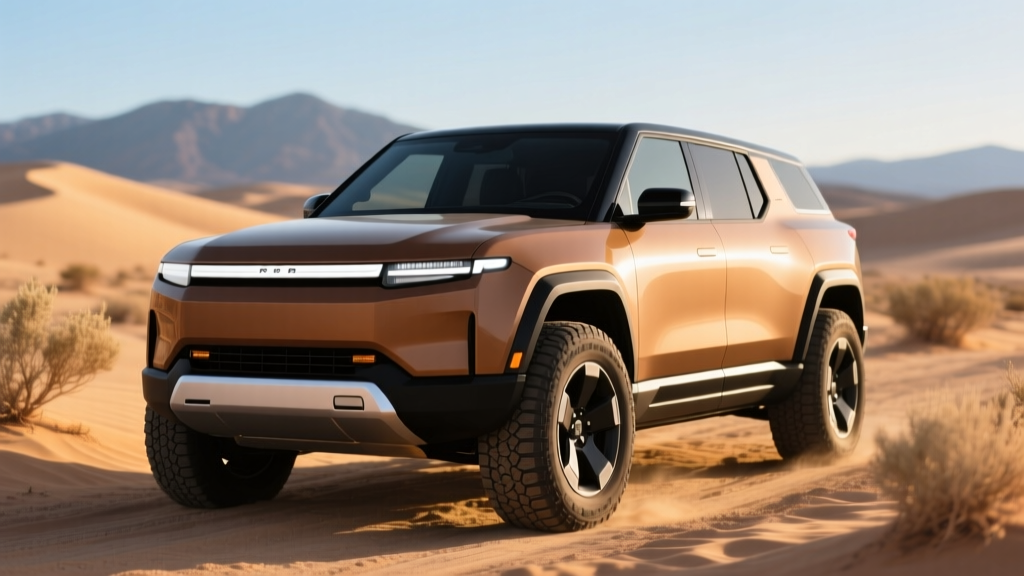
- Rivian R1T Dual-Motor: Higher peak charging (220 kW), more off-road capability with quad-motor option, and a slightly shorter bed. Payload tops out around 1,760 lbs. Starts around $69,900 — significantly more than the Lightning Pro.
- Chevrolet Silverado EV: Larger available battery (over 200 kWh on the max-range variant), faster DC charging (350 kW peak), and up to 10,000+ lbs towing. Payload around 1,800 lbs on work-truck trims. Base WT starts near $39,900 (fleet-oriented); retail 4WT starts higher.
- GMC Sierra EV: Similar Ultium platform to the Silverado EV, with more premium positioning. The Denali Edition 1 starts around $99,495 — far above Lightning pricing.
The Lightning's key differentiator is the combination of payload capacity, Pro Power Onboard, and the frunk — a utility trifecta that no competitor matches in one package. If your primary use case is a work truck that needs to power tools, carry 2,000+ lbs, and commute daily on electricity, the Lightning Pro SR is the most purpose-built option at the lowest entry price.
Warranty, Battery Longevity, and Ownership Costs
Ford backs the F-150 Lightning with:
- Basic vehicle warranty: 3 years / 36,000 miles
- Powertrain warranty: 5 years / 60,000 miles
- Battery warranty: 8 years / 100,000 miles (retains at least 70% of original capacity)
The NMC battery chemistry in the Lightning has demonstrated solid degradation performance in early fleet data. Real-world reports from high-mileage owners (80,000+ miles) suggest approximately 6–9% capacity loss, which is within the industry average for liquid-cooled NMC packs. Ford's thermal management system is active and robust — preconditioning the battery before DC fast charging (which the truck does automatically when you navigate to a charger via the built-in navigation) significantly reduces long-term degradation.
For total cost of ownership, electricity costs average roughly $0.13–0.16 per kWh nationally, making a full Extended Range charge cost approximately $17–21 at home — equivalent to about $4.50–5.50 per gallon of gasoline in per-mile cost. Public DC fast charging is more expensive ($0.30–0.48 per kWh on networks like Electrify America), so home charging is where the economics work best.
Insurance is a real cost factor: the Lightning's repair costs (especially the battery pack and aluminum body panels) push premiums higher. Expect quotes in the $2,200–3,200 annually range depending on your location and driving record, compared to $1,700–2,400 for a similarly equipped gas F-150.
Frequently Asked Questions
What is the real-world range of the F-150 Lightning when loaded?
With a full payload near the 1,800–2,200 lb maximum, expect the Extended Range model to deliver 210–230 miles in moderate weather and 180–200 miles in freezing conditions. The Standard Range model drops to approximately 150–170 miles loaded in cold weather. Always plan routes with a 15–20% buffer below the truck's displayed estimate.
How fast does the F-150 Lightning charge at home and on the road?
At home on a 48A Level 2 charger, it adds about 20 miles per hour (11.5 kW). On an 80A circuit with the dual onboard charger option, that jumps to 30–35 miles per hour (19.2 kW). On a DC fast charger, it peaks at 150 kW, reaching 10–80% in 36 minutes (SR) or 41 minutes (ER).
Does the F-150 Lightning qualify for the $7,500 federal EV tax credit?
Most trims qualify, provided the buyer meets IRS §30D income limits ($150K single / $300K joint), the MSRP is at or below $80,000 (which excludes the Platinum), and the battery meets the current year's critical-mineral and component-sourcing thresholds. The point-of-sale transfer option lets you apply the credit directly at the dealership. Always verify with the IRS qualifying vehicle list and a tax professional.
Is the F-150 Lightning worth buying over a gas F-150?
If you have home charging access, drive under 250 miles daily, and value the frunk, Pro Power Onboard, and instant torque, the Lightning saves significantly on fuel and maintenance over 5 years. If you regularly tow heavy trailers over long distances, drive in extreme cold, or lack reliable charging, a gas or hybrid F-150 PowerBoost remains more practical. The Lightning is a compelling work-and-commute tool — not yet a universal replacement for every truck use case.
Can the F-150 Lightning power my home during an outage?
Yes, with the available 9.6 kW Pro Power Onboard system and the Ford Intelligent Backup Power home integration system (installed by a licensed electrician, equipment and installation typically $5,000–8,000 additional). The Extended Range battery can power an average home for approximately 3 days during an outage, depending on consumption. This is a genuine differentiator over gas trucks, which cannot provide whole-home backup without a separate generator.
What is the maximum towing capacity?
With the optional Max Trailer Tow Package, the Extended Range Lightning rates up to 10,000 lbs. The Standard Range with Max Tow reaches 7,700 lbs. However, towing at maximum capacity cuts range roughly in half — expect 130–160 miles from the ER model when pulling a 9,000-lb trailer at highway speeds. Plan charging stops accordingly.