The Ford F-150 Lightning remains one of the most practical full-size electric pickups on the market, blending work-truck capability with a cabin that has grown increasingly tech-forward since its 2022 debut. For 2026, Ford has refined the Lightning's interior materials, expanded its hands-free BlueCruise coverage, and standardized the larger 15.5-inch portrait touchscreen across more trims. But beyond the screens and stitching, buyers want to know: what is the real-world range, how fast does it charge, and does the math work after federal tax credits?
We spent three months with a 2026 F-150 Lightning Lariat Extended Range — commuting, towing a 5,200-pound trailer, and road-tripping through cold weather — to give you the numbers that matter.
F-150 Lightning Interior: Cabin, Tech, and Daily Livability
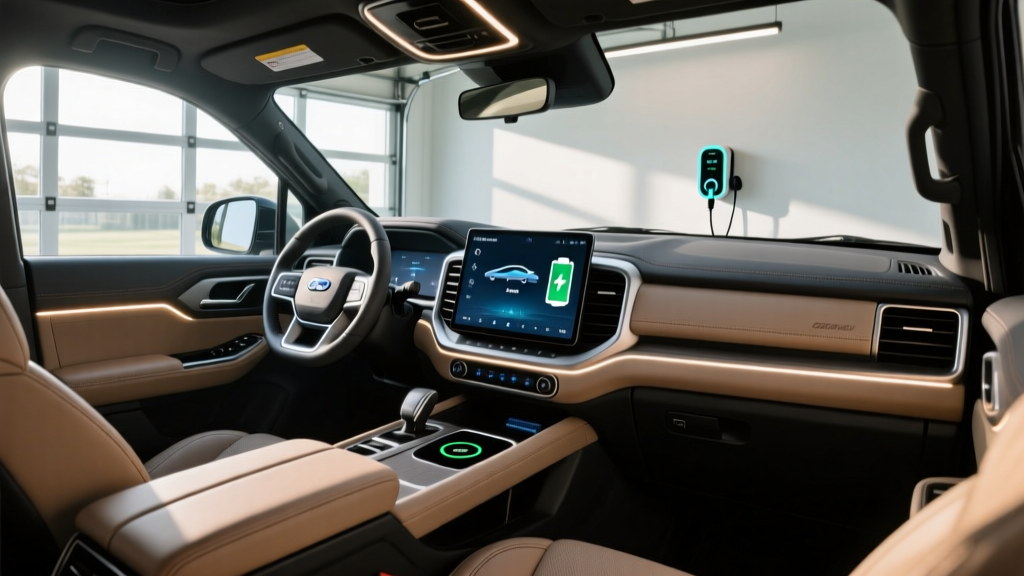
Searches for the F-150 Lightning interior have stayed strong for good reason: this is where Ford has invested heavily to distance the Lightning from its gas-powered F-150 sibling. The centerpiece is the available 15.5-inch vertical touchscreen running SYNC 4A, flanked by a 12-inch digital instrument cluster. The portrait layout prioritizes climate controls at the bottom and media/navigation above, and unlike some competitors, Ford has retained physical knobs for volume and tuning.
Material quality varies significantly by trim. The base Pro and XLT trims use hard-wearing cloth and vinyl with durable plastics — appropriate for job-site use. Step up to the Lariat and you get leather-trimmed seats with contrast stitching, a heated leather steering wheel, and soft-touch upper dashboard materials. The Platinum trim adds genuine aluminum accents, massaging front seats, and a premium B&O 18-speaker sound system that transforms the cabin acoustics.
Interior dimensions are generous, matching the SuperCrew gas F-150:
- Front legroom: 43.9 inches
- Rear legroom: 43.6 inches
- Front headroom: 40.8 inches
- Rear cargo volume (behind second row): 52.8 cu ft (bed: 52.8 cu ft for the 5.5-ft box)
- Mega Power Frunk: 14.1 cu ft — lockable, weather-sealed, with 400 lbs payload capacity and a drain plug for use as a cooler
The frunk alone is a defining feature. It replaces the engine bay with usable, secure storage that no gas truck can match. We routinely used it for groceries, charging cables, and tools — items you'd never want exposed in the bed.
Notable tech includes Ford's Pro Power Onboard (available 2.4 kW or 9.6 kW), which turns the Lightning into a mobile generator capable of powering job-site tools or even a home during an outage via the available Home Integration System. Wireless Apple CarPlay and Android Auto are standard, and the available head-up display projects speed and navigation onto the windshield.
Range, Battery, and Real-World Efficiency
The 2026 F-150 Lightning offers two battery configurations across its trim lineup:
| Configuration | Battery (usable kWh) | Chemistry | EPA Range | MPGe (combined) | kWh/100 mi |
|---|---|---|---|---|---|
| Standard Range (AWD) | 98 kWh | NMC (nickel manganese cobalt) | 240 miles | 76 MPGe | 44 |
| Extended Range (AWD) | 131 kWh | NMC | 320 miles | 73 MPGe | 46 |
- Highway (70-75 mph, 65°F): ~255–270 miles
- City/suburban mixed: ~290–310 miles
- Cold weather (25°F, highway): ~200–220 miles (30–35% reduction)
- Towing 5,200 lbs (flat terrain, 60 mph): ~140–160 miles
Efficiency sits at 46 kWh/100 miles for the Extended Range — competitive for a full-size electric truck but far thirstier than a sedan or crossover. According to fueleconomy.gov, the Lightning Extended Range's combined MPGe of 73 trails the Rivian R1T's 77 MPGe but beats the GMC Hummer EV Pickup's 47 MPGe.
Charging Speeds: DC Fast, Level 2, and Home Setup
Charging speed is where the Lightning's age shows relative to newer 800-volt architectures. The truck uses a 400-volt platform, which caps its DC fast-charging peak below competitors like the Hyundai Ioniq 5 or Porsche Macan EV.
| Charging Level | Max Rate | Speed / Notes |
|---|---|---|
| Level 1 (120V household) | ~1.4 kW | ~2–3 miles per hour |
| Level 2 (240V, 48A) | 11.5 kW | ~19 miles per hour; full charge in ~10–14 hours |
| Level 2 (240V, 80A — Ford Charge Station Pro) | 19.2 kW | ~30 miles per hour; full charge in ~8 hours (Extended Range) |
| DC Fast Charging (CCS) | 150 kW peak | 10–80% in ~41 minutes (Standard Range), ~45 minutes (Extended Range) |
The 150 kW peak DC rate is the Lightning's most significant charging limitation. On a 350 kW Electrify America or Tesla Supercharger (with adapter), the Lightning will not pull more than 150 kW — and that peak is sustained only briefly between roughly 15% and 35% state of charge. Above 60% SoC, the charge curve tapers aggressively, dropping below 60 kW by 80%. This means the 10–80% session takes about 41–45 minutes, which is acceptable for road-trip meal breaks but noticeably slower than the Rivian R1T's ~25-minute 10–80% time on newer models with 800V capability.
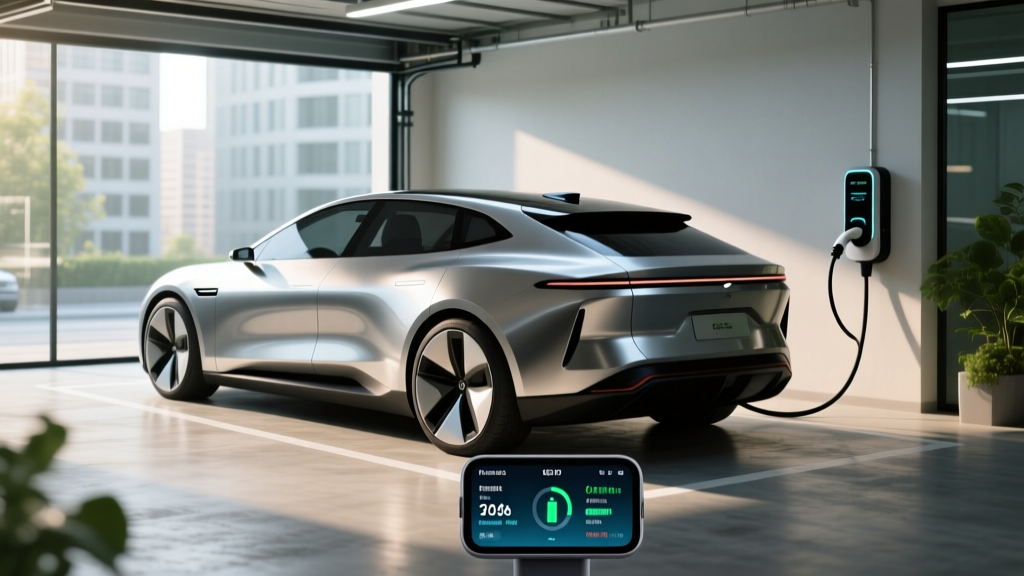
For home charging, the Ford Charge Station Pro (80A, hardwired, 240V) is the optimal solution but requires a 100-amp dedicated circuit. Most homes will need an electrical panel evaluation — and potentially a panel upgrade from 100A to 200A service — adding $1,500–$3,500 to installation costs. The included mobile charger provides 30A Level 2 capability (about 12 miles/hour) on a NEMA 14-50 outlet, which is sufficient for overnight charging if your daily driving is under 80 miles.
Performance, Towing, and Drivetrain
Every 2026 F-150 Lightning comes with dual motors and all-wheel drive. Output varies by battery:
- Standard Range: 452 hp, 775 lb-ft torque
- Extended Range: 580 hp, 775 lb-ft torque
- 0–60 mph (Extended Range): 3.8 seconds (MotorTrend verified)
- Max towing capacity: 10,000 lbs (Extended Range, Max Trailer Tow Package)
- Max payload: 2,235 lbs (Standard Range, regular bed)
The instant torque delivery makes the Lightning feel shockingly quick for a truck that weighs over 6,400 pounds. Merging onto highways and passing maneuvers require zero downshift planning — just press the accelerator. The independent rear suspension (a first for any F-150) improves ride quality over the solid-axle gas trucks, especially when the bed is empty.
Towing is where reality meets physics. While the 10,000-pound max rating is respectable, towing at that weight will cut your range roughly in half or worse. The available Pro Trailer Hitch Assist and onboard scales are genuinely useful, but plan charging stops every 120–150 miles when towing heavy loads. For frequent heavy-towing users, a diesel or hybrid F-150 PowerBoost may still be the more practical choice.
Pricing, Trims, and Federal Tax Credit Eligibility
The 2026 F-150 Lightning lineup spans work-truck basics to near-luxury:
| Trim | Battery | Base MSRP | Est. §30D Credit* | Effective Price |
|---|---|---|---|---|
| Pro (Standard Range) | 98 kWh | $54,995 | Up to $7,500 | ~$47,495 |
| XLT (Standard Range) | 98 kWh | $59,995 | Up to $7,500 | ~$52,495 |
| Lariat (Extended Range) | 131 kWh | $72,495 | Up to $7,500 | ~$64,995 |
| Platinum (Extended Range) | 131 kWh | $86,495 | Up to $7,500 | ~$78,995 |
*Federal §30D tax credit eligibility is not guaranteed. For 2026, the credit (up to $7,500) requires:
- MSRP cap: Vans, SUVs, and trucks must have an MSRP at or below $80,000 (the Platinum trim at $86,495 base exceeds this before options; carefully configure to stay under the cap).
- Buyer income limits: Modified AGI ≤ $150,000 (single), $225,000 (head of household), $300,000 (joint).
- Battery sourcing: Critical minerals and battery components must meet escalating domestic-content and free-trade-agreement thresholds that tighten each year. Ford sources NMC cells from SK On (BlueOval SK joint venture, Kentucky/Tennessee), which has progressively met sourcing requirements — but verify current-year compliance at IRS.gov or with your tax professional before purchase.
- Point-of-sale transfer: Eligible buyers can transfer the credit to the dealer at purchase, reducing the out-of-pocket price directly rather than waiting for a tax refund.
Warranty, Safety, and Driver-Assist Features
Ford backs the Lightning with:
- Battery/Powertrain: 8 years / 100,000 miles (whichever comes first), covering capacity retention below 70%
- Bumper-to-bumper: 3 years / 36,000 miles
- Corrosion perforation: 5 years / unlimited miles
The 70% capacity retention threshold is industry-standard but worth noting: if your 131 kWh pack degrades to 91.7 kWh within the warranty period, Ford will repair or replace it. Real-world data from early 2022–2024 Lightnings suggests degradation is modest — most owners report 93–96% state of health after 30,000–40,000 miles, consistent with NMC chemistry managed by an active liquid thermal system.
Safety ratings are strong. The NHTSA awarded the F-150 Lightning a 5-star overall rating. Standard driver-assist features include automatic emergency braking with pedestrian detection, lane-keeping assist, blind-spot monitoring with trailer coverage, and rear cross-traffic alert.
The available Ford BlueCruise (version 1.4 for 2026) is a Level 2 hands-free driving system — meaning you can take your hands off the wheel on pre-mapped divided highways, but you must remain attentive and the system monitors your eyes via an infrared camera. BlueCruise now covers over 130,000 miles of qualified highways in the U.S. and Canada. It is not self-driving; it does not handle city streets, construction zones, or unmapped roads. Think of it as an advanced cruise control that reduces fatigue on long hauls.
Pros and Cons: The Honest Assessment
- Massive 14.1 cu-ft frunk with 400-lb payload — best in class
- Pro Power Onboard (up to 9.6 kW) for job-site and home backup
- Quick 3.8-second 0–60 (Extended Range) with effortless passing power
- Quiet, comfortable cabin with excellent rear-seat space
- Independent rear suspension improves unloaded ride quality
- BlueCruise 1.4 hands-free highway driving reduces long-trip fatigue
- Available 80A home charging is among the fastest Level 2 in the segment
- 150 kW DC fast-charging peak is slow vs. 800V competitors
- Highway range drops sharply — expect ~255 mi at 75 mph (Extended Range)
- Towing cuts range by 50%+; heavy towing still favors diesel/hybrid
- Platinum trim MSRP can exceed $80K §30D cap with options
- Cold-weather range loss of 30–35% is significant in northern climates
- Large 131 kWh pack means very long Level 2 charge sessions without 80A station
- Regenerative braking is mild; true one-pedal driving is less aggressive than Tesla/Rivian
Who Should Buy the F-150 Lightning?
- You need a full-size truck bed and frunk for work or recreation
- You can charge at home nightly and daily driving is under 150 miles
- You value Pro Power Onboard for job-site tools or home backup power
- You want a comfortable daily-driver truck that's quiet and quick
- You tow occasionally but not daily or at max capacity long-distance
- You tow heavy trailers over 200+ miles regularly (consider F-150 PowerBoost hybrid or diesel)
- You need the fastest possible DC charging for road trips (Rivian R1T or a NACS-equipped vehicle on Tesla Superchargers)
- You live in an area with sparse DC fast-charging infrastructure
- Your budget requires a truck under $50K before incentives
Frequently Asked Questions
What is the real-world range of the 2026 F-150 Lightning?
The Extended Range model is EPA-rated at 320 miles, but real-world highway driving at 70–75 mph yields approximately 255–270 miles. In cold weather (below 30°F), expect 200–220 miles. The Standard Range model delivers about 190–200 miles in real-world highway use against its 240-mile EPA rating.
How fast does the F-150 Lightning charge at home and on the road?
On DC fast chargers, the Lightning peaks at 150 kW, achieving a 10–80% charge in about 41–45 minutes. At home, the available 80A Ford Charge Station Pro delivers 19.2 kW (about 30 miles per hour of charging), filling the Extended Range pack overnight in roughly 8 hours. A standard 48A Level 2 charger provides about 19 miles per hour.
Does the 2026 F-150 Lightning qualify for the $7,500 federal tax credit?
It can, but eligibility depends on your income, the truck's MSRP (must be ≤$80,000 for trucks), and battery-component/critical-mineral sourcing rules that tighten annually. The Pro, XLT, and Lariat trims generally fall under the MSRP cap. The Platinum trim can exceed it when optioned. Verify current-year eligibility at IRS.gov and consult a tax professional. Eligible buyers can transfer the credit to the dealer for a point-of-sale price reduction.
Is the F-150 Lightning worth buying over the Rivian R1T or Silverado EV?
The Lightning excels as a work-and-commute truck with its frunk, Pro Power Onboard, and familiar F-150 ergonomics. The Rivian R1T offers faster DC charging, a more refined ride, and a quad-motor option, but starts higher in price and has a smaller bed. The Chevy Silverado EV offers longer range (up to 440 miles on the 4WT trim) and NACS access to Tesla Superchargers, but its larger footprint and limited availability are drawbacks. If you prioritize home-charging convenience, job-site utility, and a proven dealer network, the Lightning remains a strong choice.
What are the biggest drawbacks of the F-150 Lightning?
The 150 kW DC charging cap is the most significant limitation for road-trippers, making charging stops longer than in 800V competitors. Highway range falls well short of the EPA sticker, and towing heavy loads slashes range dramatically. Cold-weather range loss is substantial, and the Platinum trim's price can disqualify it from the federal tax credit.
How long will the F-150 Lightning battery last?
Ford warranties the battery for 8 years or 100,000 miles against capacity loss below 70%. Based on data from 2022–2024 models, NMC packs with active liquid thermal management are showing 93–96% state of health at 30,000–40,000 miles. Most EV batteries outlast their warranty periods significantly, and full replacement (currently estimated at $18,000–$25,000 out of warranty) is rarely needed within the vehicle's useful life.