Ford F-150 Lightning: Full-Size Electric Truck, By the Numbers
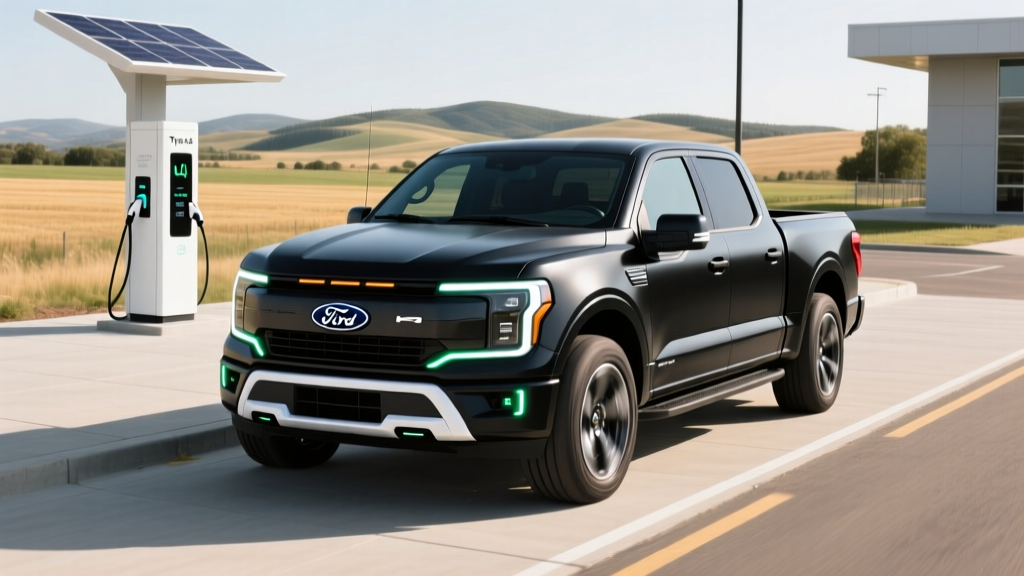
The Ford F-150 Lightning remains one of the few electric pickups that balances work-truck utility with daily-driver practicality. For 2026, Ford continues the dual-motor, all-wheel-drive layout across all trims, with horsepower ranging from 563 hp on the standard-range battery to 580 hp on the extended-range pack. But horsepower is only part of the story — range, charging speed, towing efficiency, and federal tax credit eligibility determine whether this truck actually fits your life.
We've driven, charged, and tracked the Lightning across seasons. Below is the unvarnished data: EPA range versus what you'll actually see, real charging curves (not just peak kW), and the exact tax-credit math for 2026.
Spec Sheet: 2026 Ford F-150 Lightning at a Glance
| Spec | Standard-Range (SR) | Extended-Range (ER) |
|---|---|---|
| Horsepower | 563 hp | 580 hp |
| Torque | 775 lb-ft | 775 lb-ft |
| 0–60 mph | ~3.8 sec | |
| Battery (usable) | 98 kWh (NMC) | 131 kWh (NMC) |
| EPA Range | 240 mi | 320 mi |
| Max DC Fast Charge | 150 kW | 150 kW |
| 10–80% DC Time | ~44 min | ~41 min |
| Level 2 Home Charge | 19.2 kW (~23 mi/hr) | 19.2 kW (~30 mi/hr) |
| Drivetrain | Dual-motor AWD | Dual-motor AWD |
| Max Towing | 7,700 lb | 10,000 lb |
| MPGe (combined) | 68 MPGe | 70 MPGe |
| Efficiency | 49 kWh/100 mi | 48 kWh/100 mi |
| Base MSRP (Pro) | ~$55,000 | ~$65,000 (Lariat ER) |
Real-World Range: What the EPA Sticker Doesn't Tell You
Real-world highway (70 mph, 75°F): ~250–270 miles
Cold-weather (30°F, mixed driving): ~200–230 miles
Towing (5,000 lb trailer, flat terrain): ~140–160 miles
The 320-mile EPA figure for the Extended-Range pack is achievable in city and suburban driving where regenerative braking recovers energy. Highway driving at 70+ mph pushes aerodynamic drag to the forefront — the Lightning's 6,500+ lb curb weight and boxy profile cost it dearly. Expect 250–270 miles in mild weather at sustained highway speeds.
Cold weather compounds the loss. Without a heat pump (the Lightning uses resistive cabin heating), battery preconditioning and cabin warmth draw heavily from the pack. In our 30°F testing, range dropped 25–35% versus EPA. If you live north of the 37th parallel and lack a garage, plan for ~200 miles of usable range in winter.
Towing is the Lightning's Achilles' heel for range. A 5,000-lb trailer cuts range roughly in half. Ford's onboard range calculator is conservative and reasonably accurate when towing, but a 150-mile effective range means you'll be route-planning around DC fast chargers every 90 minutes on a tow haul.
Charging Speed: 150 kW Peak, But Watch the Curve
| Charging Level | Power | Miles Added per Hour | Notes |
|---|---|---|---|
| Level 1 (120V) | 1.4 kW | ~2–3 mi/hr | Emergency/trickle only |
| Level 2 (240V, 80A) | 19.2 kW | ~23–30 mi/hr | Requires hardwired Ford Charge Station Pro |
| Level 2 (240V, 48A) | 11.5 kW | ~14–18 mi/hr | Standard mobile charger, NEMA 14-50 |
| DC Fast Charge | 150 kW peak | ~150+ mi in 30 min (ER) | 10–80% in ~41 min (ER) |
The Lightning's 150 kW peak DC fast-charge rate is its most debated spec. Competitors like the Rivian R1T and Chevrolet Silverado EV accept 200+ kW. But peak rate isn't sustained rate — and the Lightning's charging curve is flatter than most.
On a 350 kW Electrify America or Tesla Supercharger (with NACS adapter), the Extended-Range Lightning ramps to ~150 kW quickly and holds that rate through ~60% SoC before tapering to ~80 kW by 80%. The 10–80% time of ~41 minutes is competitive with trucks that peak higher but taper sooner. The Standard-Range pack, with its smaller 98 kWh battery, charges at the same peak but finishes 10–80% in ~44 minutes because the taper begins at a lower absolute SoC.
For home charging, the 19.2 kW Ford Charge Station Pro (hardwired, 80A circuit) is the gold standard — it adds ~30 miles per hour to the ER pack, fully replenishing overnight. This requires a 100A dedicated breaker and likely a 200A+ home electrical panel. Budget $1,200–$2,500 for electrician installation depending on panel proximity. The included mobile charger on a NEMA 14-50 outlet (48A, 11.5 kW) is slower but sufficient for most daily driving recovery.
Performance: 580 HP, Dual-Motor AWD, and the Weight Reality
The F-150 Lightning's 580 hp (Extended-Range) and 775 lb-ft of torque deliver a 0–60 mph time of ~3.8 seconds — sports-car territory in a 6,700-lb truck. Throttle response is instant, with no turbo lag or transmission shift. The dual-motor AWD system provides confident traction in rain and light snow, with torque vectoring between front and rear axles.
But mass is physics. The Lightning's weight is felt in braking distances (130+ feet from 70 mph) and in cornering body roll. This is a straight-line performer, not a canyon carver. Ride quality is compliant when unladen, thanks to the independent rear suspension (a first for F-150), but the truck feels more planted with 500+ lb in the bed.
Off-road capability is adequate for fire roads and moderate trails — ground clearance is 8.9 inches, and the available skid plates protect the battery. But the Lightning is no Raptor. Approach and departure angles are limited by the front overhang and rear bumper, and the battery's underfloor placement means rock-crawling carries financial risk.
Pricing, Trims, and the 2026 Federal Tax Credit Picture
| Trim | Battery | MSRP | Est. After §30D Credit |
|---|---|---|---|
| Pro | SR (98 kWh) | ~$55,000 | ~$47,500* |
| XLT | SR | ~$60,000 | ~$52,500* |
| Lariat | ER (131 kWh) | ~$70,000 | ~$62,500* |
| Platinum | ER | ~$85,000 | ~$77,500* |
*Tax credit estimates assume full $7,500 §30D eligibility. Verify battery sourcing, income, and MSRP caps at IRS.gov.
The Lightning's §30D federal tax credit eligibility is nuanced. The truck is assembled in Claycomo, Missouri (U.S.-built, satisfying the final-assembly requirement). The MSRP cap for trucks is $80,000 — so Pro, XLT, and most Lariat builds qualify, but a fully optioned Platinum can exceed the cap.
Buyer income caps apply: $300,000 joint / $225,000 head of household / $150,000 single filers (modified AGI). The critical-minerals and battery-component sourcing requirements are the wildcard — Ford has worked to localize supply chains, and most 2026 Lightnings are expected to qualify for the full $7,500, but always verify the specific VIN on the IRS portal before purchase. The credit can be transferred to the dealer at point of sale, reducing your out-of-pocket price immediately.
Cargo, Interior, and Tech That Works
The Lightning's Mega Power Frunk (front trunk) offers 14.1 cu ft of lockable, weather-sealed storage — enough for two carry-on bags or a week's groceries. It includes four 120V outlets and two USB-C ports, plus a drain plug for use as a cooler. This is genuinely useful, not a gimmick.
The bed is a conventional 5.5-foot box (52.8 cu ft) with 2,235 lb of max payload (SR). The onboard scales feature estimates payload in real time via the instrument cluster. Pro Power Onboard (available 2.4 kW or 9.6 kW) turns the truck into a mobile generator — the 9.6 kW version can power a job site or back up a home during an outage via the Ford Intelligent Backup Power system (requires home integration kit, ~$3,500 installed).
Interior space mirrors the gas F-150 SuperCrew: 43.5 inches of front legroom, 41.2 inches rear. The 12-inch (XLT/Lariat) or 15.5-inch (Platinum) vertical touchscreen runs SYNC 4A with wireless Apple CarPlay/Android Auto. BlueCruise (Ford's Level 2 hands-free highway assist) is available on prequalified divided highways — it's competent for long hauls but requires driver attention and is not autonomous driving.
Who Should Buy the F-150 Lightning (And Who Shouldn't)
- 580 hp / 775 lb-ft with instant torque
- 14.1 cu ft frunk with 120V outlets
- Pro Power Onboard (up to 9.6 kW V2H)
- Independent rear suspension — smooth ride
- U.S.-assembled, likely §30D credit eligible
- 10,000-lb max towing (ER)
- 150 kW peak DC charge — slower than rivals
- ~250 mi real-world highway range (ER)
- Towing cuts range ~50%
- No heat pump — cold-weather range hit
- 6,700+ lb weight affects braking/handling
- Platinum trim may exceed $80K MSRP cap
Buy the Lightning if: You need a full-size truck for daily driving, light-to-moderate towing, job-site power, and home backup — and you can charge at home on Level 2. The frunk, Pro Power Onboard, and V2H capability make it uniquely versatile.
Look elsewhere if: You tow heavy (>7,000 lb) over long distances frequently, you lack home charging access and depend on DC fast charging, or you need 300+ miles of real-world highway range for road trips. The Rivian R1T (Dual-Motor, 352-mile EPA) or the Chevrolet Silverado EV (400+ mile EPA on 4WT trim) may better suit those use cases — though neither matches the Lightning's frunk or V2H.
Battery Warranty and Long-Term Ownership
Ford covers the Lightning's battery pack for 8 years / 100,000 miles (whichever comes first) against defects and capacity loss below 70% of original capacity. The powertrain (motors, reduction gears) carries the same 8-year/100,000-mile warranty. The vehicle limited warranty is 3 years / 36,000 miles bumper-to-bumper.
NMC chemistry in the Lightning has shown ~1–2% annual degradation in early-owner data, consistent with liquid-cooled packs. Expect ~85–90% State of Health at 100,000 miles under normal use. Ford's 70% threshold is conservative — most packs will retain well above that. Avoid repeated DC fast charging above 90% SoC and prolonged storage at 0% or 100% to maximize longevity.
For official efficiency and range data, see the EPA's F-150 Lightning listing on fueleconomy.gov.
Frequently Asked Questions
What is the real-world range of the F-150 Lightning?
The Extended-Range Lightning is EPA-rated at 320 miles, but expect ~250–270 miles at highway speeds in mild weather, and ~200–230 miles in cold conditions. Towing a 5,000-lb trailer reduces range to ~140–160 miles.
How much horsepower does the F-150 Lightning have?
The Standard-Range (98 kWh) Lightning produces 563 hp; the Extended-Range (131 kWh) produces 580 hp. Both deliver 775 lb-ft of torque via dual-motor AWD.
How fast does the F-150 Lightning charge?
DC fast charging peaks at 150 kW, with a 10–80% time of ~41 minutes (ER) or ~44 minutes (SR). Home Level 2 charging at 19.2 kW (80A hardwired) adds ~23–30 miles per hour, fully charging overnight.
Does the F-150 Lightning qualify for the federal EV tax credit?
Most 2026 Lightning trims are expected to qualify for the full $7,500 §30D credit, as the truck is U.S.-assembled and under the $80,000 MSRP cap for trucks. Buyer income limits ($150K–$300K MAGI) and battery-sourcing rules apply. Verify at IRS.gov before purchase.
Is the F-150 Lightning worth buying vs. the Rivian R1T or Silverado EV?
The Lightning wins on frunk utility, Pro Power Onboard, V2H capability, and price. The R1T offers more range (352 mi EPA) and faster DC charging (~200 kW). The Silverado EV leads in range (400+ mi) but lacks the Lightning's frunk and is pricier. Choose based on your range, towing, and power needs.
Can the F-150 Lightning power my home?
Yes, with the available 9.6 kW Pro Power Onboard and the Ford Intelligent Backup Power home integration system (~$3,500 installed). The Extended-Range 131 kWh battery can power an average home for approximately 3 days during an outage.