Quick Verdict: What the F-150 Lightning EREV Actually Is
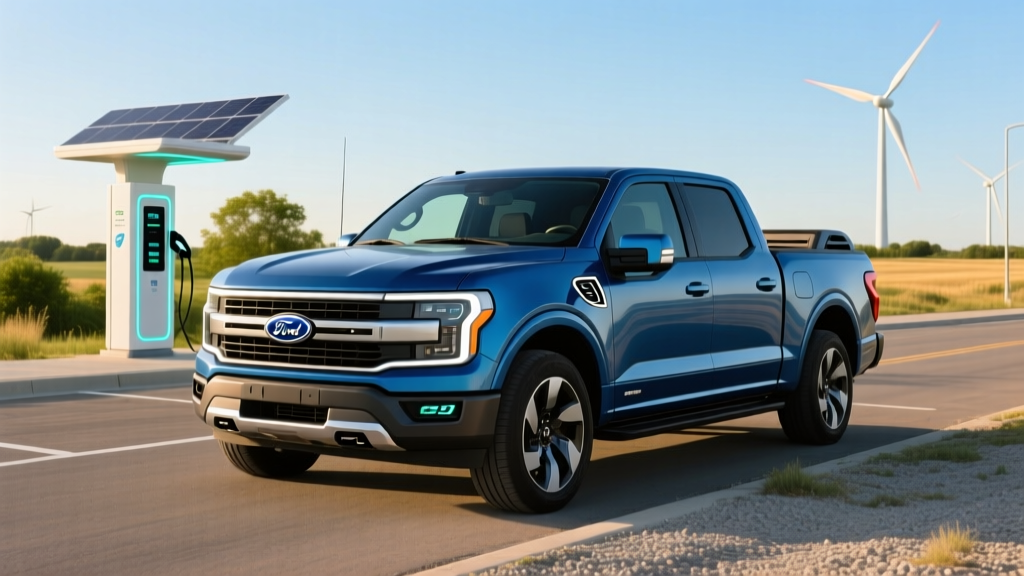
The F-150 Lightning EREV (Extended-Range Electric Vehicle) represents Ford's next move in electrified trucks: a series-hybrid powertrain where an onboard gasoline engine acts solely as a generator to recharge the battery, never directly driving the wheels. Unlike the all-electric F-150 Lightning or the PowerBoost hybrid, the EREV promises electric-only daily driving with a gas-powered safety net for long hauls and heavy towing.
As of early 2026, Ford has confirmed the EREV variant is in development alongside next-generation F-150 Lightning updates, but final EPA-certified specifications, pricing, and on-sale dates have not been published. What follows is a detailed breakdown of confirmed and projected specifications based on Ford's official announcements, supply-chain disclosures, and powertrain architecture analysis. We'll clearly separate confirmed facts from engineering estimates throughout this profile.
EREV Powertrain Architecture: How It Differs from the Lightning BEV
Understanding the EREV requires distinguishing it from Ford's existing electrified F-150 options:
| Powertrain | Propulsion | Gas Engine Role | Electric-Only Range | Total Range |
|---|---|---|---|---|
| F-150 Lightning (BEV) | Dual-motor electric | None | 230–320 mi (EPA) | Same |
| F-150 PowerBoost (HEV) | Gas + electric (parallel hybrid) | Drives wheels + charges battery | 0 mi (no EV mode) | ~700+ mi |
| F-150 Lightning EREV | Electric motors (series hybrid) | Generator only — never drives wheels | Est. 40–70 mi | Est. 500–700+ mi |
In an EREV configuration, the wheels are always turned by electric motors. The gasoline engine — likely a turbocharged inline-4 or V6 based on Ford's EcoBoost family — runs at optimized RPM to spin a generator that feeds electricity to the battery or directly to the motors. This is the same architecture used in the Chevrolet Volt (discontinued) and, more relevantly for trucks, the upcoming Ram 1500 REV with its range-extender option.
The engineering advantage: the gas engine operates at its most efficient load point rather than responding to throttle input, yielding better fuel economy than a conventional hybrid when the battery is depleted. The trade-off: added weight from carrying both a large battery and a complete internal-combustion powertrain.
Battery, Range, and Efficiency: What We Know and What's Estimated
Ford has not published the exact battery capacity for the EREV variant. However, based on the EREV's intended role — meaningful electric-only commuting with extended total range — industry analysts project a usable battery capacity in the 35–55 kWh range, likely using NMC (nickel-manganese-cobalt) chemistry for energy density. LFP (lithium iron phosphate) is less likely here given the packaging constraints of fitting both a battery pack and a range-extender engine in the F-150's frame.
Electric-only range (projected): 40–70 miles EPA (sufficient for most daily commutes)
Total range with range-extender (projected): 500–700+ miles combined
Real-world caveat: Electric-only range will drop 15–25% in cold weather (below 32°F) and under heavy payload or towing. Highway-only driving at 70+ mph will reduce EV range more aggressively than city driving due to regenerative braking recovery in stop-and-go traffic. When the range-extender activates, total range depends on fuel tank size (likely 26–36 gallons based on current F-150 configurations).
For efficiency, expect the EREV to achieve an estimated 70–90 MPGe in charge-depleting (electric) mode, and roughly 18–24 MPG combined in charge-sustaining (gas-generator) mode. These are projections based on comparable EREV architectures — the EPA will publish official figures once the vehicle undergoes certification testing. For reference, the current F-150 PowerBoost hybrid achieves 23–24 MPG combined per EPA data.
Charging Specs: DC Fast Charging and Home Level 2
Because the EREV carries a smaller battery than the full BEV Lightning, charging times will be substantially shorter — a genuine advantage for buyers without reliable home charging access who still want some EV daily driving.
| Charging Level | Power / Rate | Estimated Time (0–100%) | Notes |
|---|---|---|---|
| Level 1 (120V household) | ~1.4 kW | ~24–40 hours | Emergency/trickle only |
| Level 2 (240V home) | ~7.7–11.5 kW (est.) | ~4–7 hours | Full overnight charge; miles/hr depends on efficiency |
| DC Fast Charge | ~50–100 kW peak (est.) | ~30–45 min (10–80%) | Smaller battery = lower peak kW; curve tapers above 80% |
A critical distinction: the EREV's smaller battery means its peak DC charge rate in kW will be lower than the Lightning BEV's 150–180 kW capability. However, because there are fewer kWh to fill, the total charging session is shorter. A 45 kWh battery charging at 75 kW peak reaches 80% faster than a 131 kWh battery at 150 kW. Expect a 10–80% DC fast charge in approximately 30–45 minutes, depending on the final battery size and thermal management.
For home charging, a standard 240V/48A Level 2 station (such as the Ford Charge Station Pro or a universal Wallbox) will replenish the EREV's battery overnight with ample margin. Most EREV owners will rarely need public DC charging, since the gas generator eliminates range urgency on longer trips.
Performance, Towing, and Payload
The F-150 Lightning EREV will use a dual-motor electric drivetrain for propulsion, meaning AWD is standard — consistent with the BEV Lightning and critical for truck buyers in snow-belt states. Horsepower and torque figures have not been confirmed, but projections based on Ford's dual-motor e-platform suggest:
| Spec | F-150 Lightning BEV (Standard Range) | F-150 Lightning EREV (Estimated) |
|---|---|---|
| Horsepower | 580 hp | 500–600 hp (est.) |
| Torque | 775 lb-ft | 700–800 lb-ft (est.) |
| 0–60 mph | ~3.8 sec | ~4.5–5.5 sec (est., added weight) |
| Max Towing | 7,700–10,000 lbs | 8,000–12,000 lbs (est.) |
| Max Payload | 2,235 lbs | 1,800–2,200 lbs (est.) |
The EREV's added powertrain mass — a complete ICE generator system atop the battery and motors — will likely reduce payload capacity compared to the BEV Lightning and slow the 0–60 time modestly. However, electric torque delivery remains instant, and the range-extender eliminates the BEV's towing-range penalty (where towing 8,000+ lbs can cut the Lightning's range to 100–150 miles). With the EREV, the gas generator runs continuously under heavy load, maintaining range without charging stops.
Pricing, Trims, and Federal Tax Credit Eligibility
Ford has not announced official MSRP for the F-150 Lightning EREV. Based on the current Lightning BEV pricing structure and the added complexity of the range-extender system, we project the following:
| Trim (Projected) | Est. Base MSRP | Federal Tax Credit (§30D) | Est. Net Price |
|---|---|---|---|
| Pro (fleet/base) | $52,000–$56,000 | Up to $7,500* | $44,500–$48,500 |
| XLT | $58,000–$64,000 | Up to $7,500* | $50,500–$56,500 |
| Lariat | $68,000–$74,000 | Up to $7,500* | $60,500–$66,500 |
| Platinum | $82,000–$90,000 | Up to $7,500* | $74,500–$82,500 |
*Tax credit estimates are preliminary. Actual eligibility under IRS §30D rules depends on multiple factors that may shift before the EREV goes on sale.
- MSRP cap: Trucks/vans/SUVs must have MSRP ≤ $80,000
- Buyer income cap: Modified AGI ≤ $150,000 (single), $225,000 (head of household), $300,000 (joint)
- Battery sourcing: Critical minerals and battery components must meet escalating domestic/free-trade-agreement thresholds — percentages increase annually through 2030
- Point-of-sale transfer: Eligible buyers can transfer the credit to the dealer at purchase, reducing the sale price directly rather than waiting for a tax refund
- Assembly: Vehicle must undergo final assembly in North America
Critical caveat: Battery-sourcing requirements tighten each year. A vehicle qualifying in 2025 may not qualify in 2027. Consult IRS guidance and a tax professional before relying on credit eligibility for purchase decisions.
Interior, Cargo, and Technology
The EREV is expected to share the F-150 Lightning's cabin architecture, which means the SuperCab or SuperCrew body styles with the following approximate dimensions:
- Front legroom: ~43.9 inches
- Rear legroom (SuperCrew): ~43.6 inches
- Bed length options: 5.5 ft or 6.5 ft
- Front trunk (frunk): The BEV Lightning's 14.1 cu-ft frunk may be reduced or eliminated in the EREV, as the range-extender engine and generator occupy the space where the BEV's front motor and power electronics sit. This is a significant packaging question Ford has not yet answered.
On the tech front, expect the EREV to feature Ford's SYNC 4 or SYNC 4A infotainment system with a 12-inch touchscreen (15.5-inch on Lariat/Platinum), wireless Apple CarPlay and Android Auto, and Ford Co-Pilot360 driver-assist suite. This includes adaptive cruise control, lane-centering, evasive steering assist, and Pro Trailer Backup Assist. Note that Ford's BlueCruise hands-free highway driving (an IIHS-evaluated Level 2 system) will be available on higher trims — but the driver must remain attentive at all times. This is not autonomous driving.
Notable drawback: The EREV's mechanical complexity — two complete powertrains in one vehicle — means more components that can require service. While the electric motors and battery carry strong warranties (see below), the range-extender engine will need conventional maintenance: oil changes, spark plugs, coolant, and air filters. Buyers attracted to EVs for reduced maintenance should weigh this honestly.
Battery and Powertrain Warranty
Based on Ford's current electrified-vehicle warranty structure and federal requirements:
- High-voltage battery: 8 years / 100,000 miles (minimum federally mandated for emissions-related components; Ford may extend to 150,000 miles in CARB states)
- Battery capacity retention: Ford typically warrants against degradation below 70% of original capacity during the warranty period
- Electric drive components: 8 years / 100,000 miles
- Range-extender engine: Expected to fall under Ford's standard powertrain warranty of 5 years / 60,000 miles, though this is unconfirmed
- Bumper-to-bumper: 3 years / 36,000 miles
Long-term battery replacement cost for an EREV will likely be lower than the BEV Lightning's, simply because the battery is smaller. A 45 kWh NMC pack replacement might cost $6,000–$10,000 (parts and labor) out of warranty, versus the Lightning BEV's estimated $15,000–$25,000+ for its 98–131 kWh pack.
Who Should Buy the F-150 Lightning EREV — And Who Shouldn't
- You commute 30–60 miles daily and can charge at home, but regularly tow or take 300+ mile road trips where BEV charging logistics are a burden
- You live in a region with sparse DC fast-charging infrastructure (rural West, Upper Midwest)
- You want electric torque for off-road or low-speed work but need gas range for remote job sites
- You're not ready to commit to full BEV ownership but want to reduce daily fuel consumption significantly
- You want zero tailpipe emissions and minimal maintenance — the BEV Lightning or competitors like the Rivian R1T or Chevrolet Silverado EV are better fits
- You rarely drive more than 250 miles between charging opportunities — the BEV Lightning's 230–320 mile EPA range already covers your needs
- You're budget-sensitive and don't need a truck — a smaller BEV or PHEV SUV will cost less and deliver better efficiency
- You want to avoid all gasoline purchases — the EREV still requires fuel for extended driving
Pros, Cons, and Key Competitors
- Electric-only daily driving eliminates most gasoline use for commuters
- No range anxiety — gas generator provides 500+ mile total range
- Instant electric torque for towing and off-road work
- Shorter charging sessions than BEV (smaller battery)
- F-150 parts availability and dealer network nationwide
- Likely qualifies for §30D credit (subject to sourcing rules)
- Two powertrains = more maintenance (oil, filters, spark plugs on the range-extender)
- Added weight reduces payload vs. BEV Lightning
- Frunk may be reduced or eliminated
- Higher upfront cost than conventional F-150 hybrids
- EREV architecture unproven in Ford trucks at scale
- Gas engine noise under heavy load (generator cycling)
Key competitors to cross-shop:
- Ram 1500 REV (EREV option): Stellantis has confirmed a range-extender variant; direct competitor with similar architecture
- Chevrolet Silverado EV: Full BEV with up to 400+ miles EPA range — no gas backup but zero maintenance
- F-150 Lightning BEV: If your trips stay under 300 miles, the existing Lightning avoids ICE complexity entirely
- F-150 PowerBoost Hybrid: Proven parallel hybrid; less electric-only capability but lower cost and known reliability
- Rivian R1T: Premium BEV truck; no gas option, but strong range and off-road capability
Frequently Asked Questions
What is the real-world range of the F-150 Lightning EREV?
The EREV is projected to deliver 40–70 miles of electric-only range (EPA estimated) before the gas generator activates. Total combined range with a full tank and full battery is estimated at 500–700+ miles. In cold weather (below 32°F), expect electric-only range to drop 15–25%. Highway towing will reduce EV range more aggressively but won't strand you — the generator maintains charge-sustaining operation.
How fast does the F-150 Lightning EREV charge?
On a DC fast charger, expect a 10–80% session in approximately 30–45 minutes, depending on the final battery capacity and peak charge rate (estimated 50–100 kW). At home on a 240V Level 2 charger, a full charge takes roughly 4–7 hours — easily completed overnight. The smaller battery means faster charging than the BEV Lightning but lower peak kW.
How much does the F-150 Lightning EREV cost after tax credits?
Estimated base pricing starts around $52,000–$56,000 for the Pro trim, potentially reaching $90,000 for the Platinum. If the vehicle qualifies for the full $7,500 §30D federal credit (subject to MSRP caps, buyer income limits, and battery-sourcing rules), effective prices could start in the mid-$40,000s. Point-of-sale transfer allows you to apply the credit at purchase rather than at tax filing.
Does the F-150 Lightning EREV qualify for the federal EV tax credit?
Likely yes, but with conditions. Under current IRS §30D rules, PHEVs and EREVs qualify if they meet battery capacity thresholds (≥7 kWh), final assembly in North America, MSRP caps ($80,000 for trucks), buyer income limits, and escalating battery-sourcing requirements. Because Ford assembles the F-150 in the US, the assembly requirement is met. Battery-sourcing compliance will depend on Ford's supply chain at the time of your purchase — this changes annually and must be verified per fueleconomy.gov listings.
Is the F-150 Lightning EREV worth buying vs. the BEV Lightning or PowerBoost hybrid?
It depends on your use case. If you commute short distances and tow or road-trip frequently, the EREV's electric daily driving plus gas range extension is genuinely compelling. If you already have reliable charging and rarely exceed 250 miles, the BEV Lightning is simpler and lower-maintenance. If budget is paramount and you don't care about electric-only driving, the PowerBoost hybrid remains proven and affordable. The EREV occupies a specific niche — and for buyers in that niche, it may be the best F-150 option Ford offers.
Will the EREV's frunk be available?
This is unconfirmed. The BEV Lightning's front trunk exists because the electric powertrain is compact enough to leave space. The EREV's range-extender engine, fuel tank, and associated cooling systems may occupy some or all of that space. Ford has not published packaging details — this is one of the most important questions to resolve before ordering.