Why a Bolt Pattern Query Leads to the F-150 Lightning
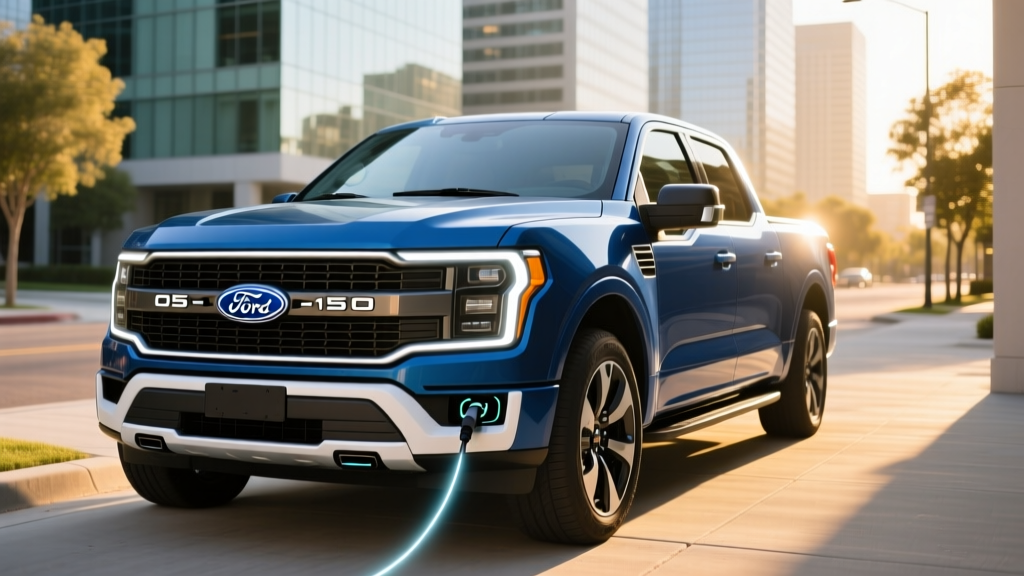
If you've been searching for the 05 F-150 bolt pattern — the 6×135 mm (6-lug, 135 mm bolt circle) wheel mounting spec that defined Ford's full-size trucks from 2004 through 2008 — you might wonder what that has to do with the all-electric F-150 Lightning. The answer matters for anyone cross-shopping used ICE F-150s against the Lightning, considering wheel swaps, or evaluating whether legacy truck accessories carry over to Ford's electric platform. The short version: the Lightning uses a different 6×139.7 mm bolt pattern, so those classic 05 F-150 wheels won't bolt on. But the Lightning's capabilities as a full-size electric pickup deserve their own deep dive.
Below, we break down everything that matters for a 2026 F-150 Lightning purchase: real-world range, DC fast-charging curves, tax-credit math, towing trade-offs, and whether this electric truck actually makes sense against the Rivian R1T and Chevrolet Silverado EV.
2026 F-150 Lightning: Core Specs at a Glance
| Spec | Standard Range (LFP) | Extended Range (NMC) |
|---|---|---|
| EPA Range | 240 miles | 320 miles |
| Battery (usable) | 98 kWh (LFP) | 131 kWh (NMC) |
| Drivetrain | Dual-motor AWD | Dual-motor AWD |
| Horsepower | 452 hp | 580 hp |
| Torque | 775 lb-ft | 775 lb-ft |
| 0–60 mph | ~3.8 sec | |
| Max DC Fast Charge | 150 kW | 150 kW |
| 10–80% DC Time | ~41 min | ~41 min |
| Level 2 Home Rate | 19.2 kW (80A) | 19.2 kW (80A) |
| MPGe (combined) | 76 MPGe | 70 MPGe |
| Towing (max) | 7,700 lbs | 10,000 lbs |
| Payload (max) | 2,235 lbs | 1,800 lbs |
| Bolt Pattern | 6×139.7 mm (not 6×135) | |
| Base MSRP (Pro trim) | $54,995 | |
| Battery Warranty | 8 yr / 100,000 mi | |
Source: fueleconomy.gov and Ford's official 2026 F-150 Lightning specification sheets.
Real-World Range: What the EPA Sticker Doesn't Tell You
EPA Sticker: 320 miles (Extended Range) / 240 miles (Standard Range)
Real-World Expectation: 260–280 miles highway (Extended Range, 70 mph, moderate temps); 190–210 miles highway (Standard Range). In cold weather (below 30°F), expect a 20–30% reduction, dropping the Extended Range to roughly 200–220 miles and the Standard Range to ~165 miles.
Full-size electric pickups face an efficiency penalty that no amount of battery chemistry can fully overcome. The Lightning's tall, flat frontal area pushes through air like a barn door at highway speed. On a 300-mile road trip at 75 mph with A/C running, the Extended Range model will typically arrive with 40–60 miles of buffer remaining — workable, but not generous. The Standard Range truck is a committed commuter; interstate road trips demand careful DC fast-charger planning.
City driving with regenerative braking engaged is where the Lightning shines. Stop-and-go traffic recovers energy that a gas F-150 wastes as heat, and the dual-motor setup delivers smooth, instant torque from every light. Expect 290+ miles around town in the Extended Range variant.
Charging Speed: DC Fast and Home Level 2 Breakdown
| Charging Level | Power | Miles Added / Hour | Notes |
|---|---|---|---|
| Level 1 (120V outlet) | ~1.4 kW | ~2–3 mi/hr | Emergency/trickle only |
| Level 2 (240V, 32A) | 7.7 kW | ~14 mi/hr | Standard home charger |
| Level 2 (240V, 80A) | 19.2 kW | ~30 mi/hr | Ford Charge Station Pro; full overnight refill |
| DC Fast (peak) | 150 kW | ~180 mi/hr (peak) | 10–80% in ~41 min; tapers sharply above 80% |
The Lightning's 150 kW peak DC fast-charging rate is its most common criticism against rivals. The Rivian R1T (Dual-Motor) charges at up to 220 kW, and the Silverado EV peaks at 350 kW on compatible stations. On a 350 kW Electrify America or Tesla Supercharger (with NACS adapter), the Lightning pulls its maximum 150 kW up to roughly 50% state of charge, then tapers progressively. You'll spend more time at the charger than you would in a Silverado EV or a Hyundai Ioniq 5, but 41 minutes for a 10–80% session is reasonable for a 6,500-lb truck.
At home, the 19.2 kW Ford Charge Station Pro (included with some trims, ~$1,200 otherwise) is the gold standard. With an 80-amp dedicated circuit, you'll replenish the Extended Range battery from 20% to full overnight in about 10 hours. Installation typically requires a 100-amp subpanel upgrade — budget $1,500–$3,000 for a licensed electrician, depending on your home's existing service. Always confirm final electrical specs with a qualified professional.
Pricing, Tax Credits, and True Cost
The 2026 F-150 Lightning lineup spans four trims:
- Pro (Standard Range): $54,995 MSRP
- XLT (Standard Range): $62,995 MSRP
- Lariat (Extended Range): $74,995 MSRP
- Platinum (Extended Range): $94,995 MSRP
Federal tax credit eligibility under IRS §30D is where things get complicated. The Lightning qualifies for up to $7,500 in clean vehicle credits, but only if you meet all of the following:
- MSRP Cap: Trucks must be under $80,000 MSRP — this eliminates the Platinum trim from credit eligibility.
- Income Cap: Modified AGI must not exceed $150,000 (single), $225,000 (head of household), or $300,000 (joint).
- Battery Sourcing: Critical minerals and battery components must meet escalating domestic/free-trade-partner thresholds. Ford has confirmed that the Extended Range (NMC) battery meets 2026 sourcing requirements for the full $7,500. The Standard Range (LFP) battery sourcing varies by production batch — confirm the VIN-specific eligibility on the IRS portal before purchasing.
- Point-of-Sale Transfer: As of 2024, you can transfer the credit to the dealer at purchase, reducing your out-of-pocket price immediately rather than waiting for tax filing.
| Trim | MSRP | Est. §30D Credit | Effective Price |
|---|---|---|---|
| Pro (Std Range) | $54,995 | $3,750–$7,500* | $47,495–$51,245 |
| XLT (Std Range) | $62,995 | $3,750–$7,500* | $55,495–$59,245 |
| Lariat (Ext Range) | $74,995 | $7,500 | $67,495 |
| Platinum (Ext Range) | $94,995 | $0 (exceeds MSRP cap) | $94,995 |
*LFP battery sourcing credit varies; confirm via the IRS clean vehicle portal. Consult a tax professional for personal eligibility.
Performance, Towing, and Payload Reality
The Lightning's dual-motor AWD delivers 452 hp (Standard Range) or 580 hp (Extended Range) with 775 lb-ft of instant torque across both. The Extended Range's 3.8-second 0–60 time embarrasses most gas-powered sport trucks, and the low center of gravity from the under-floor battery pack gives it surprisingly composed handling for a full-size pickup.
Towing is where physics reasserts itself. The 10,000-lb max tow rating (Extended Range with Max Trailer Tow Package) is legitimate, but towing a 7,000-lb travel trailer will cut range roughly in half. Plan for 150–170 miles between charges when towing heavy — and DC fast-charging infrastructure near campgrounds and boat ramps remains sparse in many regions. The onboard Pro Power Onboard system (up to 9.6 kW of 120V/240V output) is genuinely useful for job sites and tailgating, running power tools, welders, or an entire campsite without a generator.
Payload capacity ranges from 1,800 to 2,235 lbs depending on configuration — competitive with half-ton gas F-150s but lower than heavy-duty diesel trucks. The front trunk ("frunk") offers 14.1 cubic feet of lockable, drainable storage — a genuine advantage over ICE trucks where that space is occupied by an engine.
Tech, Interior, and Driver Assistance
The Lightning's cabin mirrors the 14th-generation F-150: a 12-inch instrument cluster and available 15.5-inch portrait touchscreen running SYNC 4A. Wireless Apple CarPlay and Android Auto are standard. The available BlueCruise hands-free driving system operates on over 130,000 miles of pre-mapped divided highways.
SAE Automation Level: BlueCruise is a Level 2 driver-assist system. Despite "hands-free" branding, the driver must remain attentive, keep eyes on the road (monitored by an infrared camera), and be prepared to take over immediately. This is not autonomous driving.
BlueCruise works well on long interstate hauls, reducing fatigue on 400-mile days. It does not handle construction zones, unmapped routes, or adverse weather autonomously. Ford charges approximately $75/month or $800/year after the initial complimentary trial period.
Notable drawbacks: the Lightning's ride quality on the independent rear suspension is noticeably better than a solid-axle gas F-150 when unloaded, but it can feel floaty with an empty bed. Road noise at highway speed is present — EVs expose wind and tire noise that engine rumble normally masks. And the Lightning's 6,500-lb curb weight means tire wear accelerates faster than on lighter vehicles; budget for replacement rubber every 25,000–30,000 miles.
Pros, Cons, and the Bolt Pattern Question
Pros
- Class-leading frunk (14.1 cu ft) with power-operated tailgate
- Pro Power Onboard eliminates job-site generators
- Instant 775 lb-ft torque makes merging and passing effortless
- Low operating cost: ~$0.12/mile on home electricity vs. ~$0.22/mile on gas
- Extended Range hits 320 EPA miles — viable for daily driving plus errands
- BlueCruise reduces highway fatigue on long trips
- Qualifies for up to $7,500 federal tax credit (trims under $80k)
Cons
- 150 kW DC fast-charge peak lags Silverado EV (350 kW) and R1T (220 kW)
- Towing cuts range by ~50%; poor charging infrastructure near recreational sites
- 6×139.7 mm bolt pattern means 05 F-150 (6×135) wheels are NOT compatible
- Heavy curb weight accelerates tire wear
- Standard Range 240-mile EPA range is tight for road trips
- Platinum trim exceeds §30D MSRP cap — no federal credit
- BlueCruise subscription adds $800/year after trial
The 05 F-150 Bolt Pattern: What You Need to Know
For readers who arrived here specifically researching the 05 F-150 bolt pattern: the 2004–2008 Ford F-150 used a 6×135 mm bolt pattern (6 lugs on a 135 mm bolt circle diameter) with 14 mm × 2.0 lug nuts. This spec was unique to that generation's half-ton platform.
The 2026 F-150 Lightning uses a 6×139.7 mm bolt pattern (6 lugs on a 139.7 mm / 5.5-inch circle) — the same pattern shared with the current-generation gas F-150 and many GM/SUV platforms. This means:
- Wheels from a 2005 F-150 will not fit a 2026 Lightning.
- Aftermarket wheels must be specifically manufactured for the 6×139.7 pattern with the Lightning's 87.1 mm center bore and appropriate load rating (at least 3,250 lbs per wheel given the truck's GVWR).
- If you're restoring or modifying a 2004–2008 F-150, the 6×135 pattern has robust aftermarket support, but always verify load ratings for your specific model year and trim.
Who Should Buy the F-150 Lightning?
Choose the Lightning if: You need a full-size truck bed and frunk for daily work, have reliable home Level 2 charging, mostly drive under 200 miles per day, and value Pro Power Onboard for job-site or recreational use. The Lariat Extended Range at ~$67,495 after the tax credit offers the best value-to-capability ratio.
Look elsewhere if: You tow heavy loads over long distances regularly (the Silverado EV or a diesel F-250 is more practical), you need the fastest possible DC charging (Rivian R1T or Silverado EV), or you want a lighter, more efficient electric vehicle for commuting without truck needs (consider the Hyundai Ioniq 5 or Tesla Model Y).
Frequently Asked Questions
What is the real-world range of the F-150 Lightning?
The Extended Range achieves 320 EPA miles but expect 260–280 miles in real-world highway driving and as low as 200 miles in sub-30°F cold weather. The Standard Range delivers 240 EPA miles, with real-world highway figures around 190–210 miles.
How fast does the F-150 Lightning charge?
DC fast charging peaks at 150 kW, reaching 10–80% in approximately 41 minutes. At home on a 19.2 kW Level 2 Ford Charge Station Pro (80A), a full charge takes about 10 hours for the Extended Range battery. On a standard 32A Level 2 charger, expect roughly 14 miles of range added per hour.
How much does the Lightning cost after tax credits?
The Pro trim starts at $54,995 and can drop to ~$47,495 with the full $7,500 §30D credit. The Lariat Extended Range at $74,995 drops to ~$67,495. The Platinum trim at $94,995 does not qualify for the federal credit due to the $80,000 MSRP cap for trucks. State and local incentives may further reduce cost — check your jurisdiction's official energy office for current programs.
Does the F-150 Lightning qualify for the federal EV tax credit?
Yes, trims under the $80,000 MSRP cap (Pro, XLT, Lariat) can qualify for up to $7,500 under IRS §30D, provided the buyer meets income limits ($150k single / $300k joint) and the battery meets critical-mineral and component-sourcing requirements. The Extended Range NMC battery currently qualifies for the full credit. Verify your specific VIN's eligibility through the IRS portal before purchase.
Is the F-150 Lightning worth buying vs. the Rivian R1T or Silverado EV?
The Lightning wins on frunk space, Pro Power Onboard utility, and dealer service network breadth. The Rivian R1T offers faster charging (220 kW), a more innovative gear tunnel storage system, and better off-road capability but at a higher starting price. The Silverado EV offers 350 kW DC charging and up to 400 miles of range (4WT trim) but with less cargo versatility. For traditional truck buyers wanting an electric workhorse, the Lightning remains the most familiar and serviceable choice.
Will wheels from a 2005 F-150 fit the Lightning?
No. The 2005 F-150 uses a 6×135 mm bolt pattern, while the Lightning uses 6×139.7 mm. The lug holes will not align. Additionally, any aftermarket wheel for the Lightning must support its high curb weight (~6,500 lbs) — ensure a minimum load rating of 3,250 lbs per wheel.