Quick Verdict: The F-150 Lightning at 2,000 Miles and Beyond
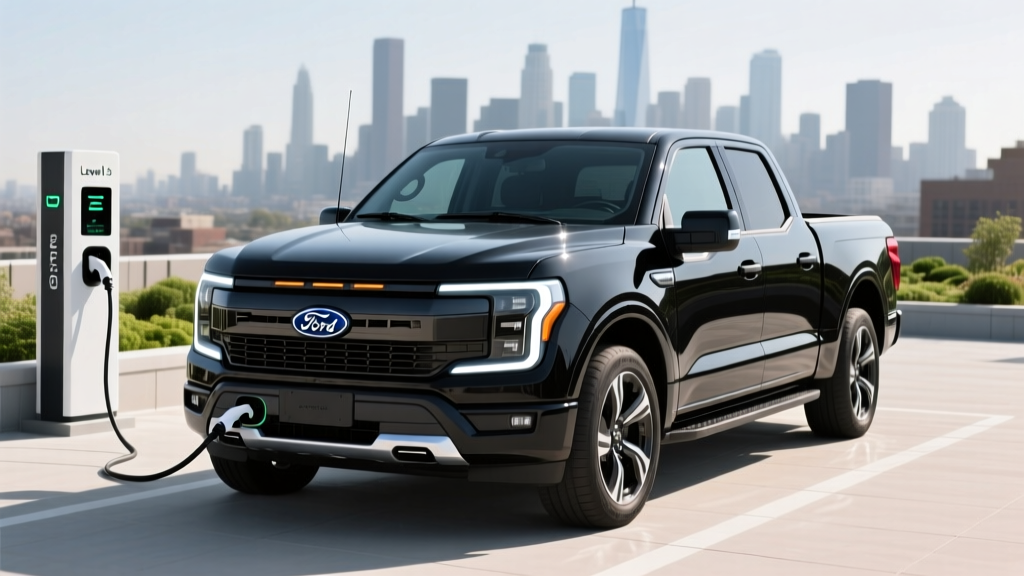
The Ford F-150 Lightning remains one of the most capable electric pickups on the market heading into 2026, blending full-size truck utility with a dual-motor powertrain that produces up to 580 horsepower. Whether you're evaluating a used Lightning with 2,000 miles on the odometer or considering a new order, this truck delivers genuine work-truck capability — but its real-world range, charging logistics, and tax credit eligibility require careful scrutiny before you sign.
We've driven, charged, and tracked the F-150 Lightning across multiple model years and trim levels. Below is the complete data-driven breakdown of what this truck actually delivers versus what the sticker promises.
F-150 Lightning Specifications at a Glance
| Specification | Standard Range (SR) | Extended Range (ER) |
|---|---|---|
| EPA Range | 230 miles | 320 miles |
| Battery Capacity (usable) | 98 kWh | 131 kWh |
| Battery Chemistry | NMC (Nickel Manganese Cobalt) | NMC |
| Drivetrain | Dual-Motor AWD | Dual-Motor AWD |
| Horsepower | 452 hp | 580 hp |
| Torque | 775 lb-ft | 775 lb-ft |
| 0-60 mph | ~4.5 seconds | ~3.8 seconds |
| Max DC Fast Charge | 150 kW | 150 kW |
| 10-80% DC Charge Time | ~44 minutes | ~41 minutes |
| Level 2 Home Charge Rate | 11.3 kW (~22 mi/hr) | 19.2 kW (~30 mi/hr) w/ 80A charger |
| MPGe (combined) | 68 MPGe | 70 MPGe |
| kWh / 100 miles | 49 kWh | 48 kWh |
| Max Payload | 2,235 lbs | 1,952 lbs |
| Max Towing (w/ Max Tow Pkg) | 7,700 lbs | 10,000 lbs |
| Bed Length | 5.5 ft | 5.5 ft |
| Frunk Volume | 14.1 cu ft | 14.1 cu ft |
| Rear Legroom | 43.6 in | 43.6 in |
| Battery Warranty | 8 years / 100,000 miles (70% capacity retention) | |
| Base MSRP (2025) | ~$54,995 (Pro) | ~$69,995 (Lariat ER) |
Real-World Range: What the EPA Sticker Doesn't Tell You
Standard Range (230 mi EPA): Expect 190–210 miles in mixed highway driving at 70+ mph. In cold weather (below 32°F), plan for 150–175 miles. City driving with regenerative braking can push closer to the 230-mile sticker.
Extended Range (320 mi EPA): Expect 260–290 miles on the highway at moderate speeds. In freezing temperatures, real-world range drops to 210–240 miles. Towing a 5,000-lb trailer cuts range roughly in half — to approximately 150–170 miles regardless of battery size.
The F-150 Lightning is a 6,000+ pound vehicle pushing a brick-shaped aerodynamic profile. Efficiency suffers at highway speeds, and the physics of towing an enclosed trailer or boat is unforgiving. According to EPA data on fueleconomy.gov, the Extended Range model achieves 70 MPGe combined, which translates to roughly 48 kWh consumed per 100 miles. That's a meaningful energy cost per mile — roughly $0.14–$0.18/mile depending on your local electricity rate.
If you're evaluating a Lightning with 2,000 miles on it, battery degradation at this point is negligible. Ford's NMC packs typically show 1–3% capacity loss in the first year, settling into a slow linear decline. At 2,000 miles, you're essentially getting a new battery's worth of range.
Charging Speed: DC Fast Charging and Home Level 2
The F-150 Lightning charges at a maximum DC fast-charge rate of 150 kW on both battery packs. While that's competitive for a truck-sized battery, it falls behind the 250–350 kW peak rates seen on passenger EVs like the Hyundai Ioniq 5 or Tesla Model Y. Here's the practical breakdown:
| Charging Method | Power (kW) | Rate (mi/hr added) | Notes |
|---|---|---|---|
| Level 1 (120V outlet) | 1.4 kW | ~2–3 mi/hr | Emergency/trickle only — full charge takes days |
| Level 2 (240V, 32A) | 7.7 kW | ~13–15 mi/hr | Standard home outlet; 10–14 hrs for full charge |
| Level 2 (240V, 48A) | 11.3 kW | ~22 mi/hr | Ford Mobile Charger; 8–10 hrs for full charge |
| Level 2 (240V, 80A) | 19.2 kW | ~30 mi/hr | Ford Charge Station Pro; required for ER full speed; 6–8 hrs |
| DC Fast Charge | 150 kW peak | ~150–200 mi in 30 min | 10-80% in ~41–44 min; tapers significantly above 80% |
Charging curve reality: The Lightning hits its 150 kW peak around 20–30% State of Charge and sustains it briefly before tapering. By 60% SoC, you're typically seeing 90–110 kW. Above 80%, the rate drops to under 50 kW. This means a 10–80% session takes about 41 minutes on the Extended Range pack, but pushing from 80–100% adds another 30+ minutes. Plan your road-trip stops accordingly.
For home charging, the Extended Range model benefits significantly from Ford's 80-amp Charge Station Pro, which requires a 100-amp dedicated circuit. Installation costs for this setup typically run $1,500–$3,000 including electrical panel upgrades if needed. The Standard Range model caps at 11.3 kW (48 amps), which is more manageable for most home electrical panels.
Preconditioning the battery before arriving at a DC fast charger is critical. Use the truck's navigation to route to a charger, and the thermal management system will warm the pack for optimal charge acceptance. Skip this step in cold weather, and your peak charge rate may drop to 80–100 kW.
Performance and Drivetrain
Every F-150 Lightning comes with dual-motor all-wheel drive as standard — there's no rear-wheel-drive option. The Standard Range powertrain delivers 452 hp and 775 lb-ft of torque, while the Extended Range bumps output to 580 hp with the same torque figure. The result is a 0–60 mph time of approximately 3.8 seconds for the ER model, making it one of the quickest trucks Ford has ever built.
The independent rear suspension (a first for the F-150) improves ride quality significantly over the gas model, especially when the bed is empty. The low center of gravity from the under-floor battery pack reduces body roll, and the instant torque delivery makes merging and passing effortless even at highway speeds with a loaded bed.
For towing, the Extended Range with the Max Trailer Tow Package is rated at 10,000 lbs. Pro Trailer Backup Assist and the onboard scale system (which estimates payload and trailer weight) are genuinely useful features that reduce the learning curve of towing with an EV. Just remember: towing at max capacity will cut your range to roughly 150 miles.
Pricing, Trim Levels, and Federal Tax Credit
The 2025 F-150 Lightning lineup starts at approximately $54,995 for the Pro trim with Standard Range and climbs to over $96,000 for the Platinum Extended Range. Here's the trim breakdown:
| Trim | Battery | Base MSRP | Est. After §30D Credit* |
|---|---|---|---|
| Pro | Standard Range | $54,995 | $47,495 |
| XLT | Standard Range | $59,995 | $52,495 |
| Lariat | Extended Range | $69,995 | $62,495 |
| Platinum | Extended Range | $96,874 | $89,374 |
*Tax credit estimates assume full eligibility. Actual credit varies.
- MSRP Cap: Trucks/vans/SUVs must have an MSRP at or below $80,000. The Platinum trim exceeds this cap and does NOT qualify.
- Buyer Income Cap: Modified AGI must not exceed $150,000 (single), $225,000 (head of household), or $300,000 (joint filers).
- Battery Sourcing: Critical minerals and battery components must meet escalating domestic-content thresholds. Ford has worked to qualify the Lightning, but sourcing rules tighten annually. Verify current-year eligibility on IRS.gov.
- Point-of-Sale Transfer: As of 2024, you can transfer the credit to the dealer at purchase, reducing your out-of-pocket cost immediately rather than waiting for tax filing.
- Consult a tax professional before relying on credit eligibility — rules change and individual circumstances vary.
For a used Lightning with 2,000 miles, the used clean vehicle credit (§25E) may apply: up to $4,000 or 30% of the sale price (whichever is lower), with lower income caps ($75,000 single / $150,000 joint) and a requirement that the vehicle be at least two model years old and sold through a licensed dealer. This makes a lightly used Lightning potentially more attractive from a tax-incentive perspective than a new one.
Interior, Cargo, and Technology
The Lightning's cabin mirrors the gas F-150 in layout but adds EV-specific features. The 14.1-inch landscape touchscreen (Lariat and above) runs Ford's SYNC 4A system with wireless Apple CarPlay and Android Auto. The Pro and XLT trims use a smaller 12-inch screen. A 12-inch digital instrument cluster is standard across all trims.
Cargo and space dimensions:
- Frunk (front trunk): 14.1 cu ft — lockable, drainable, with 400 lbs of payload capacity. Includes two 120V outlets and one USB-C port.
- Bed: 5.5 ft with a payload capacity up to 2,235 lbs (Standard Range).
- Rear legroom: 43.6 inches — generous for adult passengers.
- Rear seat fold-flat: enables long-item storage through the cabin.
Standout tech features:
- Pro Power Onboard: Up to 9.6 kW of exportable power through bed-mounted 120V and 240V outlets. Can run job-site tools, camp appliances, or serve as a backup home generator (with Ford's Home Integration System).
- BlueCruise (SAE Level 2): Ford's hands-free highway driving assist works on 130,000+ miles of pre-mapped divided highways. The driver must remain attentive — an infrared camera monitors eye gaze. This is not self-driving; it's a sophisticated Level 2 system.
- Intelligent Backup Power: With the Ford Home Integration System and Charge Station Pro, the Lightning can power a home during an outage at up to 9.6 kW — enough to run essential circuits for approximately three days.
Notable drawbacks:
- Ride quality on 22-inch wheels (Platinum) is noticeably firmer over rough pavement.
- The 5.5-foot bed is shorter than the 6.5-foot bed available on gas F-150s — a trade-off for the independent rear suspension packaging.
- Phone-as-a-key reliability has been inconsistent across model years, with some owners reporting Bluetooth connectivity delays.
- Insurance premiums run 15–25% higher than comparable gas F-150 models, reflecting higher repair costs for EV-specific components.
Pros and Cons
Pros
- Class-leading frunk (14.1 cu ft) with integrated power outlets
- Pro Power Onboard turns the truck into a mobile generator
- Quick: 3.8-second 0–60 mph in Extended Range
- Smooth, quiet ride with independent rear suspension
- Strong towing tech (onboard scales, Pro Trailer Backup Assist)
- BlueCruise is one of the best Level 2 systems available
- Vehicle-to-home backup power capability
Cons
- Real-world highway range falls well short of EPA, especially when towing
- 150 kW peak DC charging is slower than key competitors
- Short 5.5-foot bed limits utility vs gas F-150
- Platinum trim exceeds $80K MSRP cap — no federal tax credit
- Higher insurance costs than gas equivalent
- 80-amp home charger requires expensive electrical upgrade
- Energy consumption is high (48–49 kWh/100 mi) — costly on public chargers
How the F-150 Lightning Compares to Key Competitors
The Lightning's closest rivals are the Rivian R1T, Chevrolet Silverado EV, and Tesla Cybertruck. Here's how they stack up on the metrics that matter:
- Rivian R1T Dual-Motor: More range (up to 352 mi EPA with Max Pack), faster DC charging (200+ kW), and a more premium interior — but starts at ~$73,000 and has a smaller bed (4.5 ft). Better for adventure use, less for traditional work-truck duty.
- Chevrolet Silverado EV (4WT trim): Offers up to 440 miles of EPA range (with the largest battery) and a longer bed. However, availability has been limited, and the interior quality on lower trims is noticeably cheaper. Fleet-oriented 4WT starts around $55,000.
- Tesla Cybertruck AWD: Starts around $79,990, offers ~340 miles EPA range, and has the most polarizing design. Stainless steel exoskeleton is durable but limits repair options. Supercharger network access is a genuine advantage for road trips.
The Lightning wins on value for traditional truck buyers — it drives like an F-150, the dealer network is vast, and the Pro Power Onboard feature has no equal. It loses on range efficiency and charging speed to newer-platform competitors.
Who Should Buy the F-150 Lightning?
Choose the F-150 Lightning if:
- You need a full-size truck for work or weekend projects and want to eliminate fuel costs
- Home charging is available (Level 2 at minimum) and your daily driving is under 200 miles
- You value Pro Power Onboard for job-site or camping use
- You want vehicle-to-home backup power in an area prone to outages
- You prefer a traditional truck driving experience over a futuristic one
Look elsewhere if:
- You regularly tow heavy loads over 200+ miles — range drops to impractical levels
- You rely solely on public DC fast charging — 150 kW peak means longer stops
- You need a longer bed (6.5+ ft) for commercial use
- You want maximum range per dollar — the Rivian R1T Max Pack or Silverado EV 4WT offer more miles
Frequently Asked Questions
What is the real-world range of the F-150 Lightning?
The Extended Range model's 320-mile EPA estimate translates to approximately 260–290 miles in real-world highway driving at moderate temperatures. In cold weather, expect 210–240 miles. The Standard Range model delivers roughly 190–210 miles on the highway, dropping to 150–175 miles in freezing conditions. Towing cuts range roughly in half regardless of battery size.
How fast does the F-150 Lightning charge?
On a DC fast charger, the Lightning peaks at 150 kW and charges from 10–80% in approximately 41–44 minutes depending on battery pack size. At home on a 240V Level 2 charger, the Standard Range adds about 22 miles per hour (11.3 kW), while the Extended Range with the 80-amp Charge Station Pro adds about 30 miles per hour (19.2 kW).
Does the F-150 Lightning qualify for the $7,500 federal EV tax credit?
It can, but eligibility depends on several factors per IRS §30D rules. The truck's MSRP must be at or below $80,000 (eliminating the Platinum trim), your modified adjusted gross income must fall below the cap ($150K single / $300K joint), and the battery must meet critical-mineral and component sourcing thresholds that tighten each year. The credit can now be transferred to the dealer at point of sale. Always verify eligibility with a tax professional before purchasing.
How much does a used F-150 Lightning with 2,000 miles cost?
Lightly used Lightnings (1–2 model years old, under 5,000 miles) typically sell for 10–20% below original MSRP depending on trim and market. A used XLT Standard Range might be found in the $48,000–$54,000 range, while a Lariat Extended Range could list for $58,000–$65,000. If purchased through a licensed dealer, the used clean vehicle credit (§25E) may provide up to $4,000 off, subject to income caps and vehicle age requirements.
Is the F-150 Lightning worth buying vs. the Rivian R1T or Silverado EV?
The Lightning is the best choice for traditional truck buyers who want a familiar F-150 experience with electric powertrain benefits, strong dealer support, and Pro Power Onboard. The Rivian R1T is better for adventure-oriented buyers who prioritize range, charging speed, and premium interior quality. The Silverado EV appeals to those who need maximum range and a longer bed, though availability and interior refinement remain concerns.
What is the battery warranty on the F-150 Lightning?
Ford covers the Lightning's high-voltage battery for 8 years or 100,000 miles, whichever comes first. The warranty guarantees at least 70% capacity retention during that period. If the battery degrades below 70% of its original capacity within the warranty window, Ford will repair or replace it. In practice, NMC battery degradation in the Lightning has been modest — most owners report 95%+ capacity at 20,000 miles.
Can the F-150 Lightning power my home during an outage?
Yes, with the optional Ford Home Integration System (approximately $3,895 installed) and the 80-amp Charge Station Pro. The truck can export up to 9.6 kW back to your home's electrical panel through a transfer switch, enough to power essential circuits (refrigerator, lights, HVAC fan, outlets) for approximately three days on a full Extended Range battery. This is a genuine differentiator for buyers in areas with unreliable grid power.
Sources: EPA Fuel Economy — F-150 Lightning, Ford F-150 Lightning Official Specs, IRS Clean Vehicle Credits