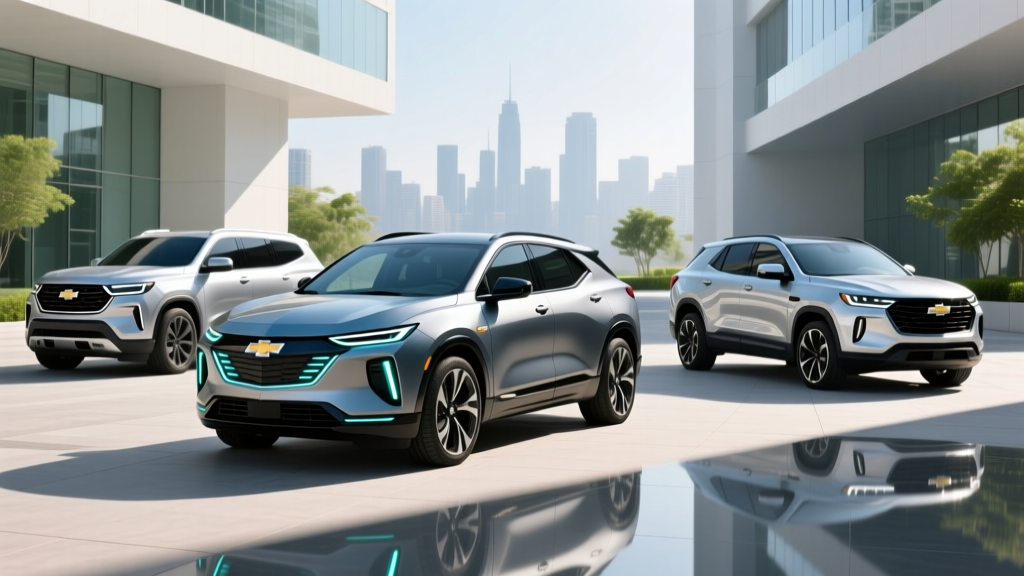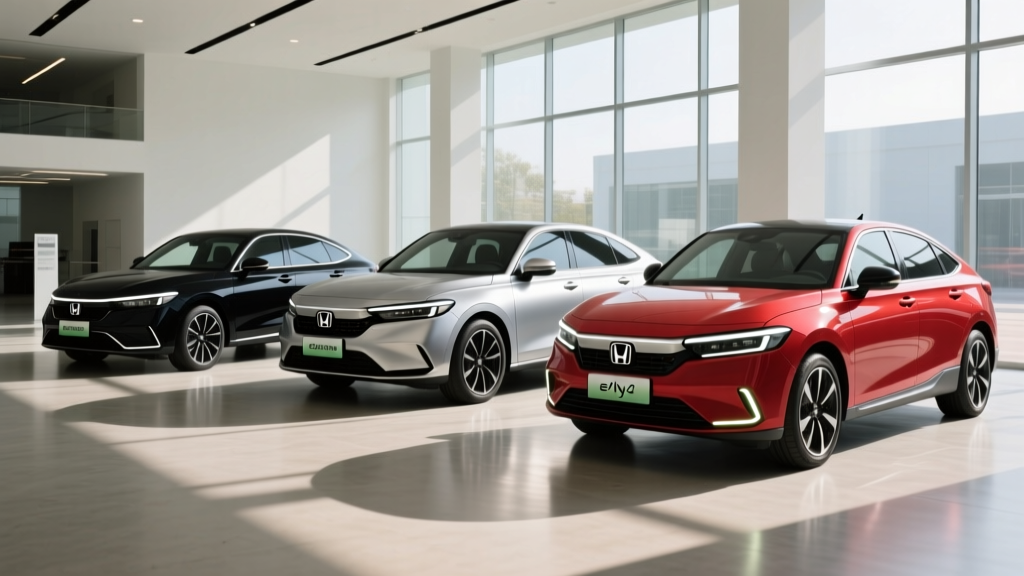
Quick Answer: Honda's 2026 electric lineup centers on the Prologue SUV (EPA-estimated 296 miles range, starting ~$47,400), the upcoming Honda Saloon sedan (announced for late 2026, targeting 300+ miles), and the compact e:Ny1 (limited markets). The Prologue qualifies for partial or full §30D federal tax credits depending on battery-sourcing updates and your income. For most buyers, the Prologue is the practical pick today; the Saloon is worth waiting for if you want a sedan. Compared to Honda's hybrids (CR-V Hybrid at ~40 MPG), the Prologue costs more upfront but saves $800–$1,400/year in fuel and maintenance for a typical driver covering 12,000 miles.
The Electric Honda Lineup at a Glance
Honda's electrification strategy in 2026 spans three distinct BEVs plus a growing hybrid lineup. Unlike Hyundai or Tesla, Honda entered the EV market through a partnership with GM (using the Ultium platform for the Prologue) before transitioning to its own dedicated EV architecture — the Honda e:Architecture — debuting with the Saloon sedan.
| Spec | 2026 Honda Prologue | Honda Saloon (Announced) | Honda e:Ny1 |
|---|---|---|---|
| Body Style | Midsize SUV | Sedan | Compact Crossover |
| EPA Range | 296 mi (FWD) | ~300+ mi (est.) | 256 mi (WLTP; ~220 EPA est.) |
| Battery (usable) | 85 kWh, NMC | TBD (likely ~80 kWh) | 68.8 kWh, NMC |
| Peak DC Fast Charge | 155 kW | ~200 kW (est.) | ~100 kW |
| 10–80% DC Time | ~30 min | ~22 min (est.) | ~41 min |
| Level 2 Rate | 11.5 kW (48A) | TBD | 7.4 kW |
| Horsepower | 288 hp (AWD) / 212 hp (FWD) | TBD | 201 hp |
| 0–60 mph | ~5.8 sec (AWD) | TBD | ~7.6 sec |
| Starting MSRP | $47,400 (EX FWD) | ~$45,000 (est.) | ~$38,000 (limited markets) |
| Battery Warranty | 8 yr / 100,000 mi | 8 yr / 100,000 mi (est.) | 8 yr / 100,000 mi |
Sources: Honda Prologue Official Specs, fueleconomy.gov. Saloon figures are preliminary estimates from Honda's announcement — final EPA certification pending.
2026 Honda Prologue: The Electric SUV You Can Buy Now
The Prologue remains Honda's volume EV in the US market for 2026. Built on GM's Ultium platform (sharing architecture with the Chevrolet Blazer EV), it offers a comfortable, family-friendly package with Honda's interior design language and infotainment on top.
Real-World Range Reality: The Prologue's EPA rating is 296 miles for the EX FWD trim. In real-world highway driving at 70–75 mph, expect 240–265 miles. In cold weather (below 30°F), plan for 200–230 miles of usable range before needing to charge. The AWD Elite trim drops to an EPA-estimated 273 miles due to added weight and drivetrain losses.
Charging Performance
The Prologue's 155 kW peak DC fast-charging rate is adequate but trails competitors like the Hyundai Ioniq 5 (peaking at 240 kW). On a 150+ kW charger, you'll see peak speeds sustained from roughly 10–40% State of Charge, after which the charge curve tapers significantly. The 10–80% session takes approximately 30 minutes — functional for road-trip stops, but you'll notice the difference versus 800-voltage architectures on longer trips.
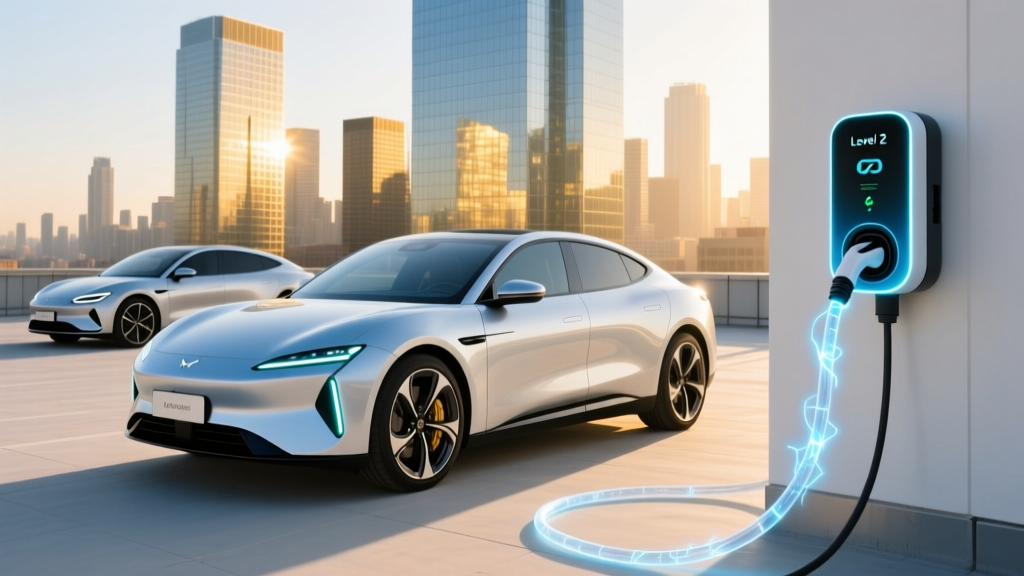
At home on a Level 2 (240V) connection, the 11.5 kW onboard charger replenishes the 85 kWh battery in about 7.5 hours — a full overnight charge is realistic. Honda includes a dual-voltage portable charging cord (120V/240V) with the Prologue, though most buyers will want a dedicated wall-mounted Level 2 unit for daily convenience.
Driving Impressions and Tech
The AWD Prologue delivers 288 horsepower with smooth, linear acceleration. Honda's tuning prioritizes comfort over sportiness — the ride quality is composed, body roll is well-managed, and cabin noise is impressively low. The Honda Sensing suite (adaptive cruise, lane-keeping, automatic emergency braking) is standard, operating at SAE Level 2 — meaning you must remain actively engaged at all times. This is a driver-assist system, not autonomous driving.
Waiting for the Honda Saloon? Here's What We Know
The Honda Saloon is the first vehicle on Honda's proprietary e:Architecture, announced for North American delivery in late 2026 or early 2027. It represents Honda's independent EV vision — a sleek sedan concept that previews the brand's future design language.
Key announced details:
- Platform: Honda e:Architecture (rear-wheel-drive bias, scalable)
- Target range: 300+ miles EPA (final certification pending)
- Charging: Expected to support ~200 kW DC fast charging, with an estimated 10–80% time of ~22 minutes
- Design: Low-slung sedan with a fastback roofline, similar in footprint to the Accord
- ADAS: Next-gen Honda Sensing 360 with expanded highway assist capabilities (still SAE Level 2)
⚠️ Important: The Saloon is not yet available for purchase. All specs are preliminary estimates based on Honda's announcements. EPA range, pricing, and tax credit eligibility will not be confirmed until closer to launch. Do not base a purchase decision on estimated figures alone.
Electric Honda vs. Gas and Hybrid: Real Cost Comparison
The most common question from Honda shoppers: should you buy the Prologue EV, the CR-V Hybrid, or stick with a gas-powered CR-V? Here's a data-driven breakdown over a 5-year, 60,000-mile ownership period.
| Cost Factor (5 Years) | Prologue EX AWD | CR-V Hybrid Sport-L | CR-V EX-L (Gas) |
|---|---|---|---|
| MSRP (approx.) | $50,400 | $39,500 | $37,500 |
| Est. Federal Tax Credit (§30D) | Up to $7,500* | $0 (not a BEV/PHEV) | $0 |
| Effective Purchase Price | ~$42,900 | $39,500 | $37,500 |
| Fuel / Electricity (60k mi) | $3,000–$4,200** | $6,000 | $7,800 |
| Maintenance (5 yr) | ~$1,200 | ~$3,000 | ~$3,500 |
| Insurance (5 yr avg.) | ~$9,500 | ~$7,500 | ~$7,200 |
| Est. Depreciation | ~$18,000 | ~$14,000 | ~$13,500 |
| Total 5-Year Cost | ~$74,600–$75,800 | ~$70,000 | ~$69,500 |
*§30D tax credit eligibility depends on battery critical-mineral and component sourcing, MSRP caps ($55,000 for SUVs), and buyer income limits ($300k joint / $150k single). Confirm your eligibility via the IRS Clean Vehicle Credits page and consult a tax professional. Point-of-sale transfer is available at participating dealers.
**Electricity cost assumes $0.14/kWh home charging and occasional DC fast charging at $0.35–$0.48/kWh. Gas assumes $3.50/gal and 40 MPG combined (hybrid) or 30 MPG (gas). Actual costs vary significantly by region and driving habits.
Where the EV Wins
- Fuel savings: $2,800–$4,800 less than gas over 5 years
- Maintenance: No oil changes, no transmission fluid, fewer brake replacements (regen braking preserves pads)
- Tax credit: Up to $7,500 reduces effective purchase price substantially
- Driving experience: Instant torque, quiet cabin, one-pedal driving capability
Where the Hybrid Wins
- Lower upfront cost: Even after the tax credit, the Prologue costs more
- No charging dependency: Ideal for apartment dwellers without home charging access
- Proven long-term depreciation: CR-V Hybrid has established resale value data
- Road-trip simplicity: No charging stops needed; 5-minute refueling anywhere
Real-World Ownership: What First-Time EV Buyers Must Know
Buying your first electric Honda involves practical considerations that go beyond the spec sheet. Here are the ownership realities that matter most.
Home Charging Is the Foundation
Over 80% of EV charging happens at home. If you have a garage or driveway with access to a 240V outlet (like a dryer outlet), a Level 2 home charger installation typically costs $500–$2,000 depending on your electrical panel capacity and wiring run distance. If your panel needs an upgrade to 200 amps, add $1,500–$3,500.
If you live in an apartment or condo without dedicated parking and charging access, an EV becomes significantly less practical. Public-only charging is possible but adds time, cost, and frustration — DC fast charging costs roughly 2–3x more than home charging per kWh.
Climate Matters More Than You Think
Lithium-ion batteries lose efficiency in cold temperatures. Prologue owners in northern climates (Minnesota, Maine, Colorado) should expect 20–30% range reduction in sustained sub-freezing weather. The Prologue does include a battery preconditioning feature for DC fast charging, which warms the battery before you arrive at a charger — reducing the cold-weather charging slowdown. However, it lacks a dedicated heat pump (it uses resistive cabin heating), which further impacts range in winter compared to EVs with heat-pump systems.
Insurance Costs Are Higher
EV insurance premiums run 15–25% higher than comparable gas vehicles due to higher repair costs, specialized parts, and battery replacement considerations. For the Prologue, expect annual premiums of $1,700–$2,200 depending on your state, driving record, and coverage level. Get quotes from multiple insurers before purchasing — some companies now offer EV-specific discounts.
Common Electric Honda Misconceptions — Fact-Checked
| Myth | Fact |
|---|---|
| "The battery will need replacing in 5 years and cost $20,000." | Honda warranties the Prologue battery for 8 years / 100,000 miles against defects and capacity loss below ~70%. NMC batteries in modern EVs typically retain 85–90% capacity at 100,000 miles based on fleet data. Full replacement is rare and usually covered under warranty within the warranty period. |
| "The Prologue gets 296 miles of range no matter what." | The 296-mile figure is an EPA laboratory estimate. Real-world highway range at 75 mph is typically 240–265 miles. Cold weather, hilly terrain, and high speeds further reduce range. Always plan trips around ~80% of the EPA number for safety. |
| "I'll save $7,500 on taxes automatically." | The §30D credit has income caps ($300k joint / $150k single MAGI), MSRP caps ($55k for SUVs), and battery sourcing requirements that change periodically. Not every buyer qualifies for the full amount. The credit can be transferred at point of sale at participating dealers, reducing your purchase price directly. |
| "EVs are worse for the environment because of battery mining." | Peer-reviewed lifecycle analyses consistently show that EVs produce 50–70% fewer lifetime emissions than gas vehicles in most US grid regions, even accounting for battery manufacturing. As the grid gets cleaner, that advantage grows. Source: EPA Green Vehicle Myths. |
| "The Prologue is just a rebadged Chevy." | While the Prologue shares GM's Ultium platform and battery hardware, Honda engineered its own suspension tuning, interior, infotainment system, and Honda Sensing ADAS. The driving character and user experience are distinctly Honda — not a rebadge. |
Decision Framework: Which Electric Honda Is Right for You?
Buy the Prologue EX FWD ($47,400) if:
- You need an SUV with family cargo space (25.2 cu ft behind rear seats, 57.7 cu ft folded)
- You have home Level 2 charging access
- Your daily commute is under 80 miles round-trip
- You qualify for the §30D tax credit (bringing effective price to ~$39,900)
- You want to buy now, not wait
Buy the Prologue Elite AWD ($54,400) if:
- You need all-wheel drive for snow or mountain driving
- You value premium features (panoramic roof, Bose audio, heads-up display)
- You accept the range trade-off (EPA 273 mi vs. 296 mi for FWD)
- The MSRP stays under the $55,000 SUV cap for §30D eligibility
Wait for the Honda Saloon if:
- You prefer a sedan over an SUV
- You want Honda's proprietary platform with potentially faster charging
- You're not in a rush — delivery expected late 2026 or early 2027
- You want the latest-gen Honda Sensing 360 suite
Choose the CR-V Hybrid instead if:
- You don't have reliable home charging access
- You frequently take 500+ mile road trips and don't want to plan charging stops
- Your budget is firm below $40,000
- You live in a rural area with limited public DC fast-charging infrastructure
FAQ: Electric Honda Ownership Questions
Does the Honda Prologue qualify for the $7,500 federal tax credit?
The Prologue's eligibility for the full §30D credit depends on current battery-sourcing rules, which the IRS updates periodically. As of early 2026, Honda has been working to qualify its Ultium-based battery supply chain. Check the latest vehicle eligibility list on fueleconomy.gov and verify your personal income and MSRP eligibility before relying on the credit. Point-of-sale transfer is available at participating dealerships, reducing your out-of-pocket cost at purchase.
How long does it take to charge the Prologue at home?
On a Level 2 (240V) charger at the Prologue's maximum 11.5 kW acceptance rate, a full 0–100% charge takes about 7.5 hours. In practice, most owners plug in each evening and wake up fully charged — you rarely deplete the battery completely. On a standard 120V household outlet (Level 1), expect roughly 3–4 miles of range per hour of charging, which is only practical for emergency top-ups or very low daily mileage.
Is the Prologue's battery liquid-cooled?
Yes. The Prologue uses a liquid-cooled and liquid-heated thermal management system for its 85 kWh NMC battery pack. This is essential for maintaining battery health over time, enabling consistent DC fast-charging speeds, and protecting the pack in extreme temperatures. Honda's battery warranty covers 8 years or 100,000 miles.
Can the Honda Prologue tow?
The Prologue AWD has a maximum towing capacity of 1,500 pounds when properly equipped. That's enough for a small utility trailer or a couple of dirt bikes, but not a large camping trailer. If you need serious towing (3,500+ lbs), you'll want to look at the Ford F-150 Lightning or Rivian R1S instead.
How does the Prologue compare to the Hyundai Ioniq 5 or Tesla Model Y?
The Prologue competes in the same midsize electric SUV segment but takes a different approach. The Ioniq 5 charges faster (240 kW peak, 10–80% in ~18 min) and offers a more distinctive design, but has slightly less cargo space. The Model Y offers access to the Supercharger network (though NACS adapters now open this to the Prologue too), better efficiency, and more range in Long Range trim (~320 mi EPA). The Prologue's advantages are its traditional Honda driving feel, straightforward infotainment, and strong dealer service network. Compare all three on charging speed, range, and cargo volume before deciding.
What happens if the Prologue battery degrades significantly?
Honda's battery warranty guarantees that the high-voltage battery will retain a minimum level of capacity (typically ~70% of original) for 8 years or 100,000 miles. If degradation exceeds this threshold within the warranty period, Honda will repair, replace, or recondition the battery at no cost. Real-world data from similar Ultium-based EVs suggests most packs retain 88–92% capacity at 60,000 miles with normal use. Avoid routinely charging to 100% or letting the battery sit at 0% for extended periods to maximize longevity.