Why the F-150 Lightning Lease Deserves a Second Look in 2026
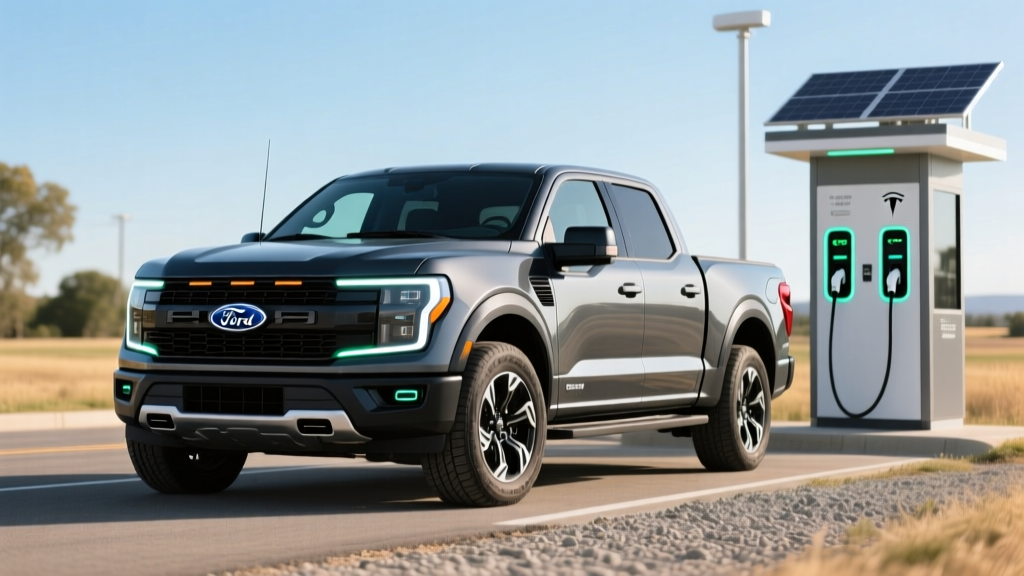
The Ford F-150 Lightning has spent the last few years proving that a full-size electric pickup can serve as a daily driver, a job-site hauler, and a backup power source—all while undercutting the price of many gas trucks once incentives are applied. For 2026, Ford has streamlined the lineup, improved battery efficiency on the Extended Range pack, and kept pricing competitive enough that an F-150 Lightning lease remains one of the most accessible paths into a full-size electric truck.
This review covers every number that matters: real-world range versus EPA stickers, charging speeds at home and on the road, federal tax credit eligibility under IRS §30D, and how the Lightning stacks up against the Chevrolet Silverado EV and Rivian R1T. If you're weighing a lease versus a purchase—or deciding between trims—this guide gives you the exact data to make the call.
2026 F-150 Lightning: Full Spec Table
| Spec | Standard Range (Pro / XLT) | Extended Range (Lariat / Platinum) |
|---|---|---|
| EPA Range | 240 miles | 320 miles |
| Battery Capacity (usable) | 98 kWh (LFP) | 131 kWh (NMC) |
| Drivetrain | Dual-motor AWD | Dual-motor AWD |
| Horsepower | 452 hp | 580 hp |
| Torque | 775 lb-ft | 775 lb-ft |
| 0-60 mph | ~5.0 sec | ~3.8 sec |
| Max DC Fast Charge | 150 kW | 150 kW |
| 10-80% DCFC Time | ~44 min | ~41 min |
| Level 2 Home Charge Rate | 11.3 kW (~22 mi/hr) | 19.2 kW (~30 mi/hr) with 80A charger |
| MPGe (combined) | 68 MPGe | 66 MPGe |
| Efficiency | 49 kWh/100 mi | 51 kWh/100 mi |
| Max Payload | 2,235 lb | 1,952 lb |
| Max Towing | 7,700 lb | 10,000 lb (w/ Max Trailer Tow) |
| Base MSRP | $55,090 (Pro) | $76,995 (Lariat) |
| Battery/Powertrain Warranty | 8 years / 100,000 miles (70% capacity retention) | |
Source: Ford Motor Company, fueleconomy.gov
Real-World Range: What You'll Actually See
Standard Range (EPA 240 mi): Expect 190–215 miles on the highway at 70 mph; 160–180 miles in sub-freezing temperatures.
Extended Range (EPA 320 mi): Expect 260–285 miles on the highway at 70 mph; 220–245 miles in cold weather with cabin heat.
City/regenerative driving can match or slightly exceed EPA numbers in mild conditions.
The F-150 Lightning's boxy aerodynamics and heavy curb weight (6,500–7,000 lb depending on trim) mean highway efficiency takes a significant hit compared to sedans and crossovers. In our experience and consistent with third-party testing, sustained 70-80 mph driving reduces range by roughly 15-20% versus the EPA combined figure.
Cold weather compounds the penalty. Lithium-ion batteries lose efficiency below freezing, and the Lightning's large cabin demands substantial energy for heating. The 2026 model includes a standard heat pump (previously optional on lower trims), which helps, but expect a 25-35% range reduction in sustained sub-30°F driving compared to mild-weather city use.
For the Standard Range pack, that means real highway road trips require a charge stop every 190-200 miles—tight for remote corridors. The Extended Range pack is the practical choice for anyone regularly driving more than 200 miles between charging stations.
Charging Speed: DC Fast Charging and Home Setup
| Charge Level | Power | Miles Added Per Hour | Notes |
|---|---|---|---|
| Level 1 (120V) | 1.4 kW | ~2-3 mi/hr | Emergency/trickle only; ~100+ hr for full charge |
| Level 2 (240V, 48A) | 11.3 kW | ~22 mi/hr | Standard Mobile Power Cord; ~10 hr full charge (Std Range) |
| Level 2 (240V, 80A) | 19.2 kW | ~30 mi/hr | Ford Charge Station Pro; ~8 hr full charge (Ext Range) |
| DC Fast Charge | 150 kW peak | ~150-180 mi in 30 min | 10-80% in ~41-44 min; tapers above 80% |
A critical nuance for Lightning buyers: Ford uses the NACS (North American Charging Standard) connector on 2026 models, granting native access to the Tesla Supercharger network without an adapter. This is a major practical advantage over the CCS-equipped competition, as the Supercharger network remains the most reliable public DC fast-charging infrastructure in the U.S.
However, the Lightning's 150 kW peak DC charge rate is conservative compared to rivals. The Hyundai Ioniq 5 and Kia EV9 accept 235-250 kW, and the Silverado EV peaks at 350 kW on 800V architecture. On a 150 kW stall, the Lightning's charge curve is relatively flat from 20-60% SoC, but it tapers noticeably past 80%—plan your stops to 80% and keep moving rather than waiting for a full top-up.
For home charging, the 80-amp Ford Charge Station Pro requires a 100-amp dedicated circuit. Most homes with a 200-amp electrical panel will need a panel upgrade to support this, which adds $1,500-$3,500 to installation costs. The 48-amp mobile cord works on a standard NEMA 14-50 outlet (50-amp circuit) and is sufficient for overnight charging on the Standard Range pack.
Pricing, Trims, and the F-150 Lightning Lease Math
| Trim | Battery | Base MSRP | Federal §30D Credit | Effective Price |
|---|---|---|---|---|
| Pro (Standard Range) | 98 kWh LFP | $55,090 | Up to $7,500* | ~$47,590 |
| XLT (Standard Range) | 98 kWh LFP | $62,090 | Up to $7,500* | ~$54,590 |
| XLT (Extended Range) | 131 kWh NMC | $72,090 | Up to $7,500* | ~$64,590 |
| Lariat (Extended Range) | 131 kWh NMC | $76,995 | Up to $7,500* | ~$69,495 |
| Platinum (Extended Range) | 131 kWh NMC | $87,995 | Up to $7,500* | ~$80,495 |
*Federal EV tax credit eligibility under IRS §30D is subject to: buyer AGI limits ($150K single / $300K joint), truck MSRP cap of $80,000, and critical-mineral/battery-component sourcing requirements that vary by model year. The credit can now be transferred to the dealer at point of sale as a purchase discount. Lease transactions may qualify under §45W (commercial clean vehicle credit) passed through by the lessor—confirm with your dealer and tax professional.
Lease vs. Buy: The Financial Argument
Leasing the F-150 Lightning has a distinct advantage in 2026: many Ford dealers pass through the $7,500 federal credit as a lease incentive (capitalized-cost reduction), even when the buyer might not qualify for §30D on a personal purchase due to income or sourcing restrictions. This is because leased vehicles are technically purchased by the leasing company (Ford Credit), which claims the commercial credit under §45W and can pass savings to the lessee.
A typical 2026 F-150 Lightning XLT Extended Range lease might look like this:
- MSRP: $72,090
- Lease incentive (credit pass-through): -$7,500
- Adjusted cap cost: ~$64,590
- 36-month / 10,500 mi/yr residual: ~55% ($39,650)
- Estimated monthly payment: $750-$850 (depending on money factor and state taxes)
That positions the Lightning lease competitively against a financed gas F-150 Lariat with similar equipment, especially when you factor in fuel savings (roughly $150-$200/month less in electricity versus gas at 15,000 miles/year) and near-zero maintenance costs—no oil changes, no transmission fluid, far less brake wear with regenerative braking.
Cargo, Passenger Space, and the Mega Power Frunk
The Lightning retains the SuperCrew cab configuration with four full doors and seating for five. Interior dimensions remain generous:
- Front legroom: 43.9 inches
- Rear legroom: 43.6 inches
- Bed length: 67.1 inches (5.5 ft box)
- Bed cargo volume: 52.8 cu ft
- Frunk (front trunk): 14.1 cu ft, 400 lb payload capacity
The Mega Power Frunk is the Lightning's party trick. With a powered opening lid and four 120V outlets (two inside, two in the bed), plus two USB-C ports, it transforms the nose of the truck into a secure, weatherproof storage and worksite power hub. On Platinum trims, Pro Power Onboard delivers up to 9.6 kW of exportable power—enough to run power tools at a job site, tailgate with multiple appliances, or provide emergency home backup through the Ford Intelligent Backup Power system (requires a compatible transfer switch and the 80A Charge Station Pro).
Tech, Driver Assistance, and the SYNC 4A System
The 2026 Lightning continues with Ford's SYNC 4A infotainment running on a 12-inch touchscreen (15.5-inch portrait screen on Lariat and Platinum). Wireless Apple CarPlay and Android Auto are standard, and the digital instrument cluster is 12 inches across all trims.
On the driver-assistance front, Ford Co-Pilot360 2.0 is standard, including:
- Adaptive cruise control with stop-and-go
- Lane centering assist
- Automatic emergency braking with pedestrian detection
- Blind-spot monitoring with trailer coverage
- Rear cross-traffic alert
Ford Co-Pilot360 and available BlueCruise are Level 2 driver-assistance systems. The driver must remain attentive and keep hands on the wheel (or be prepared to resume control in hands-free zones). BlueCruise allows hands-free driving on pre-mapped divided highways, but it is NOT autonomous driving—you are still the responsible operator.
BlueCruise 1.5 (available on Lariat and standard on Platinum) enables hands-free driving on over 130,000 miles of pre-qualified highways. It's competitive with GM's Super Cruise in real-world use, though Ford's lane-change-on-command feature still requires a turn-signal tap rather than executing fully automatic overtakes.
Pros and Cons
Pros
- NACS connector gives native Supercharger access
- Pro Power Onboard (up to 9.6 kW) is a class-leading worksite and backup power feature
- Mega Power Frunk adds 14.1 cu ft of secure, powered storage
- LFP battery on Standard Range trims offers longer cycle life and can be charged to 100% daily without degradation concern
- Strong lease incentives often pass through the full $7,500 credit
- Quiet, smooth, and surprisingly quick (3.8 sec 0-60 on Extended Range)
Cons
- 150 kW peak DC charge rate is slow for a 131 kWh battery—road-trip stops take longer than rivals
- Highway range drops to ~260 mi (Ext Range) at sustained speeds; tighter in cold weather
- Towing cuts range by 40-50%—a 10,000-lb trailer drops effective range below 160 miles
- Heavy curb weight (up to 7,000 lb) increases tire wear
- Platinum trim pushes past $88K, above the $80K §30D MSRP cap for direct purchase credit
- Rear-seat headroom is tight for tall passengers due to battery pack raising the floor
F-150 Lightning vs. the Competition
The Lightning's most direct rivals are the Chevrolet Silverado EV and the Rivian R1T. Here's how they compare on the numbers that matter:
| Spec | F-150 Lightning (Ext Range) | Silverado EV (4WT / 3WT) | Rivian R1T (Dual Max) |
|---|---|---|---|
| EPA Range | 320 mi | 380-440 mi | 352 mi |
| Battery | 131 kWh NMC | 200 kWh NMC | 149 kWh NMC |
| Peak DC Charge | 150 kW | 350 kW | 200 kW |
| 10-80% Time | ~41 min | ~20 min | ~30 min |
| 0-60 mph | 3.8 sec | ~4.5 sec (4WT) | 3.5 sec |
| Max Towing | 10,000 lb | 12,500 lb | 11,000 lb |
| Starting MSRP | $55,090 | $52,500 (3WT) | $69,900 |
| Bed Length | 5.5 ft | 5.5 ft (w/ Multi-Flex midgate) | 4.5 ft |
| Connector | NACS | NACS | NACS (2025+) |
Sources: fueleconomy.gov, manufacturer specifications
The Silverado EV wins on range and charging speed, thanks to its Ultium platform's 800V architecture. The Rivian R1T is more refined as an adventure/lifestyle vehicle with superior off-road capability and the best 0-60 time. But the Lightning holds advantages in starting price (Pro trim), Pro Power Onboard for worksite use, the frunk, and Ford's dealer network for service and support in rural areas.
Who Should Lease the F-150 Lightning?
- You need a full-size truck for daily commuting and light-to-moderate towing (<8,000 lb regularly)
- You have home Level 2 charging and mostly drive within 200 miles of home
- Pro Power Onboard and the frunk add real utility for your job site or outdoor lifestyle
- You want NACS Supercharger access without adapters
- A lease with credit pass-through gives you a lower monthly payment than a gas truck
- You tow heavy (>8,000 lb) over long distances—range drops below 160 miles
- You take frequent road trips through charging-desert corridors (150 kW charging means longer stops)
- You need a long bed (6.5+ ft)—the Lightning only comes in a 5.5 ft box
- Maximum range is your top priority (Silverado EV 4WT offers 440 mi EPA)
Frequently Asked Questions
What is the real-world range of the F-150 Lightning?
The Extended Range pack (EPA 320 mi) delivers roughly 260-285 miles at highway speeds in mild weather and 220-245 miles in freezing temperatures. The Standard Range pack (EPA 240 mi) returns about 190-215 highway miles and 160-180 in cold weather. City driving with regenerative braking can match or exceed EPA estimates.
How fast does the F-150 Lightning charge?
On a DC fast charger, the Lightning peaks at 150 kW, taking roughly 41-44 minutes to go from 10-80%. At home on a 240V/80A Level 2 charger (Ford Charge Station Pro), the Extended Range pack adds about 30 miles per hour and fully charges in roughly 8 hours. On a standard 48A Level 2 outlet, expect about 22 miles per hour.
Does the F-150 Lightning qualify for the federal EV tax credit?
Most trims qualify for up to $7,500 under IRS §30D for purchase, subject to buyer income caps ($150K single / $300K joint filing), the $80,000 truck MSRP cap (which excludes the Platinum trim at $87,995), and critical-mineral/battery-sourcing requirements that change annually. For leases, the lessor (Ford Credit) typically claims the commercial credit under §45W and passes savings to the lessee as a capitalized-cost reduction—often without the same income or sourcing restrictions. Confirm with your dealer and a tax professional.
Is it worth leasing versus buying?
Leasing is often the smarter play for the Lightning in 2026. You get the $7,500 incentive passed through regardless of personal tax liability, avoid long-term battery depreciation risk, and can upgrade in 36 months as charging infrastructure and battery technology improve. Buying makes sense if you drive fewer than 10,000 miles/year, plan to keep the truck 8+ years, and want to claim the credit directly on your tax return.
How does towing affect the Lightning's range?
Towing is the Lightning's Achilles' heel. Pulling a 7,000-10,000 lb trailer at highway speeds cuts range by 40-50%, dropping the Extended Range model to roughly 150-175 effective miles. Plan for frequent charge stops and verify DC fast-charger availability along your route. If heavy long-distance towing is your primary use case, a diesel or the Silverado EV with its larger battery may serve you better.
What is the battery warranty?
Ford covers the Lightning's battery and electric powertrain for 8 years or 100,000 miles, whichever comes first. The warranty guarantees at least 70% capacity retention over that period. The LFP battery on Standard Range trims generally degrades more slowly than NMC and tolerates frequent 100% charging, which is an advantage for daily-use fleet and work-truck buyers.