The Real Math Behind EV Total Cost of Ownership
The sticker price of an electric vehicle is only the opening move in a much longer financial game. To understand whether an EV actually saves you money — or costs you more — you need to track every dollar flowing in and out over the years you own it: the purchase price after incentives, the electricity or gasoline you burn, the insurance premiums you pay, the maintenance you perform (or skip), and the resale value when you trade it in.
This guide walks through a concrete five-year total cost of ownership (TCO) analysis using a mainstream EV benchmark — the 2026 Tesla Model Y Long Range AWD — compared against a similarly sized gas-powered crossover, the 2026 Toyota RAV4 AWD. We use real EPA data, current IRS §30D tax credit rules, national average electricity and gasoline prices, and published insurance and depreciation figures. Your numbers will vary by state, utility rate, and driving habits, but the framework applies universally.
- Ownership period: 5 years / 75,000 miles (15,000 mi/yr)
- Electricity cost: $0.16/kWh national residential average (home charging); $0.40/kWh public DC fast charging average
- Gasoline cost: $3.40/gal national average
- Charging mix: 80% home Level 2, 20% public DC fast charging
- Financing: 60-month loan at 6.5% APR, 10% down
5-Year TCO Side by Side: Model Y vs. RAV4
Before diving into each cost category, here is the full picture. The table below captures the major line items for both vehicles over five years and 75,000 miles.
| Cost Category | 2026 Tesla Model Y LR AWD | 2026 Toyota RAV4 AWD (LE) |
|---|---|---|
| Base MSRP | $44,990 | $32,350 |
| Federal Tax Credit (§30D) | −$7,500 (if eligible) | $0 |
| Effective Purchase Price | $37,490 | $32,350 |
| 5-Year Interest (60-mo loan, 6.5%) | $6,435 | $5,545 |
| Fuel / Energy (75,000 mi) | $2,640 | $8,925 |
| Maintenance (5 yr) | $900 | $3,200 |
| Insurance (5 yr) | $11,250 | $7,800 |
| Depreciation (5 yr) | $18,500 | $11,800 |
| Total 5-Year Cost | $77,215 | $69,620 |
| Cost Per Mile | $1.03 | $0.93 |
At face value, the RAV4 wins on pure TCO by roughly $7,600 over five years. But that headline number masks important nuances: the Model Y delivers dramatically lower fuel and maintenance costs, significantly more cargo space and performance, and access to the Supercharger network. The gap also narrows — or reverses — depending on your state incentives, utility rates, and how long you hold the vehicle. Let's unpack each line item.
Fuel Savings: Charging Cost Per Mile vs. Gasoline
This is where EVs shine brightest, and the math is straightforward once you separate kilowatts (kW, the rate of power delivery) from kilowatt-hours (kWh, the unit of energy stored in the battery — think of it as the EV equivalent of a gallon of gas).
| Metric | Tesla Model Y LR AWD | Toyota RAV4 AWD |
|---|---|---|
| EPA Efficiency | 28 kWh/100 mi (120 MPGe combined) | 30 MPG combined |
| Energy Cost (home, $0.16/kWh) | $0.045/mi | — |
| Energy Cost (public DC, $0.40/kWh) | $0.112/mi | — |
| Blended Cost (80/20 home/public) | $0.058/mi | — |
| Gasoline Cost ($3.40/gal) | — | $0.113/mi |
| 5-Year Fuel Cost (75,000 mi) | $2,640 | $8,925 |
| 5-Year Savings | $6,285 saved with the EV | |
The Model Y costs roughly half per mile to "fuel" compared to the RAV4, even accounting for 20% public fast-charging at higher rates. Over 75,000 miles, that translates to nearly $6,300 in fuel savings. Source: fueleconomy.gov for EPA efficiency data.
Real-world caveats: If you live in a state with expensive electricity (California averages ~$0.28/kWh residential, for example), your home-charging cost per mile rises to about $0.078 — still cheaper than gas, but the gap narrows. Conversely, if you have access to free workplace charging or a utility off-peak rate of $0.08/kWh, your EV fuel cost drops to roughly $0.022/mi, widening the advantage substantially. Cold weather also increases consumption by 15-30% due to battery heating and cabin climate demands, so winter efficiency for the Model Y may dip to 35-38 kWh/100 mi in sub-freezing climates.
Federal Tax Credit: Do You Qualify for §30D?
The federal EV tax credit under IRS §30D can knock up to $7,500 off your effective purchase price — and as of 2024, it can be transferred to the dealer at point of sale, meaning you get the discount upfront rather than waiting to claim it on your tax return. But eligibility is not automatic. The rules have tightened significantly, and qualifying depends on your income, the vehicle's MSRP, and where its battery materials are sourced.
- Credit amount: Up to $7,500 ($3,750 for critical minerals + $3,750 for battery components)
- Buyer income caps (modified AGI): $150,000 single / $225,000 head of household / $300,000 joint
- Vehicle MSRP caps: $80,000 for SUVs, pickups, and vans; $55,000 for sedans and other body styles
- Critical minerals requirement: A specified percentage of battery minerals must be sourced from the U.S. or a free-trade-agreement country (percentage increases annually)
- Battery component requirement: A specified percentage of battery components must be manufactured or assembled in North America (percentage increases annually)
- Foreign Entity of Concern (FEOC) restriction: Vehicles with battery components or critical minerals from a FEOC (e.g., certain Chinese suppliers) are disqualified
- Point-of-sale transfer: Buyers can transfer the credit to the dealer for an upfront price reduction, effective since Jan 1, 2024
- One vehicle per taxpayer per year
Source: IRS.gov — Clean Vehicle Credits. Rules are subject to change; consult a tax professional for your specific situation.
For the 2026 Tesla Model Y Long Range (MSRP $44,990, classified as an SUV), the vehicle currently qualifies for the full $7,500 credit for eligible buyers, thanks to Tesla's North American battery sourcing and supply-chain compliance. However, the qualifying list shifts as battery-sourcing percentages ratchet up each year. Always verify current eligibility on fueleconomy.gov's tax credit tool before purchasing.
State, Local, and Utility Incentives
Federal incentives are uniform, but state and utility rebates vary dramatically. Examples (amounts subject to change):
- California: Up to $7,000 via Clean Cars 4 All (income-dependent) + utility rebates of $500-$1,500
- Colorado: Up to $5,000 state tax credit for new EVs
- New York: Up to $2,000 Drive Clean Rebate (point-of-sale)
- Utility rebates: Many utilities (PG&E, ConEd, Xcel Energy) offer $250-$1,500 rebates for home Level 2 charger installation, and some provide off-peak charging credits of $50-$200/year
- HVAC/panel upgrades: Some utilities bundle EV charger installation with panel-upgrade rebates under IRA electrification programs
Check your state energy office and local utility for current programs. These incentives can add $1,000-$8,000+ on top of the federal credit, fundamentally altering the TCO equation.
Maintenance: Where EVs Quietly Save Thousands
Electric vehicles have far fewer moving parts than internal combustion engines. There's no engine oil to change, no spark plugs, no timing belts, no exhaust system, no multi-speed transmission fluid, and no emissions equipment. Regenerative braking — where the electric motor slows the car and recaptures energy — dramatically reduces wear on the friction brake pads and rotors.
| Service Item | EV (Model Y) | Gas (RAV4) |
|---|---|---|
| Oil changes | $0 | $600 (8 changes @ $75) |
| Brake pads/rotors | $0–$200 (regen extends life 2-3×) | $600–$900 |
| Transmission fluid | $0 (single-speed reduction gear) | $150–$250 |
| Engine air filter | $0 (no engine) | $100–$150 |
| Cabin air filter | $150 | $150 |
| Tire rotation/replacement | $800 (EVs wear tires ~20% faster due to weight and instant torque) | $650 |
| Coolant/other fluids | $50 | $200 |
| Wipers, bulbs, misc. | $100 | $150 |
| Total (5 yr) | ~$900 | ~$3,200 |
The five-year maintenance savings of roughly $2,300 are real and consistent across most EV-vs-gas comparisons. The one area where EVs cost more is tires: the Model Y weighs approximately 4,400 lbs and delivers instant torque, which accelerates tread wear. Budget for tire replacement around 35,000-45,000 miles rather than the 50,000-60,000 miles typical for lighter gas crossovers.
Insurance: The Cost EV Owners Often Underestimate
EV insurance premiums are typically 15-30% higher than comparable gas vehicles. For the Model Y vs. RAV4, national average annual premiums run approximately $2,250 vs. $1,560 — a difference of roughly $690/year or $3,450 over five years.
Why are EVs more expensive to insure?
- Higher repair costs: EV battery packs and specialized powertrain components are expensive to replace after a collision. Even minor rear-end damage can total a battery if the enclosure is compromised.
- Higher vehicle values: Insurers base comprehensive and collision premiums partly on replacement cost, and EVs generally carry higher MSRPs.
- Specialized labor: Fewer body shops have high-voltage certification, which drives up labor rates for EV repairs.
- Repair time: Parts availability and high-voltage safety protocols can extend repair timelines, increasing rental-car reimbursement costs for insurers.
The insurance gap is narrowing as EV market share grows and more shops gain certification, but it remains a real cost offset that must be factored into any honest TCO calculation. Shop around — some insurers now offer EV-specific policies with bundled home-charger coverage.
Depreciation: The Biggest Wild Card
Depreciation is the single largest cost of vehicle ownership, and EVs have experienced turbulent resale-value trends. In 2023-2024, aggressive Tesla price cuts on new vehicles cascaded through the used market, depressing EV resale values broadly. By 2025-2026, the market has stabilized somewhat, but EVs still depreciate faster on average than top-selling gas vehicles like the RAV4.
Current five-year depreciation estimates:
- Tesla Model Y: ~40-45% of MSRP over 5 years (effective depreciation on a credit-adjusted $37,490 purchase: ~$18,500)
- Toyota RAV4: ~35-38% of MSRP over 5 years (~$11,800)
The Model Y's higher depreciation stems from Tesla's history of aggressive new-vehicle repricing, rapid technology iteration (which can make older models feel dated), and a growing used-EV supply. The RAV4 benefits from Toyota's reputation for longevity and a deep used-buyer pool.
Important nuance: If you plan to own the vehicle for 8-10 years rather than 5, depreciation as an annual cost drops significantly for both vehicles, and the EV's fuel and maintenance savings compound further. The five-year window used here is the period where EVs face the steepest depreciation headwinds. Hold longer, and the TCO math often flips in the EV's favor.
Battery health is also a depreciation factor. Most manufacturers warranty the traction battery for 8 years/100,000 miles with a capacity-retention threshold of 70% (Tesla warranty details). Real-world degradation data from Tesla's fleet suggests an average capacity loss of roughly 10-12% at 100,000 miles for NMC chemistry packs, well within warranty thresholds. LFP (lithium iron phosphate) packs, used in the Model Y Standard Range, typically show even slower degradation but lower energy density.
When Does the EV Win on Total Cost?
- You qualify for the full $7,500 federal credit plus state incentives (effective price drops to ~$37,490 or lower)
- You can charge at home on a Level 2 circuit at residential electricity rates ($0.10-$0.18/kWh)
- You drive 15,000+ miles per year (fuel savings compound with higher mileage)
- You plan to own the vehicle 7+ years (depreciation evens out, savings accumulate)
- Your state offers additional purchase rebates or HOV-lane access
- You cannot charge at home and must rely on public DC fast charging ($0.35-$0.55/kWh erodes fuel savings)
- You don't qualify for the federal credit due to income or battery-sourcing rules
- You drive fewer than 8,000 miles per year (fuel savings don't offset higher insurance and depreciation)
- You plan to sell or trade within 3-4 years (depreciation dominates the TCO)
- Your state has no additional incentives and electricity rates exceed $0.25/kWh
Frequently Asked Questions
How much does it really cost to own an EV over 5 years?
For a mainstream EV like the 2026 Tesla Model Y Long Range, the five-year total cost of ownership is approximately $77,000 including purchase price (after a $7,500 federal credit), financing interest, electricity, insurance, maintenance, and depreciation. That compares to roughly $70,000 for a gas-powered Toyota RAV4 AWD over the same period. The EV saves heavily on fuel (~$6,300 less) and maintenance (~$2,300 less) but pays more in insurance (~$3,450 more) and depreciation (~$6,700 more). Your specific numbers depend on local electricity rates, state incentives, insurance market, and how long you hold the vehicle.
Do I qualify for the $7,500 federal EV tax credit?
Eligibility for the IRS §30D credit depends on three factors: (1) your modified adjusted gross income must be below $150,000 (single), $225,000 (head of household), or $300,000 (joint); (2) the vehicle's MSRP must not exceed $80,000 for SUVs/pickups/vans or $55,000 for other body styles; and (3) the vehicle must meet battery critical-mineral and component sourcing requirements that tighten annually. The credit can be transferred to the dealer at point of sale for an upfront price reduction. Always verify eligibility at fueleconomy.gov before purchasing, as qualifying models change throughout the year.
How much do I save on fuel and maintenance with an EV?
Based on 15,000 miles per year, national average electricity and gas prices, and 80% home charging, a typical EV saves approximately $1,250 per year on fuel and $460 per year on maintenance compared to a comparable gas vehicle. Over five years, that's roughly $6,300 in fuel savings and $2,300 in maintenance savings — totaling about $8,600 in operational savings. These savings increase if you have access to cheap off-peak electricity or free workplace charging, and decrease if you rely heavily on expensive public fast charging.
Are EVs more expensive to insure?
Yes, typically 15-30% more expensive. For a Model Y vs. RAV4 comparison, expect roughly $2,250/year vs. $1,560/year in insurance premiums — about $690 more annually for the EV. Higher repair costs (especially battery-related), higher vehicle values, and a smaller pool of certified EV repair shops drive the premium gap. The gap is narrowing as EV adoption grows. Always get insurance quotes before purchasing to factor the real cost into your decision.
How well do EVs hold their value?
EV depreciation has been volatile. As of 2026, mainstream EVs like the Model Y depreciate roughly 40-45% over five years, compared to 35-38% for high-demand gas vehicles like the RAV4. The gap stems from Tesla's history of aggressive price cuts, rapid tech iteration, and growing used-EV supply. However, if you plan to own the vehicle for 8-10 years, annualized depreciation drops significantly and the EV's operational savings can outweigh the resale-value gap. Battery warranties (typically 8 years/100,000 miles at 70% capacity retention) provide a floor of confidence for long-term ownership.
Does home charging installation affect total cost?
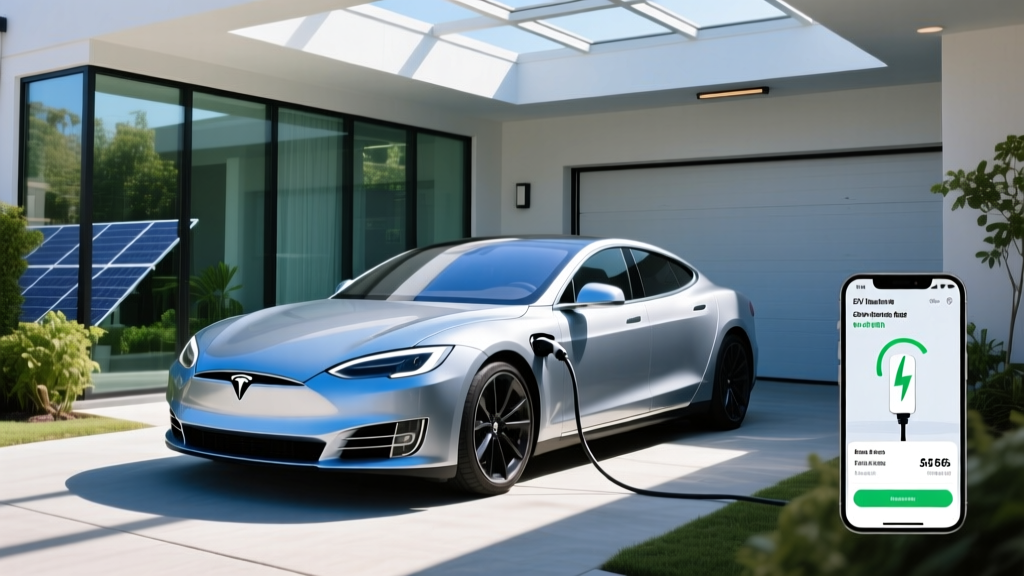
Yes, but it's a one-time cost that pays for itself quickly. A typical Level 2 home charger installation (240V, 40-48 amp circuit) costs $800-$2,500 depending on whether your electrical panel needs an upgrade. At $1,500 average, this adds roughly $300/year over five years to your EV cost — far less than the annual fuel savings of ~$1,250. Many utilities offer $250-$1,000 rebates for charger installation, further reducing the net cost.