What EV testing actually tells you: Manufacturer and EPA testing provides standardized baseline figures for range, efficiency, and charging — but real-world results vary based on driving style, temperature, terrain, and charging infrastructure. A 310-mile EPA-rated EV may deliver 250 miles on a cold highway day. Peak DC fast-charging rates (e.g., 250 kW) are sustained only briefly, typically tapering above 80% state of charge. Use testing data as a starting point, then apply real-world adjustment factors to set accurate expectations before you buy.
Why EV Testing Numbers Don't Tell the Full Story
When you read that a 2026 Hyundai Ioniq 5 achieves an EPA-estimated 310 miles of range or that a Tesla Model Y charges at up to 250 kW, those figures come from controlled laboratory testing following standardized drive cycles. The EPA uses a combination of city and highway dynamometer tests — essentially a treadmill for cars — conducted at moderate temperatures with no accessory load beyond what's specified in the protocol.
These tests are valuable precisely because they're standardized: they let you compare one EV against another on equal footing. But they don't replicate your Tuesday commute in January at 75 mph with the heat on and three passengers aboard. Understanding how testing translates (or doesn't) to your daily driving is the single most important skill for an EV buyer.
Here's what every major EV test figure actually represents — and what to expect in practice.
EPA Range vs. Real-World Range: The Adjustment Factors
The EPA range sticker on a new EV is calculated using a formula that combines city and highway drive cycles with a 0.7 adjustment factor meant to approximate real-world conditions. However, several variables can push your actual range significantly above or below that number.
Real-World Range Adjustment Guide
| Condition | Typical Range Impact | Example: 310-mi EPA EV |
|---|---|---|
| Moderate city driving, 68°F | +5% to +10% | ~325–340 mi |
| Highway at 65–70 mph, mild weather | -5% to -10% | ~280–295 mi |
| Highway at 75+ mph | -15% to -20% | ~250–265 mi |
| Cold weather (below 32°F), highway | -25% to -35% | ~200–230 mi |
| Cold weather with cabin heat, city | -15% to -25% | ~235–265 mi |
| Hilly/mountainous terrain | -10% to -20% | ~250–280 mi |
Note: EVs with heat pumps (standard on most 2026 models from Hyundai, Tesla, BMW) recover 5–10% of cold-weather range compared to resistive heating systems.
Independent fueleconomy.gov data confirms that efficiency measured in kWh/100mi varies widely with driving style. A Tesla Model 3 Long Range rated at 25 kWh/100mi combined may consume 30–32 kWh/100mi at sustained 80 mph highway speeds, directly reducing range.
The critical takeaway: if your typical driving involves cold-weather highway commutes, size your EV's battery for your worst-case scenario, not the EPA sticker.
Charging Speed Testing: Peak kW vs. Sustained Reality
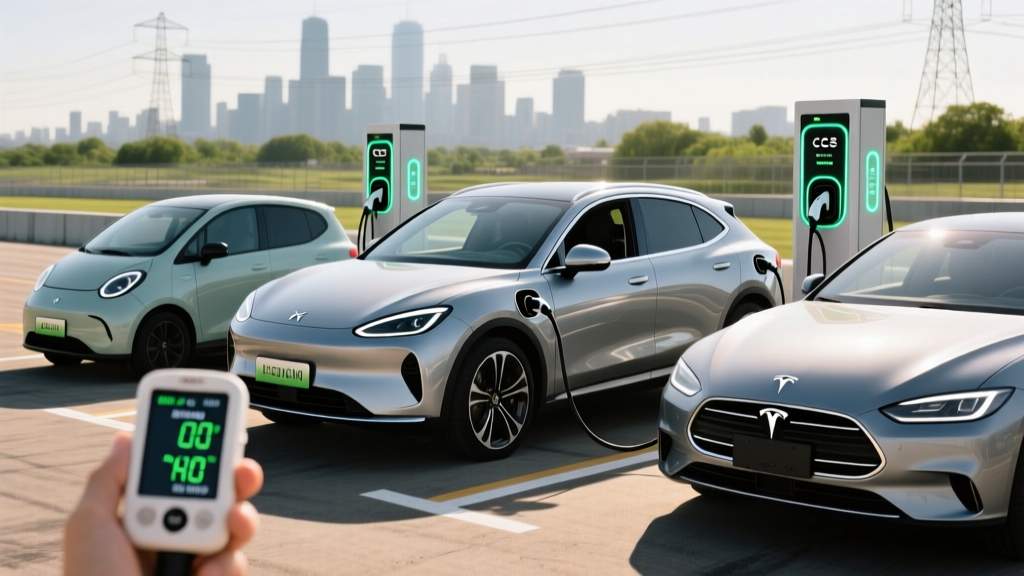
Automakers advertise peak DC fast-charging rates — "charges at up to 350 kW!" — but this number is the maximum instantaneous power draw, not the sustained rate. Understanding the charging curve is essential for planning road trips.
Here's how charging actually works: power (measured in kW) determines how fast energy (measured in kWh) flows into the battery. An EV with a 77.4 kWh usable battery charging at a sustained 150 kW would theoretically fill from 0–100% in about 31 minutes. But batteries can't accept peak power across the entire charging session.
| Charging Level | Power (kW) | Typical Miles Added/Hour | Use Case |
|---|---|---|---|
| Level 1 (120V household) | 1.4–1.9 kW | 3–5 mi/hr | Overnight top-off, emergencies |
| Level 2 (240V home/public) | 7.2–19.2 kW | 25–65 mi/hr | Daily home charging, destination |
| DC Fast (50 kW) | 50 kW | ~150–180 mi/hr | Older public stations |
| DC Fast (150 kW) | 150 kW | ~400–550 mi/hr (peak) | Common highway chargers |
| DC Fast (250–350 kW) | 250–350 kW | ~700–1,000 mi/hr (peak) | Latest-gen ultra-fast stations |
The charging curve reality: Most EVs reach peak charge rate only between roughly 10–30% state of charge (SoC). Above 50%, the rate tapers. Above 80%, it drops sharply — often to under 50 kW — to protect battery health. A "10–80% in 18 minutes" claim assumes ideal battery temperature and a compatible high-power charger.
Real-world testing at public DC fast chargers shows that the 10–80% session time is the most useful metric. For example:
- Hyundai Ioniq 5 (84 kWh, NMC): Peaks at ~240 kW on a 350 kW charger; 10–80% in approximately 18 minutes under ideal conditions
- Tesla Model 3 Long Range (79 kWh, NMC): Peaks at ~250 kW on V3 Superchargers; 10–80% in approximately 20–22 minutes
- Ford F-150 Lightning Extended Range (131 kWh, NMC): Peaks at ~150 kW; 10–80% in approximately 38–41 minutes due to larger battery
Always precondition your battery before DC fast charging — most EVs do this automatically when you navigate to a charger. Cold batteries charge dramatically slower, sometimes cutting peak rates in half.
EV vs. Gas vs. Hybrid: A Cost Comparison with Real Numbers
The purchase decision between a battery electric vehicle (BEV), plug-in hybrid (PHEV), hybrid (HEV), and conventional gas car comes down to total cost of ownership over your expected ownership period. Here's a five-year comparison using representative 2026 models.
| Category | 2026 Tesla Model 3 LR (BEV) | 2026 Toyota Prius Prime (PHEV) | 2026 Toyota Camry Hybrid (HEV) | 2026 Honda Accord 1.5T (Gas) |
|---|---|---|---|---|
| Base MSRP | $44,130 | $33,445 | $29,495 | $28,990 |
| Fed. Tax Credit (§30D)* | Up to $7,500 | Up to $7,500 | None | None |
| Effective Price After Credit | ~$36,630 | ~$25,945 | $29,495 | $28,990 |
| Fuel/Energy (5 yr, 15k mi/yr) | ~$3,000 (home) / $5,200 (public mix) | ~$3,800 | ~$5,100 | ~$7,500 |
| Maintenance (5 yr) | ~$1,500 | ~$2,800 | ~$2,500 | ~$3,200 |
| Insurance (5 yr avg.) | ~$9,500 | ~$7,200 | ~$6,800 | ~$6,500 |
| 5-Year Total Cost | $50,630–$52,830 | $39,745 | $43,895 | $46,190 |
*Federal EV tax credit under IRS §30D requires meeting MSRP caps ($55,000 sedans / $80,000 SUVs/trucks), buyer income limits ($150K single / $300K joint), and critical-mineral/battery-component sourcing requirements. Eligibility varies by model and purchase date. Verify current eligibility at irs.gov or with a tax professional.
The BEV wins on energy and maintenance costs but carries higher insurance premiums and a higher starting price. The PHEV offers the lowest total cost in this comparison, particularly for drivers who can charge at home and mostly drive within the electric-only range (44 miles EPA for the Prius Prime). The conventional gas car costs the most in fuel over five years despite the lowest MSRP.
Real-World Ownership Considerations Before You Buy
Testing data only gets you so far. Your ownership experience depends on factors that no laboratory test captures.
Home Charging Access
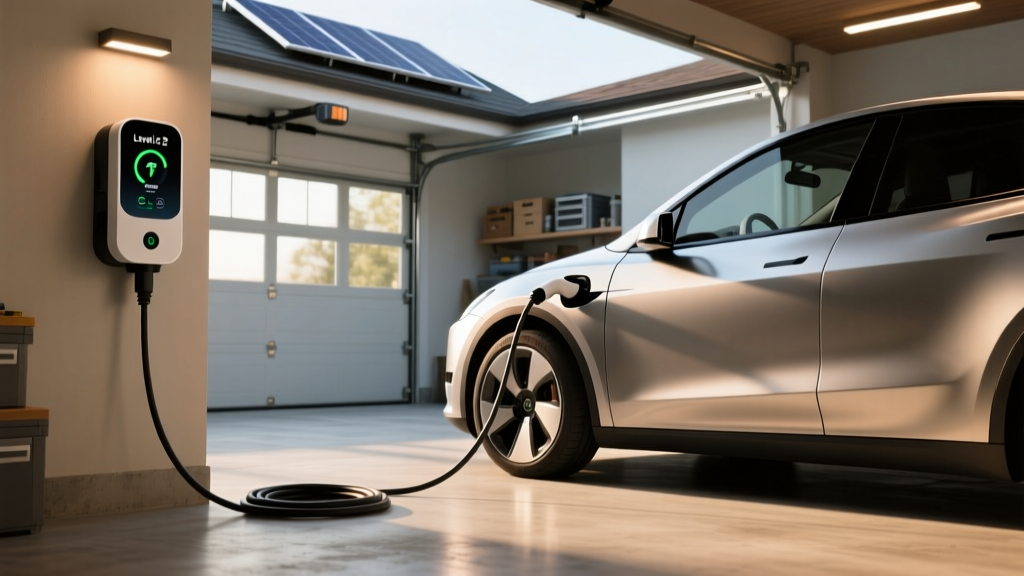
Approximately 80–90% of EV charging happens at home. If you have a garage or driveway where you can install a Level 2 (240V) charger, an EV becomes dramatically more convenient than a gas car — you start every day with a full "tank." Budget $500–$2,500 for a quality Level 2 home charger and professional installation. If your electrical panel needs an upgrade to 200A, add $1,500–$3,000.
If you live in an apartment or lack home charging access, your EV ownership experience will rely on public charging and workplace charging. This is feasible but requires planning and typically costs 2–3× more per mile than home charging.
Climate and Driving Patterns
Cold-weather EV owners in northern states should expect 20–30% range reduction in winter. If your daily round-trip commute is 80 miles and you're considering an EV with 260 miles of EPA range, you'll have adequate buffer even in cold weather. But if your commute is 150 miles, you'll want 350+ miles of rated range or a PHEV as a safer alternative.
Charging Infrastructure in Your Area
Check the density of DC fast chargers along your common road-trip routes. The Tesla Supercharger network remains the most reliable, though NACS adoption by Ford, GM, Hyundai, and others in 2025–2026 has opened access. Electrify America, EVgo, and ChargePoint operate large non-Tesla networks, though reliability varies by station. Rural areas and some highway corridors remain charging deserts — a legitimate constraint for road-trip-heavy buyers.
EV Testing Misconceptions: Myth vs. Fact
| Myth | Fact |
|---|---|
| "EPA range is what you'll actually get." | EPA range is a standardized comparison tool. Real-world range varies ±25% based on speed, temperature, and terrain. Highway driving at 75+ mph in cold weather yields the lowest range. |
| "A 350 kW charger means my EV charges at 350 kW." | Your EV's onboard charge acceptance rate limits speed. Most 2026 EVs peak between 150–270 kW. The charger's rating is a maximum, not a guarantee. |
| "EV batteries need replacement after a few years." | Modern NMC and LFP batteries are engineered for 1,500–3,000+ charge cycles. Most manufacturers warranty batteries for 8 years/100,000 miles with a 70% capacity retention threshold. Data shows most packs retain 85–90% capacity at 100K miles. |
| "EVs are always cheaper to own." | EVs save on fuel and maintenance but often cost more upfront and carry higher insurance premiums. The break-even point depends on your mileage, electricity rates, and tax credit eligibility. |
| "Regenerative braking means I never use the brake pedal." | One-pedal driving reduces brake wear significantly, but friction brakes are still needed for emergency stops, low-speed maneuvering, and when the battery is near full charge and can't accept regen. |
| "All EVs qualify for the $7,500 tax credit." | Credit eligibility depends on MSRP caps, buyer income limits, battery component sourcing, and critical mineral requirements. Many popular EVs qualify for only partial credit or none at all. Check IRS guidance before purchasing. |
Battery Chemistry Testing: LFP vs. NMC Explained
Not all EV batteries are the same. The two dominant chemistries in 2026 are lithium iron phosphate (LFP) and nickel manganese cobalt (NMC), and they behave differently in testing and real-world use.
| Characteristic | LFP (Lithium Iron Phosphate) | NMC (Nickel Manganese Cobalt) |
|---|---|---|
| Energy Density | Lower (~160 Wh/kg cell-level) | Higher (~250 Wh/kg cell-level) |
| Typical Range per Pack Size | Less range for same weight/volume | More range for same weight/volume |
| Cycle Life | 3,000–5,000+ cycles | 1,500–2,500 cycles |
| Charging to 100% | Recommended regularly for calibration | Best kept at 80–90% daily; 100% for trips only |
| Cold-Weather Performance | More range loss in extreme cold | Better cold-weather energy delivery |
| Cost | Lower (no cobalt or nickel) | Higher (commodity-dependent) |
| Common in | Tesla Model 3 RWD, Ford Mustang Mach-E Select, base trims | Long-range and performance trims across brands |
If you're a high-mileage driver who plans to keep your EV for 10+ years, LFP's superior cycle life is a significant advantage. If you prioritize maximum range and cold-weather performance, NMC is the stronger choice. Both chemistries are well-proven and covered by 8-year/100,000-mile federal battery warranty mandates.
Your EV Purchase Decision Framework
Use this if/then framework to narrow your choice:
IF you have home charging access and drive under 80 miles daily round-trip:
→ THEN a BEV with 250+ miles EPA range is ideal. You'll rarely use public chargers and will maximize fuel/maintenance savings. Consider an LFP battery model for longevity.
IF you have home charging but regularly drive 200+ mile highway trips:
→ THEN choose a BEV with 320+ miles EPA range and DC fast charging above 200 kW. Preconditioning and route planning are essential. Alternatively, a PHEV with 40+ miles of electric range covers daily driving while the gas engine handles road trips.
IF you lack home charging access (apartment, street parking):
→ THEN a PHEV or HEV is likely more practical. Public-only EV charging is feasible but adds time cost and higher per-mile energy expense. Confirm reliable Level 2 or DC fast charger access near your home and workplace before committing to a BEV.
IF you live in a cold climate (regularly below 25°F) and need reliable range:
→ THEN prioritize EVs with heat pumps and NMC batteries. Add 30% to your range requirement to account for winter losses. A PHEV eliminates cold-range anxiety entirely.
IF you're budget-conscious and want the lowest total cost:
→ THEN check IRS §30D eligibility carefully. A PHEV like the Toyota Prius Prime or a BEV that qualifies for the full $7,500 point-of-sale credit can undercut gas cars on five-year cost. Factor in your state's electricity rates (national average ~$0.17/kWh in 2026) and insurance quotes before deciding.
IF you tow or haul heavy loads regularly:
→ THEN expect 30–50% range reduction when towing at capacity. The Ford F-150 Lightning and Rivian R1T offer strong towing but plan charging stops carefully. For heavy towing over long distances, a diesel or hybrid truck may still be more practical.
What First-Time EV Buyers Should Know
If you're transitioning from a gas vehicle, here are the practical realities that testing brochures won't emphasize:
- Plan your first road trip carefully. Use apps like A Better Routeplanner or your EV's native navigation to identify DC fast chargers along your route. Arrive at chargers with 10–15% SoC for the fastest charge, and leave at 80% to avoid the slow taper.
- Install your home charger before or immediately after delivery. A licensed electrician should evaluate your panel capacity. Most Level 2 chargers require a 40–60A circuit on a 240V line.
- Download your charging network apps before you need them. Create accounts with Electrify America, EVgo, and ChargePoint (or your regional equivalents). Plug-and-charge capability (where the car authenticates automatically) is available on many 2026 models and eliminates app fumbling.
- Understand your electricity rate. Time-of-use plans can make overnight home charging dramatically cheaper — as low as $0.06–$0.10/kWh in some regions, equivalent to $1.50–$3.00 per gallon of gas.
- Check NHTSA and IIHS safety ratings. EVs tend to score well due to low centers of gravity and rigid battery structures, but check specific model ratings rather than assuming.
Frequently Asked Questions
How accurate are EPA range estimates for EVs?
EPA estimates are reliable for comparing EVs against each other but often overstate real-world highway range by 10–20%. In mild city driving, you may exceed the EPA figure. In cold-weather highway driving, expect 25–35% less than the sticker. Use the EPA number as a baseline and apply the adjustment factors above.
Does fast charging damage the battery?
Occasional DC fast charging has minimal impact on battery health. Modern battery management systems (BMS) carefully regulate temperature and charge rate to prevent damage. However, daily DC fast charging over many years may accelerate degradation slightly compared to Level 2 home charging. Most degradation data shows that charge habits (keeping SoC between 20–80% for NMC, regular 100% for LFP) matter more than charging speed.
What happens if I run out of charge on the road?
Unlike running out of gas, you can't walk to a station with a jerry can. Roadside assistance services (including AAA) increasingly offer mobile charging or flatbed towing to the nearest charger. The practical solution is planning: most EVs warn you well in advance when range is low and will route you to chargers. Range anxiety diminishes significantly after your first few months of ownership as you learn your car's real-world consumption.
Do EVs qualify for the federal tax credit in 2026?
Many do, but eligibility depends on the specific model, your income, and battery sourcing requirements. Under IRS §30D, new EVs must meet MSRP caps ($55,000 for sedans, $80,000 for SUVs/trucks/vans), buyer income limits ($150,000 single / $225,000 head of household / $300,000 joint), and critical mineral and battery component sourcing thresholds that tighten annually. The credit can now be transferred to the dealer at point of sale, reducing your purchase price directly. Always verify current eligibility before signing a purchase agreement.
How long do EV batteries last before needing replacement?
Current data from high-mileage EV fleets indicates most batteries retain 85–92% of original capacity at 100,000 miles. Full battery replacement is rare and typically costs $8,000–$18,000 depending on the vehicle and pack size. Federal law requires manufacturers to warranty EV batteries for at least 8 years/100,000 miles with a minimum 70% capacity retention threshold. Many owners never need a replacement within the vehicle's useful life.
Should I buy an EV or a plug-in hybrid?
If you can charge at home, drive under 100 miles daily, and take occasional road trips, a BEV offers lower operating costs and simpler maintenance. If you lack reliable charging, frequently drive 300+ miles in a day, or live in extreme cold, a PHEV provides electric daily driving with gas-engine flexibility. Both qualify for federal tax credits if eligibility criteria are met.