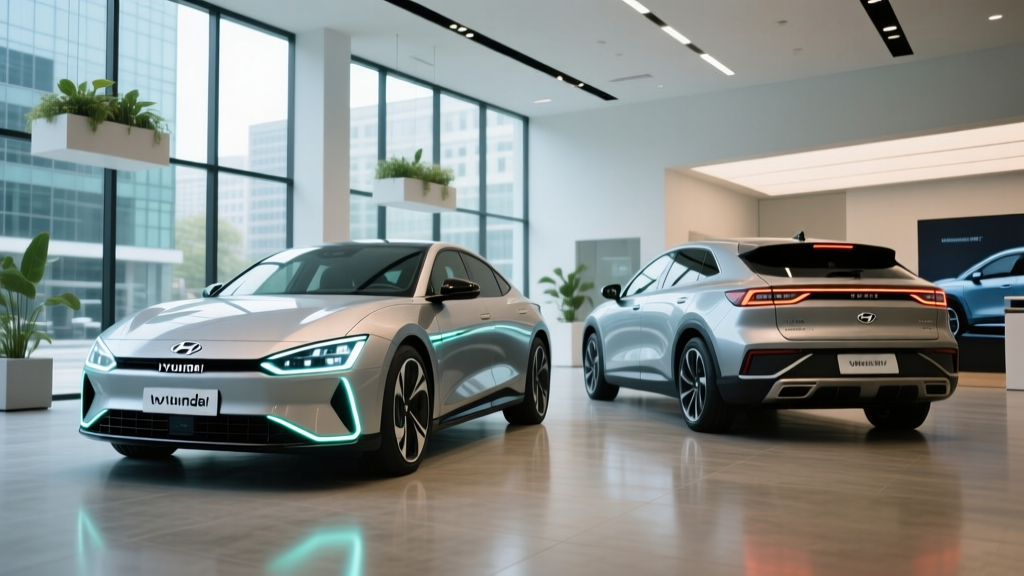
Buying an electric vehicle in 2026 means navigating a maze of shifting incentive rules, higher-than-expected insurance premiums, and genuine fuel savings that don't always offset the sticker price. The federal EV tax credit — officially the Clean Vehicle Credit under IRS §30D — remains the single largest purchase incentive available, but qualifying for the full $7,500 is far from guaranteed. Battery-sourcing mandates, MSRP caps, and household income limits eliminate many buyers and several popular models from eligibility.
This guide breaks down the exact 2026 rules, then runs the numbers on what owning an EV actually costs over five years compared to a gas-powered equivalent. No cherry-picking savings, no hiding the insurance premium — just the math.
How the 2026 Federal EV Tax Credit Works (§30D)
The Clean Vehicle Credit provides up to $7,500 for qualifying new electric vehicles and up to $4,000 for qualifying used EVs. Since January 1, 2024, buyers can transfer the credit to the dealer at the point of sale, applying it as an immediate down-payment reduction rather than waiting to claim it on their tax return. This transfer option remains available in 2026 and is the way most buyers now use the credit.
However, the credit is split into two independent halves — $3,750 for meeting battery-component requirements and $3,750 for meeting critical-minerals requirements. A vehicle can qualify for one, both, or neither half depending on its supply chain.
2026 §30D Eligibility Checklist — You Must Meet ALL of These
- Vehicle MSRP cap: $80,000 for SUVs, vans, and pickups; $55,000 for sedans and other body styles
- Buyer income cap (modified AGI): $300,000 joint / $225,000 head of household / $150,000 single — applies to the lesser of the current tax year or the prior year
- Battery components: Must be manufactured or assembled in North America (percentage thresholds increase annually; for 2026, 80% of component value must qualify)
- Critical minerals: Must be extracted or processed in the U.S. or a free-trade-agreement country, or recycled in North America (2026 threshold: 80% of critical mineral value)
- Foreign entity of concern (FEOC) restriction: Vehicles with battery components from a FEOC are disqualified entirely; critical-mineral FEOC restrictions also now apply
- Final assembly: Must occur in North America
- Vehicle type: New plug-in EV or fuel-cell vehicle with at least 7 kWh battery capacity
- Transfer election: Must be elected at time of sale if using point-of-sale option; dealer must be registered with the IRS Energy Credits Online portal
The practical result: several high-volume EVs that previously qualified have lost partial or full eligibility as FEOC restrictions tightened and sourcing thresholds increased. Always verify a specific VIN's eligibility through the dealer and the IRS qualified vehicles list before committing to a purchase.
5-Year Total Cost of Ownership: EV vs. Gas Sedan
To make this concrete, let's compare two real vehicles a cross-shopper might consider in 2026: the Hyundai Ioniq 6 SE Long Range (EV, ~$42,500 MSRP, EPA 361 miles, 77.4 kWh usable NMC battery) against the Toyota Camry SE (gas, ~$30,000 MSRP, EPA 32 MPG combined). Both are midsize sedans; the Ioniq 6 qualifies for the full $7,500 credit at time of writing, the Camry has no purchase incentive.
| Cost Category | Hyundai Ioniq 6 SE LR (EV) | Toyota Camry SE (Gas) |
|---|---|---|
| Purchase Price (MSRP) | $42,500 | $30,000 |
| Federal Tax Credit (§30D) | −$7,500 | $0 |
| Effective Purchase Price | $35,000 | $30,000 |
| State Registration / Fees (est.) | $600 (EV surcharge in some states) | $450 |
| Fuel / Charging (5 years) | $4,200 (home L2 at $0.14/kWh, some DCFC) | $10,550 (gas at $3.40/gal, 32 MPG) |
| Maintenance (5 years) | $1,800 | $3,900 |
| Insurance (5 years) | $11,250 ($2,250/yr avg) | $8,250 ($1,650/yr avg) |
| Depreciation (est. 5-yr) | −$17,500 (50% of effective price) | −$12,000 (40% of MSRP) |
| Total 5-Year Cost | $35,350 | $41,150 |
| Cost Per Mile | $0.47/mi | $0.55/mi |
The EV wins by roughly $5,800 over five years in this scenario, but notice the structure of the savings: fuel and maintenance do the heavy lifting ($8,450 combined advantage), while higher insurance ($3,000 more) and steeper depreciation ($5,500 more) claw back a significant portion. The $7,500 tax credit is what tips the scales — without it, the Ioniq 6's 5-year cost rises to $42,850, making it more expensive than the Camry.
Charging vs. Gas: The Real Cost Per Mile
The single largest ongoing savings from EV ownership comes at the "pump," but the number varies enormously depending on how and where you charge.
| Scenario | Rate | Cost Per Mile (Ioniq 6 at 3.5 mi/kWh) | Cost Per Mile (Camry at 32 MPG) |
|---|---|---|---|
| Home Level 2 (national avg electricity) | $0.14/kWh | $0.040 | — |
| Home Level 2 (high-cost state, e.g., CA) | $0.28/kWh | $0.080 | — |
| Public DC Fast Charging (avg) | $0.40/kWh | $0.114 | — |
| Gasoline (national avg) | $3.40/gal | — | $0.106 |
| Gasoline (high-cost state, e.g., CA) | $4.80/gal | — | $0.150 |
The takeaway: home charging is dramatically cheaper than gas everywhere — roughly $0.04/mile vs. $0.106/mile nationally, a 60% savings. But if you rely primarily on public DC fast charging at $0.40/kWh, your cost per mile ($0.114) actually exceeds the national average for gasoline. This is why home charging access — a Level 2 (240V) setup in your garage or driveway — is the single biggest determinant of whether an EV saves you money long-term.
The Ioniq 6's efficiency of roughly 3.5 miles per kWh (EPA combined 140 MPGe) is among the best in its class. Less efficient EVs — large trucks and SUVs getting 2.0–2.5 mi/kWh — will see higher per-mile costs at every electricity rate.
Maintenance Savings: Where EVs Genuinely Win
Electric vehicles eliminate several routine maintenance items entirely and reduce wear on others. Over five years and 75,000 miles, the difference is substantial.
| Service Item | EV (Ioniq 6) | Gas (Camry) |
|---|---|---|
| Oil changes (every 10K mi) | $0 — not applicable | $600 (7 changes × ~$85) |
| Transmission fluid | $0 — single-speed reduction gear, sealed | $250 (drain-and-fill at 60K) |
| Engine air filter | $0 — no engine | $150 (2 replacements) |
| Cabin air filter | $200 (2 replacements) | $200 (2 replacements) |
| Brake pads/rotors | $300 (regen braking extends life 2–3×; likely 1 pad set at 60K+) | $900 (2 front pad/rotor services) |
| Coolant flush | $150 (at 50K–60K for battery thermal loop) | $150 (at 50K) |
| Tire rotation/replacement | $1,100 (EVs wear tires ~20% faster due to weight and instant torque; 2 sets) | $900 (2 sets) |
| Wiper blades, misc. | $100 | $100 |
| Total 5-Year Maintenance | $1,850 | $3,250 |
The net maintenance savings: roughly $1,400 over five years, or about $280/year. The biggest gains come from eliminated oil changes and dramatically extended brake life — regenerative braking handles most deceleration, so friction brake pads often last 100,000+ miles. The offset: EVs tend to burn through tires faster because of their heavier curb weight (the Ioniq 6 is ~4,500 lbs vs. the Camry at ~3,300 lbs) and instant torque delivery.
One maintenance wildcard: battery replacement. The Ioniq 6 carries a 10-year/100,000-mile high-voltage battery warranty (capacity retention above 70%). Within a 5-year/75,000-mile ownership window, a battery failure would almost certainly be covered. Out-of-warranty NMC battery replacement currently runs $10,000–$18,000 depending on the pack — a risk that grows in years 8–12 of ownership.
Insurance: The Cost EV Buyers Often Miss
EV insurance premiums run 20–35% higher than comparable gas vehicles on average, and this is consistently the most underappreciated cost in EV ownership calculators. Several structural factors drive the gap:
- Higher repair costs: EV battery packs and power electronics are expensive to replace after collision damage. Even minor rear-end impacts can total a vehicle if the battery enclosure is compromised, because replacement packs cost $10,000–$20,000.
- Specialized labor: High-voltage system repairs require certified technicians; fewer shops are qualified, driving up labor rates.
- Higher vehicle values: A $42,500 EV simply carries more comprehensive/collision exposure than a $30,000 gas sedan.
- Parts availability: EV-specific body panels and structural battery enclosures can have longer lead times, increasing rental-car costs that insurers factor in.
In our comparison, the Ioniq 6 averages approximately $2,250/year for full-coverage insurance (liability, comprehensive, collision with $500 deductible) versus $1,650/year for the Camry — a $600/year or $3,000/five-year gap. These figures vary enormously by driver profile, ZIP code, and insurer. Some carriers now offer specific EV discounts (typically 5–10%), and Tesla's own insurance product uses real-time driving data to price premiums, sometimes undercutting traditional carriers for clean-record drivers.
Always get an insurance quote on the specific EV model and trim before purchasing. The difference between insurers on the same EV can be $800+/year.
Depreciation and Resale Value Trends
EV depreciation has been volatile. In 2023–2024, a price war led by Tesla and aggressive leasing incentives caused used EV values to drop sharply — some models lost 40–50% of value in the first two years. By 2026, the market has stabilized somewhat, but EVs still generally depreciate faster than gas-equivalent vehicles for several reasons:
- Battery health uncertainty: Used buyers discount for unknown long-term battery degradation, even though most modern NMC and LFP packs retain 85–90%+ capacity at 100,000 miles.
- Rapid tech obsolescence: New EVs each year bring faster charging, longer range, and better software — making 3-year-old models feel dated faster than gas equivalents.
- Incentive compression: When a new buyer can get $7,500 off a new EV, the used market price must drop to compete.
- Lease returns: High EV lease volumes (40–50% of some models) flood the used market at 36 months.
Current 5-year depreciation estimates for mainstream EVs sit around 45–55% of purchase price, versus 35–45% for reliable gas sedans like the Camry. On our Ioniq 6 example at a $35,000 effective purchase price (after credit), expect a resale value of roughly $15,750–$19,250 at the five-year mark. The Camry, purchased at $30,000, would retain approximately $16,500–$19,500.
The gap narrows if you buy a used EV (avoiding the steepest first-year depreciation) or if you plan to keep the vehicle 8–10 years, where depreciation curves flatten for both powertrains.
State, Local, and Utility Incentives Beyond the Federal Credit
Your mileage will vary — literally. State and utility incentives differ dramatically by jurisdiction and change frequently. The examples below are illustrative, not comprehensive. Always check your state's energy office, your utility's EV program page, and the Alternative Fuels Data Center for current programs in your ZIP code.
Common supplementary incentives available in 2026 include:
- State purchase rebates: States like California (CVRP, up to $7,000 for income-qualified buyers), Colorado (up to $5,000 tax credit), and Massachusetts (MOR-EV, up to $3,500) stack on top of the federal credit. Many states have income caps or vehicle-price caps that differ from federal rules.
- Utility rebates for home charging: Many electric utilities offer $500–$1,500 rebates for purchasing and installing a Level 2 home charger, and some offer discounted time-of-use (TOU) electricity rates for overnight EV charging (as low as $0.06–$0.08/kWh in some markets).
- HOV lane access: Several states grant solo carpool-lane access to EVs regardless of occupancy — a significant time savings in congested metros that has no direct dollar value but substantial quality-of-life impact.
- Property and sales tax exemptions: Some states exempt EVs from sales tax (e.g., Washington State sales-tax exemption up to a cap) or from annual personal-property tax on the vehicle.
- Used EV credit (§25E): A separate federal credit of up to $4,000 (30% of sale price, capped) exists for qualifying used EVs purchased from a dealer, with lower income caps ($150K joint / $75K single) and a vehicle-price cap of $25,000.
A buyer in Colorado stacking the $7,500 federal credit, a $5,000 state credit, and a $1,000 utility charger rebate could reduce the effective purchase price of a $42,500 Ioniq 6 to under $29,000 — fundamentally changing the ownership math. A buyer in a state with no incentives sees only the federal credit.
Decision Framework: Does the Math Work for You?
Choose an EV if:
- You can install a Level 2 home charger (the economics collapse without cheap home charging)
- You qualify for the full $7,500 federal credit (check income, MSRP, and VIN-level battery sourcing)
- Your state or utility stacks additional rebates on top
- You drive 12,000+ miles/year (higher mileage = greater fuel savings)
- You plan to keep the vehicle 5–8 years (amortizing the higher upfront cost)
Stick with gas or consider a hybrid if:
- You cannot charge at home and must rely on public DC fast charging exclusively
- Your income exceeds §30D caps, or the vehicle you want doesn't meet battery-sourcing rules
- You drive under 8,000 miles/year (fuel savings won't offset higher insurance and depreciation)
- You change vehicles every 2–3 years (depreciation will dominate your cost)
- You live in a region with extreme cold and limited charging infrastructure (real-world range loss of 20–30% in sub-20°F weather is normal)
Frequently Asked Questions
How much does it really cost to own an EV over 5 years?
For a mainstream EV sedan like the Hyundai Ioniq 6 with the full $7,500 federal credit, expect approximately $35,000–$38,000 in total 5-year cost (purchase, fuel, insurance, maintenance, minus resale value) over 75,000 miles. That's roughly $5,000–$8,000 less than a comparable gas sedan — but the savings depend heavily on home charging access, tax-credit eligibility, and insurance rates in your area.
Do I qualify for the 2026 federal EV tax credit?
You likely qualify for at least a partial credit if your modified AGI is under $150,000 (single) or $300,000 (joint), the vehicle's MSRP is under the applicable cap ($55K sedans / $80K SUVs and trucks), and the specific VIN meets 2026 battery-sourcing thresholds. Check the IRS qualified vehicles list and confirm with the dealer that the vehicle qualifies at point of sale. Eligibility changes as manufacturers adjust supply chains.
How much do I save on fuel and maintenance?
Nationally, expect to save roughly $5,000–$7,000 on fuel and $1,200–$1,800 on maintenance over five years and 75,000 miles, assuming primarily home Level 2 charging at average electricity rates. Combined savings of $6,000–$9,000 are typical. These savings shrink if you rely on public DC fast charging or live in a high-electricity-rate state.
Are EVs more expensive to insure?
Yes, typically 20–35% more than a comparable gas vehicle. On a $42,000 EV vs. a $30,000 gas sedan, expect roughly $500–$700/year in additional insurance cost, or $2,500–$3,500 over five years. Get quotes from multiple insurers before purchasing — the spread between carriers on EVs is wider than on gas cars.
How well do EVs hold their value?
EVs currently depreciate faster than gas equivalents — expect 45–55% depreciation over five years vs. 35–45% for a reliable gas sedan. Battery health uncertainty, rapid technology turnover, and new-vehicle incentive pressure all contribute. Buying used (2–3 years old) or keeping the vehicle 8+ years mitigates this disadvantage significantly.
Can I get the tax credit on a used EV?
Yes. The §25E used clean vehicle credit offers up to $4,000 (30% of the sale price) on qualifying used EVs purchased from a licensed dealer for $25,000 or less. Income caps are lower: $150,000 joint / $75,000 single. The vehicle must be at least two model years old and can only trigger the used credit once in its lifetime.
Does the point-of-sale transfer reduce my taxable income?
No. The point-of-sale transfer is an advance payment of the tax credit — it reduces the amount you pay at the dealership, but you still reconcile it on your tax return using IRS Form 8936. If your tax liability is less than the credit amount, you do not receive the difference as a refund (the credit is non-refundable). However, the point-of-sale transfer works regardless of tax liability as long as you meet all eligibility requirements.