Quick Answer: Should an EV Ship Fire Stop You From Buying an Electric Car?
No. While high-profile cargo ship fires like the Felicity Ace (2022) and Fremantle Highway (2023) have drawn attention to lithium-ion battery risks during ocean transport, the actual risk to consumers is minimal. EVs are far more likely to catch fire while parked or driving than during shipping — and gasoline vehicles ignite at significantly higher rates overall. If you're weighing an EV purchase, shipping fires should not factor into your decision. Focus instead on real ownership variables: home charging access, EPA range vs. real-world range, and total cost of ownership.
What Actually Causes EV Ship Fires?
Cargo vessels carrying thousands of vehicles — both electric and gasoline-powered — face fire risks from multiple sources. When an EV is involved, the concern centers on its lithium-ion traction battery. If a battery cell experiences thermal runaway (an uncontrolled exothermic reaction), it can generate temperatures exceeding 1,500°F and release flammable gases. On a tightly packed car carrier with 3,000–7,000 vehicles, a single thermal event can propagate.
However, the root causes of shipboard vehicle fires are rarely the EV battery itself:
- Electrical short circuits in aging ship wiring or improperly secured vehicles
- Gasoline vehicle fuel leaks — a far more common ignition source in cargo holds
- Improper battery state of charge (SoC) — OEMs ship EVs at roughly 30–50% SoC to reduce thermal risk
- Damage during loading/unloading that compromises a battery pack's protective casing
According to the International Maritime Safety Association and insurer data from Allianz Global Corporate & Specialty, vehicle fires on car carriers have increased over the past decade — but this tracks with the rising volume of all vehicle shipments globally, not exclusively EVs.
EV Fire Rates vs. Gas Cars: The Real Numbers
The most common misconception in the "EV ship fire" discussion is that electric vehicles are inherently more fire-prone. The data says otherwise.
| Metric | Electric Vehicles (BEV) | Gasoline Vehicles (ICE) |
|---|---|---|
| Fires per 100,000 vehicles sold (NHTSA/NTSB aggregated estimates) | ~25 | ~1,530 |
| Primary fire cause | Battery thermal runaway (rare), external collision damage | Fuel system leaks, electrical shorts, exhaust heat |
| Fire suppression difficulty | Harder — requires sustained water volume; re-ignition risk over 24–72 hrs | Easier — foam/dry chemical effective on fuel fires |
| Cargo ship transport volume (2025 global estimate) | ~8–10 million EVs shipped | ~40–50 million ICE vehicles shipped |
| Notable cargo ship fire incidents (2020–2026) | 3–4 with confirmed EV involvement | Multiple — often underreported as "vehicle fire" without fuel-type breakdown |
The National Fire Protection Association (NFPA) and NHTSA data consistently show gasoline vehicles catch fire at a rate roughly 60× higher per 100,000 units than EVs. The difference is that an EV battery fire is harder to extinguish and generates more media coverage.
How the Shipping Industry Is Adapting
Major car carriers and classification societies have implemented new protocols since 2023 to address lithium-ion transport risks:
- SoC limits: OEMs now ship EVs at 30–50% state of charge. A battery at 50% SoC has significantly less stored energy available for thermal runaway than one at 100%.
- Thermal imaging scans: Some carriers (e.g., Wallenius Wilhelmsen, Höegh Autoliners) use infrared cameras during loading to detect abnormal battery temperatures.
- Segregated stowage: EVs are increasingly grouped in dedicated deck zones with enhanced fire-detection systems and water-deluge capability.
- Updated IMO guidelines: The International Maritime Organization has updated its vehicle carrier fire safety recommendations to account for lithium-ion battery characteristics.
These measures have reduced — but not eliminated — the risk. Shipping remains statistically safer than driving any vehicle on a highway.
What This Means for Your EV Purchase: Cost & Ownership Reality
If you're researching "EV ship fire" because you're considering buying an electric car, redirect your attention to the variables that actually impact your wallet and daily life.
| Ownership Factor | 2026 Tesla Model Y Long Range AWD | 2026 Toyota RAV4 Gas (LE AWD) |
|---|---|---|
| Base MSRP | $46,630 | $32,675 |
| Est. federal tax credit (§30D) | Up to $7,500 (subject to income, MSRP cap, and battery sourcing rules — see IRS §30D guidelines) | $0 |
| Effective price after credit | ~$39,130 | $32,675 |
| EPA range / fuel economy | 320 miles (EPA); expect ~270–290 mi real-world highway | 29 MPG combined (fueleconomy.gov) |
| Annual fuel/energy cost (12,000 mi/yr) | ~$540 (home charging at $0.14/kWh, 28 kWh/100mi) | ~$1,490 (gas at $3.30/gal) |
| Annual maintenance | ~$300 (cabin filter, tire rotation, wiper fluid) | ~$750 (oil changes, filters, brake pads) |
| Insurance (national avg.) | ~$2,400/yr (higher due to repair cost) | ~$1,680/yr |
| 5-year total cost (purchase + fuel + maintenance + insurance) | ~$55,630 | ~$50,325 |
Key takeaway: The EV costs more upfront (even after the tax credit) but saves roughly $950/year in fuel and maintenance. Over 5 years, the total cost gap narrows to about $5,300 — and if gas prices rise or you drive more than 12,000 miles/year, the EV breaks even sooner.
Common Misconceptions About EV Fires — Fact-Checked
| Myth | Fact |
|---|---|
| "EVs catch fire all the time on ships." | Confirmed EV-origin cargo fires are extremely rare — fewer than 5 major incidents globally from 2020–2026 out of tens of millions of vehicles shipped. |
| "An EV battery can spontaneously explode." | Thermal runaway requires a trigger: physical damage, manufacturing defect, or extreme abuse. Spontaneous events in undamaged, properly manufactured packs are exceedingly rare. |
| "Firefighters can't put out EV fires at all." | Firefighters can extinguish EV fires — it requires more water (up to 3,000–6,000 gallons vs. ~500 for a gas car) and extended monitoring for re-ignition. NFPA has published specific EV fire response training for first responders. |
| "EV ship fires mean my delivered car could be damaged." | If a ship fire occurs, affected vehicles are typically total losses handled by marine insurance. Consumers receive undamaged units or full refunds. |
| "LFP batteries eliminate fire risk entirely." | LFP (lithium iron phosphate) chemistry has a higher thermal runaway threshold (~518°F vs. ~410°F for NMC) and doesn't release oxygen during decomposition, making it significantly safer — but not zero-risk under extreme conditions. |
Real-World Ownership: What Actually Matters When Buying an EV
Shipping fires are a logistics industry concern, not a buyer concern. Here's what should drive your decision:
Home Charging Access
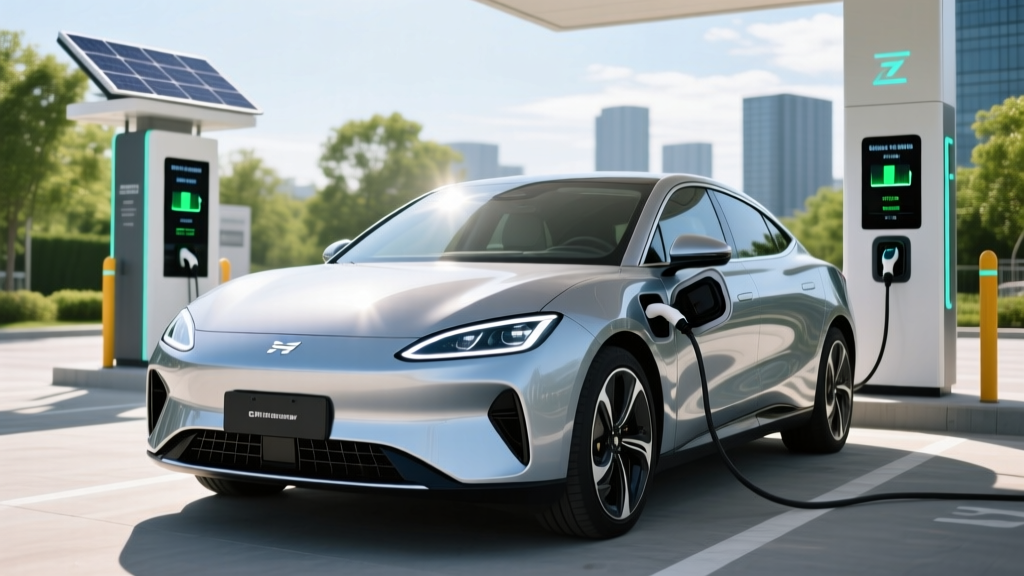
If you can install a Level 2 (240V) home charger, an EV is dramatically more convenient than a gas car — you start every morning with a "full tank." Expect $500–$2,000 for a quality Level 2 unit (e.g., ChargePoint Home Flex, Emporia Vue) plus $800–$3,000 for electrician installation depending on your panel capacity. A 200-amp panel is usually sufficient; older homes with 100-amp service may need a $2,000–$4,000 upgrade.
If you cannot charge at home (apartment, street parking), public charging costs $0.30–$0.60/kWh at DC fast chargers, erasing much of the fuel savings — and the inconvenience of 20–40 minute charging sessions adds up.
Climate and Range
Cold weather reduces EV range by 15–30% at freezing temperatures due to battery chemistry slowdown and cabin heating demands. A 320-mile EPA-rated EV may deliver 220–270 miles in 20°F winter conditions. If you live in Minnesota, North Dakota, or upstate New York, factor this into your range requirements.
Battery Chemistry Choice
Many 2025–2026 models now offer LFP battery options (Tesla Model 3 RWD, Ford Mustang Mach-E Select, several Chinese-market imports). LFP sacrifices ~10–15% energy density compared to NMC but offers longer cycle life (2,000–3,000+ cycles vs. 1,000–2,000 for NMC), better thermal stability, and the ability to charge to 100% daily without accelerated degradation.
Decision Framework: Should You Buy an EV, Hybrid, or Gas Car?
Choose a BEV (Battery Electric Vehicle) if:
- You have reliable home or workplace Level 2 charging
- Your daily driving is under 200 miles round-trip
- You want the lowest per-mile energy cost ($0.04–$0.06/mi on home power)
- You qualify for the §30D federal tax credit (individual AGI ≤ $150,000; joint ≤ $300,000; head of household ≤ $225,000)
- You plan to keep the car 5+ years to recoup the higher purchase price
Choose a PHEV (Plug-in Hybrid) if:
- You have home charging but also take frequent 400+ mile road trips
- You want 25–45 miles of electric-only commuting with a gas backup
- You're not ready to rely on public DC fast-charging infrastructure
- Examples: 2026 Toyota RAV4 Prime (42 mi EV range, 94 MPGe), 2026 Jeep Wrangler 4xe (22 mi EV range)
Choose a Gas Vehicle if:
- You have zero access to home or workplace charging
- You regularly tow heavy loads (>5,000 lbs) in cold climates
- Your budget is strictly under $28,000 and you buy new
- You live in a rural area with minimal public charging infrastructure
Frequently Asked Questions
Has an EV ship fire ever delayed vehicle deliveries to customers?
Yes. The Felicity Ace fire in February 2022 destroyed roughly 3,800 vehicles (including Porsche, Audi, Bentley, and Lamborghini units — many of which were EVs or PHEVs). Affected customers received replacements or refunds through manufacturer and marine insurance claims. Delivery delays ranged from 2–6 months for custom-ordered vehicles.
Are EVs shipped at full charge?
No. Industry practice is to ship EVs at 30–50% state of charge. This significantly reduces the energy available in the battery pack, lowering the risk and severity of any thermal event during transport.
Should I worry about my EV catching fire in my garage?
EV garage fires are extremely rare. NHTSA data indicates EVs catch fire at a rate of approximately 25 per 100,000 vehicles sold, compared to ~1,530 per 100,000 for gasoline vehicles. The risk is not zero — a damaged or recalled battery pack is a legitimate concern — which is why you should always address manufacturer recall notices promptly.
Does the §30D tax credit apply to all 2026 EVs?
No. The IRS §30D credit has multiple eligibility requirements: vehicle MSRP must be ≤ $80,000 for SUVs/pickups/vans or ≤ $55,000 for sedans; buyer AGI must be within income caps; and the vehicle must meet critical mineral and battery component sourcing thresholds that tighten annually. Many popular models qualify for the full $7,500, but some receive partial credit ($3,750) or none at all. Always verify on the IRS qualified vehicle list before purchasing. As of 2026, the credit can be transferred to the dealer as a point-of-sale discount.
What's the safest EV battery chemistry for fire risk?
LFP (lithium iron phosphate) is the safest commercially available lithium-ion chemistry for consumer EVs. Its thermal runaway onset temperature is roughly 100°F higher than NMC, and it doesn't release oxygen during decomposition, which prevents self-sustaining fires. Tesla, Ford, and several other OEMs now offer LFP options in base trims.