The Short Answer on EV RVs
As of 2026, fully electric Class A and Class C motorhomes remain extremely limited in the U.S. market, with only a handful of low-volume or concept-stage offerings. However, electric tow vehicles paired with travel trailers are a viable and growing reality — trucks like the Ford F-150 Lightning, Rivian R1T, and Chevrolet Silverado EV can tow 5,000–10,000+ lbs, though towing cuts real-world range by 40–60%. If you're considering an EV RV setup, the most practical path today is an electric pickup towing a lightweight trailer, with careful attention to route planning, DC fast-charging access along your corridor, and the significant energy cost of hauling thousands of pounds at highway speed.
What "EV RV" Actually Means in 2026
The term "EV RVs" covers several distinct vehicle categories, and the practical reality differs dramatically between them:
- Electric Class A/C Motorhomes (self-contained): Winnebago debuted the e-RV concept in 2022 based on the Ford E-Transit chassis, but it never reached mass production. Thor Industries has shown the Airstream eStream concept with a powered axle. As of early 2026, no mainstream manufacturer sells a full-size electric motorhome in the U.S. The core barrier is battery weight and energy density — a Class A motorhome needs 200+ kWh of usable battery to achieve even 150 miles of range while towing its own 15,000–20,000 lb mass.
- Electric Pickup + Travel Trailer: This is the realistic EV RV configuration today. A Ford F-150 Lightning Extended Range (131 kWh usable battery, EPA range ~320 miles unladen) towing a 5,000-lb travel trailer will see real-world range drop to roughly 150–180 miles at 65 mph. The Rivian R1T Dual-Motor Max Pack (149 kWh, EPA ~352 miles) manages slightly better, around 170–200 miles while towing.
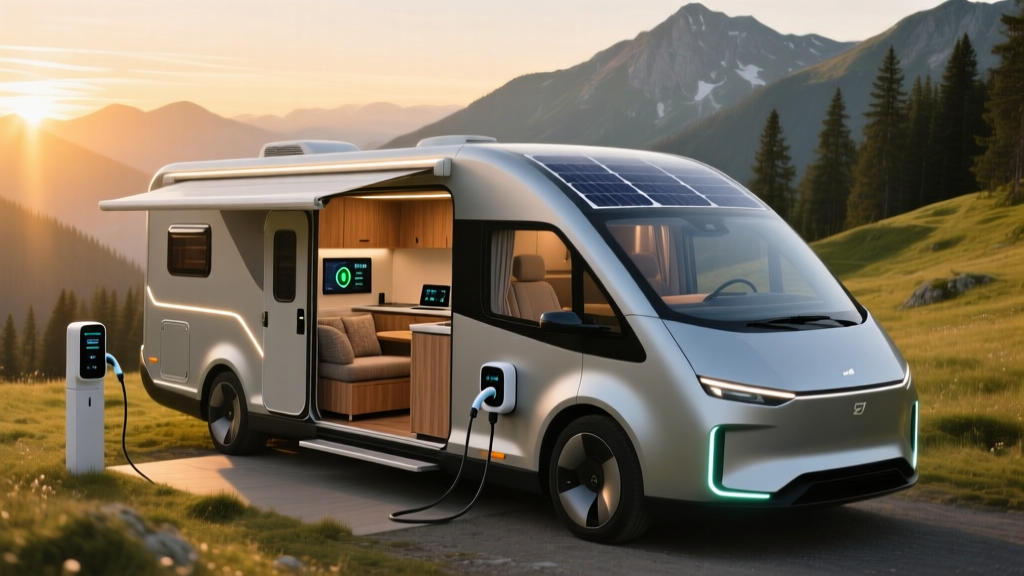
- Electric Van Conversions: Companies like Lightship (formerly Aptera-adjacent) and others have announced aerodynamic electric travel trailers with rooftop solar and battery packs that add range rather than subtract it. Lightship's AE.1 trailer, announced for 2025–2026 delivery, claims an integrated 80 kWh battery with a powered axle that offsets tow-vehicle range loss. Pricing starts around $125,000.
- Campervan Conversions: The Ford E-Transit and Mercedes eSprinter offer 108–150 miles of EPA range in cargo form. Outfitters like Outside Van and others have begun limited EV campervan builds, but range with a full conversion (added 1,500–3,000 lbs of cabinetry, water tanks, appliances) drops significantly below the base EPA figure.
The Range Reality: Towing Kills Electric Range Fast
This is the single most important factor for anyone researching EV RVs. When an electric truck tows a trailer, energy consumption roughly doubles compared to unladen driving.
| Vehicle | Battery (kWh usable) | EPA Range (unladen) | Est. Range Towing 5,000 lbs | Est. Range Towing 8,000 lbs |
|---|---|---|---|---|
| Ford F-150 Lightning Ext. Range | 131 | 320 mi | 150–180 mi | 110–140 mi |
| Rivian R1T Dual-Motor Max Pack | 149 | 352 mi | 170–200 mi | 130–160 mi |
| Chevy Silverado EV 4WT | 200+ | ~400 mi (est.) | 200–240 mi | 160–190 mi |
| Tesla Cybertruck AWD | 123 | 340 mi | 155–185 mi | 115–145 mi |
Real-world caveat: These towing estimates assume 65 mph on flat terrain at 70°F. Add mountain passes, headwinds, or cold weather (below 40°F) and expect another 15–25% reduction. A 320-mile F-150 Lightning towing 5,000 lbs through the Rockies in November may only deliver 110–130 miles between charges.
The physics are straightforward: towing increases the frontal area and total mass the powertrain must accelerate and sustain. Where an unladen F-150 Lightning averages roughly 2.0–2.2 kWh/mile (per fueleconomy.gov), towing pushes consumption to 3.5–4.5 kWh/mile. A 131 kWh battery divided by 4.0 kWh/mile gives you roughly 163 miles.
Charging on the Road: The RV-Specific Problem
Even if you accept reduced range, DC fast charging with a trailer attached introduces a logistical challenge that gas RVers don't face.
Charging Speeds While Towing
| Vehicle | Peak DC Fast Charge | 10–80% Time (unladen) | Trailer Disconnect Required? |
|---|---|---|---|
| F-150 Lightning | 150 kW | ~41 min | Yes, at most stations |
| Rivian R1T | 200+ kW | ~30 min | Yes, at most stations |
| Silverado EV | 350 kW | ~20 min | Yes, at most stations |
| Cybertruck | 250 kW | ~25 min | Yes, at most stations |
Most DC fast charging stations — Electrify America, EVgo, ChargePoint — have pull-through lanes at only a small fraction of locations. The majority of chargers require you to back in or pull forward into a standard space, meaning you must unhitch your trailer, drive to the charger, charge, then re-hitch. This adds 15–30 minutes per stop beyond the charging time itself.
Some networks and truck-stop operators are adding pull-through charging stalls designed for vehicles with trailers, but as of 2026 these remain rare. The Tesla Supercharger network has begun adding pull-through stalls at select locations, and Love's Travel Stops has announced a partnership for EV charging bays that accommodate trailers — but coverage is far from comprehensive.
Charging Cost on the Road
DC fast charging for a large battery pack is significantly more expensive than home charging:
- Home Level 2 (national avg. $0.16/kWh): Fully charging a 131 kWh F-150 Lightning costs roughly $21.
- Public DC fast charging (avg. $0.35–$0.50/kWh): That same 131 kWh charge costs $46–$66.
- Gas equivalent: A gas F-150 towing 5,000 lbs might get 9–11 mpg. At $3.50/gallon, a 160-mile fill-up costs $51–$62.
The cost advantage of electric towing is most pronounced when you can charge at home or at a campground with a 240V outlet. On the road at DC fast-charger rates, the savings narrow or disappear.
EV RV vs. Gas RV: Cost and Ownership Comparison
| Factor | Electric Pickup + Travel Trailer | Gas/Diesel Pickup + Travel Trailer |
|---|---|---|
| Vehicle MSRP (comparable trim) | $70,000–$100,000 | $50,000–$75,000 |
| Fuel/energy cost per mile (towing, avg.) | $0.10–$0.18 (home + road mix) | $0.32–$0.39 (at 10 mpg, $3.50/gal) |
| Annual fuel/energy (5,000 towing miles) | $500–$900 | $1,600–$1,950 |
| Maintenance (annual, powertrain) | $100–$300 (no oil, fewer fluids) | $400–$800 (oil, filters, trans fluid) |
| Federal tax credit (§30D) | Up to $7,500 if eligible* | $0 |
| Range between stops (towing) | 130–200 mi (frequent stops) | 300–450 mi (one tank) |
| Stop time (refuel/recharge) | 30–50 min (including unhitch) | 10–15 min |
| Campsite power advantage | V2L: power trailer from truck battery | Generator needed for boondocking |
*The IRS §30D credit has income caps ($150K single / $300K joint), MSRP caps ($80K for trucks/vans), and battery sourcing requirements. Eligibility varies by vehicle and model year — verify current rules with a tax professional.
Campground Charging and Boondocking Advantages
Here's where EV RVs gain a genuine edge. An electric truck's large battery pack can serve as a massive power source for your campsite — no noisy generator required.
Vehicle-to-Load (V2L) Capability
- Ford F-150 Lightning Pro Power Onboard: Up to 9.6 kW continuous output. This can power a travel trailer's air conditioning, microwave, refrigerator, lights, and electronics for 2–4 days off-grid from the truck's 131 kWh battery alone.
- Rivian R1T: Offers camp kitchen accessories and campsite power outlets, though V2L capability has been more limited; Rivian has announced expanded bidirectional features for 2025+ models.
- Hyundai Ioniq 5 / Kia EV9 (for smaller setups): V2L provides 3.6 kW — enough for basic camping electronics and a small trailer, but not a full-size RV's AC system.
For boondockers and dry campers, this eliminates the need for a portable gas generator (typically 2,000–3,500W, $800–$2,000, requiring fuel and producing noise and emissions). The silent, emission-free campsite power is a tangible quality-of-life advantage that gas RVers can't match without aftermarket solar or generator setups.
Campground Level 2 Charging
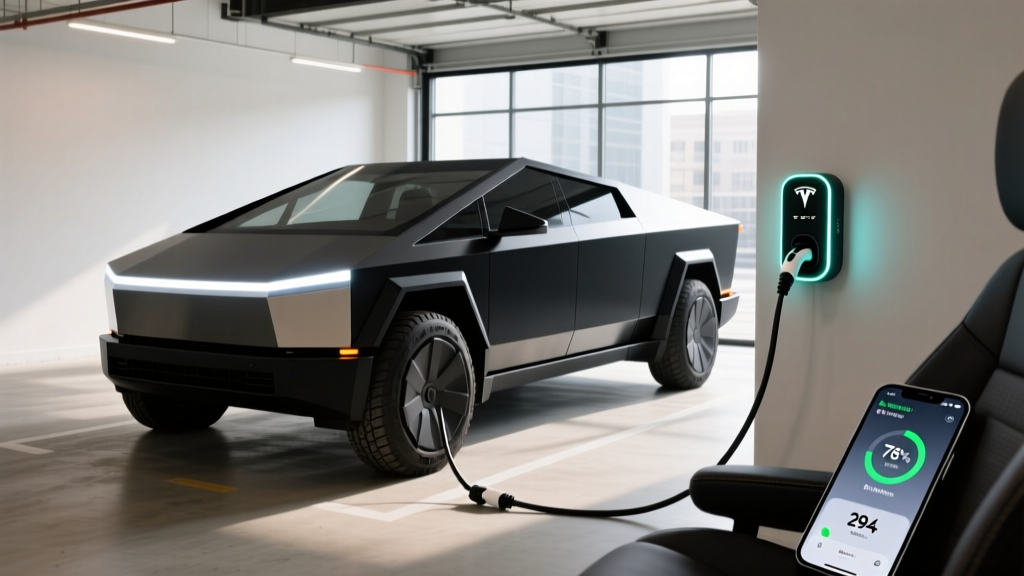
Many RV parks and campgrounds offer 50-amp or 30-amp electrical hookups. A 50-amp / 240V hookup can deliver up to 12 kW — enough to fully recharge an F-150 Lightning's 131 kWh battery in roughly 11 hours (overnight). This means you can tow to a campground, plug in overnight, and depart with a full battery the next morning — functionally identical to what gas RVers do, but with cheaper "fuel."
Common EV RV Misconceptions
| Myth | Fact |
|---|---|
| "You can't tow with an EV" | Electric trucks are rated to tow 7,500–10,000+ lbs. The issue isn't capability — it's range reduction. |
| "EV RVs have 300 miles of range" | 300+ miles applies to unladen driving only. Towing a trailer cuts that to 130–200 miles in real-world conditions. |
| "Charging is free at campgrounds" | Campgrounds charge for electric hookups ($30–$80/night). The electricity itself may be included, but you're paying for the site. |
| "Electric towing saves a ton of money" | Home charging saves significantly. DC fast charging on the road can cost nearly as much as gas per mile when towing. |
| "You'll never find a charger that fits a truck + trailer" | Pull-through charging stalls are expanding but remain limited. Plan routes around known pull-through locations. |
Decision Framework: Is an EV RV Setup Right for You?
Choose an Electric Truck + Trailer if:
- You primarily camp within 150 miles of home (day-trip or overnight towing)
- You have home Level 2 charging (240V / 40–80A circuit installed)
- You camp at RV parks with electrical hookups where you can charge overnight
- You value silent boondocking power via V2L over long highway range
- You already plan to buy an electric truck for daily use and want dual-purpose utility
- Your trailer weighs under 6,000 lbs (maximizes remaining range)
Stick with Gas/Diesel if:
- You regularly tow 200+ miles between stops on long-distance trips
- You travel through charging-desert regions (rural Mountain West, parts of the Great Plains)
- Your trailer exceeds 8,000 lbs (range becomes impractically short)
- You can't install home charging and rely entirely on public infrastructure
- You frequently travel in extreme cold (below 20°F) where range loss compounds
- You need to refuel in under 15 minutes and keep moving — e.g., multi-day cross-country hauling
Consider a PHEV or Wait if:
- You want some electric campsite capability but need gas range for long hauls — a plug-in hybrid truck (when available) could bridge the gap
- You're interested in the Lightship AE.1 or similar aerodynamic electric trailers that offset tow-vehicle range loss — these are announced but not yet widely delivered
- You're watching for full-size electric motorhomes from Thor, Winnebago, or REV Group — all have announced R&D programs, but production timelines remain unclear
What a First-Time EV RV Buyer Should Know
If you're seriously evaluating an EV RV setup, these practical steps will save you from expensive surprises:
- Install a home Level 2 charger before you buy the trailer. A 240V / 60A hardwired ChargePoint Home Flex or Wallbox Pulsar Max costs $500–$800 for the unit plus $800–$2,500 for electrician installation (more if your panel needs upgrading to 200A). This is non-negotiable for practical EV towing.
- Test-tow before you commit. Rent an electric truck from a service like Rivian's demo program or a peer-to-peer platform and tow a comparable-weight trailer for a weekend. Measure your actual energy consumption (kWh/mile) to get a real-world range figure.
- Plan trips using A Better Route Planner (ABRP). This tool accounts for towing weight, terrain, weather, and charger availability along your route. If ABRP can't route your trip without 3+ charge stops, reconsider the configuration.
- Check your trailer's weight carefully. The "dry weight" on the brochure is not the loaded weight. Add water (8.34 lbs/gallon), propane, gear, and food. A 4,500-lb dry trailer often weighs 5,500–6,000 lbs loaded — and that extra 1,000 lbs can cost you 15–20 miles of range.
- Verify insurance costs. Electric trucks often carry 15–30% higher insurance premiums than gas equivalents due to repair costs and battery replacement risk. Get quotes before purchasing.
- Understand battery warranty. Ford covers the F-150 Lightning battery for 8 years / 100,000 miles (retaining 70%+ capacity). Rivian offers 8 years / 175,000 miles. Towing accelerates battery cycling, so heavy towing users may see faster degradation — though most owners won't exceed warranty thresholds within the coverage period.
Frequently Asked Questions
Can you tow a travel trailer with an electric truck in 2026?
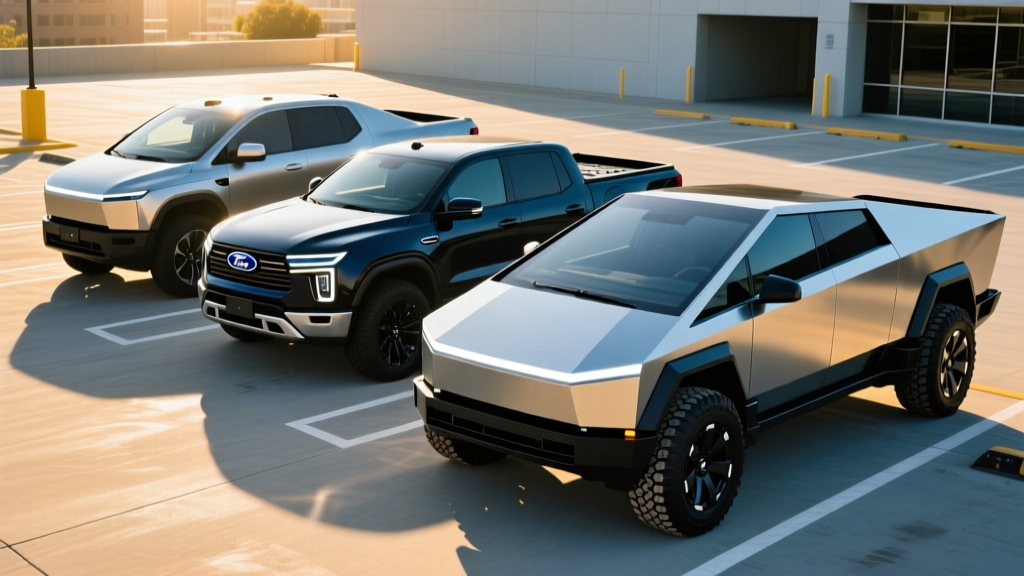
Yes. The Ford F-150 Lightning, Rivian R1T, Chevy Silverado EV, and Tesla Cybertruck are all rated to tow between 7,500 and 10,000+ lbs. The practical limitation is range: expect 130–200 miles of real-world range while towing a 5,000-lb trailer at highway speeds, compared to 300+ miles unladen.
Are there any fully electric motorhomes you can buy today?
Not from mainstream manufacturers in the U.S. as of early 2026. The Winnebago e-RV remained a concept/limited pilot. Thor Industries has demonstrated electric Airstream prototypes. Small-scale converters may offer custom electric van campers based on the Ford E-Transit or Mercedes eSprinter, but these are low-volume and expensive ($100K+). The practical EV RV path is an electric pickup towing a conventional travel trailer.
How much does it cost to charge an electric truck while towing?
At home on a Level 2 charger (avg. $0.16/kWh), filling a 131 kWh F-150 Lightning battery costs roughly $21. At a public DC fast charger ($0.35–$0.50/kWh), the same charge costs $46–$66. For comparison, a gas F-150 getting 10 mpg while towing at $3.50/gallon pays about $56 for 160 miles of range.
Do RV campgrounds have EV chargers?
Most campgrounds don't have dedicated EV charging stations, but many RV parks offer 50-amp or 30-amp electrical hookups at each site. With a portable EVSE (charging cable) and the appropriate adapter, you can charge at up to 12 kW on a 50-amp / 240V hookup — enough for a full overnight charge. Dedicated campground EV chargers (Level 2 or DC fast) are beginning to appear at KOA and select state parks but are far from universal.
What is the Lightship AE.1 electric travel trailer?
Lightship (a startup founded by former Tesla and Rivian engineers) has announced the AE.1, an aerodynamic travel trailer with an integrated ~80 kWh battery and a powered axle. The design intent is that the trailer propels itself at highway speed, offsetting the range loss the tow vehicle would normally experience. Lightship claims this preserves near-normal tow-vehicle range. Pricing starts around $125,000, with deliveries anticipated in 2025–2026. This is an announced product — verify current delivery status and independent testing before purchasing.
Is it worth buying an electric truck just for RV use?
If RV trips represent less than 20% of your driving, the daily benefits of an electric truck (lower fuel cost, instant torque, V2L capability, reduced maintenance) may justify the purchase regardless of towing limitations. If your primary use case is long-distance towing (200+ miles per trip, multiple times per month), a gas or diesel truck remains more practical in 2026 due to faster refueling, longer range under load, and more established infrastructure.