The short answer: Toyota does not sell a fully electric RAV4 (BEV) as of the 2026 model year. If you want a battery-electric Toyota SUV in the RAV4 size class, the closest equivalent is the Toyota bZ4X (EPA range up to 252 miles, starting around $37,070). If you want an electrified RAV4 specifically, the RAV4 Prime plug-in hybrid delivers 42 miles of electric-only range plus 38 mpg combined when the gas engine kicks in. Both qualify for varying degrees of federal incentive depending on your income, sourcing, and purchase timing. Below, we break down which option actually fits your driving pattern, budget, and charging situation.
Understanding the "EV RAV4" Search: What Toyota Actually Offers
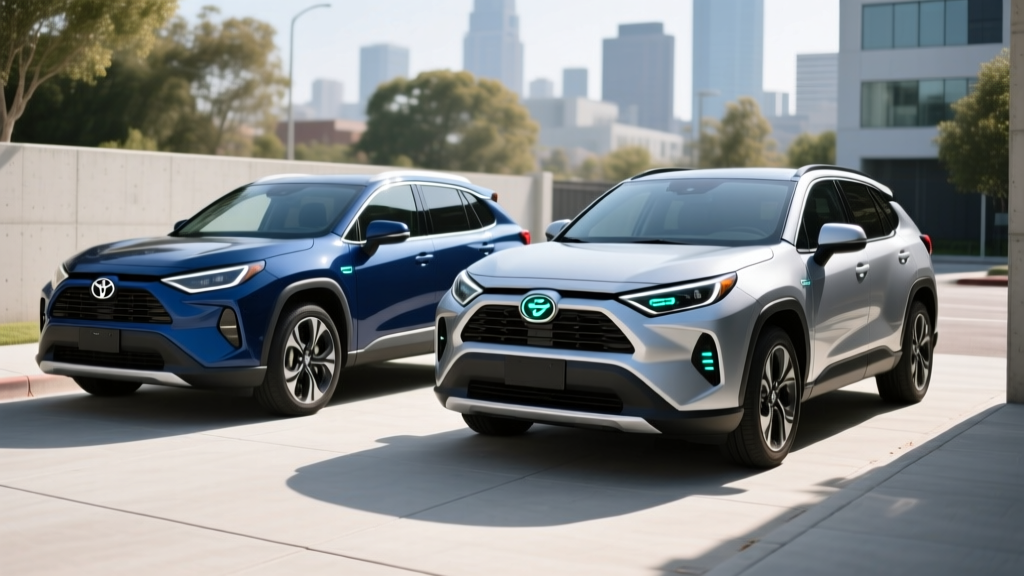
When shoppers search for an "EV RAV4," they're typically looking for one of two things: a fully electric version of America's best-selling non-truck SUV, or the closest electrified alternative Toyota currently sells. As of 2026, Toyota's lineup gives you two distinct paths:
- Toyota RAV4 Prime (PHEV): A plug-in hybrid with an 18.1 kWh battery pack, 42 miles of EPA-rated electric-only range, 302 combined horsepower, and a gas engine for longer trips. MSRP starts at $44,705 (SE trim).
- Toyota bZ4X (BEV): A dedicated battery-electric crossover similar in size to the RAV4, with a 72.8 kWh battery (usable ~65 kWh), up to 252 miles EPA range (FWD), and DC fast charging up to 150 kW. MSRP starts at $37,070 (XLE FWD).
Neither vehicle wears the RAV4 badge in electric form, but both serve the same buyer: someone who wants a compact SUV footprint with some degree of electrification. The right choice depends entirely on whether you can charge at home, how far you typically drive, and whether you're ready to eliminate gas entirely.
Spec-by-Spec: RAV4 Prime vs. bZ4X at a Glance
| Specification | 2026 RAV4 Prime (PHEV) | 2026 bZ4X (BEV, FWD) |
|---|---|---|
| Powertrain | 2.5L 4-cyl + 2 electric motors (AWD) | Single front motor (FWD) or dual motor (AWD) |
| Combined Horsepower | 302 hp | 201 hp (FWD) / 214 hp (AWD) |
| 0–60 mph | 5.5 seconds | 7.1 sec (FWD) / 6.5 sec (AWD) |
| Battery Capacity | 18.1 kWh (NMC) | 72.8 kWh gross / ~65 kWh usable (NMC) |
| Electric-Only Range | 42 miles (EPA) | 252 miles (EPA, FWD) |
| Real-World Electric Range | ~35–40 mi (hwy/cold); ~42+ mi (city/mild) | ~200–220 mi (hwy); ~170 mi (cold winter) |
| MPG / MPGe | 94 MPGe (EV mode); 38 mpg (gas hybrid mode) | 114 MPGe combined |
| DC Fast Charge (peak) | N/A (PHEV, no DC fast charge) | 150 kW peak; 10–80% in ~30 min |
| Level 2 Charge Time | ~2.5 hours (0–100% at 6.6 kW) | ~9.5 hours (0–100% at 7.2 kW) |
| Starting MSRP | $44,705 (SE AWD) | $37,070 (XLE FWD) |
| Federal Tax Credit (§30D) | Up to $7,500 (subject to sourcing/income rules) | Up to $7,500 (subject to sourcing/income rules) |
| Battery Warranty | 8 yr / 100,000 mi | 8 yr / 100,000 mi (70% capacity retention) |
Sources: EPA fueleconomy.gov, Toyota RAV4 Prime specs, Toyota bZ4X specs. Verify current MSRP and incentive eligibility with your dealer and IRS §30D guidelines.
Real Costs: What You'll Actually Spend Over 5 Years
Sticker price is only the beginning. Here's a realistic 5-year / 75,000-mile ownership comparison assuming 15,000 miles/year, $3.50/gallon regular gas, and $0.14/kWh home electricity (national average). For the RAV4 Prime, we assume 80% of daily driving falls within the 42-mile electric envelope — realistic for commuters with home charging.
| Cost Category (5 yr / 75k mi) | RAV4 Prime (PHEV) | bZ4X (BEV, FWD) | RAV4 Gas (LE AWD) |
|---|---|---|---|
| Base MSRP | $44,705 | $37,070 | $31,925 |
| Est. Federal Tax Credit | Up to $7,500* | Up to $7,500* | $0 |
| Effective Purchase Price | ~$37,205 | ~$29,570 | $31,925 |
| Fuel / Electricity (5 yr) | ~$2,800 (blended) | ~$3,150 | ~$6,560 |
| Maintenance (5 yr) | ~$2,200 | ~$1,100 | ~$3,400 |
| Insurance (5 yr est.) | ~$8,500 | ~$9,200 | ~$7,800 |
| Home Charger Install (L2) | $500–$1,500 | $500–$1,500 | $0 |
| Estimated 5-Yr Total Cost | ~$51,205–$52,205 | ~$43,520–$44,520 | ~$49,685 |
*Federal tax credit eligibility depends on MSRP caps ($80,000 for SUVs), buyer income limits ($300k MFJ / $150k single), critical-mineral and battery-component sourcing requirements, and point-of-sale transfer rules. Always verify at IRS.gov and consult a tax professional.
The bZ4X wins on pure purchase cost after incentives, while the RAV4 Prime costs more upfront but eliminates range anxiety for road trips. The gas RAV4 LE is cheapest at the dealer but the most expensive to fuel and maintain over time. Insurance for BEVs tends to run 5–15% higher than equivalent gas models due to repair cost structures — factor that into your budget.
Charging Reality: Home Access Changes Everything
The single biggest ownership variable is whether you can charge at home. Here's what each scenario looks like in practice:
RAV4 Prime Charging
The Prime uses a standard J1772 connector and charges at up to 6.6 kW on Level 2. A full charge from empty takes about 2.5 hours. On a standard 120V household outlet (Level 1, ~1.4 kW), you'll add roughly 5–6 miles of range per hour — enough to refill the 42-mile battery overnight (about 8–9 hours). No DC fast charging is available, which is typical for PHEVs. Most Prime owners wake up to a full battery every morning on a basic Level 1 outlet, making public charging largely irrelevant for daily use.
bZ4X Charging
The bZ4X charges at up to 150 kW on DC fast chargers (CCS1 connector). In real-world testing, the charge curve peaks near 150 kW at low state of charge but tapers significantly above 60%, meaning a 10–80% session takes roughly 30 minutes — not class-leading compared to Hyundai/Kia's 800V architecture (which achieves 10–80% in ~18 minutes), but adequate for road-trip stops. On a home Level 2 charger (7.2 kW), a full charge takes about 9.5 hours. On Level 1 (120V), expect roughly 3–4 miles per hour — a full charge would take over 60 hours, making Level 1 impractical as a primary strategy.
Common Misconceptions, Corrected
| Myth | Fact |
|---|---|
| "The bZ4X has the same range as the RAV4 Prime." | The bZ4X offers 252 miles total (BEV). The Prime offers 42 miles electric + ~480 miles total with its gas tank. They solve different problems. |
| "PHEVs don't need charging." | Without plugging in, the RAV4 Prime operates as a heavy hybrid, achieving ~38 mpg instead of 94 MPGe. You're paying a premium for a battery you're not using. |
| "The bZ4X charges as fast as a Tesla." | The bZ4X peaks at 150 kW (CCS). A Tesla Model Y on V3 Superchargers peaks at 250 kW (NACS) and sustains higher rates. Expect ~30 min vs ~18 min for 10–80%. |
| "Federal tax credit is automatic." | §30D has income caps, MSRP caps, and battery-sourcing requirements that change. Point-of-sale transfer is available, but eligibility must be verified per vehicle VIN at purchase. |
| "Cold weather doesn't affect PHEVs." | The Prime's electric range drops to ~30–35 miles in freezing temps due to battery chemistry and cabin heating demands. The bZ4X can lose 25–35% of its 252-mile range in sustained cold. |
Decision Framework: Which Electrified Toyota Fits Your Life?
Choose the RAV4 Prime (PHEV) if:
- Your daily round-trip commute is under 40 miles and you can plug in at home (even a 120V outlet works)
- You take road trips of 200+ miles at least a few times per year and don't want to plan around charging stops
- You live in an area with limited DC fast-charging infrastructure
- You want AWD standard and 302 hp without range trade-offs
- You value the RAV4's cargo space, visibility, and dealer service network
Choose the bZ4X (BEV) if:
- You can install a Level 2 home charger (240V, 32A+ circuit) and your daily driving stays under 150 miles
- You want the lowest operating cost and zero tailpipe emissions for daily use
- Your budget favors a lower MSRP after incentives (~$29,500 effective vs ~$37,200 for the Prime)
- You rarely drive more than 200 miles in a single day, or you're willing to plan ~30-minute DC fast-charge stops on longer trips
- You prefer minimal maintenance (no oil changes, no gas engine, fewer moving parts)
Stick with the gas RAV4 (or wait) if:
- You have no access to home or workplace charging and rely on street parking
- You regularly tow (neither the Prime nor bZ4X is rated for significant towing)
- Your budget is firmly under $30,000 and you can't wait for incentives to offset cost
What First-Time EV Buyers Should Know Before Signing
If you're moving from a gas RAV4 to either the Prime or the bZ4X, here are the practical ownership realities that spec sheets don't highlight:
Home charging installation isn't always simple. A Level 2 charger requires a dedicated 240V circuit (typically 40A for a 32A charger). If your electrical panel is at capacity — common in older homes — you may need a panel upgrade ($1,500–$3,000) on top of the $500–$1,000 for the circuit run and $300–$700 for the charger hardware. Get a quote from a licensed electrician before committing to a BEV.
Real-world range is not EPA range. The bZ4X's 252-mile EPA figure assumes mixed driving in moderate temperatures. Sustained highway driving at 75 mph drops efficiency by roughly 10–15%. Add freezing temperatures and the heat pump can't fully offset cabin and battery heating demands — expect 170–190 miles in winter. The RAV4 Prime's 42-mile electric range is more achievable in city driving but drops to ~30–35 miles in cold weather or at sustained highway speeds.
DC fast-charging speed isn't sustained. The bZ4X's 150 kW peak applies only at low state of charge (roughly 10–30%). Above 60%, the charge rate tapers to protect battery health, meaning the second half of a charging session takes significantly longer. Plan road-trip stops around the 10–80% window (~30 minutes) rather than trying to charge to 100%.
Insurance costs more for EVs. BEV insurance premiums run 5–15% higher than comparable gas vehicles, driven by higher repair costs for battery-adjacent damage and specialized parts. Get quotes before purchasing — the difference can be $100–$200/year.
Frequently Asked Questions
Will Toyota release a fully electric RAV4?
Toyota has not announced a battery-electric RAV4 as of early 2026. The company has signaled expanded BEV offerings on its upcoming dedicated EV platform, but no RAV4-badged BEV has been confirmed with a release date. The bZ4X currently fills that role in Toyota's lineup.
Does the RAV4 Prime qualify for the $7,500 federal tax credit?
The RAV4 Prime has historically qualified for up to $7,500 under §30D, but eligibility depends on current-year battery sourcing and critical mineral requirements, your adjusted gross income (caps: $300k married filing jointly, $150k single), and the vehicle's MSRP (must be under $80,000 for SUVs). The credit can be transferred to the dealer as a point-of-sale discount. Always verify eligibility by VIN at IRS.gov before purchase.
Can I charge the bZ4X at Tesla Superchargers?
As of 2026, the bZ4X uses a CCS1 connector. Toyota has announced adoption of the NACS (Tesla) connector for future models, but the current bZ4X requires a CCS-to-NACS adapter for Supercharger access, and not all Supercharger stalls support non-Tesla vehicles. Check the Tesla app or your bZ4X's navigation for compatible stations. Electrify America and other CCS networks remain the primary fast-charging option.
How long will the bZ4X battery last?
Toyota warranties the bZ4X battery for 8 years / 100,000 miles against degradation below 70% of original capacity. Real-world NMC battery data from similar platforms suggests 10–15% degradation over 100,000 miles with normal use. To maximize longevity, avoid routinely charging to 100% or draining below 10%, and use DC fast charging sparingly when Level 2 is available.
Is the RAV4 Prime worth the premium over the gas RAV4?
Financially, the Prime's ~$12,800 premium over a gas RAV4 LE AWD is partially offset by the federal tax credit (up to $7,500) and fuel savings (~$3,700 over 5 years at the blended usage above). That brings the effective payback to roughly 5–7 years for many buyers. But the Prime also delivers 302 hp, standard AWD, and a dramatically smoother daily commute in electric mode. If you can charge at home and your commute fits within 42 miles, the ownership experience — not just the math — justifies the premium for most buyers.