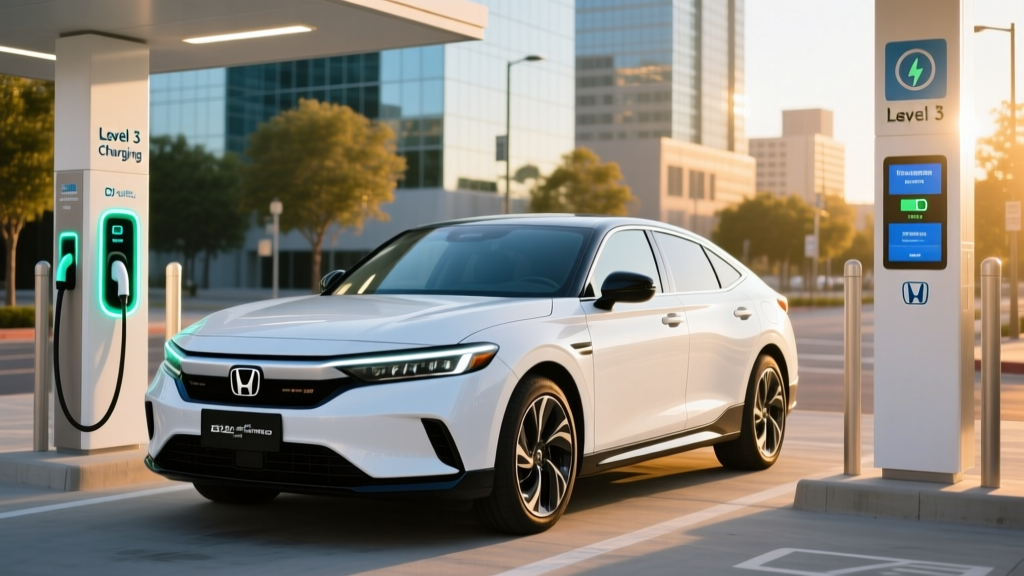
Whether you're electrifying a company fleet or evaluating a personal EV purchase against a gas baseline, the math hinges on more than the sticker price. EV fleet incentives and consumer tax credits can dramatically reduce upfront cost, but eligibility rules are specific and frequently updated. This guide dissects the 2026 incentive landscape and the true total cost of ownership (TCO) over five years — with real numbers, not marketing promises.
How EV Fleet Incentives and Consumer Credits Work in 2026
Fleet buyers and individual consumers access different incentive pathways, and understanding which applies to your situation is critical. For commercial fleets, the IRS §45W Commercial Clean Vehicle Credit offers up to $7,500 for vehicles under 14,000 lbs GVWR and up to $40,000 for heavier vehicles. Consumer buyers rely on the §30D Clean Vehicle Credit — also up to $7,500 — but with strict income, MSRP, and battery-sourcing requirements that disqualify many otherwise eligible vehicles.
State and utility incentives layer on top of federal credits but vary enormously by jurisdiction. A fleet operating in California may stack federal credits with CARB's Clean Truck and Bus Voucher program and local utility make-ready rebates, while an identical fleet in a state without EV programs captures only the federal piece. Always verify current program availability with your state energy office and local utility before finalizing procurement.
Federal Tax Credit Eligibility: The §30D Checklist
The consumer EV tax credit under IRS §30D can reduce your tax liability by up to $7,500 — or be transferred to the dealer at point of sale as an immediate price reduction. But qualifying requires threading several needles simultaneously.
- Income Caps (Modified AGI): $150,000 single filer / $225,000 head of household / $300,000 joint filers
- MSRP Caps: $80,000 for vans, SUVs, and pickup trucks; $55,000 for sedans and other passenger vehicles
- Battery Sourcing — Critical Minerals (up to $3,750): Required percentage of critical minerals must be extracted or processed in the US or a free-trade-agreement country, or recycled in North America. Threshold increases annually.
- Battery Sourcing — Components (up to $3,750): Required percentage of battery components must be manufactured or assembled in North America. Separate annual threshold increases apply.
- FEOC Exclusion: Vehicles with battery components or critical minerals from a Foreign Entity of Concern (primarily targeting Chinese supply chains) are disqualified entirely.
- Vehicle Assembly: Final assembly must occur in North America.
- Point-of-Sale Transfer: Buyers may transfer the credit to the dealer for an immediate price reduction, even if they owe less than $7,500 in taxes — but income limits still apply and must be verified at sale.
The practical result: many popular EVs qualify for only $3,750 (meeting one sourcing requirement but not the other), and several high-profile models have been disqualified entirely due to FEOC-linked supply chains. Always check the current qualified vehicle list on fueleconomy.gov before committing to a purchase — eligibility can change mid-year as manufacturers adjust battery sourcing.
5-Year Total Cost of Ownership: EV vs. Gas Baseline
The headline question for any fleet manager or individual buyer: what does an EV actually cost over five years compared to a gas equivalent? The answer depends heavily on your local electricity rate, annual mileage, and the specific vehicles compared. Below is a representative breakdown comparing a mid-range EV crossover (e.g., Hyundai Ioniq 5 SEL, ~$46,000 MSRP) against a comparable gas AWD crossover (e.g., Toyota RAV4 AWD, ~$33,000 MSRP) over 5 years and 75,000 miles.
| Cost Category | EV (Ioniq 5 SEL AWD) | Gas (RAV4 AWD) | Difference |
|---|---|---|---|
| Purchase Price (after $7,500 credit) | $38,500 | $33,000 | +$5,500 EV |
| Fuel / Charging (75,000 mi) | $4,375 | $9,375 | −$5,000 EV |
| Maintenance | $1,500 | $3,750 | −$2,250 EV |
| Insurance (5 years) | $11,250 | $8,750 | +$2,500 EV |
| Depreciation | $19,250 | $13,200 | +$6,050 EV |
| 5-Year Total Cost | $74,875 | $68,075 | +$6,800 EV |
Key assumptions: EV charging at $0.14/kWh national average (home-dominant), gas at $3.75/gallon, EV efficiency at 3.0 mi/kWh (112 MPGe combined), gas vehicle at 28 MPG combined. Insurance premiums based on industry averages for comparable crossover segments. Depreciation reflects current EV resale trends (see depreciation section below). Actual results will vary with local utility rates, driving patterns, and market conditions.
The gap narrows considerably — or reverses — if you charge primarily at home on off-peak utility rates ($0.08–$0.10/kWh), drive above 15,000 miles annually, or operate in a state with additional purchase rebates. Fleet buyers running high annual mileage and accessing commercial utility EV rates frequently achieve TCO parity or advantage within 3–4 years.
Charging vs. Gas: The Real Cost Per Mile
The single largest operational advantage of an EV is fuel cost — but only if you're charging at home or at a depot on managed electricity rates. Public DC fast charging at $0.35–$0.50/kWh can approach or exceed the cost of gasoline per mile, erasing the savings.
| Scenario | Cost/kWh or Gal | Cost Per Mile | Annual (15K mi) |
|---|---|---|---|
| EV — Home charging (off-peak) | $0.10/kWh | $0.033 | $500 |
| EV — Home charging (national avg) | $0.14/kWh | $0.047 | $700 |
| EV — Public DC fast charging | $0.40/kWh | $0.133 | $2,000 |
| Gas vehicle (28 MPG combined) | $3.75/gal | $0.134 | $2,010 |
The math is stark: home charging delivers a 70–75% fuel cost reduction versus gasoline. But if your driving pattern forces reliance on public DC fast charging exclusively — common for apartment dwellers without home charging access or fleets without depot chargers — the EV's fuel cost advantage largely disappears. Fleet procurement must prioritize depot or home charging infrastructure to capture the savings that make the TCO pencil out.
Maintenance Savings: Where EVs Consistently Win
EV powertrains have roughly 20 moving parts compared to 2,000+ in an internal combustion engine. No oil changes, no spark plugs, no timing belts, no exhaust systems, and no multi-speed transmissions. Regenerative braking dramatically extends brake pad life — many EV owners report original brake pads at 80,000+ miles.
| Service Item | EV (5-yr cost) | Gas (5-yr cost) |
|---|---|---|
| Oil changes (conventional/synthetic) | $0 | $600–$1,200 |
| Brake pads/rotors | $0–$200 | $600–$1,000 |
| Transmission fluid/service | $0 | $200–$400 |
| Tires (heavier vehicle, instant torque) | $1,200–$1,600 | $800–$1,200 |
| Cabin air filter, wipers, coolant | $200–$400 | $200–$400 |
| Total Estimated Maintenance | $1,400–$2,200 | $2,400–$4,200 |
The one maintenance category where EVs cost more is tires. Heavier curb weights (often 500–800 lbs more than gas equivalents) and instant torque delivery accelerate tire wear. Budget for one additional tire replacement over five years compared to a gas vehicle. Even with this, net maintenance savings of $1,500–$2,500 over five years are typical and well-documented by Consumer Reports and fleet management studies.
Insurance Costs: The Uncomfortable Reality
EV insurance premiums run 15–30% higher than comparable gas vehicles on average. The reasons are structural, not arbitrary: EVs have higher repair costs after collisions (battery pack damage often requires full replacement rather than repair), specialized technician training requirements, higher initial vehicle values, and limited historical claims data for newer models. Insurers price this uncertainty into premiums.
For a mid-range EV crossover, expect annual premiums of $2,000–$2,500 versus $1,500–$2,000 for a gas equivalent — a $500/year gap that adds $2,500 over five years. Some insurers now offer EV-specific policies with battery coverage riders and competitive rates, so shopping multiple quotes is essential. Fleet buyers should negotiate group rates and ask about telematics-based discounts that reward safe driving patterns.
The insurance premium gap is narrowing as the EV fleet ages and claims data matures, but as of 2026, it remains a real line-item cost that must be factored into TCO calculations — not ignored.
Depreciation and Resale Value: A Moving Target
EV depreciation has been volatile. In 2023–2024, aggressive price cuts by Tesla and others cascaded through the used EV market, causing some models to lose 50–60% of their value in the first two years — far steeper than gas equivalents. By 2025–2026, the market has partially stabilized as EV adoption matures and the used-EV credit (§25E, up to $4,000 for vehicles under $25,000) supports demand in the secondary market.
Current 5-year depreciation for mainstream EV crossovers averages 50–55% of original transaction price, compared to 40–45% for comparable gas vehicles. That translates to roughly $4,000–$8,000 in additional depreciation cost for the EV over five years. However, this gap varies enormously by brand and model: vehicles from manufacturers with strong resale reputations and stable pricing hold value better, while models subject to aggressive new-vehicle discounting depreciate faster.
For fleet buyers, depreciation is often the single largest TCO component and the hardest to predict. Leasing can transfer residual-value risk to the lessor and may be advantageous when EV resale values are uncertain. If purchasing, plan for conservative residual assumptions in your fleet financial model.
Stacking Incentives for Fleet and Individual Buyers
Maximizing the value of available incentives requires understanding which credits stack and which are mutually exclusive. A fleet buyer cannot claim both §45W (commercial) and §30D (consumer) on the same vehicle. However, federal credits generally stack with state purchase rebates, utility make-ready incentives (covering charger installation costs), and accelerated depreciation schedules (bonus depreciation under §168 can write off the full vehicle cost in year one for qualifying business use).
A realistic incentive stack for a fleet EV in a favorable jurisdiction might look like:
- $7,500 federal §45W commercial credit (no income caps or battery-sourcing restrictions like §30D)
- $2,000–$5,000 state purchase rebate (varies by state)
- $1,000–$3,000 utility make-ready rebate per vehicle (covers Level 2 charger installation)
- 100% bonus depreciation in year one (reduces taxable income by full vehicle cost)
This stack can reduce the effective purchase cost by $10,000–$20,000+ depending on the fleet's tax situation and jurisdiction — dramatically improving the TCO equation. Work with a tax professional and fleet electrification consultant to model your specific scenario.
Frequently Asked Questions
How much does it really cost to own an EV over 5 years?
For a mid-range EV crossover with home charging and the full $7,500 federal tax credit, expect a 5-year total cost of approximately $70,000–$80,000 including purchase, fuel, maintenance, insurance, and depreciation. This is typically $5,000–$10,000 more than a comparable gas vehicle, with the gap narrowing or reversing if you drive high annual miles, charge at low home electricity rates, or access additional state/utility incentives. Fleet buyers with high mileage and commercial incentive stacks frequently achieve TCO parity within 3–4 years.
Do I qualify for the federal EV tax credit?
Under §30D, you qualify if your modified AGI is under $150K (single), $225K (head of household), or $300K (joint); the vehicle MSRP is under $55K (sedans) or $80K (SUVs/trucks/vans); the vehicle meets current battery-sourcing requirements for critical minerals and components; and final assembly occurred in North America. Many popular EVs qualify for only $3,750 rather than the full $7,500 due to partial sourcing compliance. Commercial fleet buyers using §45W face no income caps and simpler sourcing rules. Check irs.gov and fueleconomy.gov for the current qualified vehicle list.
How much do I save on fuel and maintenance with an EV?
Fuel savings of $4,000–$6,000 over five years are typical if you charge primarily at home on average utility rates ($0.10–$0.14/kWh). Maintenance savings of $1,500–$2,500 over five years come from eliminating oil changes, extending brake life via regenerative braking, and reducing drivetrain service. Combined operational savings of $5,500–$8,500 are realistic for most owners. These savings are substantially reduced if you rely on public DC fast charging exclusively.
Are EVs more expensive to insure?
Yes — typically 15–30% more than a comparable gas vehicle, translating to $400–$700 per year in additional premium cost. Higher repair costs (especially battery-related claims), specialized technician requirements, and limited actuarial data on newer models drive the gap. Shopping multiple insurers, including those offering EV-specific policies, can reduce the premium differential. The gap is gradually narrowing as the EV fleet matures and claims data becomes more robust.
How well do EVs hold their value compared to gas vehicles?
As of 2026, mainstream EVs depreciate approximately 50–55% over five years versus 40–45% for comparable gas vehicles — a gap of roughly 10 percentage points or $4,000–$8,000 in additional depreciation cost. This gap has narrowed from the 2023–2024 period when EV price wars caused steeper drops. Resale value varies significantly by brand, model, and whether the manufacturer maintains stable new-vehicle pricing. Leasing remains a viable strategy to transfer residual-value risk, particularly for fleet buyers.
Can I transfer the tax credit to the dealer if I don't owe enough in taxes?
Yes. Under the point-of-sale transfer provision (effective 2024), you can transfer the §30D credit to the dealer as an immediate price reduction regardless of your tax liability. However, you must still meet all income requirements, and you'll need to attest to your expected modified AGI at the time of sale. If your actual income exceeds the cap when you file, you'll owe the credit amount back to the IRS. This provision makes the credit accessible to buyers with low tax liability but within income limits.