The Quick Answer
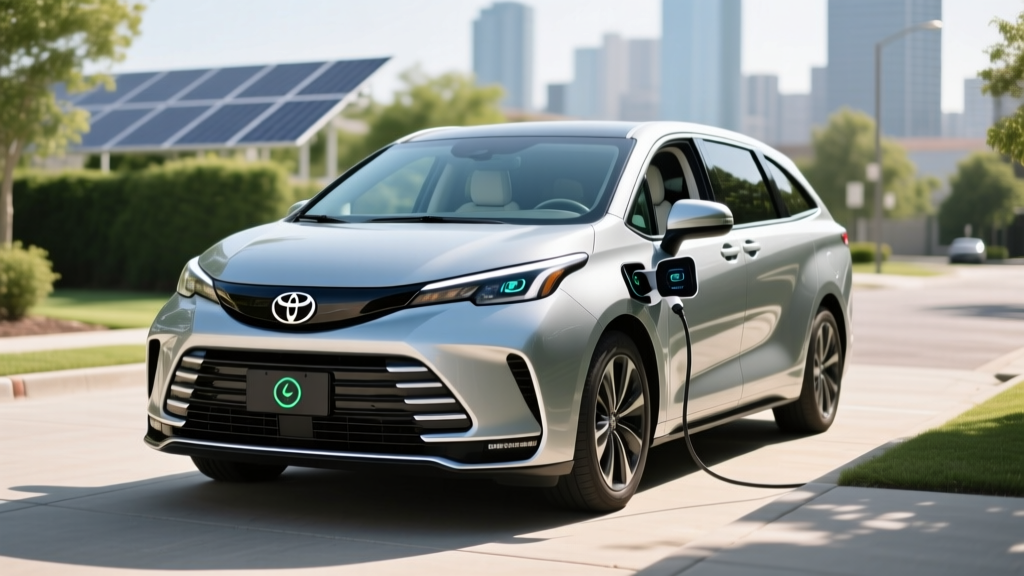
The Toyota Sienna is a hybrid-only minivan — it has no plug, no EV-only range rating, and no "EV mode" button that locks it into pure electric driving like a plug-in hybrid. The Sienna's hybrid system can propel the van at low speeds (typically under 25 mph) on electric power alone for roughly 0.5 to 1.5 miles under ideal conditions before the 2.5-liter gasoline engine kicks in. If you're searching for meaningful EV-mode driving in a minivan, you'll need a plug-in hybrid like the Chrysler Pacifica Hybrid (32 miles electric-only) or a battery-electric vehicle like the Kia EV9 (EPA 230–304 miles depending on trim).
How the Sienna's Hybrid System Actually Works
The Toyota Sienna uses Toyota's fourth-generation Hybrid Synergy Drive, pairing a 2.5-liter four-cylinder Atkinson-cycle engine with two front-mounted electric motors and, on AWD trims, a third motor on the rear axle. Combined system output is 245 horsepower. The small nickel-metal hydride (NiMH) traction battery stores roughly 1.9 kWh of usable energy — far too small to sustain highway speeds on electricity alone.
When you pull away from a stoplight or creep through a parking lot, the Sienna can operate on electric motors only. This is sometimes informally called "EV mode" by owners, but it's an automatic behavior managed by the hybrid control computer — not a selectable drive mode. Push the accelerator past a light threshold, exceed roughly 25 mph, or demand sustained power, and the gas engine seamlessly starts.
Toyota does include an "EV Mode" button on some hybrid models (like the RAV4 Hybrid), which biases the system toward electric-only operation at low speeds. The Sienna, however, does not feature a dedicated EV Mode switch in U.S. trims. The hybrid system makes its own decisions about when to use electric versus gasoline propulsion, optimizing for fuel economy rather than driver-selected electric operation.
Real-World MPG: Sienna Hybrid vs. Gas Minivans vs. Alternatives
The Sienna's hybrid powertrain delivers strong efficiency numbers that beat every conventional gas minivan on the market. Here's how it compares, using EPA data from fueleconomy.gov:
| Vehicle | Powertrain | City MPG | Highway MPG | Combined MPG | Electric-Only Range |
|---|---|---|---|---|---|
| Toyota Sienna (FWD) | HEV | 36 | 36 | 36 | ~1 mi (low speed) |
| Toyota Sienna (AWD) | HEV | 35 | 36 | 35 | ~1 mi (low speed) |
| Chrysler Pacifica Hybrid | PHEV | 30 (gas) / 82 MPGe (elec) | 31 (gas) | 30 (gas) / 82 MPGe | 32 mi (EPA) |
| Honda Odyssey | Gas V6 | 19 | 28 | 22 | None |
| Kia Carnival | Gas V6 | 19 | 26 | 22 | None |
| Kia EV9 (AWD Land) | BEV | — | — | 85 MPGe | 270 mi (EPA) |
The Sienna's 36 MPG combined is exceptional for a three-row family hauler. Over 15,000 miles annually, that's roughly 417 gallons of fuel. Compare that to the Honda Odyssey at 22 MPG combined, which burns 682 gallons — a difference of 265 gallons per year. At $3.40/gallon, the Sienna saves approximately $901 per year in fuel over a gas V6 minivan.
The "EV Mode" Misconception: What Sienna Owners Should Know
| Myth | Fact |
|---|---|
| "I can drive the Sienna on electricity only for my commute." | The Sienna's 1.9 kWh battery supports only brief low-speed electric operation — typically under 1 mile. Highway driving always engages the gas engine. |
| "The Sienna has an EV mode button I haven't found." | U.S.-spec Sienna minivans do not include a selectable EV mode button. The hybrid system manages electric/gas blending automatically. |
| "I can charge the Sienna by plugging it in." | The Sienna is a conventional hybrid (HEV), not a plug-in hybrid (PHEV). It has no charge port. The battery recharges only through regenerative braking and engine-driven generation. |
| "The Sienna qualifies for the $7,500 federal EV tax credit." | The Sienna does not qualify for the IRS §30D new clean vehicle credit. Only plug-in vehicles with sufficient battery capacity (≥7 kWh) are eligible, and the Sienna's 1.9 kWh pack doesn't meet the threshold. |
| "Hybrid batteries need expensive replacement every few years." | Toyota's hybrid battery warranty covers 10 years / 150,000 miles. Real-world data shows Toyota NiMH hybrid packs commonly last 150,000–200,000+ miles with gradual capacity loss, not sudden failure. |
Cost of Ownership: Sienna Hybrid vs. Plug-In and Electric Alternatives
If your goal is minimizing fuel costs and maximizing electric driving, here's a five-year cost comparison across minivan options. Assumptions: 15,000 miles/year, $3.40/gallon gasoline, $0.14/kWh home electricity, no tax credits applied to the Sienna (ineligible).
| Vehicle | Annual Fuel/Energy Cost | 5-Year Fuel/Energy Cost | Maintenance Estimate (5 yr) | Base MSRP (2025) |
|---|---|---|---|---|
| Toyota Sienna LE (HEV) | $1,417 | $7,083 | $2,800 | $39,585 |
| Chrysler Pacifica Hybrid (PHEV) | $1,100* | $5,500* | $3,200 | $51,095 |
| Honda Odyssey (Gas V6) | $2,319 | $11,594 | $3,000 | $40,290 |
| Kia EV9 (BEV, AWD Land) | $735** | $3,676** | $1,500 | $59,900 |
*PHEV cost assumes 60% of driving within 32-mile electric range on home charging, 40% on gasoline. Actual costs vary heavily with commute distance and charging discipline.
**BEV cost assumes 100% home Level 2 charging at $0.14/kWh and 2.5 mi/kWh efficiency. DC fast charging on road trips would increase this modestly.
The Sienna wins on upfront affordability and strong hybrid efficiency without any charging infrastructure requirement. The Pacifica Hybrid wins on daily electric-only commuting if you can charge at home. The EV9 wins on per-mile energy cost but demands a higher purchase price and access to charging.
Do You Need EV Mode? A Decision Framework for Minivan Buyers
Choose the Toyota Sienna Hybrid if:
- You want excellent fuel economy (36 MPG) with zero lifestyle changes — no plug, no charging routine, no range planning.
- Your daily driving includes a mix of city and highway miles that exceed what a PHEV's electric range covers.
- You don't have reliable access to home or workplace charging.
- You want Toyota's long-proven hybrid reliability and a 10-year/150,000-mile hybrid battery warranty.
- Third-row space and cargo versatility are priorities — the Sienna's hybrid packaging preserves full interior volume.
Choose the Chrysler Pacifica Hybrid (PHEV) if:
- Your daily round-trip commute is under 30 miles and you can install a Level 2 home charger.
- You want to drive on electricity most weekdays but still need gas flexibility for road trips.
- You value the Stow 'n Go second-row seating that folds flat into the floor (not available on Sienna).
- You're willing to pay a ~$10,000 MSRP premium and manage plug-in charging routines.
Choose the Kia EV9 (BEV) if:
- You have reliable home Level 2 charging and your typical trips fall within 200–250 miles.
- You want the lowest per-mile energy cost and minimal maintenance (no oil changes, no spark plugs, fewer moving parts).
- You're willing to plan charging stops on longer road trips using DC fast chargers (EV9 peaks at ~236 kW, 10–80% in approximately 24 minutes).
- You can absorb the higher purchase price, potentially offset by the §30D federal tax credit if you meet income, MSRP, and battery-sourcing requirements (up to $7,500, with income caps of $150K single / $300K joint and SUV MSRP cap of $80,000).
First-Time Electrified Minivan Buyer: What to Know Before You Buy
If you're considering any electrified minivan for the first time, here are the practical ownership realities that spec sheets don't always highlight:
Home charging access is the single biggest variable. If you can install a Level 2 (240V) charger at home — typically a $500–$1,500 installation depending on panel capacity and wiring distance — a PHEV or BEV becomes dramatically more convenient and cheaper to operate. Without home charging, a conventional hybrid like the Sienna is the pragmatic choice: you simply refuel at gas stations and let the hybrid system optimize efficiency.
Cold weather reduces battery efficiency across all types. The Sienna's hybrid system sees a modest MPG dip in winter (expect 2–4 MPG lower in sub-freezing temperatures due to increased engine idling for cabin heat and reduced battery efficiency). A PHEV like the Pacifica Hybrid can lose 20–30% of its electric-only range in cold weather. A BEV like the EV9 can lose 25–40% of range in extreme cold, especially without preconditioning.
Insurance costs differ. BEVs and PHEVs typically carry higher insurance premiums than conventional hybrids due to higher repair costs for battery and power-electronics components. Get quotes before committing — a $100–$200/year premium difference adds up over ownership.
Maintenance shifts, not disappears. The Sienna hybrid still requires oil changes (every 10,000 miles), brake fluid, coolant, and tire rotations — though regenerative braking significantly extends pad life. A BEV eliminates oil changes and dramatically reduces brake wear but still needs tires, cabin air filters, coolant checks, and wiper fluid. Factor in roughly 40–60% lower routine maintenance costs for a BEV versus a hybrid.
Sienna Hybrid Battery Longevity and Warranty
Toyota covers the Sienna's hybrid battery for 10 years or 150,000 miles (whichever comes first) across all 50 states. This is one of the strongest hybrid warranties in the industry. The NiMH chemistry in the Sienna is less energy-dense than the lithium-ion packs in PHEVs and BEVs, but it's proven extremely durable over two decades of Toyota hybrid production.
Should the battery require replacement out of warranty, expect $2,500–$4,500 for a refurbished or new OEM pack including labor at a Toyota dealer. Independent hybrid specialists often perform this service for $1,800–$3,000. Given the 10-year warranty and typical Sienna ownership patterns, most original owners will never face this cost.
The Bottom Line: Is the Sienna the Right Electrified Minivan for You?
The Toyota Sienna doesn't offer a true EV mode — and it doesn't pretend to. What it delivers is best-in-class hybrid fuel economy for a minivan, proven reliability, and the simplicity of never needing to plug in. If "EV mode" in your search meant you hoped to drive a minivan on electricity alone for your commute, the Sienna won't do that — you need a PHEV or BEV for meaningful electric-only miles.
But if your priority is a three-row family vehicle that sips fuel, avoids charging hassles, and costs less upfront than plug-in alternatives, the Sienna's 36 MPG combined and ~$39,585 starting price make it the efficiency benchmark in the minivan segment. It saves roughly $900/year in fuel over a gas V6 competitor, and that savings compounds over years of ownership without any infrastructure investment or behavioral change on your part.
Can I add an EV mode to the Toyota Sienna?
No. The Sienna's hybrid system is not designed for driver-selectable EV-only operation. The onboard computer manages electric and gasoline power automatically. There is no software update, aftermarket module, or setting that enables sustained electric-only driving.
Does the Toyota Sienna qualify for any federal tax credits?
No. The Sienna is a conventional hybrid (HEV) with a 1.9 kWh battery. The IRS §30D credit requires a plug-in vehicle with at least 7 kWh of battery capacity. The Sienna does not have a charge port and does not qualify for any federal EV tax incentive.
How far can the Sienna go on electricity alone?
Under ideal conditions — flat terrain, gentle acceleration, speeds under 25 mph — the Sienna can travel approximately 0.5 to 1.5 miles on battery power before the gas engine engages. In practice, most drivers experience electric-only operation in short bursts (parking lots, stop-and-go traffic) rather than sustained distances.
Is the Sienna hybrid AWD system all-electric at the rear?
Yes, partially. AWD-equipped Sienna trims use a separate rear-mounted electric motor (54 hp) that provides rear-wheel traction when needed. There is no mechanical driveshaft connecting the engine to the rear wheels. However, this rear motor draws from the same small hybrid battery and does not enable independent rear EV driving.
What minivan offers the most electric-only range?
Among currently available minivans, the Chrysler Pacifica Hybrid offers 32 miles of EPA-rated electric-only range on a full charge. Among three-row SUVs positioned as minivan alternatives, the Kia EV9 offers 230–304 miles of EPA range depending on trim and drivetrain, but requires DC fast charging infrastructure for road trips.