The State of EV Minivans Right Now
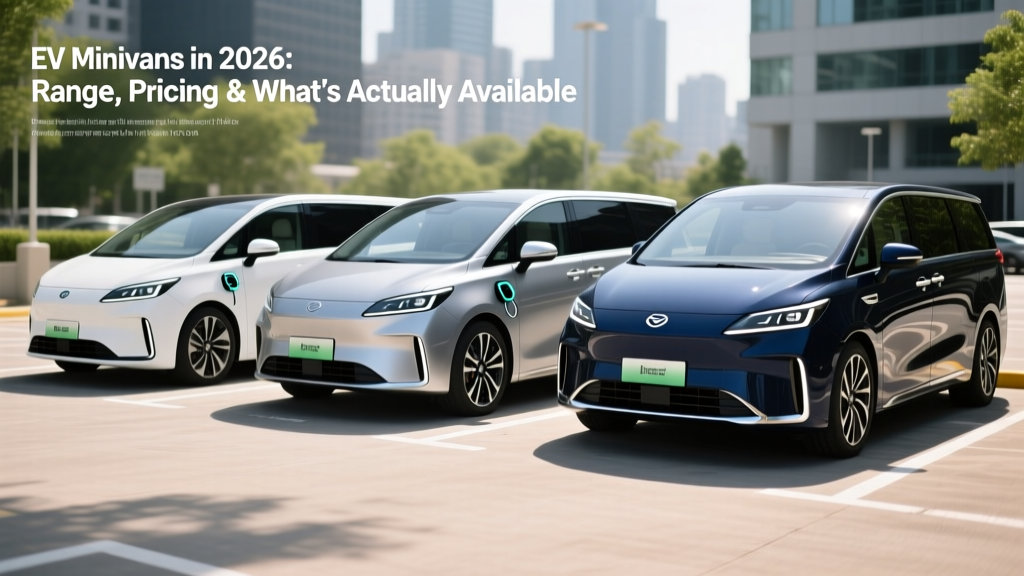
If you need a plug-in family hauler today, your only widely available option is the Chrysler Pacifica Hybrid (PHEV) — a plug-in hybrid minivan with 32 miles of electric-only range and an EPA-estimated 82 MPGe. A fully battery-electric minivan does not yet exist in the US market as of early 2026. Several concepts and announcements (notably from Kia and Hyundai) suggest pure-electric minivans may arrive for the 2027–2028 model years, but nothing is on sale. For families ready to go fully electric in a three-row vehicle, the closest alternatives are electric SUVs like the Kia EV9 or Tesla Model X.
Why the EV Minivan Segment Is So Small
Minivans occupy a difficult space for electrification. Buyers demand maximum interior volume, low step-in height, sliding doors, and competitive pricing — all of which conflict with the current reality of large battery packs. A 300-mile electric minivan would require roughly a 100–110 kWh battery, adding significant weight and cost to a vehicle class where buyers are historically price-sensitive.
The result: automakers have prioritized electrifying sedans, crossovers, and SUVs first. The minivan segment, which moves roughly 400,000–500,000 units annually in the US, has been slower to adopt full electrification compared to the broader market.
What You Can Actually Buy: The 2026 Chrysler Pacifica Hybrid
The Pacifica Hybrid remains the only plug-in minivan sold in the United States. It pairs a 3.6-liter V6 with a 16 kWh (usable) battery pack and two electric motors integrated into the transmission. Here's what the numbers look like:
| Spec | Value |
|---|---|
| Powertrain | 3.6L V6 PHEV (260 hp combined) |
| Battery (usable) | 16 kWh |
| EPA Electric-Only Range | 32 miles |
| EPA MPGe (electric + gas) | 82 MPGe |
| Gas-Only Combined MPG | 30 MPG |
| Total Range (full tank + full charge) | ~520 miles |
| Level 2 Charge Time (0–100%) | ~2 hours at 7.2 kW |
| DC Fast Charging | Not available |
| 0–60 mph | ~7.1 seconds |
| Cargo (behind 3rd row) | 32.3 cu ft |
| Starting MSRP | ~$51,095 |
| Battery Warranty | 10 yr / 100,000 mi |
Real-world note: The 32-mile electric range holds up reasonably well in moderate climates with city driving. Expect 25–28 miles in cold weather (below 30°F) or sustained highway speeds above 65 mph. The Pacifica Hybrid does not support DC fast charging — Level 2 at home is the practical charging method.
According to fueleconomy.gov, the Pacifica Hybrid achieves 82 MPGe when operating in electric mode and 30 MPG combined once the battery is depleted. For context, the gas-only Pacifica returns 22 MPG combined.
EV Minivan vs. Gas Minivan vs. Electric SUV: The Cost Comparison
Let's compare the real operating costs of three realistic family-hauler choices over 5 years and 75,000 miles:
| Category | Pacifica Hybrid (PHEV) | Honda Odyssey (Gas) | Kia EV9 (BEV) |
|---|---|---|---|
| Base MSRP | $51,095 | $41,935 | $54,900 |
| Est. Federal Tax Credit | $0 (PHEV battery <16 kWh threshold varies) | $0 | Up to $7,500 (if eligible) |
| Fuel/Energy Cost (5 yr) | ~$4,800 | ~$9,400 | ~$3,200 |
| Maintenance (5 yr) | ~$3,100 | ~$3,800 | ~$1,800 |
| Insurance (5 yr avg) | ~$9,500 | ~$8,200 | ~$10,800 |
| Est. 5-Yr Depreciation | ~$22,000 | ~$19,500 | ~$26,000 |
| Estimated Total Cost | ~$46,295 | ~$41,835 | ~$52,200 |
Fuel costs assume $3.40/gal gas, $0.14/kWh home electricity, 70% electric driving for the PHEV. Tax credit eligibility for the EV9 depends on battery sourcing, buyer income, and MSRP caps per current IRS §30D rules. Always verify with a tax professional.
The Pacifica Hybrid saves roughly $4,600 in fuel over the gas Odyssey across 5 years, but its higher MSRP largely offsets that gain. The EV9 costs more upfront but offers the lowest energy and maintenance costs — and three rows of seating, though not sliding doors or the same cargo flexibility as a minivan.
Upcoming Electric Minivans: What's Announced
Several automakers have signaled electric minivan plans, though none have confirmed US availability with firm pricing:
- Kia (announced concept): Kia has shown the PV5 concept, a modular electric van platform targeting commercial and passenger use. A passenger variant could reach the US by 2027–2028, but specs and pricing are preliminary.
- Hyundai: Hyundai has referenced a next-generation electric people-mover, potentially based on the eM platform. No US timeline confirmed.
- Chrysler: Stellantis has indicated future electrification across its lineup, but no confirmed fully electric Pacifica successor has been announced for the US market.
Important: These vehicles are announced or in concept stage. Specifications, pricing, and availability are all preliminary and subject to change. None should be factored into a near-term purchase decision.
Real-World Ownership Considerations for Plug-In Families
If you're considering the Pacifica Hybrid or waiting for a future electric minivan, these practical factors matter more than spec sheets:
Home Charging Access
The Pacifica Hybrid's 16 kWh battery charges fully in about 2 hours on a Level 2 (240V) home charger at 7.2 kW. If you can install a Level 2 charger at home — typically $500–$1,800 including equipment and electrician — you'll start most mornings with a full 32-mile electric buffer. Without home charging, the PHEV advantage shrinks significantly: you'll be driving primarily on gas, and the 30 MPG combined is only marginally better than competing gas minivans.
Driving Patterns
The PHEV math works best when your daily driving stays under 30 miles round-trip and you charge nightly. A family doing a 10-mile school run and 15-mile commute can run almost entirely on electricity during the week, using gas only for longer weekend trips. If your daily mileage regularly exceeds 40–50 miles, the electric range becomes a smaller fraction of total driving, and a conventional hybrid (like the Toyota Sienna, rated 36 MPG combined) may save more fuel at a lower purchase price.
Climate Impact
Cold weather reduces the Pacifica Hybrid's electric range by roughly 15–25% in temperatures below freezing. In northern climates, expect 24–27 electric miles in winter versus the rated 32. Cabin heating draws from the battery in EV mode, though the gas engine can kick in to assist.
Common Misconceptions About EV Minivans
| Myth | Fact |
|---|---|
| "There are plenty of electric minivans to choose from." | Only one plug-in minivan (Pacifica Hybrid) is sold in the US. No fully electric minivan exists in the US market as of 2026. |
| "A PHEV minivan eliminates all gas use." | The Pacifica Hybrid's 32-mile electric range covers short trips. Longer drives burn gas at 30 MPG combined — better than a gas-only van, but not zero-emission. |
| "I don't need a home charger for a PHEV." | Without home charging, you'll rarely use the battery, negating the fuel savings that justify the higher purchase price. |
| "An electric SUV is the same as an electric minivan." | Electric SUVs like the Kia EV9 offer three rows but lack sliding doors, low load floors, and the stow-and-go cargo flexibility that define the minivan experience. |
| "The $7,500 tax credit applies to the Pacifica Hybrid." | PHEV tax credit eligibility under §30D depends on battery capacity (≥16 kWh for full credit in many cases), sourcing requirements, and buyer income limits. The Pacifica Hybrid's credit eligibility has varied — verify current status on irs.gov. |
Decision Framework: Which Family Hauler Is Right for You?
If / Then Guide
- If you need a minivan specifically (sliding doors, stowable seating, low step-in) and you can charge at home → Chrysler Pacifica Hybrid is your only plug-in option. Budget ~$51K+ and expect 32 electric miles for daily errands.
- If you want maximum fuel savings in a minivan but don't need plug-in capability → Toyota Sienna Hybrid (HEV, 36 MPG combined, ~$38K starting) offers strong efficiency without charging requirements.
- If you're committed to a fully electric vehicle and can accept SUV packaging → Kia EV9 (EPA range up to 304 miles, 3 rows, ~$54,900) or Tesla Model X (EPA range up to 335 miles, ~$79,990) are the closest electric alternatives.
- If you can wait 2–3 years and a true electric minivan is your goal → Monitor announcements from Kia (PV5 platform) and Hyundai. Do not delay a necessary vehicle purchase on unconfirmed future models.
- If you cannot charge at home → A conventional hybrid minivan (Sienna) makes more financial sense than the Pacifica PHEV, since you won't capture the electric-range benefit.
Frequently Asked Questions
Is there a fully electric minivan available in the US?
No. As of early 2026, no fully battery-electric minivan is sold in the United States. The only plug-in minivan option is the Chrysler Pacifica Hybrid, which is a plug-in hybrid (PHEV) with 32 miles of electric-only range backed by a gasoline engine.
Does the Chrysler Pacifica Hybrid qualify for the federal tax credit?
Eligibility under IRS §30D has changed multiple times and depends on battery sourcing requirements, buyer income caps ($150K single / $300K joint), and MSRP limits ($80K for vans/SUVs). The Pacifica Hybrid has had varying eligibility — check the latest qualified vehicle list on fueleconomy.gov or consult a tax professional before purchasing.
How does the Pacifica Hybrid compare to the Toyota Sienna?
The Sienna is a conventional hybrid (HEV) — it cannot plug in and has no electric-only range. It achieves 36 MPG combined versus the Pacifica Hybrid's 30 MPG on gas (but 82 MPGe when using its electric range). The Sienna starts roughly $13,000 lower and never requires charging, but it cannot drive on electricity alone. If your trips are short and you charge at home, the Pacifica Hybrid uses less gas. For longer commutes or no home charging, the Sienna is simpler and cheaper.
When will a fully electric minivan be available?
No automaker has confirmed a US-market fully electric minivan with firm pricing and availability. Kia's PV5 platform and Hyundai's eM platform are the most likely candidates, potentially arriving in the 2027–2028 timeframe. These are announced/concept-stage vehicles with preliminary specifications.
What electric vehicle has the most cargo space for families?
Among currently available EVs, the Kia EV9 offers 81.7 cu ft of cargo space with both rear rows folded, and the Tesla Model X provides up to 88 cu ft. Neither matches the minivan's low load floor and sliding-door convenience, but both accommodate three rows and substantial cargo for fully electric families.