The Short Answer: Is the EV Hayat Right for You?
The "EV hayat" — the full electric-vehicle lifestyle — makes financial sense in 2026 if you can charge at home, drive under 250 miles daily, and qualify for the federal §30D tax credit. A typical EV owner saves between $4,500 and $8,000 over five years compared to a comparable gas car, primarily through lower fuel and maintenance costs. However, the EV hayat is not universally cheaper: upfront prices remain $3,000–$7,000 higher than gas equivalents on average, public charging costs can rival gasoline on road trips, and apartment dwellers without home charging access face real friction. Below, we break down every number so you can decide.
What "EV Hayat" Actually Means for Buyers
The term EV hayat (from the Turkish word for "life") captures the full ownership experience of living with an electric vehicle — not just driving one, but charging it, maintaining it, budgeting for it, and adapting daily routines around it. For American buyers in 2026, this means understanding:
- Daily charging logistics: Whether you plug in at home overnight, rely on workplace Level 2 chargers, or depend on public DC fast-charging networks like Tesla Superchargers, Electrify America, or EVgo.
- Range planning: Managing real-world range that can be 15–30% lower than EPA estimates in cold weather or at sustained highway speeds above 70 mph.
- Financial trade-offs: Higher sticker prices offset by federal and state incentives, dramatically lower per-mile "fuel" costs, and reduced maintenance (no oil changes, fewer brake replacements thanks to regenerative braking).
- Long-term battery health: Understanding degradation curves, warranty coverage (typically 8 years/100,000 miles for the traction battery), and eventual replacement costs.
EV vs. Gas vs. Hybrid: The 5-Year Cost Breakdown
Let's compare three realistic 2026 vehicles in the compact crossover segment — a battery-electric vehicle (BEV), a conventional hybrid (HEV), and a gasoline-only baseline — over five years and 75,000 miles of mixed driving.
| Cost Factor | EV (e.g., Hyundai Ioniq 5 SEL) | Hybrid (e.g., Toyota RAV4 Hybrid) | Gas (e.g., Toyota RAV4 LE) |
|---|---|---|---|
| Base MSRP | $42,600 | $33,425 | $29,825 |
| Federal Tax Credit (§30D) | −$7,500 (if eligible) | $0 | $0 |
| Effective Purchase Price | $35,100 | $33,425 | $29,825 |
| Fuel / Electricity (5 yr / 75k mi) | $3,750 (home charging avg.) | $6,900 (40 MPG combined) | $9,375 (30 MPG combined) |
| Maintenance (5 yr) | $1,800 | $3,200 | $4,100 |
| Insurance (5 yr avg.) | $9,500 | $7,800 | $7,500 |
| Estimated Depreciation | $14,000 | $11,500 | $12,000 |
| Total 5-Year Cost | $64,150 | $62,825 | $62,800 |
| 5-Year Cost w/ Tax Credit | $56,650 | $62,825 | $62,800 |
Key takeaway: With the full $7,500 §30D credit, the EV wins by roughly $6,150 over five years. Without it — due to income caps, MSRP caps, or battery-sourcing disqualification — costs are nearly identical to a hybrid. Always verify your eligibility on IRS.gov's clean vehicle credit page before purchasing.
Real Charging Costs: Home vs. Public vs. Gas Station
The single biggest variable in the EV hayat is where you charge. Electricity pricing varies enormously, and the difference between home Level 2 charging and public DC fast charging can be a factor of 3–4x.
| Charging / Fueling Method | Cost per kWh or Gallon | Cost per 300 Miles | Time Required |
|---|---|---|---|
| Home Level 2 (national avg. $0.16/kWh) | $0.16/kWh | $14.40 (at 3.3 mi/kWh) | 6–8 hours (overnight) |
| Home with solar / off-peak rates | $0.08/kWh | $7.20 | 6–8 hours (overnight) |
| Public DC Fast Charger (avg. $0.40/kWh) | $0.40/kWh | $36.00 | 25–40 min (10–80%) |
| Tesla Supercharger (avg. $0.30/kWh) | $0.30/kWh | $27.00 | 20–30 min (10–80%) |
| Gasoline (avg. $3.50/gal, 30 MPG) | $3.50/gal | $35.00 | 5 minutes |
At home, charging an EV is dramatically cheaper — roughly $0.05 per mile versus $0.12 per mile for a 30 MPG gas car. But on road trips using public DC fast chargers, the cost gap narrows or even reverses. A 300-mile road-trip segment in an EV can cost $27–$36 in electricity, compared to $35 in gasoline. The EV hayat saves the most money for drivers who charge at home 80%+ of the time.
Home Charging Setup: What the EV Hayat Actually Requires
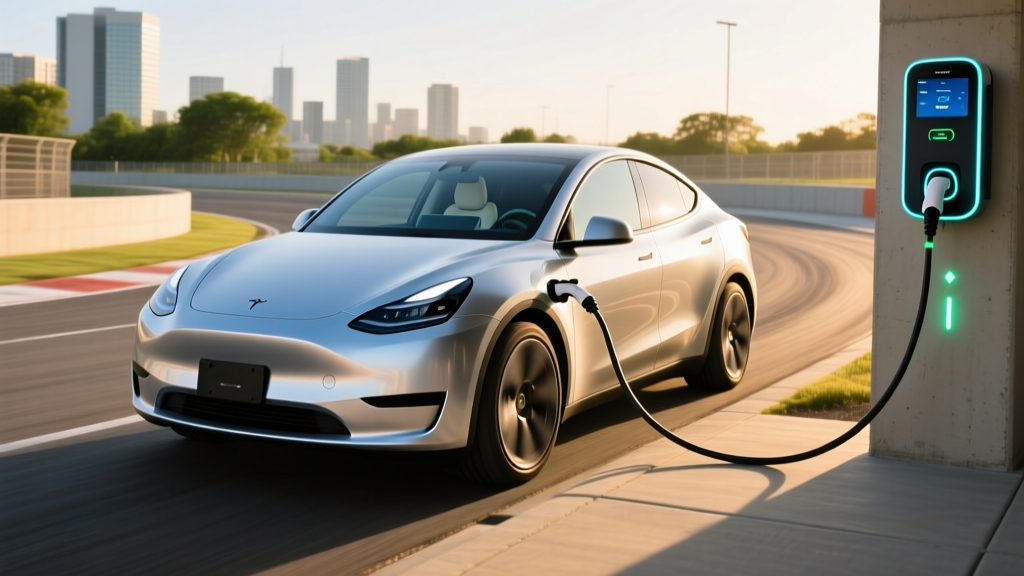
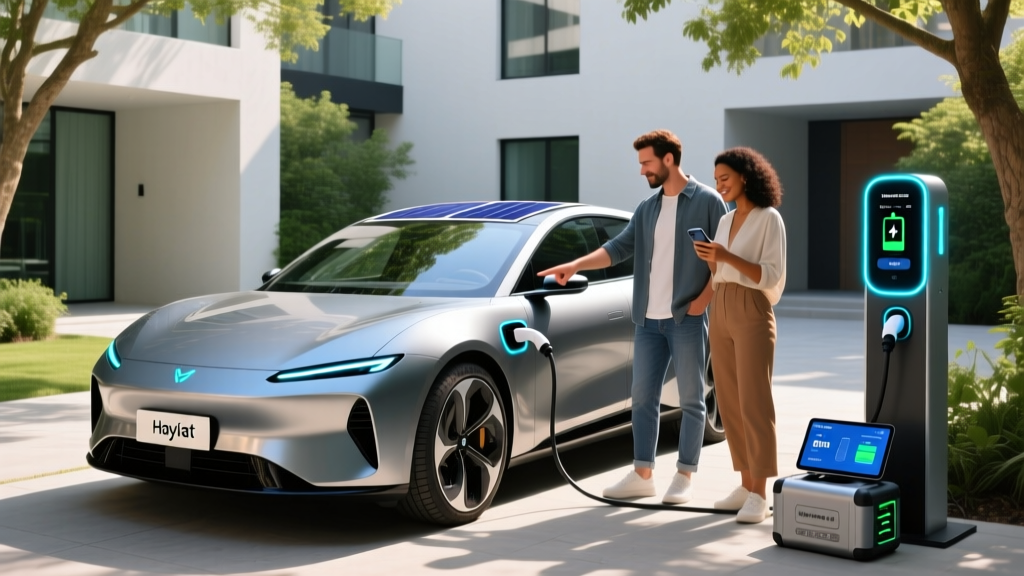
Most EV owners do 85–95% of their charging at home. Here's what a typical Level 2 home installation looks like in 2026:
- Level 2 charger (240V, 32–48A): Equipment costs $300–$700. Popular options include the ChargePoint Home Flex, Emporia Level 2, and the Tesla Wall Connector.
- Electrical panel capacity: Most homes need a 200-amp panel to support a 48A charger alongside normal household loads. A panel upgrade runs $1,500–$3,000 if your existing panel is 100A.
- Electrician labor + permits: $500–$2,000 depending on run length from panel to garage or driveway.
- Total typical installation: $1,200–$2,500 for homes with adequate panels; $3,000–$5,000 if a panel upgrade is needed.
A Level 2 charger at 11.5 kW (48A) adds roughly 35–40 miles of range per hour of charging, meaning any EV with a 250+ mile battery will be fully replenished overnight. Always get a licensed electrician to assess your panel before purchasing equipment.
What First-Time EV Buyers Must Know in 2026
| Common Misconception | The Reality (with data) |
|---|---|
| "EV batteries need replacing every few years." | Modern NMC and LFP batteries degrade roughly 10–15% over 100,000 miles. Federal law mandates an 8-year/100,000-mile battery warranty (10 years/150,000 miles in CARB states). Full replacements cost $8,000–$18,000 but are rarely needed within the warranty period. |
| "The EPA range is what you'll actually get." | Real-world highway driving at 75 mph typically yields 80–90% of EPA range. In sub-30°F winter weather, expect 65–80% of EPA range due to battery chemistry limitations and cabin heating demands. A vehicle rated at 300 miles EPA may deliver 210–240 miles in cold highway conditions. |
| "Everyone qualifies for the $7,500 tax credit." | The §30D credit has strict requirements: buyer AGI under $150K (single) / $300K (joint), vehicle MSRP under $55K (sedans) or $80K (SUVs/trucks), and battery minerals/components must meet North American sourcing thresholds that tighten annually. Many popular models qualify for only $3,750 or nothing. Check current eligibility at fueleconomy.gov. |
| "Public charging is always broken." | Reliability has improved significantly. Tesla's Supercharger network maintains 97%+ uptime. Electrify America and EVgo have upgraded hardware and added NACS connectors. However, CCS-only chargers in rural areas can still have spotty uptime — plan road trips using apps like PlugShare or A Better Routeplanner. |
| "EVs are worse for the environment because of the grid." | Even on coal-heavy grids, an EV produces fewer lifetime emissions than a 30 MPG gas car. On the U.S. average grid mix in 2026, an EV's well-to-wheel emissions are roughly 50–60% lower per mile, according to EPA and DOE data from fueleconomy.gov. |
The Decision Framework: Should You Live the EV Hayat?
Choose a Battery-Electric Vehicle (BEV) If:
- You have access to home or workplace Level 2 charging (this is non-negotiable for cost savings)
- Your daily driving is under 250 miles and you take road trips fewer than 6 times per year
- You qualify for the §30D tax credit (check income, MSRP, and sourcing rules)
- You live in a moderate or warm climate, or you're willing to accept 20–30% winter range loss
- You value instant torque, quiet operation, and one-pedal regenerative driving
Choose a Plug-In Hybrid (PHEV) If:
- You want 25–45 miles of electric-only commuting but need gas flexibility for frequent long trips
- You have home charging but live in a region with sparse public DC fast-charging infrastructure
- You're not ready to plan road trips around charging stops
- Examples: Toyota RAV4 Prime (42 mi electric), Jeep Wrangler 4xe (22 mi electric)
Choose a Conventional Hybrid (HEV) If:
- You have no access to home or workplace charging
- You want maximum fuel efficiency with zero behavioral change (no plugging in)
- Your budget is under $35,000 and you don't qualify for EV incentives
- Examples: Toyota Prius (57 MPG combined), Honda Accord Hybrid (48 MPG combined)
Stick With Gasoline (for now) If:
- You drive over 400 miles daily in rural areas with no charging infrastructure
- You tow heavy loads regularly (towing can cut EV range by 40–50%)
- Your electrical panel is 100A, upgrading is cost-prohibitive, and you have no workplace charging
Ownership Realities: Insurance, Maintenance, and Longevity
The EV hayat comes with a few cost categories that surprise first-time buyers:
- Insurance premiums: EVs cost 15–25% more to insure than comparable gas cars, primarily due to higher repair costs after collisions (specialized parts, high-voltage safety protocols, and certified technician requirements). Budget an extra $300–$600 per year.
- Tire wear: EVs are 500–1,000 lbs heavier than gas equivalents and deliver instant torque, which accelerates tire wear by 20–30%. Expect to replace tires every 25,000–35,000 miles rather than 40,000–50,000. EV-specific tires (like the Michelin e.Primacy or Hankook iON) help but cost $200–$300 per corner.
- Maintenance savings: No oil changes, no spark plugs, no transmission fluid, and regenerative braking extends pad life to 80,000–100,000+ miles. Typical annual maintenance for an EV: $250–$400 versus $600–$900 for a gas car.
- Depreciation: EV depreciation has stabilized in 2026 after steep drops in 2023–2024 caused by Tesla price cuts and incentive shifts. Expect 45–55% value retention at 5 years for mainstream models; luxury EVs depreciate faster.
Frequently Asked Questions
Is the EV hayat cheaper than owning a gas car?
Over five years and 75,000 miles, an EV is typically $4,500–$8,000 cheaper than a gas car if you qualify for the $7,500 federal tax credit and charge primarily at home. Without the credit or with heavy reliance on public fast charging, the costs are roughly equal to a fuel-efficient hybrid.
What happens if I can't charge at home?
Public-only charging is viable but expensive and inconvenient. DC fast charging costs $0.30–$0.50/kWh (comparable to gasoline per mile), and you'll spend 2–4 hours per week at chargers. If you lack home charging, a PHEV or HEV is a more practical choice.
How long do EV batteries actually last?
Data from Tesla fleet reports and independent studies show average degradation of 10–12% after 100,000 miles for NMC batteries and 8–10% for LFP batteries. Most EV batteries outlast the vehicle itself. Federal warranty law mandates coverage for 8 years/100,000 miles with a minimum 70% capacity retention threshold.
Do EVs work in cold climates?
Yes, but with compromises. Expect 20–30% range loss below freezing due to battery resistance and cabin heating. Preconditioning (warming the battery and cabin while plugged in) mitigates this significantly. Heat pump-equipped EVs (standard on most 2026 models) reduce heating energy consumption by 30–40% compared to resistive heaters.
What's the cheapest way to start the EV hayat?
The most affordable new EVs in 2026 include the Chevrolet Equinox EV LT ($33,600 MSRP, up to $7,500 credit) and the Hyundai Kona Electric SE ($32,975 MSRP). After the federal credit, effective prices can dip below $26,000. Used EVs under $25,000 may qualify for a separate $4,000 used-vehicle credit under §25E.