The Short Answer on the EV Ford Bronco
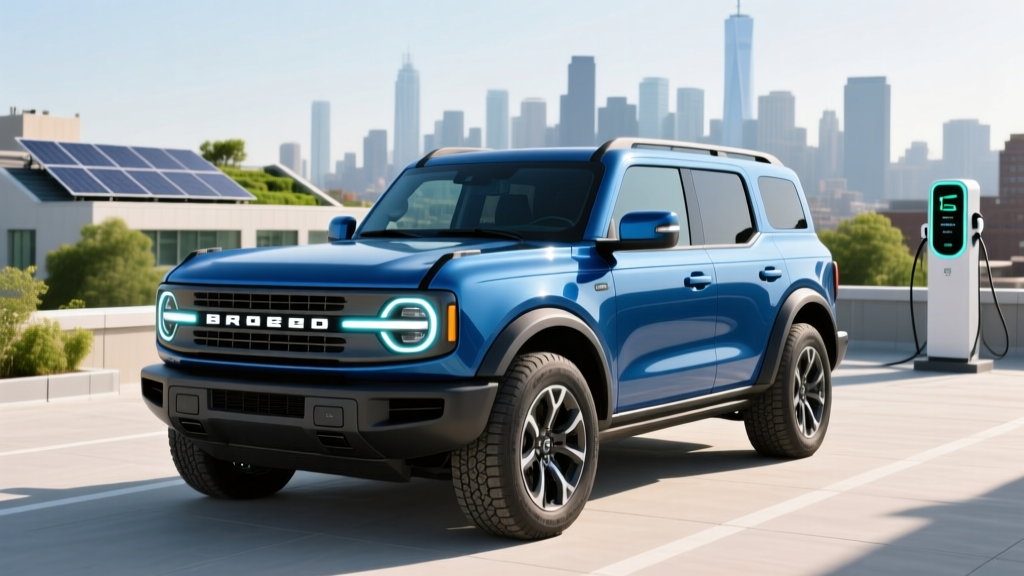
As of early 2026, Ford has not yet released a fully electric Bronco. The current sixth-generation Bronco (two-door and four-door) is available only with gasoline turbocharged engines and a mild-hybrid option on select trims. Ford CEO Jim Farley has publicly confirmed that an electric Bronco is in development, and industry analysts expect a reveal no earlier than late 2026 or model-year 2027/2028. If you're searching for an "EV Ford Bronco" today, you'll need to wait — or consider the gas Bronco, the Bronco Sport Hybrid, or competing electric off-road SUVs like the Rivian R1S or the upcoming electric Jeep Wrangler.
What Ford Has Confirmed About an Electric Bronco
Ford's commitment to electrifying its most iconic nameplates is well documented. The automaker has already launched the F-150 Lightning (electric pickup), the Mustang Mach-E (electric crossover), and the E-Transit (electric commercial van). An electric Bronco fits squarely into what Ford calls its "Icon" vehicle strategy — leveraging high-recognition, high-margin models for EV conversion.
Here's what we know based on public statements and reporting through early 2026:
- Platform: The EV Bronco is widely expected to ride on Ford's next-generation flexible EV architecture, which supports body-on-frame and unibody configurations. This is distinct from the GE1 platform underpinning the Mustang Mach-E.
- Timeline: No official launch date has been announced. Ford's revised EV product timeline (announced mid-2024) pushed several next-gen EVs to 2027 and beyond. A reveal in late 2026 with deliveries in 2027 is the most optimistic credible estimate.
- Off-road capability: Ford has signaled that any electric Bronco must match or exceed the current gas Bronco's off-road credentials — ground clearance, approach/departure angles, water fording, and G.O.A.T. (Goes Over Any Type of Terrain) modes.
- Body styles: Both two-door and four-door configurations are anticipated, though Ford has not confirmed whether a removable hardtop and doors will carry over to the EV version.
Because official specifications have not been published, any range, battery, or pricing figures discussed below are estimates based on comparable Ford EVs and segment competitors. We will update this article when Ford releases confirmed data.
Estimated Specs: What an EV Bronco Might Look Like
To ground expectations, here's a projection based on the F-150 Lightning's powertrain technology, the Rivian R1S (the closest current competitor), and the segment's trajectory. All figures are preliminary estimates, not manufacturer-confirmed.
| Specification | EV Bronco (Est.) | Rivian R1S Dual-Motor | Gas Bronco Badlands (2026) |
|---|---|---|---|
| Battery capacity (usable) | ~100–130 kWh (NMC est.) | 106 kWh (Standard) / 141 kWh (Max) | N/A (2.7L EcoBoost V6) |
| EPA range | ~250–320 miles | 291 mi (Standard) / 410 mi (Max) | ~370 mi (17.5 gal × ~21 MPG) |
| Peak DC fast charge rate | ~170–210 kW | 200 kW (Standard) / 220 kW (Max) | N/A |
| 10–80% DC charge time | ~30–40 min | ~30 min (Standard) | ~5 min (gas fill-up) |
| Horsepower | ~450–580 hp (dual-motor) | 533 hp | 330 hp (2.7L EcoBoost) |
| Torque | ~550–750 lb-ft | 610 lb-ft | 415 lb-ft |
| 0–60 mph | ~4.5–5.5 sec | 4.5 sec | ~6.5 sec |
| Towing capacity | ~4,500–6,000 lbs (est.) | 7,700 lbs | 3,500 lbs (4-door) |
| Starting MSRP (est.) | ~$55,000–$65,000 | $75,900 | $44,495 (Badlands 4-door) |
Real-World Range Reality Check
If the EV Bronco lands near the estimated 280–320 mile EPA range, expect ~220–260 miles in real-world highway driving at 70–80 mph, and ~180–220 miles in cold weather (below 30°F). Off-road driving with aggressive terrain modes will further reduce range. These losses are consistent with all current EV SUVs — the Rivian R1S, for example, sees roughly 15–25% range reduction in sustained highway use versus its EPA sticker, per fueleconomy.gov data and independent testing.
EV Bronco vs. Gas Bronco: Cost & Ownership Comparison
For buyers weighing whether to wait for the EV Bronco or buy a gas model now, here's a concrete cost comparison. This uses the gas Bronco Badlands 4-door (2.7L EcoBoost, ~$44,500 MSRP) against our mid-range EV Bronco estimate (~$60,000).
| Cost Category | EV Bronco (Est.) | Gas Bronco Badlands |
|---|---|---|
| Purchase price (MSRP) | $60,000 | $44,500 |
| Federal tax credit (§30D, if eligible) | –$7,500 (see caveats below) | $0 |
| Effective purchase price | ~$52,500 | $44,500 |
| Fuel/energy (5 yr, 12K mi/yr) | ~$3,600 (home charging avg.) | ~$10,800 (21 MPG, $3.50/gal) |
| Maintenance (5 yr) | ~$1,500 | ~$3,800 |
| Insurance (5 yr avg.) | ~$11,000 | ~$9,500 |
| Estimated depreciation | ~$22,000 | ~$16,000 |
| 5-year total cost of ownership | ~$90,600 | ~$84,600 |
Key takeaway: The EV Bronco is likely to cost more upfront, even after the federal tax credit, but saves significantly on fuel and maintenance. Whether it reaches cost parity within 5 years depends heavily on your driving mileage, local electricity rates, and whether you qualify for the full §30D credit. According to IRS §30D guidelines, the $7,500 credit requires the vehicle to meet MSRP caps (SUVs: $80,000), buyer income limits ($150K single / $300K joint AGI), and battery critical-mineral and component sourcing thresholds — all of which are subject to change.
Who Should Wait — and Who Should Buy Now?
Decision Framework: Wait for the EV Bronco or Buy Now?
Wait for the EV Bronco if:
- You can delay your purchase 12–24 months without hardship.
- You have reliable home charging access (Level 2, 240V/40A+ circuit).
- Your daily driving is under 100 miles round-trip, with occasional longer road trips.
- Off-road capability matters, but you're willing to accept range trade-offs on trails.
- You want instant torque and near-silent trail crawling (a genuine EV off-road advantage).
Buy the gas Bronco now if:
- You need a vehicle in the next 3–6 months.
- You live in a charging desert (rural areas with limited DC fast-charger infrastructure).
- You regularly tow heavy loads (trailers, boats) over long distances — EV towing range drops 30–50%.
- You frequently drive in extreme cold (below 10°F) where range loss compounds.
- Your budget is firmly under $50,000 and you can't wait for potential EV price drops.
Consider a Rivian R1S or plug-in hybrid alternative if:
- You want an electric off-road SUV today and can spend $75,000+.
- A PHEV like the Jeep Wrangler 4xe (25 miles electric-only, then gas) fits your mixed-use pattern.
Charging at Home and on the Road: What EV Bronco Buyers Must Plan For
One of the most common misconceptions among first-time EV buyers is that public charging will cover all their needs. In practice, 80–90% of EV charging happens at home. If you cannot install a Level 2 home charger, EV ownership becomes significantly less convenient.
| Charging Level | Power (kW) | Miles of Range Added per Hour | Use Case |
|---|---|---|---|
| Level 1 (120V household outlet) | ~1.4 kW | ~4–5 miles | Overnight trickle; emergency only |
| Level 2 (240V home/public) | ~7.7–11.5 kW | ~25–40 miles | Daily home charging; full overnight refill |
| DC Fast Charge (public) | ~170–210 kW (peak) | ~500–700 miles/hr (peak) | Road trips; 10–80% in ~30–40 min |
Home Charging Installation Costs
If you're planning ahead for an EV Bronco, budget for a Level 2 home charger installation. Costs vary widely based on your electrical panel's capacity and the distance from the panel to your garage or parking spot.
| Component | Cost Range |
|---|---|
| Level 2 charger hardware (e.g., ChargePoint Home Flex, Emporia Vue) | $350–$700 |
| Electrician labor (240V/50A circuit installation) | $500–$2,000 |
| Permit and inspection fees | $50–$300 |
| Electrical panel upgrade (if needed, 100A→200A) | $1,500–$3,500 |
| Total (without panel upgrade) | $900–$3,000 |
| Total (with panel upgrade) | $2,400–$6,500 |
Always consult a licensed electrician for a site-specific quote. The final spec must be determined by a professional — never attempt to self-assess panel capacity for a 50A continuous load.
Public Charging: The Ford BlueOval Network
Ford EV owners currently access the BlueOval Charge Network, which aggregates over 90,000 public chargers across providers including Electrify America, EVgo, and ChargePoint. Since 2024, Ford EVs with NACS (North American Charging Standard) ports also access Tesla Superchargers using a Ford-provided adapter. The EV Bronco is expected to ship with a native NACS port, giving it access to the most reliable DC fast-charging network in North America — a significant advantage for road-trip-capable off-roaders.
Common Misconceptions About an Electric Bronco
| Myth | Fact |
|---|---|
| "An electric Bronco can't handle real off-roading." | EVs offer instant torque at zero RPM, precise individual wheel torque vectoring, and a low center of gravity from the floor-mounted battery. Rivian's R1S and GMC Hummer EV have demonstrated serious off-road capability. The question is range on trails, not capability. |
| "I'll save $7,500 on any EV I buy." | The §30D credit has strict income caps ($150K single / $300K joint), MSRP caps ($80K for SUVs), and battery sourcing requirements. Not every buyer or vehicle qualifies. Check IRS guidelines and consult a tax professional. |
| "EV batteries need replacing every few years." | Modern NMC and LFP batteries are designed to retain 70–80% capacity after 150,000–200,000 miles. Ford provides an 8-year/100,000-mile battery warranty on current EVs (minimum 70% capacity retention), and the EV Bronco is expected to match or exceed this. |
| "Charging takes too long for road trips." | A 10–80% DC fast charge in 30–40 minutes aligns naturally with rest stops, meals, and bathroom breaks. The key is route planning around reliable chargers — which the NACS/Supercharger network increasingly enables. |
| "The EV Bronco will be affordable." | Based on comparable EV SUVs and Ford's pricing strategy, expect a starting MSRP of $55,000–$65,000, with well-equipped trims reaching $70,000+. The gas Bronco starts at ~$39,000 (Big Bend 2-door). EVs carry a price premium that fuel savings may offset over time. |
Competitors to Consider While You Wait
If the EV Bronco's timeline doesn't align with your needs, these electric and electrified SUVs are available or arriving soon:
- Rivian R1S (2026): From $75,900. 291–410 miles EPA range. Genuine off-road chops with quad-motor option. NACS native. The closest direct competitor, but significantly more expensive.
- Jeep Wrangler 4xe (PHEV, 2026): From ~$52,000. 25 miles electric-only, then gas hybrid. Removable doors and top. A proven trail rig with a plug-in option — not a full EV, but a bridge for Wrangler/Bronco cross-shoppers.
- Ford Explorer EV (2026): From ~$48,000 (estimated). Built on VW's MEB platform. More crossover than off-roader, but relevant for Ford-loyal EV buyers who don't need body-on-frame capability.
- GMC Hummer EV SUV (2026): From ~$99,000. 314 miles EPA. Extreme off-road capability (crab walk, adaptive air suspension). Far more expensive but demonstrates what a large electric off-roader can do.
What First-Time EV Buyers Should Know Before Committing
Whether you're waiting for the EV Bronco or considering another electric vehicle, these fundamentals apply:
- Confirm home charging feasibility first. Before buying any EV, verify that you can install a Level 2 charger (or already have access to one). A 240V/40A+ circuit is the minimum for practical daily charging. Renters and condo dwellers face real barriers — check your lease agreement and HOA rules.
- Understand kW vs. kWh. kW (kilowatts) measures power — how fast energy flows into the battery during charging. kWh (kilowatt-hours) measures energy — the battery's total capacity. A 100 kWh battery charged at 10 kW takes roughly 10 hours from empty. This distinction is the single most common source of confusion for new EV owners.
- EPA range is a best-case estimate, not a guarantee. Highway driving at 75+ mph reduces range by 10–20%. Cold weather (below 30°F) can reduce it by 20–30%. Towing can slash it by 30–50%. Always plan trips around the lower real-world figure.
- DC fast charging slows above 80%. The published peak charge rate (e.g., 200 kW) applies only at low states of charge. Above 80% SoC, the charge rate tapers dramatically to protect battery health. This is why 10–80% times are the industry standard metric — charging from 80–100% can take as long as 10–80%.
- Insurance costs are typically higher for EVs. Expect premiums 15–25% above comparable gas vehicles due to higher repair costs and parts pricing. Get quotes before purchasing.
- Preconditioning matters. Most EVs allow you to warm the battery before arriving at a DC fast charger (via navigation routing or a manual setting). A cold battery charges significantly slower — preconditioning can cut your 10–80% charge time by 20–40% in cold weather.
Frequently Asked Questions
Is there an EV Ford Bronco available to buy in 2026?
No. As of early 2026, Ford has not released or opened reservations for a fully electric Bronco. The current Bronco is available only with gasoline engines (2.3L EcoBoost I4, 2.7L EcoBoost V6, and 3.0L EcoBoost V6 on the Raptor). A Bronco Sport Hybrid exists but is a mild-hybrid (HEV), not a plug-in or full EV.
When will the EV Ford Bronco be released?
Ford has not announced an official date. Based on Ford's revised EV roadmap and comments from CEO Jim Farley, a reveal is most likely in late 2026 or 2027, with customer deliveries potentially starting in 2027 or 2028. This timeline could shift based on market conditions and supply chain factors.
How much will the EV Bronco cost?
No official pricing has been published. Based on Ford's current EV pricing (F-150 Lightning starts at ~$55,000; Explorer EV at ~$48,000 estimated) and the Bronco's premium positioning, a reasonable estimate is $55,000–$65,000 for a base four-door model, with high-end trims (Wildtrak, Raptor-equivalent) potentially reaching $70,000–$80,000.
Will the EV Bronco qualify for the $7,500 federal tax credit?
This depends on several factors that won't be confirmed until launch: the vehicle's MSRP (must be ≤$80,000 for SUVs), battery sourcing compliance with §30D critical-mineral and component requirements, and the buyer's adjusted gross income (≤$150K single / $300K joint). The credit can now be transferred to the dealer at point of sale as an upfront discount. Always verify current rules at irs.gov before relying on credit eligibility in your purchase decision.
Can an electric Bronco really off-road?
Electric drivetrains offer inherent off-road advantages: instant torque at zero RPM, precise torque vectoring to individual wheels, and a low center of gravity from the under-floor battery pack. The Rivian R1S and GMC Hummer EV have proven that large electric SUVs can handle serious trails. The real limitation is range — aggressive off-roading consumes energy rapidly, and there are no DC fast chargers on most trails. An EV Bronco will likely include terrain-optimized drive modes and regenerative braking tuned for low-speed technical driving.
Should I buy a gas Bronco now or wait for the EV version?
If you need a vehicle within 6 months, frequently tow heavy loads, live in an area with poor charging infrastructure, or have a firm budget under $45,000, the gas Bronco is the practical choice. If you can wait 18–24 months, have home charging access, and your daily driving is under 100 miles with occasional road trips, waiting for the EV Bronco could yield long-term fuel savings and a more refined driving experience.