Quick answer: As of 2026, the only production EV convertible you can buy new in the U.S. is the Fiat 500e Cabrio (starting around $38,995, EPA-estimated 149 miles of range, 42 kWh battery). The broader global market includes the MG4 EV Cabrio (not yet sold in the U.S.). Several concept-stage models—like the Polestar O2 roadster and a rumored Tesla Roadster—remain unreleased. If you need a drop-top EV today, your choices are limited; if you can wait, the pipeline is slowly expanding.
The Current EV Convertible Landscape Is Narrow—but Real
The intersection of electric powertrains and open-top body styles remains one of the smallest niches in the auto industry. Structural rigidity, battery packaging, and low sales volume all work against the EV convertible. Convertibles require reinforced sills, thicker A-pillars, and additional bracing to compensate for the missing roof—engineering that adds weight and cost to vehicles already carrying heavy battery packs.
That said, the segment isn't empty. Here's what's actually available or confirmed for the 2026 model year:
| Model | Body Style | EPA Range | Battery (kWh) | Peak DC Charge | 0-60 mph | Base MSRP | U.S. Availability |
|---|---|---|---|---|---|---|---|
| Fiat 500e Cabrio | 2-door convertible | 149 mi | 42 kWh (NMC) | 85 kW | 9.0 sec | $38,995 | Available (select dealers) |
| MG4 EV Cabrio | 2-door convertible | N/A (WLTP ~230 mi) | 51 kWh (NMC) | ~80 kW (est.) | ~8.5 sec (est.) | ~€32,000 (EU) | Not available in U.S. |
| Polestar O2 (announced) | 2-seat roadster | TBD | TBD | TBD | TBD | TBD | Announced, not on sale |
The Fiat 500e Cabrio is the practical choice for U.S. buyers. Its 149-mile EPA range is modest—real-world highway driving at 70+ mph will likely yield 120–135 miles, and cold weather (below 40°F) can push that down another 15–20%. This is a city and coastal-cruiser, not a road-trip EV.
Specs Deep Dive: The Fiat 500e Cabrio (2026)
The 500e Cabrio uses a 117-hp electric motor driving the front wheels, paired with a 42 kWh NMC (nickel manganese cobalt) battery. It supports DC fast charging at up to 85 kW—meaning a 10–80% charge takes approximately 30–35 minutes on a capable station. Level 2 charging at 11 kW fills the battery in about 4 hours, which is reasonable for overnight home charging.
The soft-top mechanism is electrically operated and can be partially opened (like a large sunroof) or fully retracted. With the top down, cargo volume shrinks to roughly 6.5 cubic feet—enough for a weekend bag, not much more.
Range reality check: The 500e Cabrio's 149-mile EPA estimate assumes mixed driving. On a flat, 55-mph commute in mild weather, you might see 155–160 miles. At sustained 75-mph highway speeds in summer heat with the top down (increasing aerodynamic drag), expect 125–135 miles. In winter conditions (30°F), plan for 110–120 miles. This is fine for daily commuting under 60 miles round-trip; it's not viable as a sole vehicle for anyone with a long commute or frequent highway travel.
EV Convertible vs. Gas Convertible: The Cost Comparison
The closest gas-powered rival to the 500e Cabrio is the Mazda MX-5 Miata, starting around $30,170 for the soft-top Sport trim. Let's compare the total five-year ownership picture, assuming 12,000 miles/year and national average electricity ($0.16/kWh) and gas ($3.40/gallon) prices.
| Cost Factor | Fiat 500e Cabrio | Mazda MX-5 Miata (Sport) |
|---|---|---|
| Base MSRP | $38,995 | $30,170 |
| Federal tax credit (§30D) | $0 (income/MSRP/sourcing rules apply; Fiat likely ineligible due to battery sourcing) | $0 |
| Fuel/energy cost (5 yr, 60k mi) | ~$2,880 (3.5 mi/kWh avg, $0.16/kWh) | ~$6,800 (29 MPG combined, $3.40/gal) |
| Maintenance (5 yr est.) | ~$1,200 (no oil changes, brake wear reduced by regen) | ~$3,500 (oil, filters, brake pads, spark plugs) |
| Insurance (5 yr avg) | ~$8,500 | ~$7,200 |
| Depreciation (est. 5 yr) | ~$18,000 | ~$12,000 |
| Est. 5-year total cost | ~$70,575 | ~$59,670 |
The EV saves roughly $3,920 on fuel and $2,300 on maintenance over five years, but those savings are more than offset by a higher purchase price, steeper depreciation (the EV used-car market is still normalizing), and higher insurance premiums. The Miata wins on total cost for most buyers unless electricity is significantly cheaper in your area or you drive more than 15,000 miles annually.
Critical caveat: The Fiat 500e Cabrio's eligibility for the §30D federal tax credit is uncertain. Under current IRS rules, a vehicle must meet critical-mineral and battery-component sourcing requirements, and the buyer must fall within income caps ($150,000 single / $300,000 joint). The 500e's battery is sourced from Stellantis' European supply chain, which likely does not satisfy the domestic-content thresholds. Always verify current eligibility on fueleconomy.gov before purchasing.
Charging Realities for Convertible EV Owners
Most EV convertible buyers will be second- or third-car households, which simplifies the charging question: home Level 2 charging is the primary fueling method. A 240V Level 2 home charger (like a ChargePoint Home Flex or Wallbox Pulsar Plus, $500–$700 for equipment) paired with a 40-amp circuit will fully replenish the 500e Cabrio's 42 kWh battery overnight.
Installation costs vary widely. If your electrical panel has spare capacity and the run from panel to garage is short, expect $800–$1,500 for a licensed electrician. If you need a panel upgrade (common in older homes with 100-amp service), add $2,000–$4,000.
For the 500e Cabrio's modest battery, even a standard 120V outlet (Level 1) adds about 3–4 miles of range per hour—enough to recover 40–50 miles overnight, which covers many daily commutes. This is one scenario where an EV convertible's small battery is actually an advantage: you don't need expensive DC fast charging infrastructure for daily use.
Public DC fast charging at 85 kW peak is adequate but not fast by 2026 standards. On a road trip, plan for 30-minute stops every 100–110 miles (accounting for real-world range and the charge-curve taper above 80%). This makes the 500e Cabrio a poor choice for frequent long-distance travel.
What First-Time EV Buyers Should Know About Convertibles
If the EV convertible is your entry point into electric ownership, understand these realities before signing:
- Range is less than the sticker says. The EPA estimate is a laboratory average. Highway speeds, cold weather, air conditioning, and the aerodynamic penalty of a lowered soft top all reduce range by 15–30%.
- Charging speed is measured in kW (power), not kWh (energy). The 500e Cabrio charges at up to 85 kW—meaning it can accept 85 kilowatts of power at peak. A 42 kWh battery at 85 kW would theoretically fill in 30 minutes, but charging slows dramatically above 80% state of charge to protect the battery. Real-world 10–80% time is 30–35 minutes.
- Home charging access is essential. Relying solely on public charging for an EV convertible is expensive ($0.30–$0.50/kWh at DC stations) and inconvenient. If you can't install a Level 2 charger at home, an EV convertible may not be practical.
- Insurance costs more. EVs carry higher insurance premiums due to battery replacement costs and specialized repair requirements. Expect quotes 15–25% higher than a comparable gas convertible.
- Depreciation is uncertain. The used EV market experienced significant price corrections in 2023–2025. Small-batch convertibles may depreciate faster than mainstream EVs due to limited buyer pools.
Upcoming EV Convertibles: What's on the Horizon
Several manufacturers have teased or announced open-top EVs, but most remain in concept or early-development stages:
- Polestar O2: Announced as a production-intent concept. This 2-seat roadster would ride on Polestar's bonded-aluminum architecture. No confirmed on-sale date, pricing, or final specifications as of early 2026. Treat any specs you see online as preliminary.
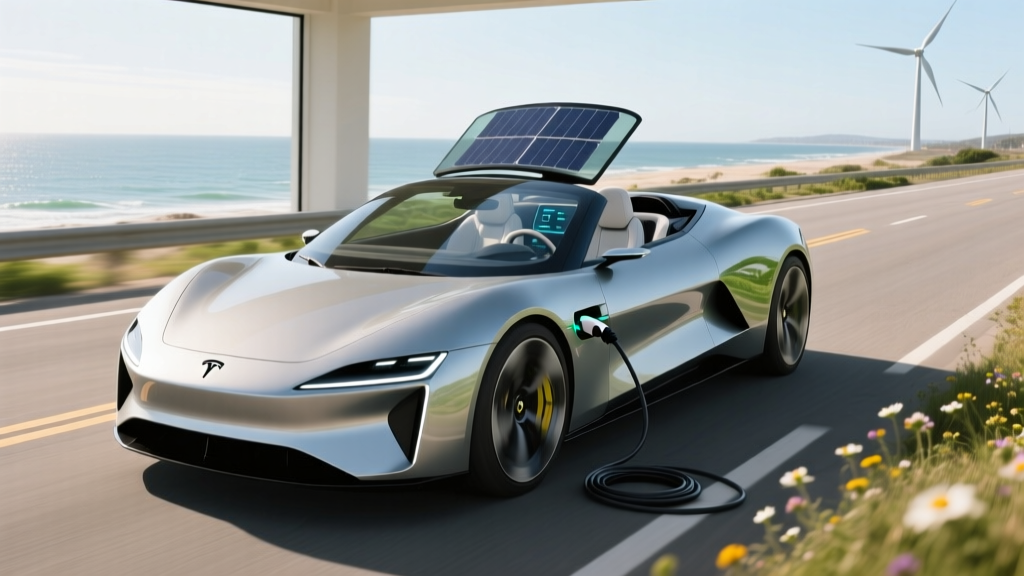
- Tesla Roadster: Originally announced in 2017 with a removable glass roof panel (targa-style, not a true convertible). Tesla has repeatedly delayed production. As of 2026, it remains unreleased with no firm delivery timeline.
- BMW i8 successor (speculative): BMW discontinued the i8 Roadster in 2020. No confirmed electric successor has been announced, though industry analysts expect BMW's Neue Klasse platform could eventually spawn a drop-top variant.
The honest assessment: if you want an EV convertible in the U.S. market today, the Fiat 500e Cabrio is your only real option. Everything else is either unavailable domestically or not yet in production.
Decision Framework: Should You Buy an EV Convertible?
Buy the Fiat 500e Cabrio if:
- Your daily commute is under 50 miles round-trip
- You have Level 2 home charging access (or can install it)
- You live in a mild climate where the top can be down frequently
- This is a second or third vehicle, not your only car
- You value low running costs and zero tailpipe emissions over long-range capability
Stick with a gas convertible (Miata, Mini, etc.) if:
- You regularly drive more than 150 miles in a day
- You cannot install home charging
- You live in a region with sparse DC fast-charging infrastructure
- You want the lowest total cost of ownership over 5 years
- You need cargo space for weekend trips
Wait for upcoming models if:
- You want 250+ miles of range in an EV roadster
- You need performance beyond the 500e Cabrio's 117 hp
- You're willing to hold off 2–4 years for Polestar or other entrants to reach production
Myths vs. Facts About EV Convertibles
| Myth | Fact |
|---|---|
| "EVs can't be convertibles because batteries are too heavy." | The 500e Cabrio weighs ~3,050 lbs—comparable to many gas convertibles. Battery weight is manageable in small platforms. |
| "You'll run out of charge with the top down." | Open-top driving adds minor aerodynamic drag, reducing range by roughly 5–8%. It's measurable but not catastrophic. |
| "EV convertibles don't exist." | The Fiat 500e Cabrio is a production vehicle available through select U.S. Stellantis dealerships as of 2026. |
| "The battery will need replacing in 5 years." | Stellantis provides an 8-year/100,000-mile battery warranty covering degradation below 70% capacity. NMC batteries in mild-use scenarios typically retain 85–90% capacity at 5 years. |
| "Charging takes too long for a convertible road trip." | At 85 kW, the 500e Cabrio adds ~100 miles in 30 minutes. It's slower than 250 kW-capable EVs but workable with planning. |
Frequently Asked Questions
Is there a Tesla convertible?
No. Tesla does not currently produce a convertible. The Tesla Roadster (announced 2017) features a removable glass roof panel (targa-style), but the vehicle has not entered production as of 2026, and Tesla has not confirmed a delivery timeline.
What is the longest-range EV convertible available?
Among U.S.-available models, the Fiat 500e Cabrio is the only option, with an EPA-estimated 149 miles. The MG4 EV Cabrio sold in Europe has a WLTP estimate of roughly 230 miles (approximately 190–200 miles if converted to EPA testing standards), but it is not sold in the United States.
Can I install a Level 2 charger for an EV convertible in an apartment?
It depends on your building's electrical infrastructure and landlord approval. Some apartments have EV-ready parking with 240V outlets. If not, you'll need landlord permission and a licensed electrician to install a dedicated circuit. Portable Level 2 chargers (like the Lectron V-BOX) can plug into existing 240V dryer or range outlets where available.
Does the Fiat 500e Cabrio qualify for the $7,500 federal tax credit?
Most likely not. Under current IRS §30D rules, the vehicle must meet critical-mineral and battery-component sourcing requirements tied to U.S. or free-trade-agreement partners. The 500e Cabrio's battery is manufactured in Europe, and it likely does not satisfy these thresholds. Additionally, the buyer must have a modified adjusted gross income below $150,000 (single) or $300,000 (joint). Always check fueleconomy.gov for the most current eligibility list.
How does cold weather affect an EV convertible's range?
Cold temperatures reduce battery efficiency and increase cabin heating demands. Expect a 15–30% range reduction below 40°F. The 500e Cabrio's 149-mile EPA range could drop to 110–120 miles in winter. Convertibles also lack the insulation of a fixed roof, increasing heat loss and further taxing the heating system. A heat pump (not confirmed on the U.S.-spec 500e Cabrio) would mitigate this, but resistance heating is common in this segment.
Are EV convertibles safe?
The Fiat 500e Cabrio has not been crash-tested by NHTSA or IIHS as of early 2026. Convertibles generally perform well in modern safety testing due to reinforced A-pillars and roll-bar systems, but the absence of a fixed roof means structural engineering must compensate. Check for updated ratings before purchasing.