The Real Cost of Insuring an Electric Vehicle
If you've been researching EVs, you've likely noticed the sticker prices have come down — a base Tesla Model 3 starts around $38,990 in 2026, and the Hyundai Ioniq 5 undercuts $42,000. But one line item catches many new EV buyers off guard at the dealership or in their inbox: EV car insurance premiums run 20-40% higher than comparable gas-powered vehicles.
This isn't marketing spin or anecdotal griping. Data from major insurers and industry analyses consistently show that electric vehicles cost more to insure. Understanding why — and how those premiums fit into the broader five-year ownership picture — is essential before you sign a purchase agreement.
In this guide, we'll break down exactly what EV owners pay for insurance in 2026, how those costs interact with fuel savings, tax credits, and maintenance, and whether the total cost of ownership still favors going electric.
Why EV Car Insurance Premiums Run Higher
Insurance companies price risk based on data, and the actuarial math on EVs currently works against the owner in several specific ways:
Higher Repair Costs After Collisions
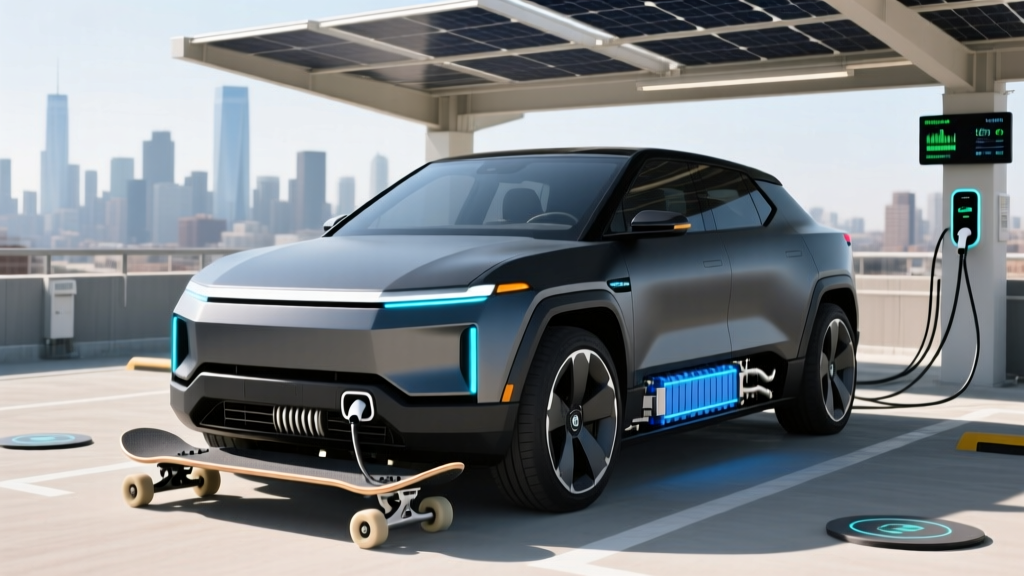
EV battery packs are the single most expensive component in the vehicle — often representing 30-40% of the total build cost. A 2026 Hyundai Ioniq 5's 84 kWh NMC battery pack can cost $15,000-$20,000 to replace if damaged. Even minor undercarriage impacts that would be a $2,000 repair on a gas car can total an EV if the battery enclosure is compromised.
Additionally, EVs require specialized high-voltage training for body shop technicians. Fewer shops have this certification, which reduces competition and drives up labor rates for EV collision repair.
Higher Vehicle Purchase Prices
Insurance premiums partially track the vehicle's replacement value. Even as EV prices have dropped, the average transaction price for a new EV in early 2026 remains around $48,000 — roughly $5,000 above the average gas vehicle. Higher replacement value means higher comprehensive and collision premiums.
Performance Characteristics
EVs deliver instant torque, which translates to quick acceleration even in non-performance trims. A base Tesla Model 3 RWD hits 0-60 mph in 5.8 seconds; the dual-motor AWD version does it in 4.2 seconds. Insurers associate rapid acceleration with higher accident risk, and the data partially supports this — EVs have shown slightly higher at-fault accident rates in some studies.
Weight and Tire Wear
EVs are heavy. The Ford F-150 Lightning tips the scales at over 6,500 pounds. More mass means more kinetic energy in a collision, leading to more severe damage to both the EV and any other vehicle involved. This liability exposure gets priced into your premium.
- Tesla Model 3 RWD: $2,400–$3,100/year
- Hyundai Ioniq 5 SEL: $1,900–$2,500/year
- Ford Mustang Mach-E Premium: $2,100–$2,700/year
- Chevrolet Equinox EV 2LT: $1,700–$2,200/year
- Comparable gas sedans/crossovers: $1,400–$1,800/year
Ranges reflect national averages; actual premiums vary by state, driving record, age, and coverage levels. Source: industry aggregate data from ValuePenguin and Insurify analyses.
Five-Year Total Cost of Ownership: The Full Picture
Insurance is one piece of a larger equation. To evaluate whether an EV makes financial sense, you need to compare the total cost of ownership (TCO) across every major category. Here's a realistic five-year breakdown comparing a 2026 Hyundai Ioniq 5 SEL AWD ($45,500 MSRP) against a comparably equipped Toyota RAV4 AWD ($35,000 MSRP):
| Category | 2026 Ioniq 5 SEL AWD (EV) | 2026 RAV4 AWD (Gas) |
|---|---|---|
| Purchase Price (MSRP) | $45,500 | $35,000 |
| Federal Tax Credit (§30D) | −$3,750 to −$7,500* | $0 |
| Effective Purchase Price | $38,000–$41,750 | $35,000 |
| Charging / Fuel (5 yrs, 75,000 mi) | $4,500–$6,750** | $7,500–$9,375*** |
| Insurance (5 yrs) | $10,500–$13,000 | $7,500–$9,000 |
| Maintenance (5 yrs) | $1,500–$2,500 | $3,500–$5,000 |
| Depreciation (est. 5-yr) | $18,000–$22,000 | $14,000–$17,000 |
| Estimated 5-Year TCO | $72,500–$85,500 | $67,500–$75,375 |
*Credit amount depends on battery sourcing compliance and buyer income; see eligibility details below.
**Assumes 70% home charging at $0.14/kWh, 30% DC fast charging at $0.38/kWh; Ioniq 5 efficiency ~3.4 mi/kWh.
***Assumes $3.50/gal average, RAV4 AWD combined 28 MPG.
The numbers reveal a nuanced reality: the EV wins on fuel and maintenance but loses on insurance, depreciation, and (without the tax credit) purchase price. The federal tax credit is often the swing factor that makes the math work.
Federal Tax Credit: IRS §30D Eligibility Rules for 2026
The federal Clean Vehicle Credit under IRS §30D can reduce your tax liability by up to $7,500 — and since 2024, it can be transferred to the dealer at point of sale as an immediate price reduction. But eligibility is far from automatic. Here's what you must satisfy in 2026:
- Income Caps: Modified AGI must not exceed $300,000 (married filing jointly), $225,000 (head of household), or $150,000 (single filers).
- MSRP Caps: Vans, SUVs, and pickups must have an MSRP ≤ $80,000; sedans and other body styles ≤ $55,000.
- Battery Sourcing: The $7,500 credit splits into two halves — $3,750 for critical minerals and $3,750 for battery components. Each half has independent sourcing requirements tied to US or free-trade-agreement partner supply chains, with percentages increasing annually.
- FEOC Restriction: Vehicles containing battery components from a "foreign entity of concern" (primarily Chinese suppliers) are disqualified. This restriction has tightened significantly through 2025-2026.
- Assembly: Final assembly must occur in North America.
- Point-of-Sale Transfer: You can elect to transfer the credit to the dealer, reducing your out-of-pocket cost at purchase rather than waiting for a tax refund.
Rules are subject to legislative change. Verify current requirements at irs.gov and consult a tax professional for your specific situation.
Which popular 2026 EVs qualify? As of early 2026, models like the Tesla Model 3 (certain trims), Ford F-150 Lightning, and Chevrolet Equinox EV are eligible for at least a partial credit. However, several Hyundai and Kia models — despite competitive pricing and excellent range — may only qualify for $3,750 or $0 due to battery-sourcing requirements. Always check the current fueleconomy.gov credit listings before purchasing.
Charging vs. Gas: Per-Mile Cost Reality
This is where EVs consistently deliver genuine savings — but the amount depends heavily on how and where you charge.
Cost Per Mile Breakdown
| Scenario | Cost per Mile | Assumptions |
|---|---|---|
| Home Level 2 (national avg electricity) | $0.041 | $0.14/kWh, 3.4 mi/kWh efficiency |
| Home Level 2 (California, high rate) | $0.076 | $0.26/kWh, 3.4 mi/kWh efficiency |
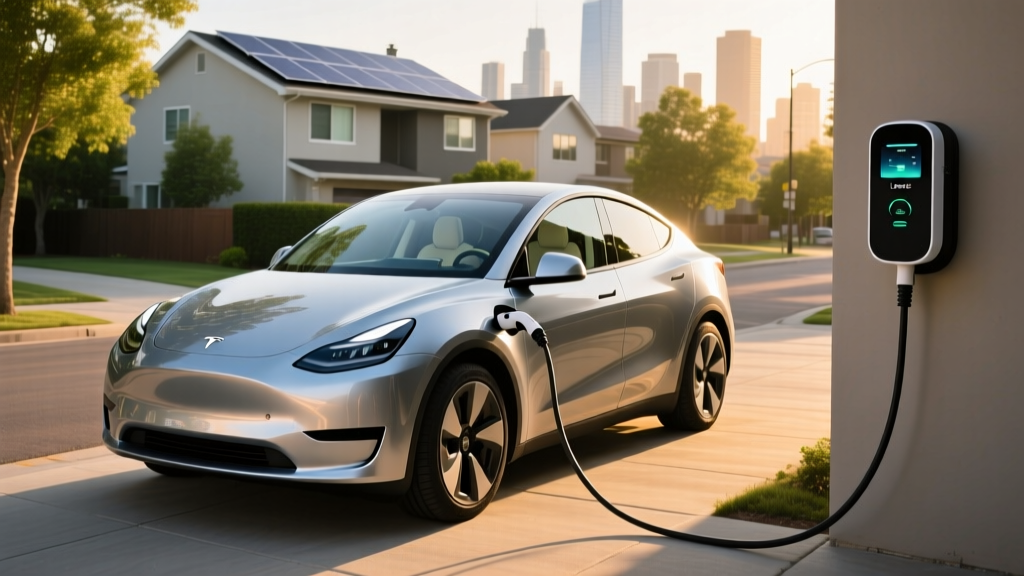
| Home with solar (marginal cost) | $0.00–$0.02 | Excess solar, net metering varies |
| DC fast charging (Electrify America, avg) | $0.112 | $0.38/kWh, 3.4 mi/kWh efficiency |
| Gas vehicle (28 MPG combined) | $0.125 | $3.50/gallon average |
| Gas vehicle (22 MPG combined, truck) | $0.159 | $3.50/gallon average |
The key takeaway: If you charge primarily at home on a national-average electricity rate, you'll spend roughly one-third what a gas car owner spends per mile on fuel. Even in high-rate states like California, home charging still undercuts gasoline. However, if you rely exclusively on DC fast charging at $0.38-$0.50/kWh, your per-mile cost can approach or exceed that of an efficient gas car.
For a driver covering 15,000 miles per year with 70% home charging and 30% DC fast charging, annual fuel savings versus a 28 MPG gas car run approximately $600–$975. Over five years, that's $3,000–$4,875 in fuel savings.
Maintenance Savings: Fewer Parts, Lower Bills
EVs eliminate several routine maintenance categories entirely and reduce wear on others:
| Service Item | Gas Vehicle (5 yr / 75k mi) | EV (5 yr / 75k mi) |
|---|---|---|
| Oil changes | $500–$750 (5-8 changes) | $0 |
| Transmission fluid | $150–$300 | $0 (single-speed reducer) |
| Brake pads/rotors | $600–$1,200 | $200–$400 (regen reduces wear 50-70%) |
| Engine air filter | $100–$150 | $0 (no intake) |
| Spark plugs | $200–$400 | $0 |
| Cabin air filter | $100–$150 | $100–$150 |
| Tire rotation | $150–$250 | $150–$250 |
| Coolant service | $150–$250 | $0–$150 (longer intervals) |
| Estimated Total | $1,950–$3,450 | $450–$950 |
One caveat: EV tires wear faster due to the vehicle's additional weight and instant torque delivery. Expect to replace tires 10,000–15,000 miles sooner than on a comparable gas vehicle, and EV-specific tires (optimized for low rolling resistance and noise) cost $200–$350 per tire. Budget an extra $400–$700 over five years for tire replacement compared to a gas car.
Depreciation and Resale Value: The Wildcard
Depreciation is the single largest ownership cost for any vehicle, and EVs have experienced a turbulent few years in this category.
In 2023-2024, used EV values dropped sharply — in some cases 40-50% in a single year — driven by Tesla's aggressive new-vehicle price cuts, rapid improvements in new EV range and charging speed making older models feel outdated, and consumer uncertainty about long-term battery health. A 2022 model-year EV purchased at MSRP in early 2023 often lost more value in 18 months than a comparable gas car would lose in three years.
By 2026, the depreciation picture has stabilized somewhat:
- Mainstream EVs (Ioniq 5, Model 3/Y, Equinox EV) are now depreciating at roughly 45-55% over five years — still steeper than top gas vehicles (35-45%) but no longer the freefall of 2023.
- Battery health data is more robust, with most modern LFP and NMC packs showing 85-90% state of health at 100,000 miles, reducing buyer fear.
- NACS standardization (the industry-wide adoption of Tesla's charging connector) has eliminated one source of used-EV uncertainty.
- Leasing remains a popular strategy to sidestep depreciation risk entirely, with many manufacturers offering 24-36 month leases that pass through the $7,500 credit via the lessor.
Federal credits get the headlines, but state, local, and utility incentives can meaningfully reduce your effective cost. Examples include Colorado's innovative EV tax credit (up to $5,000), California's CVRP rebate (up to $7,000 for income-qualified buyers), and utility company rebates of $250–$1,500 for home Level 2 charger installation. These programs change frequently and often have income qualifications or funding caps. Check your state energy office and local utility for current offerings — but don't assume they'll be available at purchase time.
Strategies to Lower Your EV Insurance Premium
Given that EV car insurance runs higher, here are proven tactics to reduce your premium:
- Shop at least 5 carriers. Insurers weight EV risk differently. In our research, quotes for the same Ioniq 5 varied by over $900/year between the cheapest and most expensive major carrier.
- Bundle home and auto. Multi-policy discounts of 10-20% apply to EVs just as they do to gas vehicles.
- Choose higher deductibles. Moving from a $500 to a $1,000 comprehensive/collision deductible typically saves 10-15% on those coverages.
- Look for EV-specific discounts. Some insurers offer green vehicle discounts or telematics-based programs where safe driving habits (monitored via an app or OBD-II device) earn rate reductions.
- Maintain a clean record. This is obvious but worth emphasizing — EV insurance surcharges compound with at-fault accidents and moving violations more severely than on gas vehicles due to the higher base premium.
- Consider the model. Insurance costs vary dramatically between EVs. A Chevrolet Equinox EV costs significantly less to insure than a Tesla Model S Plaid. If premium costs are a primary concern, factor this into your model selection.
Does the Math Work? A Decision Framework
- You have reliable home charging access (Level 2 installation feasible)
- You qualify for the full or partial §30D federal tax credit
- Your state offers additional purchase incentives
- You drive 12,000+ miles annually (higher mileage = greater fuel savings)
- You plan to keep the vehicle 5+ years (amortizes the higher insurance and depreciation)
- Your electricity rate is below $0.20/kWh for home charging
- You cannot install a home charger and would rely primarily on DC fast charging
- You don't qualify for the federal credit due to income or the vehicle's battery sourcing
- You drive fewer than 8,000 miles per year (fuel savings won't offset higher insurance)
- You trade vehicles every 2-3 years (depreciation risk is highest in early years)
- You live in an area with very high electricity rates and no off-peak charging options
Frequently Asked Questions
How much does it really cost to own an EV over 5 years?
For a mainstream EV like the Hyundai Ioniq 5 SEL AWD, expect a five-year total cost of ownership between $72,500 and $85,500, depending on your tax credit eligibility, electricity rates, and insurance premiums. This compares to roughly $67,500–$75,375 for a gas equivalent like the Toyota RAV4 AWD. The EV can break even or come out ahead if you qualify for the full $7,500 tax credit, charge mostly at home, and drive above-average annual miles.
Do I qualify for the federal EV tax credit?
Eligibility under IRS §30D depends on your modified adjusted gross income (under $150K single / $300K joint), the vehicle's MSRP (under $55K for sedans / $80K for SUVs and trucks), North American final assembly, and battery component and critical-mineral sourcing requirements. The credit can be up to $7,500, but many vehicles qualify for only $3,750 or nothing at all due to FEOC sourcing restrictions. Always verify at irs.gov before purchasing.
How much do I save on fuel and maintenance?
Most EV owners save $600–$975 per year on fuel (assuming a mix of home and DC fast charging versus a 28 MPG gas car) and $300–$600 per year on maintenance. Combined, that's roughly $4,500–$7,875 over five years. However, these savings must be weighed against higher insurance premiums (typically $500–$1,200 more per year) and potentially steeper depreciation.
Are EVs more expensive to insure?
Yes. EV car insurance premiums typically run 20-40% higher than comparable gas vehicles due to higher repair costs (especially battery replacement), greater vehicle weight, higher purchase prices, and performance characteristics that insurers associate with increased risk. Expect to pay an additional $500–$1,200 per year for a mainstream EV versus a gas equivalent.
How well do EVs hold their value?
EV depreciation has stabilized but remains steeper than most gas vehicles. Expect a mainstream EV to retain 45-55% of its purchase price after five years, compared to 55-65% for popular gas models. The risk is mitigated by leasing, by the improving longevity data on modern battery packs, and by the industry-wide adoption of the NACS charging standard, which reduces obsolescence concerns for older models.