Converting a classic or used internal-combustion car to electric power is one of the most technically fascinating paths into EV ownership — and one of the most misunderstood. If you've been searching for practical, number-driven guidance on an EV car conversion, here's the direct answer:
The Quick Answer on EV Car Conversions
A professional EV car conversion typically costs $20,000 to $40,000+ on top of the donor vehicle price, delivers 60 to 200 miles of real-world range depending on battery size (usually 20–60 kWh), and charges on Level 1 (120V) or Level 2 (240V) — rarely with DC fast charging. Most conversions weigh 200–500 lbs more than the original car, which affects handling and braking. A DIY conversion can cut costs to $10,000–$18,000 but demands serious electrical and fabrication skills. For most buyers, a used production EV (like a 2023 Chevy Bolt EUV at ~$18,000–$22,000 used) offers more range, reliability, safety features, and warranty coverage for less money.
That said, an EV conversion makes sense for specific use cases: preserving a beloved classic, building a unique daily driver with modern powertrain efficiency, or learning hands-on EV engineering. Below, we break down the real numbers so you can decide if the investment is justified.
What an EV Car Conversion Actually Involves
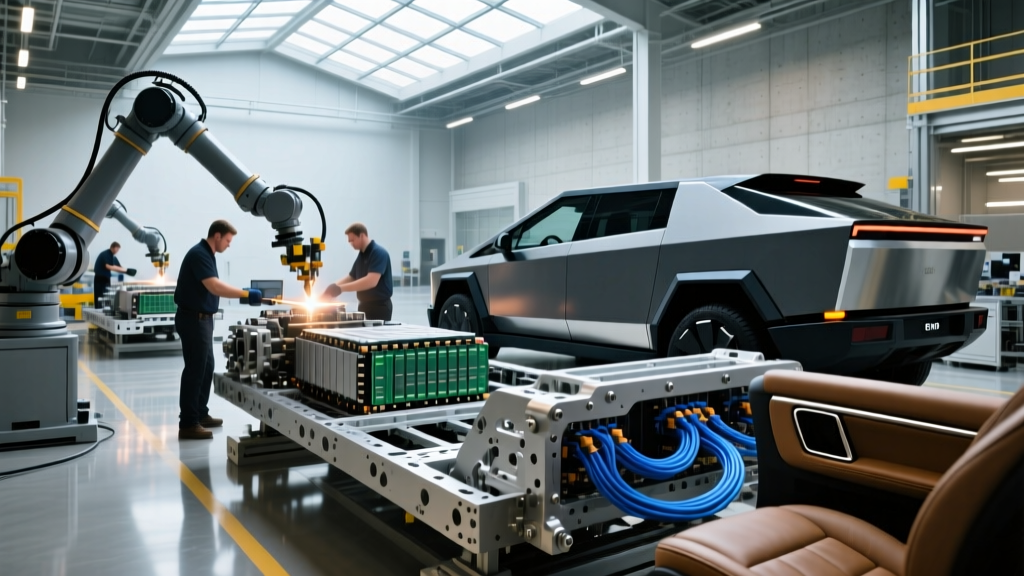
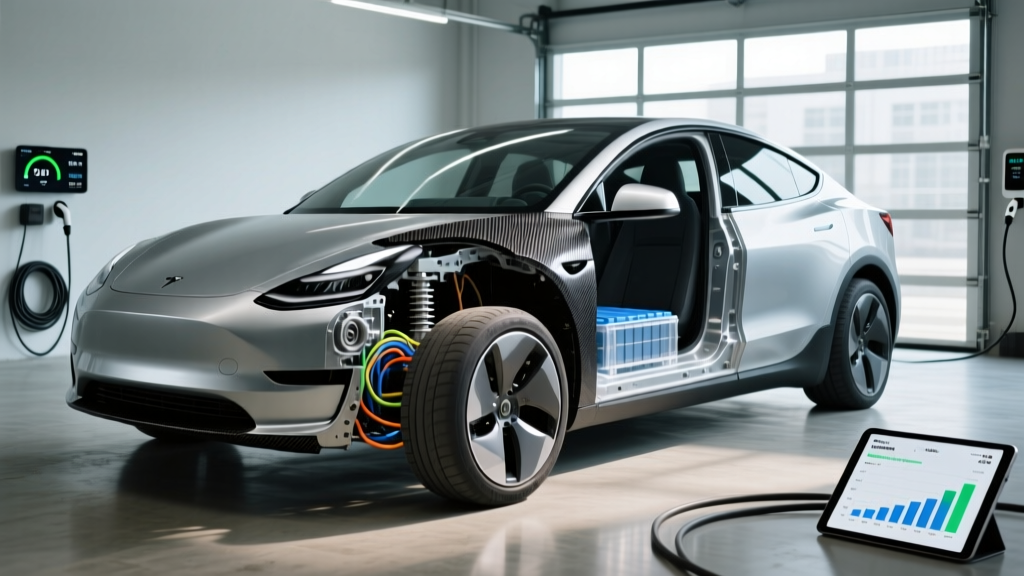
An EV conversion replaces the internal combustion engine, fuel tank, exhaust system, and often the transmission with an electric motor, motor controller, battery pack, onboard charger, and associated wiring. The donor car's 12V system, power steering, brakes, and climate control may also need modification or replacement.
The core components in a typical 2026 conversion include:
- Electric motor: Usually a salvaged or new AC induction or permanent-magnet motor rated at 50–150 kW (67–201 HP). Popular sources include Tesla drive units (from wrecked Model S/3 vehicles), NetGain Hyper9, or HPEVS AC-50/51 units.
- Battery pack: Repurposed Tesla modules, Nissan Leaf packs, or new LFP (lithium iron phosphate) cells. Capacity typically ranges from 20 kWh to 60 kWh usable.
- Motor controller: Matches the motor — options include the Tesla inverter (with an open-source controller board like the EVolve or Logan board), Sevcon, or Curtis controllers.
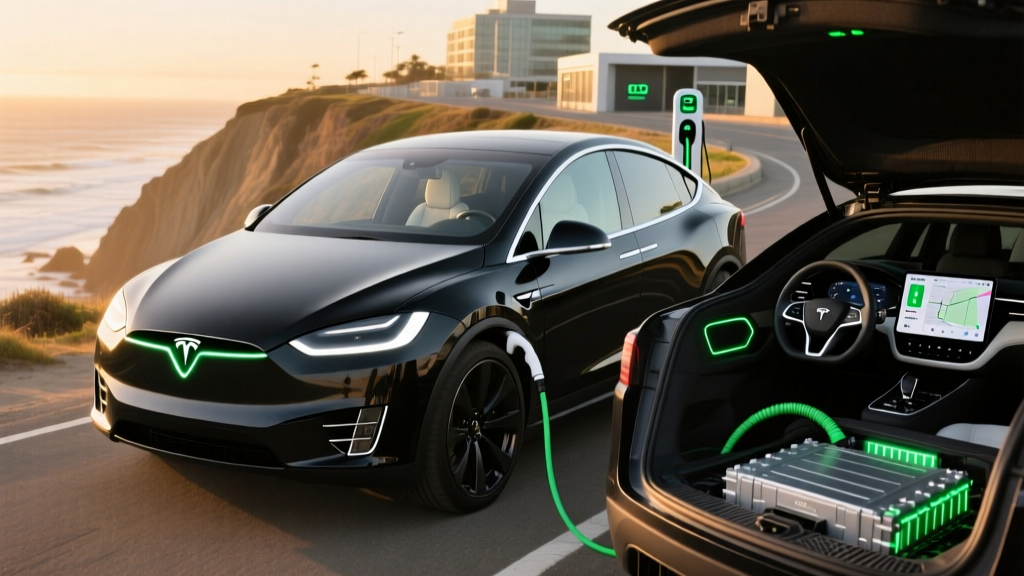
- Onboard charger: Typically 3.3 kW to 6.6 kW, enabling Level 2 home charging. DC fast charging (CCS or NACS) is rare in conversions due to the communication protocol complexity and added cost ($2,000–$5,000+).
- BMS (Battery Management System): Essential for cell balancing, thermal monitoring, and safety. Options include Orion BMS, SimpBMS, or Tesla BMS integration boards.
The conversion process takes 200 to 600+ labor hours for a professional shop, or several months to over a year for a dedicated DIY builder working evenings and weekends.
EV Conversion Cost Breakdown: Where the Money Goes
Here's what a realistic EV car conversion costs in 2026, whether you go the professional route or tackle it yourself:
| Component / Service | DIY Build | Professional Shop |
|---|---|---|
| Donor vehicle (classic or used ICE car) | $2,000–$15,000 | $2,000–$25,000 |
| Electric motor + controller | $2,500–$6,000 | $4,000–$10,000 |
| Battery pack (20–60 kWh) | $3,000–$10,000 | $6,000–$18,000 |
| BMS + wiring + safety components | $800–$2,000 | $1,500–$3,500 |
| Onboard charger (3.3–6.6 kW) | $600–$1,500 | $1,000–$2,500 |
| Fabrication, mounts, adapters | $500–$2,000 (materials) | $3,000–$8,000 |
| Labor (shop hours @ $100–$175/hr) | $0 (your time) | $10,000–$35,000 |
| Engineering / CAD / custom parts | $200–$1,000 | $2,000–$5,000 |
| Registration, inspection, titling | $200–$1,000 | $200–$1,500 |
| Total estimated cost | $10,000–$30,000 | $25,000–$80,000+ |
The single biggest cost driver is battery capacity. A 40 kWh pack built from salvaged Tesla Model S modules might cost $5,000–$8,000, while a new 60 kWh LFP pack with a proper enclosure and thermal management can exceed $15,000. Labor is the second major expense for professional builds — a full conversion at a reputable shop like EV West, Zeus Electric Chassis, or Icon routinely runs $30,000–$50,000 in labor alone.
Range, Charging, and Performance: What to Expect
Unlike production EVs with EPA-rated range figures, conversions don't have standardized efficiency testing. Range depends on battery size, vehicle weight, aerodynamics, tire rolling resistance, and driving style. Here are realistic estimates based on common conversion configurations:
| Battery Size | Vehicle Type | Estimated Range | Efficiency (Wh/mi) |
|---|---|---|---|
| 20 kWh | Light car (e.g., VW Beetle, Miata) | 50–70 miles | 280–350 Wh/mi |
| 35 kWh | Mid-size sedan (e.g., BMW E30, Honda Civic) | 80–120 miles | 280–350 Wh/mi |
| 50 kWh | Mid-size (e.g., Porsche 914, Volvo 240) | 120–160 miles | 300–380 Wh/mi |
| 60+ kWh | Heavier car/truck (e.g., F-100, Land Cruiser) | 140–200 miles | 320–420 Wh/mi |
Real-world caveat: These ranges assume moderate-speed city/suburban driving in 60–80°F weather. Sustained highway driving at 70+ mph can reduce range by 20–30%. Cold weather (below 32°F) without a battery thermal management system can cut range by 30–50%, because LFP and NMC cells lose efficiency and available capacity when cold, and cabin heating (often a resistive PTC heater in conversions) draws 2–5 kW continuously.
Charging speeds in conversions are almost always limited to Level 1 (1.4–1.9 kW, adding ~4–6 miles per hour) or Level 2 (3.3–6.6 kW, adding ~12–25 miles per hour). A full charge on a 40 kWh pack at 6.6 kW takes roughly 6–7 hours. DC fast charging is technically possible but adds significant cost and complexity — the CCS or NACS communication handshake requires a compatible gateway module, high-voltage contactors rated for 200+ amps, and liquid-cooled cables. Expect to pay an additional $3,000–$7,000 if you add DC fast-charge capability, and even then, charge rates typically peak at 40–50 kW — far below the 150–250 kW rates of modern production EVs.
Performance is where conversions often shine. A 100 kW (134 HP) motor in a 2,800-lb classic car delivers brisk acceleration — expect 0–60 mph times of 5–8 seconds, with instant torque that makes the car feel significantly quicker than its original engine. However, the added battery weight (typically 400–900 lbs) changes weight distribution and increases braking distances. Upgraded brakes and suspension are strongly recommended.
EV Conversion vs. Buying a Used Production EV
This is the comparison most prospective converters need to confront. Here's how a typical $35,000 EV conversion stacks up against a used production EV at a similar total budget:
| Factor | EV Conversion (~$35K total) | Used 2022–2023 Chevy Bolt EUV (~$20K) | Used 2022 Tesla Model 3 SR+ (~$24K) |
|---|---|---|---|
| EPA Range | Not EPA-rated; ~100–140 mi est. | 247 mi (EPA) | 272 mi (EPA) |
| Battery warranty | None (or component mfr. only) | 8 yr / 100K mi (remaining) | 8 yr / 120K mi (remaining) |
| DC fast charging | Rare; 40–50 kW if equipped | 55 kW peak (CCS) | 170 kW peak (NACS/CCS) |
| Level 2 charge rate | 3.3–6.6 kW | 11.5 kW | 11.5 kW (NACS) |
| ADAS / safety tech | None (no ABS/airbags in many classics) | Super Cruise avail., AEB, lane keep | Autopilot (Level 2), AEB, lane keep |
| Resale value | Highly variable; niche market | Predictable; depreciating normally | Predictable; Tesla brand premium |
| Insurance | Specialty/classic car policy needed | Standard EV rates (~$130–$180/mo) | Standard rates (~$140–$200/mo) |
| Maintenance support | DIY or specialty shop only | Dealer + independent EV shops | Tesla service + mobile techs |
| Uniqueness / character | Very high — one-of-a-kind build | Common commuter | Common commuter |
The production EV wins on nearly every practical metric: range, charging speed, safety, warranty, and serviceability. The conversion wins on uniqueness, the satisfaction of building something yourself, and preserving a vehicle with sentimental or collector value.
Federal Tax Credits, Registration, and Legal Considerations
A common question: does an EV conversion qualify for the federal §30D tax credit? The answer is almost always no.
The IRS §30D clean vehicle credit applies only to new qualifying vehicles purchased from a manufacturer, with strict requirements including MSRP caps ($55,000 for sedans, $80,000 for SUVs/trucks), buyer income limits ($150K single / $300K joint), and battery critical-mineral and component sourcing rules. A conversion of an existing vehicle does not meet these criteria.
There is a separate used clean vehicle credit (up to $4,000 or 30% of sale price, whichever is less) for qualifying pre-owned EVs, but this also requires the vehicle to be originally manufactured as an EV by an OEM — not a conversion.
Some states and local air-quality districts offer rebates for EV conversions, but these are uncommon and vary widely. Check your state energy office or Alternative Fuels Data Center for current programs.
Registration and titling for a converted EV varies significantly by state. Most states require a special inspection (often a "specially constructed vehicle" or SPCNS process in California, or a rebuilt/salvage inspection in other states) before issuing a new title reflecting the electric powertrain. You'll need documentation of all major components, receipts, and often a brake and light inspection. Budget $200–$1,000 and several weeks for this process. Some states exempt converted EVs from emissions testing (which is logical, as they have no tailpipe), but you must complete the title conversion first.
Common EV Conversion Misconceptions — Myth vs. Fact
| Myth | Fact |
|---|---|
| "An EV conversion is cheaper than buying a used EV." | Rarely true. A complete professional conversion typically costs $25,000–$80,000+ including the donor car. A used Chevy Bolt, Nissan Leaf, or Tesla Model 3 delivers more range, warranty, and safety for $15,000–$25,000. |
| "I'll get 200+ miles of range easily." | Only with a large (60+ kWh) battery pack in a light, aerodynamic vehicle — which is expensive and heavy. Most conversions achieve 60–150 miles realistically. |
| "I can fast-charge at Tesla Superchargers." | Tesla Superchargers require a Tesla communication handshake that most conversions cannot replicate. Some open-source projects are making progress, but reliable Supercharger access in a conversion is not guaranteed in 2026. |
| "Any mechanic can service my conversion." | Most general mechanics won't touch a custom EV conversion due to liability and unfamiliarity. You'll rely on yourself, the conversion shop, or specialized EV technicians. |
| "Conversions are always eco-friendly." | The environmental benefit depends on your electricity source and the battery's origin. Repurposing salvaged EV battery modules extends their life; buying new cells has an upstream carbon cost. Manufacturing a new production EV is generally more resource-efficient than converting an old car. |
Decision Framework: Should You Convert or Buy?
Choose an EV Car Conversion If:
- You have a specific donor car with sentimental, collector, or aesthetic value (e.g., a 1965 Mustang, 1987 VW Westfalia, or 1991 Porsche 964) that you want to preserve and drive regularly.
- You enjoy hands-on engineering projects and have (or want to develop) skills in high-voltage electrical systems, fabrication, and programming.
- Your driving needs fit within 60–140 miles per day, with reliable Level 2 home charging.
- You understand the conversion will not qualify for federal EV tax credits and may be difficult to insure and resell.
- You budget $20,000–$50,000+ and 6–18 months for the project.
Choose a Used Production EV If:
- You need reliable daily transportation with 200+ miles of range and DC fast charging for road trips.
- You want a battery warranty, ADAS safety features (automatic emergency braking, lane-keeping), and dealer service support.
- You want to potentially qualify for the used clean vehicle credit (up to $4,000 via IRS §25E, subject to income and vehicle eligibility).
- Your budget is $15,000–$30,000 and you want to drive the car immediately, not spend months on a build.
- You don't have access to a fabrication shop, high-voltage training, or the time for a complex project.
Real-World Ownership: Charging, Insurance, and Daily Use
Home charging is nearly mandatory for a converted EV. Without DC fast charging, public charging infrastructure is of limited use — you'd be limited to Level 2 public stations (typically 6.6–19.2 kW), which your car may accept at only 3.3–6.6 kW. A full charge could take 6–12 hours. Plan to install a dedicated 240V Level 2 circuit at home; expect to pay $500–$2,000 for the electrician work (more if your panel needs an upgrade to 200A service).
Insurance for a converted EV typically requires a specialty or agreed-value policy from insurers like Hagerty, Grundy, or American Modern. Standard carriers may decline to insure a custom conversion or may value it only at the donor car's pre-conversion book value, which leaves your $30,000 investment unprotected. Expect annual premiums of $800–$2,500 depending on the vehicle's agreed value and your driving profile.
Maintenance on a conversion is generally lower than the original ICE powertrain — no oil changes, spark plugs, timing belts, or exhaust repairs. However, you'll need to monitor battery cell balance (via your BMS), coolant levels if your pack is liquid-cooled, and high-voltage cable integrity. Brake wear may increase due to added vehicle weight, unless your motor controller supports strong regenerative braking (most modern controllers do, recovering 15–30% of energy in stop-and-go driving).
Climate considerations matter enormously. If you live in a region with harsh winters (sustained temps below 20°F), a conversion without battery thermal management will suffer significant range loss and slower charging. Some builders integrate battery heating pads or repurpose Tesla-style coolant loops, but this adds $1,000–$3,000 in parts and complexity. In hot climates (Arizona, Texas summers), battery cooling is equally important to prevent cell degradation and thermal runaway risk.
Frequently Asked Questions
How long does an EV car conversion take?
A professional shop typically completes a conversion in 3–8 months, depending on complexity and backlog. A DIY build by an experienced hobbyist working part-time takes 6–18 months. First-time DIY builders should budget 12–24 months and expect setbacks.
Can I convert any car to electric?
Technically, almost any vehicle can be converted, but some are far easier than others. Lightweight cars with simple mechanical layouts (air-cooled VW Beetles, classic Porsches, Miatas, old BMWs) are popular conversion candidates. Modern cars with complex CAN bus networks, electric power steering tied to the ECU, and integrated safety systems are much harder to convert because removing the engine can disable other systems.
What's the difference between kW and kWh in a conversion?
This is the most common point of confusion. kW (kilowatts) measures power — how fast energy flows. Your motor might be rated at 100 kW (134 HP), and your charger at 6.6 kW. kWh (kilowatt-hours) measures energy capacity — the size of your "fuel tank." A 40 kWh battery pack holds 40 kilowatt-hours of energy. Think of kW as the width of a pipe and kWh as the size of the tank it fills.
Is an EV conversion safe?
A well-executed conversion with proper high-voltage safety components (fuses, contactors, inertia switches, insulated cables, and a quality BMS) can be safe for daily driving. However, conversions lack the crash-testing, airbag integration, and structural engineering validation of production EVs. If your donor car predates modern safety standards (pre-1995, typically), you're driving a vehicle without airbags, ABS, or crumple zones designed for its new weight. Take this seriously.
Will an EV conversion increase my car's value?
It depends entirely on the vehicle and the quality of the build. A high-quality conversion on a desirable classic (e.g., a Porsche 356 or early 911) by a well-known shop can command a premium at auction. A mediocre conversion on a common donor car (e.g., a Honda Civic or Ford Ranger) will almost never recoup its cost. The conversion market is niche, and buyers are few.
Can I use Tesla Superchargers with my EV conversion?
As of 2026, Tesla Supercharger access for non-Tesla vehicles requires a NACS connector and Tesla's communication protocol. Some conversion builders have successfully integrated Tesla charge-port controllers using open-source projects, but this is not officially supported by Tesla, can break with firmware updates, and should not be relied upon as your primary charging strategy. Plan to charge at home or on non-Tesla networks (Electrify America, EVgo, ChargePoint).
An EV car conversion is a rewarding engineering project for the right person with the right car — but it is not a cost-saving shortcut to EV ownership. Go in with clear expectations on range, charging, legal requirements, and total spend, and you'll either build something extraordinary or decide that a used production EV is the smarter daily driver.