The 2026 Chevy Bolt EV Lease: A Numbers-First Look
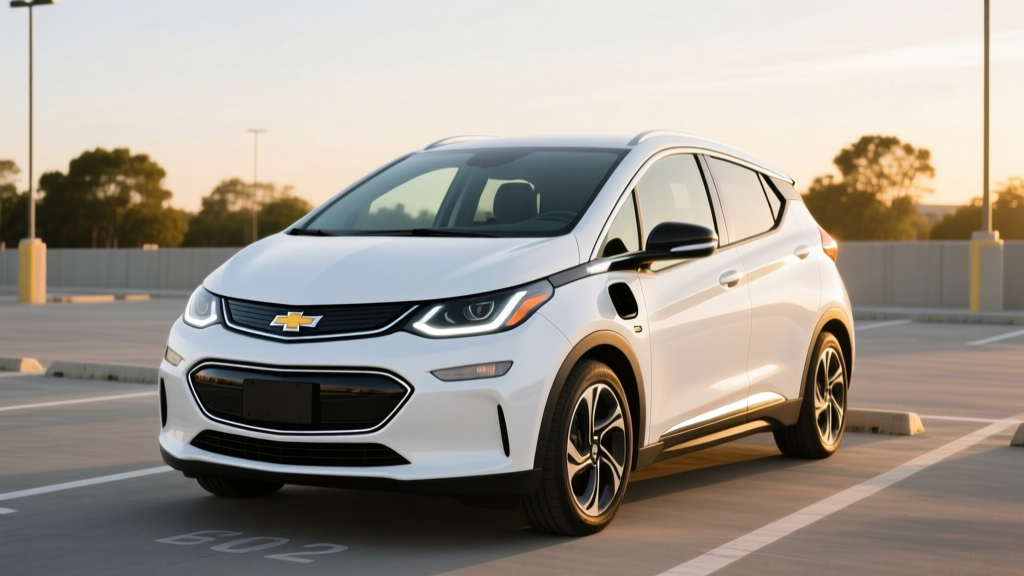
The Chevrolet Bolt EV returned for the 2026 model year with a refreshed platform, NACS charging port compatibility, and a starting MSRP that undercuts nearly every other new electric vehicle on the market. For buyers weighing an EV Bolt lease against financing or buying a used EV, the math is more nuanced than the sticker price suggests. This guide walks through every dollar — federal credits, fuel costs, insurance premiums, maintenance, and depreciation — so you can decide whether a Bolt lease actually pencils out in 2026.
| Spec | 2026 Chevy Bolt EV 2LT |
|---|---|
| Base MSRP | $29,995 (incl. destination) |
| EPA Range | 259 miles |
| Battery | 65 kWh usable, NMC lithium-ion |
| DC Fast Charge (peak) | 115 kW (CCS/NACS adapter) |
| 10–80% DC Charge | ~30 minutes |
| Level 2 Charge Rate | 11.5 kW (~37 mi/hr) |
| Efficiency | 120 MPGe combined / 28 kWh/100mi |
| 0–60 mph | 6.5 seconds |
| Horsepower | 200 hp / 266 lb-ft torque |
| Battery Warranty | 8 years / 100,000 miles |
| Federal Tax Credit | Up to $7,500 (§30D, eligibility varies) |
Source: Chevrolet Bolt EV Configurator and fueleconomy.gov.
Federal Tax Credit: Do You Qualify for Up to $7,500?
The IRS §30D Clean Vehicle Credit can reduce your federal tax liability by up to $7,500 — and since 2024, it can be transferred to the dealer at point of sale as an immediate price reduction. But eligibility is not automatic. The rules changed substantially under the Inflation Reduction Act, and they continue to evolve. Here is the current checklist for the 2026 tax year:
- MSRP Cap: Vehicle MSRP must not exceed $55,000 for sedans/hatchbacks (the Bolt EV at ~$29,995 qualifies).
- Buyer Income Cap: Modified adjusted gross income (MAGI) must not exceed $150,000 (single), $225,000 (head of household), or $300,000 (married filing jointly).
- Battery Sourcing: A percentage of critical minerals and battery components must be sourced from the U.S. or free-trade-agreement countries. These percentages increase annually. The Bolt's Ultium-based battery sourcing has been updated for 2026, but confirm current-year compliance with your dealer.
- Final Assembly: Vehicle must undergo final assembly in North America. The Bolt is assembled in Orion Township, Michigan — this requirement is met.
- Point-of-Sale Transfer: You may elect to transfer the credit to the dealer, reducing your purchase price or down payment at signing. The dealer must be registered with the IRS Energy Credits Online portal.
- One Credit Per Vehicle: The vehicle must be new, purchased for personal use, and not previously claimed.
Always verify current eligibility at IRS.gov §30D. Rules and sourcing requirements update annually. Consult a tax professional for your specific situation.
Lease vs. Buy: How the Credit Works Differently
If you lease a Bolt EV, the §30D credit technically goes to the leasing company (the vehicle's legal owner). However, most manufacturers pass this savings through as a "lease cash" incentive that reduces your monthly payment. GM has historically passed the full credit through on Bolt leases, but this is not guaranteed — confirm the exact lease cash amount with your dealer before signing.
If you purchase the Bolt EV, you claim the credit directly on your federal tax return (Form 8936) or transfer it at point of sale to reduce your out-of-pocket cost immediately.
5-Year Total Cost of Ownership Breakdown
Here is a realistic 5-year / 60,000-mile ownership projection for the 2026 Chevy Bolt EV 2LT, compared against a similarly priced gas compact (the 2026 Honda Civic EX at ~$28,000 MSRP, 35 MPG combined).
| Cost Category | 2026 Bolt EV 2LT | 2026 Civic EX (Gas) |
|---|---|---|
| Purchase / Lease Price (after credit) | $22,495 ($29,995 − $7,500) | $28,000 |
| Fuel / Charging (60,000 mi) | $3,600 (home charging at $0.14/kWh) | $6,000 (gas at $3.50/gal, 35 MPG) |
| Maintenance (5 years) | $1,200 | $3,500 |
| Insurance (5 years) | $9,500 | $7,500 |
| Depreciation (est. 5-yr) | $10,000 | $11,200 |
| 5-Year Total | $46,795 | $56,200 |
| Cost Per Mile | $0.78 | $0.94 |
Assumptions: 12,000 miles/year, $0.14/kWh average home electricity (national average per EIA), $3.50/gallon gas, 80% home / 20% public charging mix. Insurance based on national EV averages. Depreciation estimated from historical Bolt and Civic resale data. Your actual costs will vary by region, driving habits, and utility rates.
Charging Cost Per Mile: The Math
Bolt EV: 28 kWh per 100 miles × $0.14/kWh = $0.039 per mile (home charging)
Civic Gas: 1 gallon per 35 miles × $3.50/gallon = $0.100 per mile
Savings: ~$0.061 per mile, or roughly $3,660 over 60,000 miles when charging primarily at home.
Public DC fast charging costs significantly more — typically $0.30–$0.48/kWh depending on the network (Electrify America, EVgo, Tesla Supercharger). At $0.40/kWh, Bolt fuel cost rises to $0.112/mile, which erases most of the savings versus gas. Home charging access is the single biggest variable in EV economics.
Maintenance Savings: Where the Bolt Really Wins
Electric vehicles eliminate the most common recurring maintenance items on gas cars. Here is what you will never pay for on a Bolt EV:
| Maintenance Item | Gas Car (5 yr) | Bolt EV (5 yr) |
|---|---|---|
| Oil Changes (synthetic, 2×/yr) | $750 | $0 |
| Transmission Fluid | $200 | $0 (single-speed reducer) |
| Spark Plugs | $300 | $0 |
| Engine Air Filter | $150 | $0 |
| Brake Pad Replacement | $600 | $0–$200 (regen extends life 2–3×) |
| Cabin Air Filter | $200 | $200 |
| Tire Rotation | $250 | $250 |
| Coolant Flush | $150 | $150 (battery thermal system) |
| Total Estimated | $2,600+ | $600–$800 |
The Bolt's regenerative braking system handles most deceleration, meaning mechanical brake pads often last 80,000–100,000+ miles. The primary maintenance items are cabin air filter replacement (~$30–$50 every 2 years), tire rotation, windshield washer fluid, and the battery thermal management coolant service at longer intervals.
One caveat: EV tires wear faster than gas-car tires due to instant torque and heavier vehicle weight. Budget for a tire replacement around 35,000–45,000 miles. A set of four all-season tires for the Bolt runs roughly $500–$700 installed.
Insurance Cost Reality: The Line Item That Stings
EV insurance premiums run 15–30% higher than equivalent gas vehicles, and the Bolt is no exception. Based on national averages, expect to pay roughly $1,800–$2,000/year for full coverage on a Bolt EV versus $1,400–$1,600/year for a Civic. Over five years, that is an additional $2,000 in insurance costs.
Why are EVs more expensive to insure?
- Higher repair costs: Battery packs and power electronics are expensive to replace after collision damage. Even minor rear-end impacts can trigger battery safety inspections costing $1,000+.
- Specialized labor: Fewer body shops are certified for high-voltage EV repairs, which drives up labor rates.
- Total-loss thresholds: Insurers are more likely to declare an EV a total loss after battery-related damage, raising claim payouts.
- Parts availability: EV-specific components (inverters, charge ports, battery modules) can have longer lead times.
To mitigate this, shop quotes from at least three insurers. Companies like GEICO, Progressive, and State Farm have become more competitive on EV rates as the fleet grows. Bundling home and auto, maintaining a clean driving record, and choosing higher deductibles can bring EV premiums closer to gas-car levels.
Depreciation and Resale Value Trends
EV depreciation has been volatile. The Bolt EV specifically saw steep depreciation in 2023–2024 when GM slashed new-vehicle pricing and the used EV market was flooded with off-lease models. However, the 2026 Bolt's refreshed platform, NACS compatibility (opening access to Tesla Superchargers), and improved battery chemistry have stabilized its outlook.
Current projections suggest the 2026 Bolt EV will retain approximately 45–50% of its value after 5 years / 60,000 miles — competitive with gas compacts. Key depreciation factors to watch:
- Battery health: The 8-year/100,000-mile battery warranty provides buyer confidence. GM warrants the battery to retain at least 60% of original capacity during that period.
- Charging network access: NACS compatibility is a significant resale advantage over CCS-only vehicles as the Supercharger network dominates public charging.
- Market competition: As more affordable EVs enter the market (Hyundai, Kia, Nissan), older Bolts may face pricing pressure.
- Tax credit changes: If future legislation reduces or restructures §30D credits, used EV demand could shift unpredictably.
For leased Bolts, depreciation is the leasing company's problem — your risk is limited to excess mileage and wear charges at lease-end. This is one reason leasing can be attractive for EVs: you avoid the resale-value gamble entirely.
State, Local, and Utility Incentives
- State rebates: California (CVRP, up to $2,000 for income-qualified buyers), Colorado (up to $5,000 state tax credit), New York (Drive Clean Rebate, up to $2,000), Massachusetts (MOR-EV, up to $3,500).
- Utility rebates: Many utilities offer $250–$1,500 rebates for home Level 2 charger purchase and installation, plus off-peak charging rates as low as $0.06–$0.08/kWh.
- HOV lane access: States like California, Colorado, and Virginia offer single-occupant HOV lane stickers for qualifying EVs — a significant commute perk.
- Registration fee reductions: Some states waive or reduce annual EV registration fees.
Check your specific incentives at AFDC's state incentive database and your utility's EV program page. These incentives can reduce your effective Bolt EV cost by an additional $1,000–$5,000 depending on where you live.
Is a Bolt EV Lease Right for You? Decision Framework
Choose a Bolt EV lease if:
- You have reliable home or workplace Level 2 charging access
- Your daily commute is under 100 miles round-trip
- You want the lowest monthly payment on a new EV with full warranty coverage
- You prefer to avoid long-term depreciation risk on a rapidly evolving technology
- You qualify for the §30D credit (or your dealer confirms lease-cash pass-through)
Consider buying instead (or look at a different vehicle) if:
- You drive more than 15,000 miles/year (lease mileage penalties add up fast at $0.20–$0.25/mile)
- You lack home charging and would rely primarily on expensive public DC fast charging
- You regularly tow or need cargo space beyond the Bolt's 57 cu ft maximum
- You live in an area with extreme cold and need 300+ miles of real-world range
- You plan to keep the vehicle 8+ years and want to maximize long-term value
Frequently Asked Questions
How much does it really cost to own a 2026 Chevy Bolt EV over 5 years?
Based on our analysis at 12,000 miles/year with home charging, the 5-year total cost of ownership is approximately $46,800 — or about $0.78 per mile — after accounting for the federal tax credit, charging, insurance, maintenance, and depreciation. This compares favorably to a gas compact like the Civic at roughly $56,200 over the same period, primarily due to fuel and maintenance savings offsetting higher insurance.
Do I qualify for the $7,500 federal tax credit on a Bolt EV?
You may qualify if your modified adjusted gross income is below $150,000 (single) / $300,000 (married filing jointly), the vehicle MSRP is under $55,000, and the battery meets current-year critical mineral and component sourcing requirements. The Bolt's MSRP and North American assembly meet the price and assembly requirements. Confirm battery sourcing compliance with your dealer, as percentages change annually. If leasing, the credit goes to the lessor but is typically passed through as lease cash.
How much do I save on fuel and maintenance versus a gas car?
With home charging at the national average of $0.14/kWh, the Bolt costs about $0.039/mile to "fuel" versus $0.10/mile for a 35-MPG gas car — saving roughly $3,660 over 60,000 miles. Maintenance savings add another $1,800–$2,000 over 5 years thanks to eliminated oil changes, spark plugs, and extended brake pad life from regenerative braking. Combined fuel and maintenance savings total approximately $5,500–$5,700 over five years.
Are EVs more expensive to insure than gas cars?
Yes, typically 15–30% more. For the Bolt EV, expect annual full-coverage premiums of $1,800–$2,000 versus $1,400–$1,600 for a comparable gas compact. Higher repair costs, specialized high-voltage labor, and expensive battery components drive the premium. Shop multiple quotes — the gap is narrowing as insurers gain more EV claims data.
How well does the 2026 Bolt EV hold its value?
The 2026 Bolt is projected to retain 45–50% of its value after 5 years / 60,000 miles, aided by NACS Supercharger compatibility and the refreshed platform. This is competitive with gas compacts but remains subject to market shifts in EV incentives and competition. Leasing eliminates resale risk entirely — at lease-end, you simply return the vehicle.
What happens if I exceed my lease mileage?
Most Bolt EV leases come with 10,000 or 12,000 miles/year. Excess mileage charges typically run $0.20–$0.25 per mile. If you drive 15,000 miles/year on a 12,000-mile lease, you would owe approximately $4,500–$6,000 at lease-end. Negotiate a higher-mileage lease upfront if needed — the per-mile rate is often lower when agreed at signing.
Can I charge the 2026 Bolt EV at Tesla Superchargers?
Yes. The 2026 Bolt EV comes equipped with a NACS (North American Charging Standard) port, granting native access to the Tesla Supercharger network — over 25,000 locations in North America. At a V3 Supercharger (250 kW), the Bolt will charge at its peak rate of 115 kW, adding roughly 150 miles in 30 minutes.