The Short Answer on EU EVs for US Buyers
European-market EVs like the Volkswagen ID.4, BMW iX, Mercedes EQB, Volvo EX30, and Porsche Taycan are sold in the US with EPA-rated ranges, NACS or CCS connectors, and compliance to US safety standards — but many popular EU-only models (Renault 5 E-Tech, Peugeot e-208, Citroën ë-C3) are not available stateside due to different crash regulations, charging connector mandates, and homologation costs. If you're researching "EU EVs" from the US, focus on models that share global platforms (VW MEB, BMW Neue Klasse, Volvo SPA2/EX) and verify EPA certification on fueleconomy.gov, not WLTP figures quoted in European press.
Which EU-Brand EVs Are Actually Sold in the US?
Not every European electric car crosses the Atlantic. Automakers selectively badge global models for North America, often with larger battery packs and CCS1/NACS charge ports rather than the Type 2/CCS2 connectors used in Europe. Here's what's buyable new in the US for the 2026 model year:
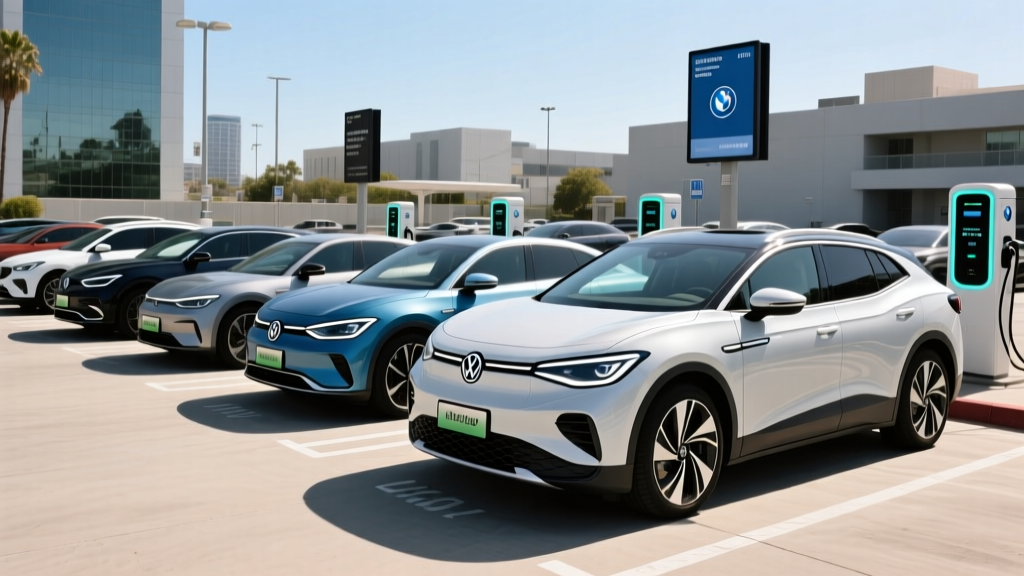
- Volkswagen ID.4 (Chattanooga-built): 82 kWh usable NMC battery, EPA 291 mi (RWD Pro), peak 175 kW DC fast charge, 10–80% in ~30 min, starts at ~$40,790.
- BMW iX xDrive50: 111.5 kWh usable, EPA 324 mi, peak 200 kW, 10–80% in ~34 min, 516 hp, 0–60 in 4.4 s, MSRP ~$87,250.
- Volvo EX90 Twin Motor: 111 kWh, EPA ~310 mi, peak 250 kW, 10–80% in ~20 min, starts ~$79,990.
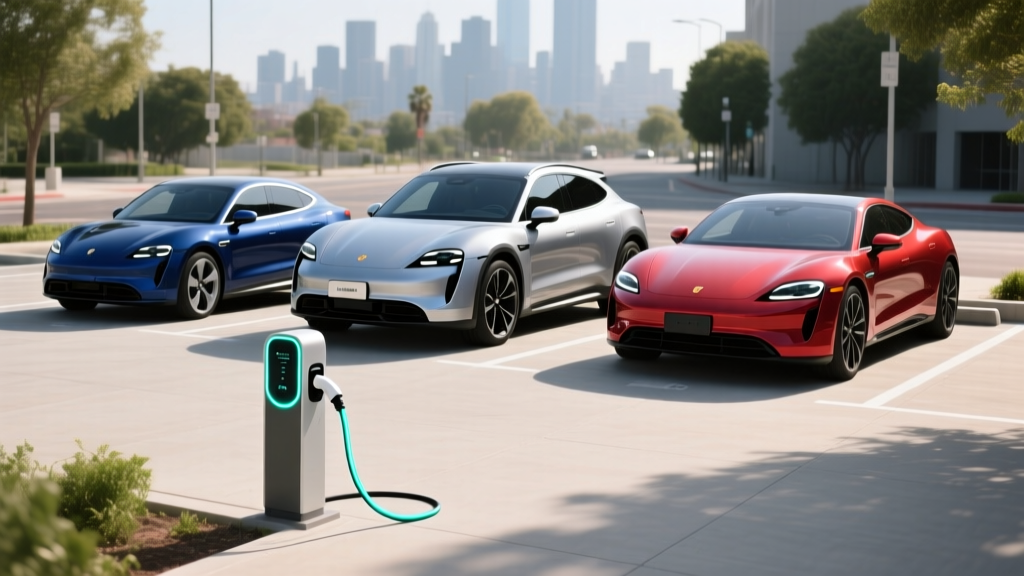
- Porsche Taycan (2025 refresh): 105 kWh (Performance Battery Plus), EPA up to 318 mi, peak 320 kW, 10–80% in ~18 min, starts ~$99,400.
- Mercedes-Benz EQS 450+: 118 kWh usable, EPA 390 mi, peak 200 kW, starts ~$105,550.
Models you'll see in EU reviews but cannot buy new in the US include the Renault 5 E-Tech, Peugeot e-2008, Fiat 500e (discontinued in US after 2024), and most Dacia/Skoda EVs. Gray-market imports are technically possible but face a 25% "chicken tax" on light trucks, DOT/EPA conversion costs exceeding $15,000, and no warranty support.
WLTP vs EPA: Why EU Range Numbers Don't Translate
European EVs are rated under WLTP (Worldwide Harmonised Light Vehicle Test Procedure), which produces range figures roughly 15–25% higher than the US EPA cycle for the same car. The EPA test includes higher sustained speeds, colder ambient assumptions, and HVAC load — closer to real-world American highway driving.
| Model | WLTP (EU) | EPA (US) | Real-World US Highway (70 mph) |
|---|---|---|---|
| VW ID.4 Pro (82 kWh) | 545 km / 339 mi | 291 mi | ~240–260 mi |
| BMW iX xDrive50 | 630 km / 391 mi | 324 mi | ~275–295 mi |
| Porsche Taycan Perf. Plus | 678 km / 421 mi | 318 mi | ~270–290 mi |
Rule of thumb: multiply any WLTP figure by 0.80 to approximate the US EPA number, then subtract another 10–15% for sustained 70+ mph highway driving or cold-weather operation below 40°F. European range claims seen on YouTube reviews are not directly comparable to what you'll experience in the US.
Cost Breakdown: EU EV vs Gas vs Hybrid (5-Year US Ownership)
Comparing a VW ID.4 Pro S (representative EU-brand EV), a Toyota RAV4 Hybrid (HEV), and a RAV4 LE (gas-only) over 5 years / 75,000 miles. Electricity priced at US average $0.17/kWh; gas at $3.40/gal; home Level 2 charging assumed.
| Category | VW ID.4 Pro S (EV) | RAV4 Hybrid | RAV4 LE (Gas) |
|---|---|---|---|
| Purchase (after incentives) | $39,290* | $33,500 | $30,500 |
| Energy / fuel | $3,850 | $6,460 | $8,500 |
| Maintenance | $1,800 | $3,200 | $3,800 |
| Insurance (avg) | $9,200 | $7,400 | $7,100 |
| Depreciation (est.) | $18,500 | $14,200 | $15,000 |
| 5-Year Total | $72,640 | $64,760 | $64,900 |
*Assumes $7,500 §30D federal credit via point-of-sale transfer; ID.4 US-built models currently qualify for partial credit depending on battery-sourcing rules. Verify on IRS.gov before purchase — rules tighten annually through 2032.
The EV wins on energy and maintenance (no oil, spark plugs, or transmission fluid), but loses on insurance premiums (typically 20–30% higher than equivalent ICE models) and steeper early depreciation. Breakeven vs gas typically occurs around year 6–7 if charging at home. Public DC fast-charging at $0.40–0.60/kWh erases the fuel-cost advantage entirely.
Real-World Ownership: What First-Time Buyers Miss
Three practical factors decide whether a EU-brand EV actually works for your household:
1. Home Charging Access Is Non-Negotiable
Level 1 (120V) charging adds ~3–5 miles per hour — adequate only for sub-40-mile daily commutes. A Level 2 home install (240V, 48A / 11.5 kW) costs $800–$2,500 including a ChargePoint Home Flex or Wallbox Pulsar Plus and electrician labor, assuming your panel has 50A spare capacity. A panel upgrade to 200A can add $2,000–$4,000. Without home charging, EU-brand EVs with 80+ kWh batteries become a weekly public-charging chore.
2. Cold Weather Cuts Range 20–35%
European EVs bound for the US typically include heat pumps (VW ID.4, Volvo EX90, BMW iX) but battery chemistry still suffers in sub-30°F conditions. Expect an ID.4 rated at 291 mi EPA to deliver 190–220 mi in Minnesota winters with cabin heating. Preconditioning the battery while plugged in recovers 5–8% of that loss.
3. Charging Curves Are Not Linear
A "peak 175 kW" rating is sustained only between ~10–40% state-of-charge. Above 80%, most EU-platform EVs taper to 40–60 kW to protect the NMC cells. A 10–80% session on a 350 kW Electrify America stall takes ~30 minutes for the ID.4 — but 80–100% adds another 45 minutes. Plan road-trip stops around 10–80% fills, not full charges.
EU EVs vs Hybrids: Decision Framework
Choose a EU-Brand BEV If:
- You have reliable home Level 2 charging (garage/driveway with 240V access).
- Daily driving is under 200 miles and road trips are 2–4 per year.
- You want the lowest per-mile energy cost (~$0.04/mi vs $0.11/mi gas).
- You qualify for §30D credits (income under $150K single / $300K joint; vehicle MSRP under $55K sedans / $80K SUVs).
Choose a Hybrid or PHEV If:
- You live in an apartment or park on-street with no charging access.
- You regularly tow (hybrids handle sustained loads without range cliff).
- You drive in extreme cold (<10°F) for long commutes.
- You want one vehicle for both urban errands and 600-mile road trips without planning.
Common Misconceptions About EU EVs
| Myth | Fact |
|---|---|
| "EU EVs use different plugs — I can't charge here." | US-spec EU-brand EVs ship with CCS1 or NACS (Tesla Supercharger-compatible) ports. Only EU-market cars use Type 2/CCS2. |
| "European range figures are what I'll get." | WLTP is 15–25% optimistic vs EPA. Always cross-reference fueleconomy.gov. |
| "EU EVs have worse reliability." | Platform-dependent. VW MEB software had launch issues (2021–2023) now largely resolved; BMW/Porsche EV powertrains rank high on Consumer Reports data. |
| "I need to import a European EV." | US-spec versions of ID.4, iX, EX90, Taycan are sold domestically with full warranties. Gray imports are impractical. |
Frequently Asked Questions
Can I buy a Renault 5 or Peugeot EV in the US?
No. Renault and Peugeot (Stellantis Europe) do not sell EVs in the US as of 2026. Stellantis offers the Jeep Wagoneer S and Chrysler-badged electrified models stateside, but European Peugeot/Citroën/Opel EVs are not homologated for US crash or emissions standards.
Do EU-brand EVs qualify for the $7,500 federal tax credit?
It depends on final assembly location and battery-mineral sourcing. The US-built VW ID.4 and Volvo EX90 (Ridgeville, SC) have qualified in recent years; imported BMW iX and Porsche Taycan typically do not. Check the current DOE qualifying vehicle list and consult a tax professional — §30D rules change annually.
Will European EVs switch to NACS (Tesla plug)?
Yes. VW, BMW, Volvo, Mercedes, and Porsche have committed to NACS for US models beginning 2025–2026, granting access to 20,000+ Tesla Supercharger stalls via native port or included adapter.
Are EU EV batteries more expensive to replace?
Replacement costs mirror other brands: $15,000–$25,000 out of warranty for 80–110 kWh packs. Federal law mandates 8-year/100,000-mile battery warranty with ≥70% capacity retention; VW and Volvo currently offer that baseline. Real-world degradation on liquid-cooled NMC packs averages 8–12% over 8 years based on current fleet data.