Quick Answer: What Is the ELI Zero Electric Car?
The ELI Zero is a compact Neighborhood Electric Vehicle (NEV) designed for city commuting and short errands. It offers an EPA-estimated ~100 miles of range from a ~14 kWh lithium-ion battery, tops out at 25 mph (street-legal on roads posted 35 mph and under in most states), and charges on a standard 120V household outlet in roughly 6–8 hours. Base pricing starts near $11,990 before any state or local incentives. It is not a highway-capable vehicle and does not qualify for the federal §30D EV tax credit because it does not meet the minimum battery-capacity and GVWR thresholds required by the IRS. The ELI Zero makes sense as a second-vehicle urban commuter or campus runabout—not as a primary family car.
ELI Zero Specs at a Glance
| Specification | Figure |
|---|---|
| EPA-Estimated Range | ~100 miles (real-world 70–85 mi at sustained speeds) |
| Battery Capacity | ~14 kWh (lithium-ion) |
| Top Speed | 25 mph (NEV classification) |
| Charging (Level 1, 120V) | ~1.4 kW; 0–100% in 6–8 hours |
| Seating | 2 passengers |
| Base MSRP | ~$11,990 |
| Federal Tax Credit (§30D) | Not eligible |
| Warranty | 1 year / limited; battery warranty varies by dealer |
Who Should Buy the ELI Zero (and Who Shouldn't)
The ELI Zero occupies a narrow but real niche. It targets buyers who need a covered, zero-tailpipe-emission vehicle for short, low-speed trips: commuting across a college campus, running errands in a small town, or shuttling around a retirement community. Think of it as a step up from a golf cart or e-bike, with weather protection and a locking cabin.
Buy the ELI Zero if:
- Your daily driving is under 40 miles round-trip on roads posted 35 mph or less.
- You have access to a standard 120V outlet for overnight charging (no special installation needed).
- You want a second vehicle strictly for local errands and already own a highway-capable car.
- You live in a warm climate—NEVs have minimal battery thermal management, and cold weather will reduce range significantly (expect 30–40% loss below freezing).
Do NOT buy the ELI Zero if:
- You need to drive on roads posted above 35 mph or access highways—it's illegal and unsafe.
- You need seating for more than two, cargo space beyond a few grocery bags, or towing capability.
- You expect crash-test ratings: NEVs are not required to meet the same NHTSA crash standards as full-size passenger vehicles, and the ELI Zero has not been rated by the IIHS or NHTSA.
- You need a single vehicle that can handle road trips, winter mountain passes, or long rural routes.
Real Costs: ELI Zero vs. a Gas-Powered Commuter Car
Let's compare the ELI Zero against a typical fuel-efficient gas subcompact (think Toyota Corolla or Honda Civic) over a 5-year, 50,000-mile ownership horizon, assuming all driving is local and within the ELI Zero's speed envelope.
| Cost Category | ELI Zero (NEV) | Gas Subcompact (e.g., Corolla LE) |
|---|---|---|
| Purchase Price (base MSRP) | ~$11,990 | ~$23,000 |
| Federal Tax Credit | $0 (not eligible) | $0 |
| Fuel/Energy (50,000 mi) | ~$550 (at $0.16/kWh, 3.5 mi/kWh) | ~$5,250 (at $3.50/gal, 33 MPG) |
| Maintenance (5 yr) | ~$300 (tires, cabin filter, brake inspection) | ~$2,800 (oil, filters, brakes, fluids) |
| Insurance (5 yr est.) | ~$2,500 (varies; some insurers offer NEV discounts) | ~$6,000 |
| Estimated 5-Year Total | ~$15,340 | ~$37,050 |
The ELI Zero's operating cost advantage is stark: roughly $0.04–0.05 per mile on electricity versus $0.11–0.12 per mile on gasoline. The purchase-price gap alone ($11,000+) makes the ELI Zero dramatically cheaper for its intended use case, even without any tax incentives.
However, the comparison is apples-to-oranges in capability. The Corolla can drive 400+ miles nonstop at 75 mph on the interstate, carries five passengers, and has full crash protection. The ELI Zero cannot do any of those things. This is why the ELI Zero works as a supplement, not a replacement, for most households.
Charging the ELI Zero: What First-Time Buyers Need to Know
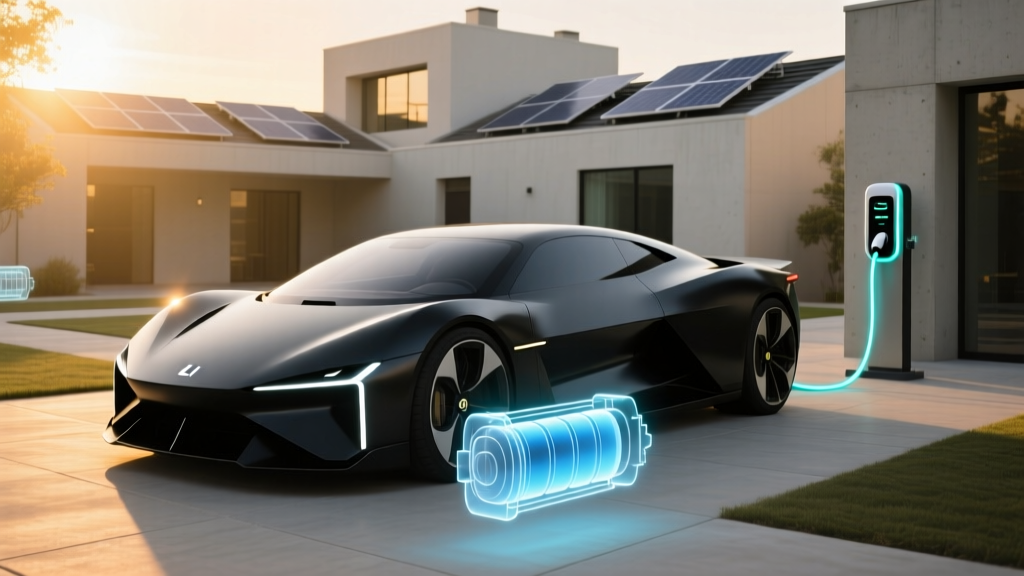
One of the ELI Zero's biggest practical advantages is that it requires zero charging infrastructure investment. It ships with a standard 120V charging cord that plugs into any grounded household outlet—exactly like charging a laptop.
| Charging Level | Power (kW) | Time to Full (~14 kWh) | Availability |
|---|---|---|---|
| Level 1 (120V household) | ~1.4 kW | 6–8 hours | Any standard outlet |
| Level 2 (240V) | Not supported (no onboard L2 hardware on most trims) | N/A | N/A |
| DC Fast Charging | Not supported | N/A | N/A |
kW vs. kWh refresher: kW (kilowatts) measures the rate of charging—how fast energy flows. kWh (kilowatt-hours) measures the capacity of the battery—how much energy it stores. The ELI Zero's battery holds about 14 kWh of energy, and it accepts roughly 1.4 kW of charging power, which is why a full charge takes 6–8 hours.
Practical charging tips:
- Plug in overnight. A full charge from near-empty takes about 6–8 hours, which fits easily into an overnight window.
- You do NOT need to hire an electrician or upgrade your electrical panel for Level 1 charging. However, ensure the outlet is on a dedicated 15A or 20A circuit to avoid tripping breakers if other appliances share the same circuit.
- Public DC fast chargers (Tesla Superchargers, Electrify America, EVgo) are irrelevant for this vehicle—the ELI Zero cannot use them.
Common Misconceptions About the ELI Zero
| Myth | Fact |
|---|---|
| "It qualifies for the $7,500 federal EV tax credit." | No. The IRS §30D credit requires a minimum 7 kWh battery capacity, a GVWR under 14,000 lbs, and compliance with battery-sourcing and critical-mineral rules. The ELI Zero's ~14 kWh battery may seem to meet the capacity threshold, but the vehicle is classified as a Low-Speed Vehicle (LSV) / NEV and does not meet the full definition of a qualified plug-in electric drive motor vehicle under §30D. Always verify current-year eligibility at irs.gov. |
| "I can drive it on any road." | Federal law limits NEVs to roads with speed limits of 35 mph or less, though some states allow limited crossings of higher-speed roads. Check your state DMV regulations before purchasing. |
| "The battery will need replacing in a few years." | Modern lithium-ion packs in NEVs typically last 5–8 years with moderate use before significant degradation (20–30% capacity loss). Replacement costs range from $2,000–$4,000 depending on the supplier. Ask your dealer for the specific battery warranty terms before purchase. |
| "It's as safe as a regular car." | NEVs are exempt from most Federal Motor Vehicle Safety Standards (FMVSS) that apply to full-size passenger cars. The ELI Zero has seat belts and basic lighting, but no airbags, crumple zones, or crash-test ratings from NHTSA or IIHS. Drive defensively and avoid mixed traffic with larger vehicles whenever possible. |
| "I can take it on the highway." | It is both illegal and dangerous. The 25 mph top speed makes highway merging impossible, and the lightweight construction offers minimal protection in a collision with a full-size vehicle. |
Real-World Ownership Considerations
Beyond the spec sheet, here's what actual ELI Zero ownership looks like in practice:
Climate impact on range: Like all EVs, the ELI Zero loses range in cold weather. In temperatures below 32°F, expect real-world range to drop to 60–70 miles from the EPA-estimated 100. The vehicle lacks an active battery thermal management system (liquid heating/cooling), which is standard on full-size EVs. If you live in Minnesota or Maine, plan accordingly—or consider the ELI Zero a fair-weather vehicle only.
Insurance and registration: NEV insurance is typically cheaper than standard auto insurance, but not all carriers offer NEV-specific policies. Before buying, call your insurer to confirm they'll cover an LSV/NEV and get a quote. Registration requirements vary by state: some require a title and plate, others treat NEVs more like ATVs. Check with your local DMV.
Home charging access: Unlike full-size EVs that benefit from Level 2 (240V) home chargers for faster overnight charging, the ELI Zero's Level 1-only setup means you need nothing more than a standard outlet in your garage or carport. If your parking spot is far from an outlet, you may need an outdoor-rated extension cord (12-gauge, grounded) or a simple outlet installation by an electrician ($150–$300).
Resale value: The NEV market is niche, and resale values are less predictable than mainstream EVs. Expect to recoup 40–55% of your purchase price after 3–4 years, depending on condition and local demand.
Decision Framework: Is the ELI Zero Right for You?
Step 1: Do you already own a highway-capable vehicle for longer trips? → If NO, the ELI Zero is not sufficient as your only vehicle. Consider a full-size EV (Chevrolet Bolt, Nissan Leaf, Hyundai Kona Electric) or a plug-in hybrid instead.
Step 2: Is your daily driving under 40 miles on roads posted ≤35 mph? → If NO, the ELI Zero cannot legally or practically serve your commute. Look at a conventional EV or gas car.
Step 3: Do you have access to a standard 120V outlet near your parking spot? → If NO, you'll need to arrange outlet installation ($150–$300) before purchase.
Step 4: Are you comfortable with minimal crash protection and no highway capability? → If NO, this vehicle category is not for you regardless of cost savings.
Step 5: Does a ~$12,000 purchase price and ~$0.04/mile operating cost fit your budget for a secondary commuter? → If YES, the ELI Zero is a strong value proposition for your use case.
Frequently Asked Questions
Does the ELI Zero qualify for any tax credits or incentives?
The ELI Zero does not qualify for the federal §30D clean vehicle credit. However, some states and local utilities offer rebates for NEVs or low-speed electric vehicles—check your state energy office or utility provider. Incentive programs change frequently, so verify current availability before purchasing.
How does the ELI Zero compare to a used Nissan Leaf or Chevrolet Bolt?
A 2–3-year-old Leaf or Bolt with 80–150 miles of EPA range can be found for $12,000–$18,000 on the used market and offers highway capability, full crash protection, DC fast charging, and eligibility for the used EV tax credit (up to $4,000 under §25E). If you need highway access or more range, a used full-size EV is a better buy. If you strictly need a low-speed neighborhood runabout and want a new vehicle with a warranty, the ELI Zero has the edge on upfront price.
Can I drive the ELI Zero in the rain or winter?
The ELI Zero has a fully enclosed cabin with wipers, heater, and basic weather protection, so rain is not a problem. Winter driving is more challenging: range drops 30–40% in freezing temperatures, and the lightweight vehicle can struggle on snow-covered or icy roads. Winter tires are not typically available for NEV wheel sizes, so exercise caution.
What maintenance does the ELI Zero require?
Very little compared to a gas car. There's no engine oil, transmission fluid, spark plugs, or exhaust system. Expect to check tire pressure regularly, replace the cabin air filter annually, inspect brake pads every 10,000 miles (regenerative braking reduces wear), and keep the battery charged between 20–80% for optimal longevity. Budget roughly $50–$75 per year in routine maintenance.
Is the ELI Zero street-legal in my state?
NEV/LSV regulations vary by state. Under federal law, NEVs can operate on roads with speed limits up to 35 mph, and states may allow crossing higher-speed roads at designated intersections. Some states require a driver's license, registration, and insurance; others have additional restrictions. Consult your state DMV or department of transportation for specific rules before purchasing.