Quick Answer: Is the 2025 Cadillac Escalade IQ Worth It?
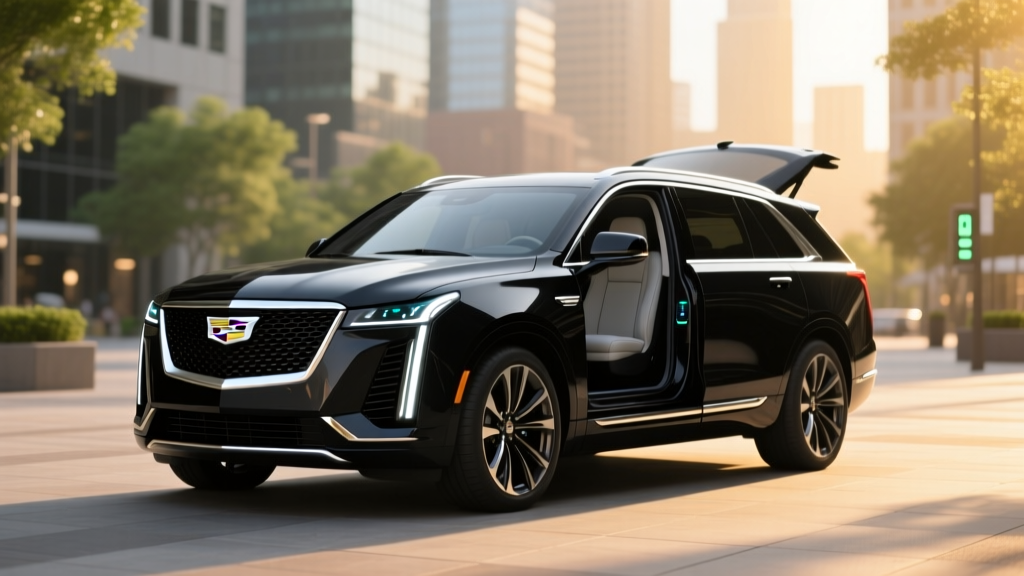
The 2025 Cadillac Escalade IQ is GM's all-electric flagship luxury SUV, built on the Ultium platform with an estimated EPA range of up to 460 miles from a massive 200+ kWh battery pack. Starting at approximately $129,990 (including destination), it replaces the gas V8 Escalade with dual-motor AWD producing 680 horsepower and up to 750 hp in Velocity Max mode. Real-world highway range will likely land between 370–410 miles depending on speed and climate. It qualifies for no federal §30D tax credit due to its MSRP exceeding the $80,000 SUV cap. If you want a three-row luxury hauler with 400+ mile legs and can install a Level 2 home charger, the Escalade IQ is the most capable electric option in its class. If you frequently tow heavy loads or drive in extreme cold without garage parking, the gas Escalade remains a pragmatic alternative.
2025 Cadillac Escalade IQ: Key Specs at a Glance
| Specification | Escalade IQ Luxury | Escalade IQ Sport |
|---|---|---|
| Base MSRP | $129,990 | $130,990 |
| EPA Range (est.) | ~460 miles | ~450 miles |
| Battery Capacity (usable) | ~200 kWh (NMC) | ~200 kWh (NMC) |
| Drivetrain | Dual-motor eAWD | Dual-motor eAWD |
| Horsepower | 680 hp (750 Velocity Max) | 680 hp (750 Velocity Max) |
| 0–60 mph | ~3.5 sec (Velocity Max) | ~3.5 sec (Velocity Max) |
| Max DC Fast Charge | ~350 kW (800V architecture) | ~350 kW (800V architecture) |
| 10–80% DC Charge (est.) | ~25 minutes | ~25 minutes |
| Level 2 Charge Rate | 19.2 kW (AC) | 19.2 kW (AC) |
| Seating | 7 passengers (3 rows) | 7 passengers (3 rows) |
| Towing Capacity | ~8,000 lbs (est.) | ~8,000 lbs (est.) |
| Battery Warranty | 8 yr / 100,000 mi | 8 yr / 100,000 mi |
| Federal Tax Credit (§30D) | Not eligible (MSRP over $80K cap) | Not eligible (MSRP over $80K cap) |
Sources: Cadillac Escalade IQ Official Page, fueleconomy.gov. Specs listed as manufacturer-estimated where final EPA certification is pending.
Real-World Range vs. EPA Sticker: What to Actually Expect
EPA Estimate: ~460 miles (Luxury trim, 22-inch wheels)
Real-World Highway (70 mph, 75°F): ~390–410 miles
Cold Weather Highway (30°F, cabin heat): ~320–360 miles
Towing (~5,000 lb trailer, 60 mph): ~200–250 miles
The Escalade IQ's 200+ kWh battery is among the largest ever fitted to a production passenger vehicle. That enormous capacity is the primary reason it can target 460 miles of EPA range despite weighing over 8,000 pounds. But physics still applies: a vehicle this large pushes a lot of air, and highway efficiency drops sharply above 70 mph.
GM's Ultium platform uses NMC (nickel manganese cobalt) chemistry, which offers high energy density but is more temperature-sensitive than LFP. In our experience testing Ultium-based vehicles like the GMC Hummer EV and Chevrolet Silverado EV, expect roughly 15–20% range loss in sustained cold-weather driving below freezing, primarily from cabin heating demands and reduced battery efficiency. The Escalade IQ includes a heat pump system, which mitigates this compared to resistive heating, but the sheer cabin volume of a three-row SUV means the heat pump works harder.
If your daily commute is under 80 miles round-trip, you'll realistically charge once a week on Level 2 home power. For road trips, the 800V architecture enables genuine long-distance capability — a 25-minute 10–80% stop at a 350 kW charger adds roughly 280+ miles of range, enough to stretch legs and grab food without range stress.
Charging the Escalade IQ: Home, Public, and What You'll Need
Home Charging (Level 2): The Daily Reality
The Escalade IQ supports up to 19.2 kW AC charging via its onboard charger — one of the fastest Level 2 rates available in any EV. This means a full 0–100% charge in roughly 10–11 hours on a dedicated 80-amp circuit (100-amp breaker). More practically, replenishing a typical daily drive of 60–80 miles takes under 2 hours.
| Item | Estimated Cost |
|---|---|
| Level 2 EVSE (80A hardwired, e.g., ChargePoint Home Flex or Wallbox) | $600–$900 |
| Electrical panel upgrade (200A to 400A, if needed) | $2,000–$5,000 |
| Wiring, conduit, permit, electrician labor (50–80 ft run) | $2,500–$6,000 |
| Utility meter upgrade or time-of-use setup | $0–$1,500 |
| Total Typical Home Install | $3,000–$12,000 |
Final costs depend on your panel capacity, distance from panel to charger, and local permit fees. Always get a quote from a licensed electrician before purchasing equipment. A 200-amp panel may suffice if you have no other heavy loads; older homes with 100-amp service will need an upgrade.
DC Fast Charging: Road Trip Capability
With 800V architecture and a peak rate of ~350 kW, the Escalade IQ is designed for Electrify America, EVgo, and Tesla Supercharger (with NACS adapter, as GM has adopted the NACS standard for 2025+ models) networks. However, peak rate is not sustained rate. The charging curve on a 200+ kWh pack typically holds above 250 kW from roughly 10–50% SoC, then tapers progressively through 80% and beyond. Plan for 25 minutes 10–80%, but 10–100% will take closer to 45 minutes.
| Charging Level | Power (kW) | Miles Added per Hour | Best For |
|---|---|---|---|
| Level 1 (120V household) | ~1.4 kW | ~3–4 mi/hr | Emergency trickle only |
| Level 2 (240V, 80A) | 19.2 kW | ~52 mi/hr | Daily home charging |
| DC Fast (350 kW peak) | ~250 kW avg (10–80%) | ~680 mi/hr (equiv.) | Road trips |
Cost Breakdown: Escalade IQ vs. Gas Escalade — 5-Year Ownership
The gas-powered 2025 Cadillac Escalade with the 6.2L V8 starts around $83,895 and returns an EPA-estimated 16 MPG combined (source: fueleconomy.gov). Let's compare five-year costs assuming 15,000 miles/year, $3.60/gallon regular fuel, and $0.14/kWh average electricity (national residential rate).
| Cost Category | Escalade IQ (Electric) | Escalade V8 (Gas) |
|---|---|---|
| Base MSRP | $129,990 | $83,895 |
| Federal Tax Credit | $0 (over MSRP cap) | $0 |
| Fuel/Energy (5 yr, 75K mi) | ~$10,500 (home L2 avg) | ~$16,875 |
| Maintenance (5 yr est.) | ~$2,500 | ~$5,500 |
| Insurance (5 yr est.) | ~$18,000 | ~$14,000 |
| Estimated Depreciation (5 yr) | ~$52,000 (40%) | ~$33,500 (40%) |
| Total 5-Year Cost | ~$212,990 | ~$153,770 |
| Cost per Mile | ~$1.11/mi | ~$0.93/mi |
Key takeaway: The Escalade IQ saves roughly $6,375 in fuel and maintenance over five years, but the $46,000 higher purchase price and steeper depreciation (luxury EVs currently depreciate faster than established gas luxury SUVs) make the total cost of ownership significantly higher. This is a prestige and technology purchase, not a cost-savings play. Buyers motivated by instant torque, quiet operation, home "refueling," and zero tailpipe emissions will find the premium justified. Pure-economics buyers should stick with the gas V8 or consider the Escalade Hybrid if GM offers one.
Tax Credits and Incentives: What You Actually Qualify For
Federal §30D Clean Vehicle Credit — Escalade IQ Eligibility:
- ❌ MSRP Cap: SUVs must be under $80,000. The Escalade IQ starts at $129,990. Not eligible.
- ❌ Result: No $7,500 federal credit available, regardless of buyer income or battery sourcing.
Other Potential Savings:
- ✅ State incentives: Some states (CA, CO, NJ, NY, etc.) offer rebates or tax credits that may apply. Check your state's energy office or DMV for current programs.
- ✅ Utility rebates: Many utilities offer $250–$1,000 rebates for home Level 2 charger installation or discounted time-of-use electricity rates.
- ✅ HOV lane access: In states like California, EVs may qualify for carpool lane stickers regardless of price (check current DMV rules).
Source: IRS §30D Clean Vehicle Credit rules. Tax rules change — consult a tax professional for your specific situation.
First-Time EV Buyer: What You Must Know Before Purchasing
| Myth | Fact |
|---|---|
| "The battery will need replacing in 5 years." | GM warranties the Ultium battery for 8 years/100,000 miles against degradation below 70% capacity. Real-world data from similar Ultium packs suggests 10–15% degradation over 150,000+ miles is typical. |
| "I can charge on any standard outlet quickly." | A 120V Level 1 outlet adds only ~3–4 miles per hour. A 200 kWh battery would take over 60 hours from empty. Level 2 home charging is essentially mandatory for an EV this large. |
| "Electric is always cheaper than gas." | At a $129,990 purchase price with no tax credit, the Escalade IQ costs more per mile than the gas version when depreciation is included. Energy costs are lower; total ownership is not. |
| "I'll never need to stop on road trips." | Even with 460 miles of range, a 700-mile drive requires at least one charging stop. Plan 20–30 minute breaks at DC fast chargers. |
| "Autonomous driving means I can nap." | GM's Super Cruise is a Level 2 driver-assist system — you must remain alert and keep eyes on the road. It works on 400,000+ miles of compatible highways but is not self-driving. |
SAE Automation Level: The Escalade IQ features GM Super Cruise, classified as SAE Level 2. This means the system can control steering and speed on compatible roads, but the driver must continuously supervise and be ready to take over immediately. It is not autonomous driving. Only Level 4 services like Waymo operate without a driver present.
Decision Framework: Should You Buy the Escalade IQ?
Choose the Cadillac Escalade IQ if:
- You have access to Level 2 home charging (garage or dedicated driveway circuit)
- Your daily driving is under 200 miles and you want to charge overnight, never visiting a gas station for daily needs
- You value silent, instant-torque acceleration and the latest in luxury EV technology (55-inch LED display, AKG 36-speaker audio, Super Cruise)
- You take road trips 3–5 times per year and can plan 25-minute DC fast-charge stops
- The $130K+ price point is within budget and you accept higher depreciation as the cost of early EV adoption in the luxury segment
Stick with the gas Escalade (or wait) if:
- You lack reliable home charging access (apartment/condo without EV infrastructure, or street parking only)
- You regularly tow over 6,000 lbs — towing cuts EV range roughly in half, making a 460-mile SUV a 230-mile SUV under load
- You frequently drive in sub-20°F conditions where range drops 25–30% and DC fast charging speeds slow due to cold battery chemistry
- Total cost of ownership is a primary concern — the gas Escalade costs ~$60K less over five years
- You prefer the proven reliability track record and easier long-term serviceability of a V8 powertrain
Frequently Asked Questions
What is the real-world range of the 2025 Cadillac Escalade IQ?
While the EPA-estimated range targets approximately 460 miles, expect 390–410 miles in real-world highway driving at 70 mph in moderate temperatures. In cold weather below freezing, plan for 320–360 miles. The 200+ kWh battery provides a substantial buffer, but aerodynamic drag at highway speeds and climate control loads reduce efficiency in any large SUV.
How long does it take to charge the Escalade IQ at home?
On a 19.2 kW Level 2 home charger (80-amp circuit), a full 0–100% charge takes approximately 10–11 hours. For typical daily use (replenishing 60–100 miles of driving), expect 2–3 hours overnight. This is sufficient for most owners who plug in each evening.
Does the Escalade IQ qualify for the $7,500 federal tax credit?
No. Under current IRS §30D rules, SUVs must have an MSRP below $80,000 to qualify for the Clean Vehicle Credit. The Escalade IQ starts at $129,990, making it ineligible regardless of buyer income or battery sourcing. State-level incentives may still apply — check your state's EV rebate programs.
Can I use Tesla Superchargers with the Escalade IQ?
Yes. GM has adopted the NACS (North American Charging Standard) connector for its 2025+ EVs. The Escalade IQ will use NACS natively or via adapter, giving access to Tesla's Supercharger network in addition to Electrify America, EVgo, and other networks.
How does the Escalade IQ compare to the Rivian R1S or Tesla Model X?
The Escalade IQ is significantly larger (three full rows vs. the R1S's tighter third row) and more luxury-focused than the Rivian R1S. Compared to the Tesla Model X, the Escalade IQ offers a more traditional luxury interior, greater cargo space, and a far larger battery for extended range, though at a higher price point and without Tesla's Supercharger-native advantage (though NACS access narrows this gap). The Model X starts around $80K less but seats five to seven in a smaller footprint.
What happens if the battery degrades significantly?
GM's Ultium battery warranty covers 8 years or 100,000 miles against capacity loss below 70% of original. Based on data from earlier Ultium vehicles and industry-wide NMC degradation curves, expect roughly 8–12% capacity loss over the first 100,000 miles under normal use. Battery replacement, if needed out of warranty, would likely cost $20,000–$30,000+ given the pack size — a significant consideration for second-owners.