Quick Answer: Is the Electric XP Trike Right for You?
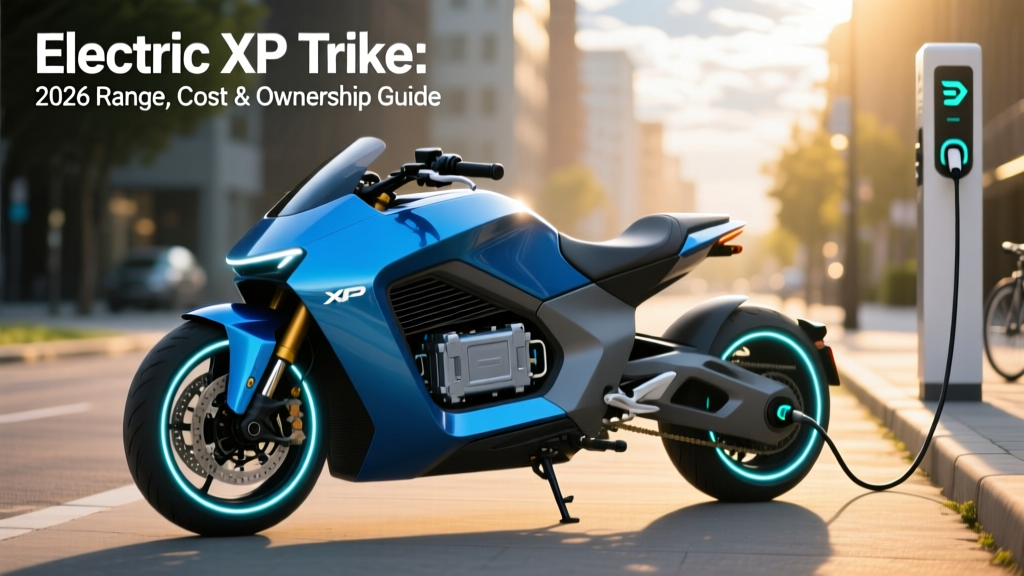
The Electric XP Trike (from manufacturers like Lectric and similar brands in the three-wheeled electric trike segment) is a low-speed, battery-powered three-wheeler designed for neighborhood commuting, errands, and light cargo. Expect a real-world range of 30–45 miles per charge from a ~1.0–1.5 kWh battery pack, a top speed around 20–28 mph, and a purchase price between $2,500 and $5,500 depending on trim. It charges on a standard 120V outlet in 4–6 hours and costs roughly $0.15–$0.25 per full charge. For short-distance urban and suburban trips, it eliminates gasoline entirely — but it is not a replacement for a full-size EV or highway-capable vehicle.
What Exactly Is an Electric XP Trike?
The term "electric XP trike" typically refers to a class of three-wheeled electric vehicles that blend elements of e-bikes, mobility scooters, and micro-EVs. Popular models in this space include the Lectric XPress and similar trikes from brands like E-Wheels, Vive, and Addmotor. These vehicles seat one or two riders, feature a step-through or bucket-seat design, and run on lithium-ion or lithium iron phosphate (LFP) battery packs.
Unlike a full battery-electric vehicle (BEV) such as a Tesla Model Y or Chevrolet Equinox EV, an electric XP trike is classified in most U.S. states as a low-speed vehicle (LSV) or electric bicycle, depending on its top speed and motor wattage. This classification matters enormously for where you can legally ride, whether you need a license, and whether federal EV tax credits apply.
Key Specifications at a Glance
| Spec | Typical Electric XP Trike |
|---|---|
| Battery Capacity | 1.0–1.5 kWh (lithium-ion or LFP) |
| Motor Power | 500W–1,000W hub motor |
| EPA-Estimated Range | Not EPA-rated; manufacturer est. 35–50 mi |
| Real-World Range | 30–45 mi (varies with payload, terrain, temp) |
| Top Speed | 20–28 mph (some models up to 35 mph) |
| Charge Time (120V) | 4–6 hours (0–100%) |
| Charging Connector | Standard 120V household plug |
| Payload Capacity | 300–450 lbs |
| Base Price Range | $2,500–$5,500 MSRP |
Electric XP Trike vs. Gas Scooter vs. Full EV: The Numbers
Before buying, it's critical to understand what the electric XP trike replaces — and what it doesn't. Here's how it compares to a gas-powered scooter and a full-size BEV for short-trip commuting:
| Metric | Electric XP Trike | Gas Scooter (50cc) | Full-Size BEV (e.g., Chevy Equinox EV) |
|---|---|---|---|
| Purchase Price | $2,500–$5,500 | $2,000–$3,500 | $33,000–$43,000 |
| Fuel/Energy Cost per Mile | ~$0.005–$0.008 | ~$0.08–$0.12 | ~$0.03–$0.05 |
| Annual Fuel/Energy (6,000 mi/yr) | $30–$48 | $480–$720 | $180–$300 |
| Annual Maintenance | $50–$100 | $200–$400 | $300–$500 |
| Highway Capable? | No (20–28 mph top speed) | Some models (40–55 mph) | Yes (100+ mph) |
| Range | 30–45 mi | 100–150 mi | 250–319 mi (EPA) |
| Insurance (Annual Avg) | $0–$200 (often not required) | $200–$500 | $1,200–$2,000+ |
The electric XP trike's cost-per-mile advantage is dramatic for short trips. At roughly half a cent per mile in electricity, a rider covering 15 miles round-trip daily spends about $1.50 per month on energy — compared to $30–$45 per month in gasoline for an equivalent gas scooter.
Real-World Ownership Costs: 5-Year Breakdown
Let's model a realistic 5-year ownership scenario for an electric XP trike versus a gas scooter, assuming 6,000 miles driven per year (about 16.5 miles/day, consistent with neighborhood commuting).
| Cost Category | Electric XP Trike (5 Yr) | Gas Scooter 50cc (5 Yr) |
|---|---|---|
| Purchase Price (mid-range trim) | $3,800 | $2,800 |
| Energy/Fuel (30,000 mi total) | $180 | $3,000 |
| Maintenance & Repairs | $350 | $1,500 |
| Insurance | $500 | $1,750 |
| Battery Replacement (if needed) | $400–$800 | N/A |
| Total 5-Year Cost | $5,230–$5,630 | $9,050 |
| Cost per Mile | $0.17–$0.19 | $0.30 |
The electric XP trike saves approximately $3,400–$3,800 over five years despite a higher upfront cost. The largest savings come from fuel elimination and minimal maintenance — no oil changes, no spark plugs, no carburetor cleaning, and far fewer moving parts.
Battery Longevity and Replacement
Most electric XP trikes use lithium-ion or LFP battery packs rated for 800–1,500 charge cycles before degrading to 80% of original capacity. At one full charge per day, that translates to roughly 2.5–4 years of daily use before noticeable range loss. A replacement battery pack costs $400–$800 depending on capacity and chemistry. LFP packs last longer (up to 2,000+ cycles) but are heavier and slightly more expensive upfront.
Charging at Home: What You Actually Need
One of the electric XP trike's biggest practical advantages is that it requires zero specialized charging infrastructure. Unlike a full-size BEV that benefits from a 240V Level 2 home charger (which can cost $500–$2,000 to install), an electric XP trike charges from any standard 120V household outlet.
Charging Specifics
- Power draw: Most chargers pull 100–200W during peak charging — equivalent to two or three incandescent light bulbs.
- Charge time (0–100%): 4–6 hours for a 1.0–1.5 kWh pack.
- Cost per full charge: At the U.S. average residential electricity rate of ~$0.17/kWh (per EIA data), a full 1.5 kWh charge costs about $0.26.
- Apartment-friendly: If you live in an apartment or condo without dedicated EV charging, the trike's battery is often removable — you can carry it inside and charge it at any outlet.
This is a decisive advantage for renters and those without garage access. No electrician visit, no panel upgrade, no HOA approval required.
Federal Tax Credits and Incentives: Does the XP Trike Qualify?
Here's where many buyers get confused. The federal §30D Clean Vehicle Credit (up to $7,500 for new EVs) applies to four-wheeled vehicles with a gross vehicle weight rating (GVWR) under 14,000 lbs that meet strict battery sourcing and critical mineral requirements per IRS guidelines.
Most electric XP trikes do not qualify for the §30D credit because:
- They have three wheels, not four.
- They are classified as e-bikes, LSVs, or mobility devices — not "motor vehicles" under IRS definitions.
- Their battery packs are far too small to meet the credit's battery-capacity thresholds.
However, some states and local utilities offer rebates for e-bikes and electric micro-mobility devices. Check your state energy office and local utility for potential incentives. A few cities, including Denver and Boulder, Colorado, have offered e-bike rebate programs of $300–$1,700 that may cover electric trikes.
Common Misconceptions — Fact vs. Fiction
| Myth | Fact |
|---|---|
| "It qualifies for the $7,500 federal EV tax credit." | Most three-wheeled electric trikes do not meet §30D requirements. The credit applies to four-wheeled clean vehicles with specific battery sourcing. |
| "The range is 50+ miles." | Manufacturer claims of 50+ miles assume ideal conditions (flat terrain, light rider, no wind, moderate temperature). Real-world range is typically 30–45 miles, and drops 15–30% in cold weather below 40°F. |
| "I can ride it on the highway." | No. With a top speed of 20–28 mph, electric XP trikes are restricted to roads with speed limits of 35 mph or lower in most states. They are not highway-legal. |
| "The battery will die in a year." | Modern lithium-ion and LFP packs are rated for 800–2,000 charge cycles. Even with daily charging, that's 2.5–5+ years before significant degradation. |
| "I need a driver's license to ride it." | Requirements vary by state. In many states, trikes classified as e-bikes (under 750W, under 20 mph) don't require a license. Higher-powered models classified as LSVs may require one. Check your state DMV. |
Decision Framework: Should You Buy an Electric XP Trike?
Choose an Electric XP Trike If:
- Your daily trips are under 30 miles round-trip — errands, school runs, neighborhood commuting.
- You lack home charging for a full-size EV — apartment dwellers and condo residents benefit from the removable, outlet-chargeable battery.
- You want the lowest possible operating cost — at under $0.01/mile in energy, nothing else on the road is cheaper to "fuel."
- You need cargo capacity beyond a bicycle — most trikes offer rear baskets or cargo beds rated for 50–100+ lbs of groceries or packages.
- You prefer stability over two wheels — the three-wheel design is ideal for riders with balance concerns or those who want a step-through, no-lean riding experience.
Look at a Full-Size EV or PHEV Instead If:
- You need highway speeds — any commute on roads with speed limits above 40 mph disqualifies the trike.
- You regularly drive more than 40 miles per day — range limitations make the trike impractical for longer commutes.
- You live in an area with harsh winters — cold weather reduces battery range by 15–30%, and three-wheeled stability on ice and snow is a legitimate safety concern.
- You need to carry more than one passenger — most XP trikes are single-rider or single-rider-plus-child designs.
- You want to use the federal §30D tax credit — only four-wheeled qualifying vehicles are eligible.
What First-Time Electric XP Trike Buyers Should Know
1. Test the Real Range Before Committing
Manufacturer range claims are optimistic. If possible, test-ride the trike on your actual commute route with your typical cargo load. Pay attention to how range drops on hills and in headwinds.
2. Understand Your State's Classification
Electric trikes fall into a regulatory gray area. Before purchasing, confirm with your state DMV whether the specific model requires registration, insurance, a license, or a helmet. The NHTSA defines low-speed vehicles as four-wheeled, so three-wheelers often fall under state e-bike or moped laws instead.
3. Budget for a Spare Charger and Battery
Chargers are inexpensive ($30–$60), and having a spare at your workplace or second location effectively doubles your practical range. A spare battery ($400–$800) eliminates range anxiety entirely for heavy-use riders.
4. Check Local Utility Rebates
While federal tax credits likely won't apply, many utilities offer $100–$500 rebates for electric micro-mobility or energy-efficient transportation. These are often poorly advertised — call your utility directly.
5. Factor in Weather and Seasonality
If you live in a climate with freezing winters, plan for 6–8 months of practical use per year, not 12. Battery chemistry (lithium-ion and LFP) loses efficiency below 40°F, and traction on three small wheels in snow or ice is limited. Some owners treat the trike as a fair-weather commuter and use a car or transit during winter months.
Frequently Asked Questions
How fast does an electric XP trike go?
Most models top out between 20 and 28 mph, with some performance-oriented trims reaching 35 mph. This makes them suitable for roads with speed limits of 25–35 mph but impractical and often illegal on faster roads.
Can I ride an electric XP trike in the rain?
Most electric trikes have IP54 or IP65 water resistance ratings, meaning they handle light to moderate rain. However, the battery connector, motor hub, and controller are vulnerable to submersion. Avoid deep puddles and heavy downpours, and always dry the charge port before plugging in.
How long does the battery last before needing replacement?
Expect 2.5–5 years of daily use before the battery degrades to 80% of its original capacity. LFP chemistry batteries last longer (up to 2,000+ cycles, or 5+ years of daily charging) but cost more upfront. Replacement packs run $400–$800.
Is an electric XP trike street-legal?
In most U.S. states, yes — but only on lower-speed roads. The exact rules depend on whether your state classifies the trike as an e-bike, moped, or low-speed vehicle. Check your state's DMV or department of transportation for specific requirements around registration, licensing, and helmet laws.
Can I tow a small trailer with an electric XP trike?
Some models offer hitch points rated for 100–200 lbs of towed cargo. However, towing significantly reduces range (by 20–40%) and increases strain on the motor and brakes. Check the manufacturer's specifications for your specific model before towing.
What's the total cost of ownership compared to a gas car?
An electric XP trike costs roughly $1,000–$1,100 per year to own and operate (including purchase amortization, energy, maintenance, and insurance). A comparable gas car costs $6,000–$9,000+ per year. The trike is not a car replacement, but for the trips it can handle, the savings are substantial.