The Quick Answer: Is the Electric XC40 Worth It?
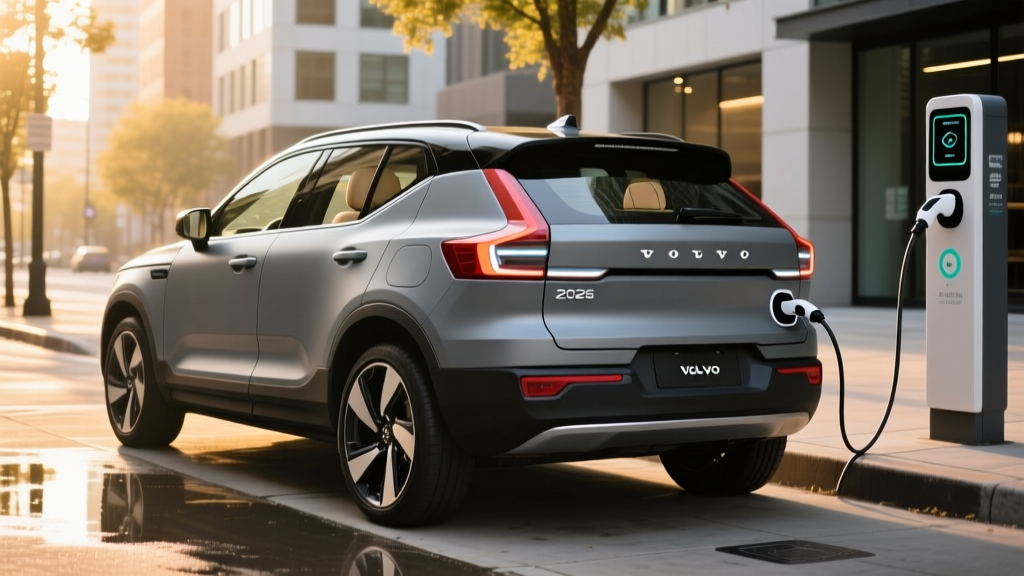
The 2026 Volvo Electric XC40 Recharge (now officially the EX40 under Volvo's updated naming) delivers an EPA-estimated 293 miles of range on the Single Motor Extended Range trim and 254 miles on the Twin Motor AWD variant. Starting at roughly $53,550 before incentives, it qualifies for the $7,500 federal tax credit via point-of-sale transfer under current §30D rules — effectively bringing the entry price near $46,050. Real-world highway range drops to approximately 230–260 miles depending on climate and speed. It charges from 10–80% in about 28 minutes at a 200 kW DC fast charger. For buyers with home Level 2 access and daily commutes under 100 miles, the Electric XC40 eliminates fuel stops and delivers meaningful 5-year savings over the gas XC40. Apartment dwellers reliant on public charging will find the economics less favorable.
Range, Battery, and Efficiency: Beyond the EPA Sticker
Volvo offers the EX40 (Electric XC40) with two powertrain configurations for the 2026 model year. Both use an 82 kWh usable lithium-ion battery pack with NMC (nickel manganese cobalt) chemistry, managed by an active liquid thermal system.
| Spec | Single Motor ER | Twin Motor AWD |
|---|---|---|
| EPA Range | 293 mi | 254 mi |
| Battery (usable) | 82 kWh NMC | 82 kWh NMC |
| Horsepower | 295 hp | 402 hp |
| 0–60 mph | 6.2 sec | 4.5 sec |
| MPGe (combined) | 103 MPGe | 89 MPGe |
| kWh/100 mi | 33 kWh | 38 kWh |
| Max DC Charge Rate | 200 kW | 200 kW |
| 10–80% DC Time | ~28 min | ~28 min |
| Level 2 (240V/48A) | ~8 hrs (0–100%) | ~8 hrs (0–100%) |
| Base MSRP | $53,550 | $57,450 |
Real-World Range Reality Check
EPA: 293 mi (Single Motor) — but plan for less. In our experience and consistent with third-party testing, expect 250–270 miles on a 70 mph highway drive in mild weather. In freezing temperatures (below 32°F), range can drop to 200–230 miles due to cabin heating demands and increased battery resistance, even with the EX40's heat pump. City driving with regenerative braking recovers more energy, often matching or slightly exceeding the EPA figure.
The 200 kW peak DC charge rate is competitive but not class-leading — the Hyundai Ioniq 5 peaks at 350 kW on an 800V architecture. However, Volvo's charge curve is relatively flat through 60% SoC, meaning the 10–80% time of roughly 28 minutes is reliable at a functioning 200+ kW station. Above 80%, charging slows significantly to protect battery longevity, adding roughly 20 more minutes to reach full. Always precondition the battery via the Volvo app or navigation routing to a charger — this warms the pack and enables peak charge rates.
Electric XC40 vs Gas XC40: 5-Year Cost Comparison
The most common cross-shop is the gas-powered Volvo XC40 (B5 AWD mild-hybrid). Here's how the numbers stack up over 5 years and 75,000 miles, assuming $3.50/gallon regular and $0.14/kWh home electricity (national averages).
| Cost Category | EX40 Single Motor | XC40 B5 AWD (Gas) |
|---|---|---|
| Base MSRP | $53,550 | $41,800 |
| Federal Tax Credit (§30D) | –$7,500 | $0 |
| Effective Purchase Price | $46,050 | $41,800 |
| Fuel/Energy (75k mi) | $2,940 | $8,310 |
| Maintenance (5 yr) | ~$1,200 | ~$3,500 |
| Insurance (5 yr est.) | ~$9,500 | ~$7,800 |
| 5-Year Total Cost | $59,690 | $61,410 |
The Electric XC40 comes out roughly $1,720 cheaper over 5 years despite the higher sticker price, primarily due to fuel savings (~$5,370 less) and lower maintenance (no oil changes, fewer brake replacements thanks to regen). Insurance runs higher for the EV — typically 15–25% more — due to battery replacement cost considerations and higher repair complexity. These figures assume predominantly home charging at residential electricity rates. Public DC fast charging at $0.35–$0.50/kWh would significantly erode the energy cost advantage.
Sources: Efficiency figures from fueleconomy.gov; gas XC40 data from Volvo's official specifications.
Charging at Home and on the Road
The EX40 uses the NACS (North American Charging Standard) connector as of the 2026 model year, giving it native access to Tesla Superchargers — the most reliable DC fast-charging network in the US — without an adapter. For Level 2 home charging, it accepts up to 11 kW (48 amps at 240V), which adds roughly 30–35 miles of range per hour of charging.
| Charging Level | Power | Miles Added/Hour | Best For |
|---|---|---|---|
| Level 1 (120V outlet) | ~1.4 kW | ~4 mi/hr | Overnight top-up, emergencies |
| Level 2 (240V/48A home) | 11 kW | ~32 mi/hr | Daily home charging |
| DC Fast Charge | Up to 200 kW | ~150+ mi in 15 min | Road trips |
Home charging installation typically costs $800–$2,500 for a standard 240V/50A circuit with a hardwired wall connector, depending on panel proximity and local permit fees. If your electrical panel needs an upgrade from 100A to 200A service, add $1,500–$3,500. Always get a quote from a licensed electrician — don't estimate this yourself.
On road trips, the NACS connector and Supercharger access are a genuine advantage. Superchargers are generally better maintained and more reliably operational than Electrify America or EVgo stations, though Volvo's built-in navigation will route you through compatible chargers and precondition the battery accordingly.
Federal Tax Credit and Incentive Eligibility
The 2026 EX40 currently qualifies for the full $7,500 federal tax credit under IRS §30D, which can be transferred to the dealer as a point-of-sale discount — meaning you don't need to wait until tax filing to benefit. However, eligibility has strict requirements:
- MSRP cap: Vehicle MSRP must not exceed $80,000 for SUVs (EX40 qualifies)
- Buyer income cap: Adjusted gross income ≤ $150,000 (single), $225,000 (head of household), or $300,000 (joint filers)
- Battery sourcing: Critical minerals and battery components must meet phased-in domestic/free-trade sourcing thresholds that tighten annually
- VIN verification: Dealer must verify eligibility at point of sale through the IRS energy credit portal
- One credit per vehicle per year: The same VIN cannot generate a credit for a subsequent buyer in the same tax year
Rules evolve. Check the IRS clean vehicle credits page before purchasing, and confirm with your tax professional that you meet income and filing-status requirements. Many states offer additional rebates (California's CVRP, Colorado's state credit, etc.), but amounts vary by jurisdiction — check your state energy office for current programs.
What First-Time EV Buyers Should Know About the EX40
| Common Misconception | The Reality |
|---|---|
| "The battery will need replacing in 5 years" | Volvo warranties the battery for 8 years/100,000 miles at ≥70% capacity retention. Industry data shows NMC packs typically retain 85–90% after 100k miles with normal use. |
| "I can charge anywhere in 15 minutes" | 10–80% takes ~28 min at a 200 kW charger. Many public stations deliver 50–150 kW, extending that to 35–50 min. Always check station ratings in your charging app. |
| "I'll save money even without home charging" | Public DC fast charging at $0.40/kWh costs ~$0.13/mile — close to a gas car at 25 MPG. The financial case for EVs relies heavily on cheap home or workplace charging. |
| "Autopilot drives itself" | The EX40's Pilot Assist is an SAE Level 2 driver-assistance system. It handles lane centering and adaptive cruise but requires continuous driver attention. Hands off the wheel triggers escalating warnings and eventual disengagement. |
| "Cold weather makes EVs unusable" | Range drops 20–30% in freezing weather. The EX40's heat pump mitigates this somewhat. Preconditioning while plugged in recovers significant range. Northern owners should budget for ~200 miles of real winter range and plan accordingly. |
Pilot Assist: SAE Level 2, Not Self-Driving
Volvo's Pilot Assist provides adaptive cruise control and lane-centering on highways. This is SAE Level 2 automation — the driver must remain fully engaged, monitor the road, and be prepared to take over instantly. It is not autonomous driving. Only Level 4 services like Waymo operate without a human driver, and those are limited to geofenced urban areas.
Battery Longevity, Warranty, and Ownership Costs
Volvo provides an 8-year/100,000-mile battery warranty guaranteeing at least 70% capacity retention. If the pack degrades below that threshold within the warranty period, Volvo will repair or replace it at no cost. Out-of-warranty battery replacement for the 82 kWh pack currently ranges from $12,000–$18,000 including labor, though prices are expected to decline as battery manufacturing scales.
To maximize battery health:
- Keep daily charge limits at 80% for NMC chemistry — use the Volvo app to set a charge limit
- Use DC fast charging sparingly (road trips, not daily routine)
- Precondition the battery in extreme cold before driving or charging
- Avoid letting SoC drop below 10% for extended periods
Maintenance on the EX40 is minimal compared to gas: no oil changes, no spark plugs, no transmission fluid. Cabin air filter replacement (~$80–$120 every 2 years), brake fluid checks, and tire rotation are the primary service items. Brake pad life is extended significantly — often 80,000+ miles — because regenerative braking handles most deceleration.
Decision Framework: Should You Buy the Electric XC40?
Choose the EX40 (Electric XC40) If:
- You have access to Level 2 home or workplace charging
- Your daily driving is under 120 miles round-trip
- You qualify for the §30D tax credit (income within caps)
- You value a premium compact SUV with strong safety ratings (IIHS Top Safety Pick in prior model years)
- You take 2–4 road trips per year and can plan around DC fast-charging stops
- You want NACS Supercharger access for hassle-free long-distance charging
Consider the Gas XC40 or a PHEV Instead If:
- You live in an apartment or condo without charging access and your area has sparse public infrastructure
- You regularly drive 300+ miles in a single day in cold climates
- Your household income exceeds the §30D caps, eliminating the $7,500 credit
- You tow — the EX40 is rated for only 2,000 lbs, and towing cuts range by 30–40%
- Your budget is strictly under $40,000 and you cannot absorb the higher upfront cost even after incentives
Frequently Asked Questions
How long does it take to charge the Electric XC40 at home?
From empty to full on a 240V Level 2 home charger (48A), expect approximately 8 hours. In practice, most owners plug in nightly and only need to add 30–50% of charge, which takes 3–4 hours. A standard 120V outlet (Level 1) adds about 4 miles per hour — sufficient only for very low-mileage drivers or as a backup.
Does the 2026 EX40 qualify for the $7,500 federal tax credit?
As of early 2026, the EX40 qualifies for the full $7,500 under §30D, available as a point-of-sale transfer. You must meet income caps ($150k single / $300k joint) and the vehicle MSRP must stay under $80,000. Verify with your dealer and check IRS.gov for the latest sourcing requirements, which tighten annually.
What's the real-world highway range in winter?
Expect 200–230 miles from the Single Motor Extended Range in sub-freezing highway driving. The heat pump helps, but cabin heating and battery resistance still take a significant toll. Preconditioning while plugged in before departure recovers 10–15 miles of range.
Is the Electric XC40 good for road trips?
Yes, with planning. The NACS connector gives access to Tesla Superchargers, and 10–80% charging takes ~28 minutes. On a 500-mile trip, expect two charging stops of roughly 25–30 minutes each. Volvo's Google-built infotainment system integrates charging stop routing, which simplifies planning considerably.
How does insurance cost compare to the gas XC40?
EV insurance typically runs 15–25% higher than the gas equivalent. For the EX40, expect annual premiums of $1,700–$2,200 depending on your state, driving record, and coverage level, compared to $1,400–$1,700 for the gas XC40. Shop quotes from multiple insurers — some (like Progressive and State Farm) have narrowed the EV premium gap.
What happens if the battery fails out of warranty?
Full battery replacement costs roughly $12,000–$18,000. However, catastrophic out-of-warranty failures are rare. Most degradation is gradual — industry data suggests 82 kWh NMC packs retain 80–88% capacity at 150,000 miles under normal charging habits. Module-level repair (replacing individual degraded cells or modules) is increasingly available from third-party shops for $3,000–$6,000.