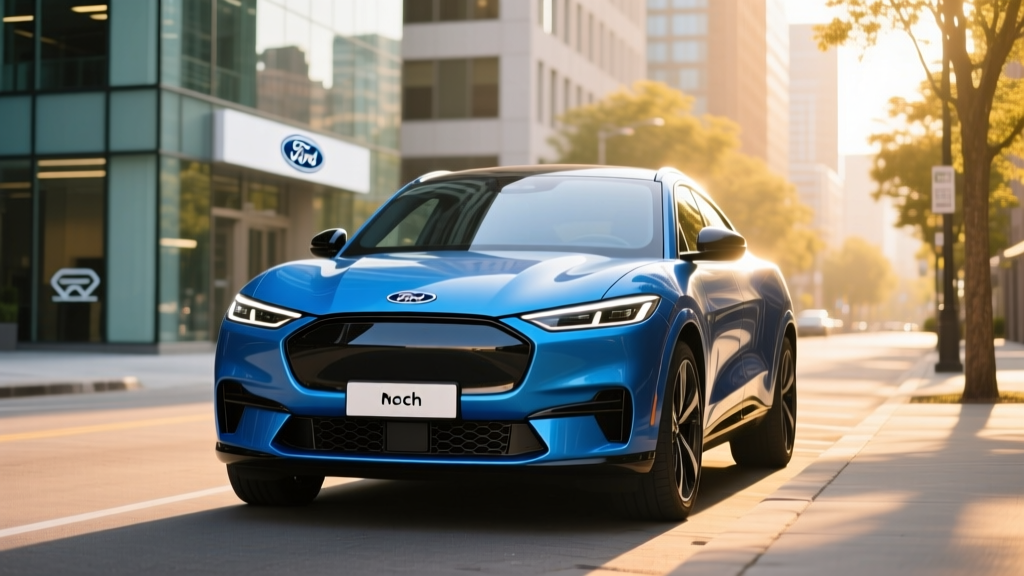
Rumors about the Ford Mach-E being discontinued surface every time Ford restructures its EV division or shifts production schedules. As of early 2026, the Ford Mustang Mach-E remains in production and on sale at U.S. dealerships. However, Ford has made significant changes to the lineup, pricing, and battery sourcing that affect which trims are available and whether they qualify for federal incentives. This review cuts through the speculation with hard specs, real-world range data, and ownership economics so you can decide if the Mach-E still deserves a spot on your shortlist.
Ford Mach-E Discontinued Rumors: What's Actually Happening in 2026
Ford has not discontinued the Mustang Mach-E. What has changed is Ford's EV strategy. In 2024-2025, Ford delayed next-generation EV platforms, pivoted some investment toward hybrids, and consolidated manufacturing at its Cuautitlán, Mexico plant. These moves sparked "discontinued" headlines, but the current-generation Mach-E continues for the 2026 model year with carryover powertrains, updated software, and revised trim availability. The GT trim and Rally variant remain, while some lower-volume configurations have been simplified.
For buyers, the practical reality is that the Mach-E is still purchasable new, certified pre-owned inventory is abundant, and Ford continues to honor its battery and powertrain warranties. If you're searching for a "ford mach e discontinued" confirmation, you won't find one from Ford — just a narrower configurator and aggressive dealer discounts as Ford manages inventory ahead of future platform changes.
2026 Ford Mach-E Specs at a Glance
| Specification | Select (RWD) | Premium AWD | GT |
|---|---|---|---|
| EPA Range | 250 mi | 290 mi | 280 mi |
| Battery (usable) | 72 kWh (LFP) | 91 kWh (NMC) | 91 kWh (NMC) |
| Horsepower | 266 hp | 346 hp | 480 hp |
| 0-60 mph | 6.1 sec | 5.1 sec | 3.5 sec |
| Drivetrain | RWD (single motor) | AWD (dual motor) | AWD (dual motor) |
| Max DC Fast Charge | 115 kW | 150 kW | 150 kW |
| 10-80% DC Time | ~38 min | ~33 min | ~33 min |
| Level 2 Home Rate | 10.5 kW (~30 mi/hr) | 10.5 kW (~30 mi/hr) | 10.5 kW (~30 mi/hr) |
| EPA Efficiency | 105 MPGe (31 kWh/100mi) | 98 MPGe (34 kWh/100mi) | 86 MPGe (39 kWh/100mi) |
| Base MSRP | $39,995 | $46,995 | $57,995 |
| Cargo (rear seats up) | 29.7 cu ft | ||
| Cargo (seats folded) | 59.7 cu ft | ||
| Front Trunk (frunk) | 4.7 cu ft (drainable) | ||
| Rear Legroom | 38.1 in | ||
| Battery Warranty | 8 years / 100,000 miles | ||
Source: fueleconomy.gov and Ford Motor Company 2026 specifications. Prices exclude $1,395 destination charge.
Real-World Range: What the EPA Sticker Doesn't Tell You
EPA Estimate: 250-320 miles depending on trim and battery.
Real-World Expectation: In mixed driving at 65-75 mph, expect roughly 85-90% of the EPA sticker — approximately 215-275 miles for most trims. Sustained highway driving at 80+ mph drops efficiency to around 75-80% of EPA. In cold weather (below 32°F), range can fall 20-30% without preconditioning, bringing a 290-mile Premium AWD down to roughly 200-230 miles on a full charge.
The Mach-E's LFP-equipped Select trim sacrifices some range for a lower price and longer cycle life. The extended-range NMC battery in the Premium and GT trims delivers the best real-world highway range in the lineup. Ford's heat pump (standard on AWD trims) mitigates cold-weather losses better than resistive heating, but you should still plan for meaningful winter range reduction if you live above the 40th parallel.
Charging Speed: DC Fast Charging and Home Level 2
The Mach-E charges at a maximum of 150 kW on DC fast chargers (extended-range battery) or 115 kW (standard-range LFP). That puts it behind the Hyundai Ioniq 5's 240 kW peak and the Tesla Model Y's ~250 kW capability on V3/V4 Superchargers, but it's adequate for road trips if you plan stops around the 10-80% window where the charge curve is strongest.
| Charging Level | Power | Speed (mi/hr added) | Notes |
|---|---|---|---|
| Level 1 (120V household) | ~1.4 kW | ~3-4 mi/hr | Emergency/top-up only |
| Level 2 (240V, 48A) | 10.5 kW | ~30 mi/hr | Full charge overnight (~9-10 hrs) |
| DC Fast (standard-range LFP) | 115 kW peak | ~200 mi in 38 min (10-80%) | Tapers sharply above 80% |
| DC Fast (extended-range NMC) | 150 kW peak | ~210 mi in 33 min (10-80%) | Sustains ~130 kW to ~55% SoC |
On a road trip, the Mach-E's charge curve holds near peak power until about 50-55% state of charge, then tapers progressively. Charging from 80-100% on DC is painfully slow — plan to leave at 80% and top up at the next station. At home, a Level 2 wall connector on a 60A circuit (48A continuous) replenishes roughly 30 miles of range per hour, meaning a full overnight charge is easily achievable for daily commuters.
Pricing, Trims, and Federal Tax Credit Eligibility
The 2026 Mach-E starts at $39,995 for the Select RWD with the standard-range LFP battery. The volume-selling Premium AWD with extended range lists at $46,995, and the performance-oriented GT starts at $57,995. All prices exclude destination and dealer-installed options.
| Trim | Base MSRP | Est. After §30D Credit* | Federal Credit Eligible? |
|---|---|---|---|
| Select RWD (LFP) | $39,995 | ~$32,495 | Yes — up to $7,500 (subject to sourcing & income rules) |
| Premium AWD (NMC) | $46,995 | ~$39,495 | Yes — up to $7,500 (subject to sourcing & income rules) |
| GT AWD (NMC) | $57,995 | ~$50,495 | Yes — under $80,000 SUV MSRP cap |
*Estimated price assumes full $7,500 §30D credit applied at point of sale. Actual eligibility depends on buyer income, battery critical-mineral sourcing, and MSRP caps. See IRS §30D guidelines for current-year rules. The Mach-E is classified as an SUV for the $80,000 MSRP cap. Income limits: $150,000 single / $300,000 joint AGI.
The Mach-E's Mexico assembly previously disqualified it from the full credit under North American final-assembly rules, but Ford restructured its supply chain and battery sourcing for 2025-2026 to restore eligibility on qualifying trims. Always verify the specific VIN on fueleconomy.gov before purchasing, as battery-sourcing compliance can shift mid-year.
Driving Experience, Tech, and Daily Livability
The Mach-E drives more like a tall hatchback than an SUV, with a low center of gravity and responsive steering that belies its ~4,600-lb curb weight (GT). The 15.5-inch vertical SYNC 4A touchscreen dominates the dash and runs wireless Apple CarPlay and Android Auto. Ford's BlueCruise hands-free driving assist is available on divided highways — this is SAE Level 2 driver assistance, meaning you must remain attentive and keep your eyes on the road. It is not autonomous driving.
Interior space is competitive with the Tesla Model Y and Hyundai Ioniq 5. Rear legroom at 38.1 inches accommodates adults comfortably, and the 29.7 cu ft cargo area (59.7 cu ft with seats folded) handles family gear. The drainable frunk (4.7 cu ft) is a practical bonus for wet items or tailgating. However, the absence of a rear wiper on earlier models (addressed in 2025+) and the piano-black trim's tendency to show scratches are persistent owner complaints.
Pros
- Strong real-world highway range on extended-range trims (250-275 mi)
- BlueCruise hands-free assist on mapped highways
- Competitive cargo space and drainable frunk
- Federal tax credit eligibility restored on qualifying 2026 builds
- Aggressive dealer discounts as Ford manages EV inventory
Cons
- DC fast-charge speed (150 kW peak) lags Hyundai/Kia 800V rivals
- LFP standard-range battery sacrifices range and cold-weather performance
- BlueCruise requires a subscription after the trial period
- Ride quality firm on GT with 20-inch wheels
- Resale value uncertain given discontinuation speculation
How the Mach-E Stacks Up Against Key Rivals
The Mach-E competes directly with the Tesla Model Y, Hyundai Ioniq 5, and Kia EV6. The Model Y still leads in Supercharger network access (though NACS adoption is narrowing this gap) and efficiency. The Ioniq 5 and EV6 crush the Mach-E on DC fast-charge speed thanks to their 800V architecture (10-80% in ~18 minutes at 240+ kW). The Mach-E's advantage is its conventional SUV driving position, BlueCruise availability, and — for 2026 — aggressive pricing after the federal credit.
If you prioritize fast road-trip charging above all else, the Ioniq 5 or EV6 are objectively better. If you want the longest proven range with the broadest charging network, the Model Y Long Range wins. The Mach-E occupies the middle ground: a comfortable, well-equipped electric crossover that charges adequately and now benefits from tax-credit-eligible pricing that undercuts many rivals.
Who Should Buy the 2026 Ford Mach-E?
Choose the Mach-E if: You want a mainstream electric SUV with available hands-free highway driving, competitive real-world range, and strong post-credit pricing. It suits daily commuters who charge at home and take 2-3 road trips per year, and families who need rear-seat space without stepping up to a three-row EV.
Look elsewhere if: You regularly road-trip 400+ miles and need the fastest possible DC charging (Ioniq 5/EV6), you want access to the full Tesla Supercharger network without adapters (Model Y), or you need three rows of seating (Kia EV9, Rivian R1S).
Frequently Asked Questions
Is the Ford Mach-E actually discontinued?
No. As of 2026, the Ford Mustang Mach-E remains in production and on sale. Ford has narrowed the trim lineup and adjusted production volumes, but the model has not been discontinued. Future-generation plans remain unannounced.
What is the real-world range of the Ford Mach-E?
The EPA rates the Mach-E at 250-320 miles depending on trim. In real-world mixed driving at highway speeds, expect roughly 85-90% of the EPA figure — about 215-275 miles. Cold weather (below 32°F) can reduce range by 20-30% without battery preconditioning.
How fast does the Mach-E charge at home and on the road?
On a Level 2 home charger (240V, 48A), the Mach-E adds about 30 miles of range per hour. On DC fast chargers, the extended-range battery peaks at 150 kW and charges from 10-80% in approximately 33 minutes. The standard-range LFP battery peaks at 115 kW with a 10-80% time of about 38 minutes.
Does the 2026 Mach-E qualify for the $7,500 federal EV tax credit?
Qualifying 2026 Mach-E builds are eligible for up to $7,500 under IRS §30D, applied at the point of sale. Eligibility requires the buyer to meet income caps ($150K single / $300K joint), the vehicle to fall under the $80,000 SUV MSRP cap, and battery critical-mineral and component sourcing to meet current-year thresholds. Always verify VIN-level eligibility on fueleconomy.gov before purchase.
Is the Mach-E worth buying over the Tesla Model Y or Hyundai Ioniq 5?
The Mach-E is worth considering if you value BlueCruise hands-free driving, a traditional SUV driving position, and strong post-credit pricing. The Ioniq 5 charges significantly faster on DC. The Model Y offers superior efficiency and Supercharger access. Your priorities — charging speed, network access, or driver-assist features — should determine the winner.
What is the Mach-E's battery warranty?
Ford covers the Mach-E's high-voltage battery and electric powertrain components for 8 years or 100,000 miles, whichever comes first. The warranty guarantees the battery will retain a minimum capacity threshold (typically 70% of original capacity) during the coverage period.