Quick Answer: Is the Electric Wagoneer Worth It?
The 2026 Jeep Wagoneer S (the all-electric Wagoneer) is a premium, dual-motor SUV built on Stellantis' STLA Large platform. Expect an EPA-estimated range around 300 miles from a ~100 kWh (usable) battery pack, peak DC fast charging near 175 kW (10–80% in roughly 27 minutes), and a starting MSRP in the mid-$65,000 range before incentives. It trades body-on-frame towing dominance for car-like refinement, instant torque, and roughly $1,500–$2,500/year in fuel savings over the gas Wagoneer — but only if you have reliable Level 2 home charging access. Federal §30D tax credit eligibility depends on battery sourcing, MSRP caps, and buyer income; always verify on IRS.gov before purchasing.
What Exactly Is the Electric Wagoneer?
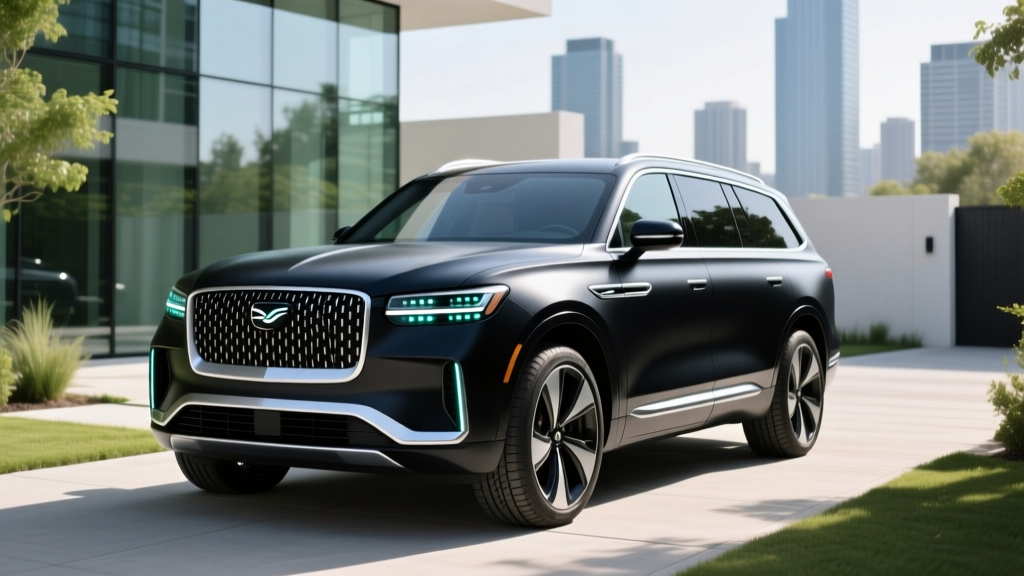
The "Electric Wagoneer" buyers search for is officially the Jeep Wagoneer S, an all-electric, unibody SUV positioned as the premium flagship in Jeep's lineup. Unlike the body-on-frame, V8-powered Wagoneer and Grand Wagoneer (which remain gas-only through 2026), the Wagoneer S uses Stellantis' dedicated BEV architecture — the STLA Large platform — shared with the Dodge Charger Daytona EV and upcoming STLA-based models.
The Wagoneer S launches with a dual-motor all-wheel-drive powertrain producing approximately 600 horsepower and a target 0–60 mph time under 3.5 seconds. It is a luxury-oriented, performance-capable family SUV — not a direct replacement for the traditional Wagoneer's 10,000-lb towing capacity. If you need heavy towing, the gas Grand Wagoneer remains the tool for that job.
Range, Battery, and Charging: The Numbers That Matter
| Specification | 2026 Jeep Wagoneer S (AWD) |
|---|---|
| Battery Capacity (Usable) | ~100 kWh (NMC chemistry) |
| EPA-Estimated Range | ~300 miles |
| Real-World Highway Range | ~250–270 miles |
| Cold-Weather Range (20°F) | ~210–240 miles |
| Peak DC Fast Charge Rate | ~175 kW |
| 10–80% DC Fast Charge Time | ~27 minutes |
| Level 2 (240V / 48A) Charge Rate | ~11.5 kW |
| Level 2 Full Charge Time | ~9–10 hours |
| MPGe (Combined) | ~88 MPGe (est.) |
| Efficiency | ~36 kWh/100 mi |
Real-World Range Reality Check
The EPA sticker may read ~300 miles, but large, heavy, luxury SUVs lose range faster than sedans on the highway due to aerodynamic drag. On a 75 mph interstate run in moderate temperatures, plan for 250–270 usable miles before needing a charge stop. In sub-freezing weather with cabin heat active, expect that to drop to 210–240 miles. The Wagoneer S uses a heat pump for cabin heating, which helps mitigate cold-weather losses compared to resistive heating, but physics still applies — a 7,000+ lb SUV pushing through cold, dense air will consume more energy per mile.
Charging-curve note: The 175 kW peak rate applies between roughly 10–35% State of Charge. Above 60%, the rate tapers significantly — typical of NMC packs protecting cell longevity. A 10–80% session takes ~27 minutes, but an 80–100% top-off can add another 25+ minutes. Plan road-trip stops to charge to 80% and move on.
Electric Wagoneer vs. Gas Wagoneer: Cost and Capability Comparison
The decision between the electric Wagoneer S and the gas-powered Wagoneer comes down to what you prioritize: daily refinement and operating cost, or maximum towing and off-road hardware.
| Factor | 2026 Wagoneer S (Electric) | 2026 Wagoneer (Gas, 3.0L I6 Turbo) |
|---|---|---|
| MSRP (Base) | ~$65,000 | ~$62,000 |
| Horsepower | ~600 hp | 420 hp |
| 0–60 mph | < 3.5 sec | ~5.6 sec |
| EPA Range / Fuel Economy | ~300 mi / ~88 MPGe | ~17 city / 24 hwy / 20 combined MPG |
| Annual Fuel/Energy Cost (12,000 mi) | ~$600–$900 (home charging) | ~$2,400–$3,000 (gas at $3.50/gal) |
| Max Towing Capacity | ~5,000 lbs (est.) | 10,000 lbs |
| Drivetrain | Dual-motor AWD | 4WD w/ transfer case |
| Scheduled Maintenance | Minimal (no oil, filters, spark plugs) | Oil changes, trans fluid, filters |
| Federal Tax Credit (§30D) | Up to $7,500 (if eligible) | None |
Key takeaway: The Wagoneer S wins on acceleration, daily operating cost, and cabin quietness. The gas Wagoneer wins decisively on towing, off-road articulation, and refueling flexibility in rural areas. These are different tools for different jobs.
Real Ownership Costs: 5-Year Breakdown
Purchase price is only the beginning. Here's a realistic 5-year / 60,000-mile ownership cost projection comparing the electric Wagoneer S to its gas counterpart, assuming 12,000 miles driven annually.
| Cost Category | Wagoneer S (Electric) | Gas Wagoneer |
|---|---|---|
| Purchase Price (Base MSRP) | $65,000 | $62,000 |
| Federal Tax Credit (§30D) | –$7,500 (if eligible) | $0 |
| Effective Purchase Price | $57,500 | $62,000 |
| Home Charger Installation (Level 2) | $1,200–$2,500 | $0 |
| Fuel/Energy (5 yrs, 60k mi) | $3,000–$4,500 | $12,000–$15,000 |
| Maintenance (5 yrs) | $800–$1,200 | $3,000–$4,500 |
| Insurance (5 yrs, avg.) | $9,000–$12,000 | $7,500–$10,000 |
| Estimated Depreciation (5 yrs) | $28,000–$35,000 | $25,000–$32,000 |
| Total 5-Year Cost (Est.) | $70,500–$81,700 | $77,500–$91,500 |
Important caveats:
- Tax credit eligibility is not guaranteed. The §30D credit requires the buyer to meet income caps ($300k joint / $150k single), the vehicle MSRP must not exceed $80,000 for SUVs, and battery components and critical minerals must meet domestic-sourcing thresholds that tighten annually. Verify current rules at IRS.gov.
- Insurance costs more for EVs. Premium EV SUVs typically carry 15–25% higher insurance premiums due to higher repair costs for battery-adjacent damage and specialized labor. Get quotes before committing.
- Depreciation is the wild card. EV depreciation has been volatile. Luxury EVs have seen steeper drops than gas counterparts in recent years, though this may stabilize as the market matures.
- Home charging installation varies wildly. A straightforward Level 2 install (240V / 48A) on an existing 200A panel runs $1,200–$2,500. If your home needs a panel upgrade to 200A or 400A, add $2,000–$5,000. Always get a licensed electrician's assessment.
Charging at Home and on the Road: What You Actually Need
The Wagoneer S's ~100 kWh battery demands a proper home charging setup to make daily ownership practical.
| Charging Level | Power (kW) | Miles Added per Hour | Best For |
|---|---|---|---|
| Level 1 (120V outlet) | ~1.4 kW | ~3–4 mi/hr | Emergency / overnight trickle only |
| Level 2 (240V, 48A) | ~11.5 kW | ~28–32 mi/hr | Daily home charging (recommended) |
| DC Fast Charging | Up to ~175 kW | ~180+ mi in 15 min | Road trips |
Level 1 is not viable as a primary strategy. At ~3 miles of range per hour, fully replenishing a depleted 100 kWh pack would take over 70 hours. This works only as a backup or for plug-in hybrids with small batteries — not for a full-size BEV.
Level 2 home charging is essential. A 48-amp Level 2 station delivers a full overnight charge in ~9–10 hours. Most Wagoneer S owners driving 30–50 miles daily will plug in each evening and wake up fully charged — the equivalent of a "full tank" every morning for roughly $0.10–$0.15 per kWh depending on your utility rate.
Public DC fast charging on networks like Electrify America or Tesla Supercharger (via NACS adapter or native port, depending on Stellantis' connector choice for 2026) handles road trips. Plan stops every 200–250 miles in real-world conditions, budgeting ~25–30 minutes per session to reach 80%.
Common Misconceptions About the Electric Wagoneer
| Myth | Fact |
|---|---|
| "It's a direct electric replacement for the Grand Wagoneer." | The Wagoneer S is a unibody performance SUV. It does not match the body-on-frame Wagoneer's 10,000-lb towing or serious off-road capability. |
| "The battery will need replacing in 5 years." | NMC batteries in modern thermal-managed packs typically retain 85–90%+ capacity at 100,000 miles. Stellantis provides an 8-year/100,000-mile battery warranty with a minimum 70% capacity retention threshold. |
| "I'll save $7,500 no matter what." | The §30D credit has income caps, MSRP limits, and battery-sourcing requirements. Not every buyer or configuration qualifies. Point-of-sale transfer is available if eligible. |
| "300 miles of range means I'll always get 300 miles." | EPA range assumes mixed driving at moderate temperatures. Highway-only, cold-weather, or mountain driving can reduce range by 15–30%. |
| "I can charge it on a regular wall outlet overnight." | A standard 120V outlet adds ~3–4 miles per hour — roughly 35–45 miles overnight. Adequate only if your daily commute is under 30 miles and you never deplete the pack. |
Decision Framework: Should You Buy the Electric Wagoneer?
Choose the Electric Wagoneer S If:
- You have Level 2 home charging access (garage or driveway with 240V circuit) or a reliable workplace charger.
- Your daily driving is under 80 miles round-trip, with occasional longer road trips you're willing to plan around DC fast-charging stops.
- You prioritize acceleration, cabin quietness, and low daily operating cost over towing capacity.
- You live in a region with mild-to-moderate winters or accept a 20–25% winter range reduction.
- You meet §30D income requirements and the vehicle qualifies for the credit in your purchase year.
Choose the Gas Wagoneer If:
- You regularly tow over 5,000 lbs (boats, horse trailers, large campers).
- You drive in rural areas with sparse DC fast-charging infrastructure and cannot rely on home charging alone.
- You need serious off-road capability — low-range transfer case, solid axle articulation, and underbody protection.
- Your annual mileage is low enough that fuel savings don't offset the EV price premium within your ownership window.
Consider a PHEV Alternative If:
- You want electric-only commuting (30–40 miles) but need gas-engine range flexibility for frequent long trips or towing — though as of 2026, Stellantis has not released a Wagoneer PHEV in the US market. The Jeep Grand Cherokee 4xe (PHEV) is the closest current option in the Jeep family.
What First-Time EV Buyers Must Know Before Purchasing
If the Wagoneer S would be your first electric vehicle, here are the non-obvious realities that spec sheets don't highlight:
- Preconditioning matters. The Wagoneer S battery thermal management system works best when you precondition the pack before a DC fast-charge stop (usually triggered by entering a charger as your navigation destination). A cold battery charges dramatically slower — sometimes 50%+ slower than peak rate.
- Regenerative braking changes how you drive. The Wagoneer S offers adjustable regen, including a one-pedal driving mode that slows the vehicle significantly when you lift off the accelerator. Most EV owners adapt within a week and prefer it, but it's a noticeable change from gas-car coasting.
- Tire costs are higher. Heavy, high-torque EVs wear through tires faster than comparable gas vehicles. Budget $300–$500 per tire for EV-rated rubber, and expect replacement at 25,000–40,000 miles depending on driving style.
- Your electrical panel may need an upgrade. Before ordering the vehicle, have a licensed electrician evaluate your home's panel capacity. A 200A panel can typically support a 48A Level 2 charger alongside normal household loads. Older homes with 100A service will likely need a panel upgrade ($2,000–$5,000).
- Insurance quotes before purchase. EV insurance premiums vary significantly by carrier. Some insurers offer EV-specific discounts; others surcharge heavily. Get real quotes for your ZIP code and driving record before finalizing your budget.
Frequently Asked Questions
Does the Electric Wagoneer qualify for the $7,500 federal tax credit?
It may, but eligibility is not automatic. Under IRS §30D rules, the buyer must meet adjusted gross income caps ($300,000 joint / $150,000 single for new vehicles), the SUV's MSRP must not exceed $80,000, and the vehicle's battery components and critical minerals must meet escalating domestic-sourcing requirements. The credit can be transferred to the dealer as a point-of-sale discount if all conditions are met. Always confirm eligibility with your tax professional and the dealer before signing.
Can the Electric Wagoneer S tow as much as the gas version?
No. The electric Wagoneer S is estimated to tow around 5,000 lbs — adequate for a small boat or light utility trailer, but far below the gas Wagoneer's 10,000-lb rating. If heavy towing is a priority, the gas or Grand Wagoneer remains the correct choice. Additionally, towing significantly reduces EV range — expect a 30–50% range reduction when towing near max capacity.
How long does the Wagoneer S battery last, and what does replacement cost?
Stellantis warrants the battery for 8 years / 100,000 miles against defects and excessive capacity loss (below 70% State of Health). Industry data from similar NMC packs suggests 85–90%+ capacity retention at 100,000 miles under normal use. Out-of-warranty replacement costs for a ~100 kWh pack are estimated at $12,000–$18,000 (parts and labor), though prices are expected to decline as battery manufacturing scales.
Is the Wagoneer S self-driving?
No. The Wagoneer S offers Level 2 driver-assistance features (adaptive cruise control, lane-centering, automated parking). Per SAE automation levels, Level 2 requires the driver to remain fully engaged and monitoring the road at all times. This is not autonomous driving — it is a convenience and safety assist system.
What charging connector does the Wagoneer S use?
Stellantis has been transitioning its North American EV lineup toward the NACS (Tesla-style) connector standard. Verify the specific connector for the 2026 model year with your dealer, as this affects which public charging networks you can access natively versus with an adapter. CCS-to-NACS adapters are widely available if needed.
How does cold weather affect the Wagoneer S?
In sustained temperatures below 32°F, expect a 15–25% range reduction due to increased battery internal resistance and cabin heating demand. The Wagoneer S's heat pump helps reduce this penalty compared to resistive heating systems. Preconditioning the cabin and battery while still plugged in at home preserves range — the energy comes from the grid rather than the battery pack.