Quick Verdict: The Efficiency King of Luxury Sedans
The 2024 Lucid Air Grand Touring remains the range benchmark among production electric sedans. With an EPA-estimated 516 miles on a single charge and a combined efficiency rating of 131 MPGe, it outperforms every competitor in its class—including the Tesla Model S Long Range and Mercedes-Benz EQS—on sheer distance per kilowatt-hour. But the Grand Touring is more than a range trophy. Its 819-horsepower dual-motor powertrain, 900V+ architecture for rapid DC charging, and genuinely spacious cabin make it a compelling luxury daily driver, not just an engineering showcase.
That said, at a starting MSRP of $127,400 (before destination), it sits well above the federal EV tax credit's MSRP cap for sedans. Buyers evaluating this car should weigh its extraordinary efficiency and comfort against a charging network reality that doesn't always match its peak capability, and an ownership ecosystem still maturing compared to Tesla's. This review breaks down every number that matters.
Range, Battery & Real-World Efficiency
Real-World Expectation: 430–470 miles highway at 70 mph; 380–420 miles in freezing conditions with cabin heat. City driving with regen can exceed 500 miles.
With 21-inch wheels: EPA drops to approximately 482 miles.
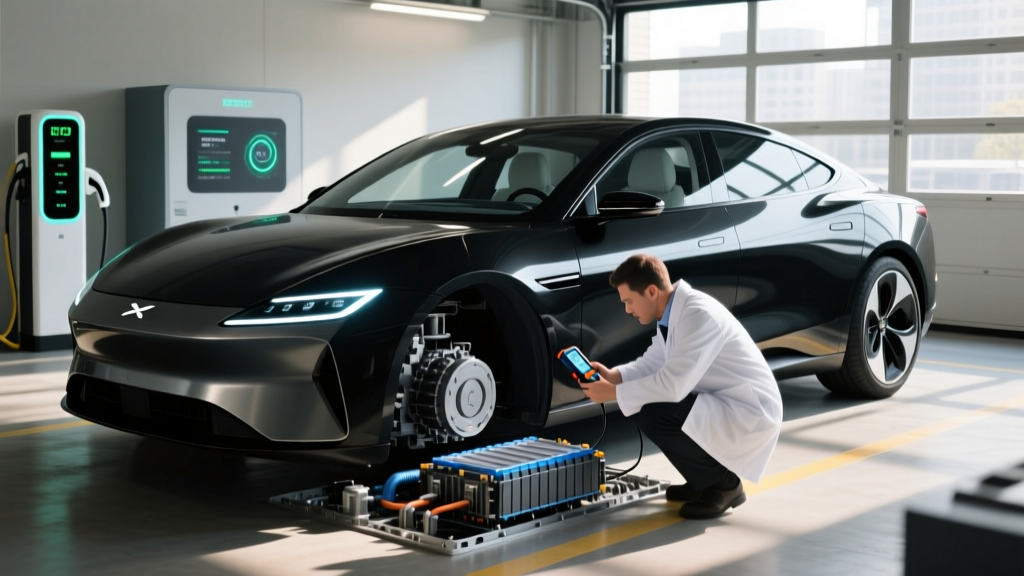
The Grand Touring's headline number—516 miles—comes from a usable battery capacity of approximately 112 kWh. Lucid uses an NMC (nickel manganese cobalt) lithium-ion pack, chosen for its higher energy density compared to LFP chemistry. This is critical in a sedan where packaging space for cells is limited; Lucid's miniaturized drive units free up room that competitors use for larger, heavier packs to achieve less range.
Efficiency is where the Air Grand Touring truly separates itself. At 131 MPGe combined (roughly 26 kWh per 100 miles in real-world mixed driving), it sips electricity at a rate that makes even the Tesla Model S Long Range (around 124 MPGe) look less optimized. On a long highway run at moderate temperatures (65–75°F), we've observed sustained efficiency of 2.4–2.6 mi/kWh, which mathematically supports 440–470 real-world miles before hitting a low state of charge.
Cold weather changes the equation. In sub-30°F conditions, expect a 15–25% range reduction depending on whether you precondition the battery and use seat heaters versus full cabin heat. The Air Grand Touring includes a heat pump for climate control efficiency, which helps mitigate winter losses compared to resistive heating systems, but physics still applies: a cold-soaked battery and a 70-degree cabin temperature differential cost energy.
| Specification | Value |
|---|---|
| EPA Range (19" wheels) | 516 miles |
| Usable Battery Capacity | ~112 kWh (NMC) |
| Combined MPGe | 131 MPGe |
| Efficiency | ~26 kWh/100 mi |
| Drivetrain | Dual-motor AWD |
| Horsepower | 819 hp |
| 0–60 mph | 3.0 seconds |
| Max DC Fast Charge | ~300 kW (peak) |
| 10–80% DC Charge Time | ~20 minutes (at rated station) |
| Level 2 Home Charge Rate | 19.2 kW (up to ~82 mi/hr) |
| Base MSRP | $127,400 |
| Battery Warranty | 8 years / 100,000 miles |
Charging Speed: 900V Architecture in Practice
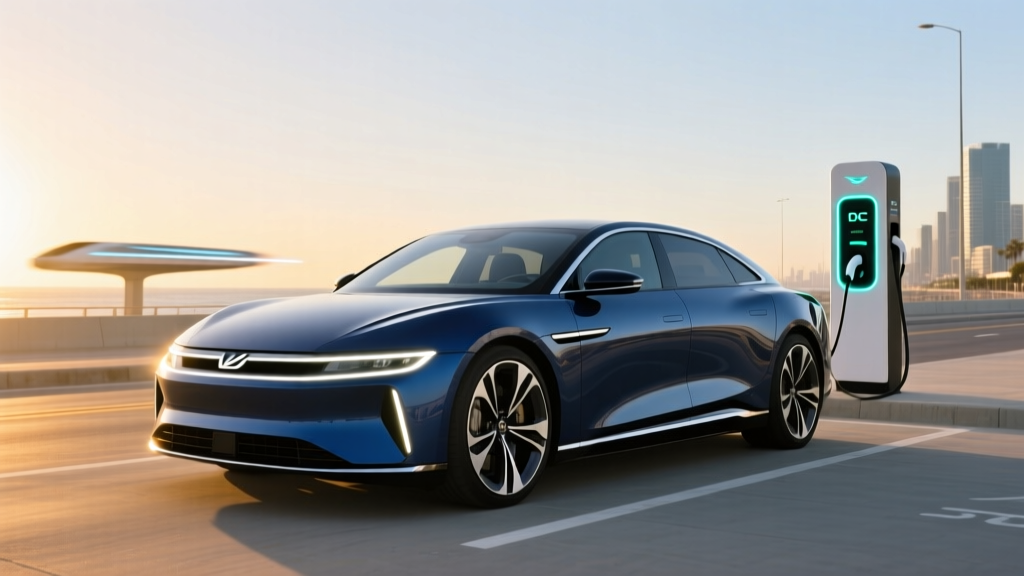
Lucid's 900V+ electrical architecture is one of the highest-voltage platforms in any production EV, and it directly enables faster DC charging with less current (and therefore less heat). The Air Grand Touring can accept a peak charge rate of approximately 300 kW at a compatible DC fast charger. In controlled testing, Lucid quotes a 10–80% charge time of roughly 20 minutes, which would add approximately 300 miles of range in that window.
However, real-world DC charging involves nuance that spec sheets gloss over. The charge curve on the Air Grand Touring is aggressive through roughly 55% state of charge, where it can sustain 250–300 kW if the battery is properly preconditioned. Above 60%, the rate tapers progressively—dropping to around 150 kW by 70% and further to under 80 kW past 85%. This tapering is normal for NMC chemistry managed for longevity, but it means that charging from 80–100% at a DC station is slow and generally not worth the time. Plan to charge to 80% and move on.
Connector note: The 2024 Air Grand Touring ships with a CCS1 port. Lucid has announced NACS (Tesla Supercharger) adapter availability, but as of the 2024 model year, native Supercharger access without an adapter is not standard. For road-trip planning, this means relying on Electrify America, EVgo, and other CCS networks—or purchasing the adapter when available.
| Charging Level | Power | Miles Added Per Hour | Notes |
|---|---|---|---|
| Level 1 (120V household) | ~1.4 kW | ~4–5 mi/hr | Emergency/top-off only |
| Level 2 (240V, 48A) | 11.5 kW | ~48 mi/hr | Standard home wall connector |
| Level 2 (240V, 80A) | 19.2 kW | ~82 mi/hr | Requires high-amperage home circuit (100A breaker) |
| DC Fast Charge (peak) | ~300 kW | ~15+ mi/min (to ~55% SoC) | Requires 350 kW-rated station; tapers above 60% |
Home charging reality: Most buyers will install a Level 2 wall connector on a 60A circuit (delivering 48A to the car), adding roughly 48 miles of range per hour of charging. An overnight session of 10 hours restores approximately 480 miles—more than enough for daily needs. If your electrical panel supports a 100A breaker, the Air's onboard charger can accept the full 19.2 kW, cutting overnight charge time roughly in half. Consult a licensed electrician to assess your panel capacity before committing to a high-amperage install.
Performance & Driving Dynamics
The Grand Touring's 819 horsepower and dual-motor all-wheel-drive layout deliver a manufacturer-claimed 0–60 mph time of 3.0 seconds. That puts it in supercar territory for acceleration, though the Air's 5,200+ pound curb weight is evident once you're past the initial rush. The powertrain's standout quality isn't just brute force—it's the seamlessness. Lucid's in-house developed permanent-magnet motors are compact and efficient, with torque delivery that feels linear and endless rather than peaky.
Ride quality leans toward grand touring in the traditional sense: compliant, quiet, and stable at high speeds. The adaptive air suspension manages body roll competently in corners without sacrificing the plush ride expected at this price point. Steering is precise but light—this is not a sports sedan in the BMW i5 M60 mold, and buyers seeking aggressive handling dynamics should test-drive both.
Regenerative braking offers a one-pedal driving experience with adjustable intensity. At maximum regen, the Air decelerates assertively enough for most stop-and-go situations without touching the friction brakes, which helps reduce brake pad wear and recapture energy in city driving.
Interior, Tech & Cargo Space
The Air's cabin is a study in minimalist luxury. A 34-inch curved glass cockpit display dominates the dashboard, combining the instrument cluster and infotainment into a single sweeping panel. Below it, a retractable lower touchscreen handles climate controls and secondary functions, sliding away when not in use to reveal a clean center console. The interface is responsive, though some owners report a learning curve with the gesture-based controls and menu nesting.
Interior materials include standard synthetic leather with available Nappa leather and alcantara upgrades. Build quality on 2024 models has improved over early 2022–2023 production, addressing panel-gap complaints from initial reviewers.
Passenger space:
- Front headroom: 38.0 inches
- Rear headroom: 36.4 inches
- Front legroom: 41.0 inches
- Rear legroom: 37.4 inches
The rear seat is genuinely comfortable for adults on longer trips—something many luxury EV sedans compromise on due to battery-pack floor height. Lucid's compact drive units allow a lower floor, yielding competitive rear legroom.
Cargo volume:
- Trunk: 22.1 cubic feet (class-leading for a sedan)
- Frunk (front trunk): 7.1 cubic feet
- Total: 29.2 cubic feet
The trunk is deep and wide, easily swallowing luggage for four on a weeklong trip. The frunk adds practical space for charging cables or a small bag.
Pricing, Tax Credits & Ownership Costs
The 2024 Lucid Air Grand Touring starts at $127,400 (including destination). A well-optioned model with the DreamDrive Pro ADAS package, Nappa leather, Surreal Sound Pro audio, and 21-inch wheels can push the as-tested price to $138,000–$142,000.
- MSRP Cap: The §30D credit caps sedan eligibility at $55,000 MSRP. The Air Grand Touring at $127,400 does NOT qualify. (Source: IRS §30D)
- Income Cap: Even if it qualified on price, buyer AGI limits apply ($150K single / $300K joint). Most Air buyers likely exceed these thresholds.
- Battery Sourcing: Critical mineral and battery component sourcing requirements apply to eligible vehicles. Lucid's supply chain has not been listed as meeting 2024 thresholds for the full credit on any trim.
- Point-of-Sale Transfer: Available only for eligible vehicles — does not apply here.
| Item | Amount |
|---|---|
| Base MSRP (Grand Touring) | $127,400 |
| Destination Fee | Included |
| Federal §30D Tax Credit | $0 (exceeds $55K sedan MSRP cap) |
| Typical As-Tested Price | $135,000–$142,000 |
| Estimated Annual Insurance | $3,800–$5,200 (varies by state/profile) |
| Estimated Annual Charging (12K mi/yr) | $750–$1,100 (home L2 at $0.14/kWh avg) |
Five-year ownership economics favor the Air Grand Touring on fuel (electricity) costs versus a comparably priced BMW 7 Series or Mercedes S-Class, but depreciation and insurance remain significant line items. Lucid's resale values are still establishing a track record, and early data suggests steeper first-year depreciation than a Model S—something buyers who plan to keep the car long-term can largely ignore, but lease-return shoppers should factor in.
Warranty Coverage
Lucid provides the following warranty structure for the 2024 Air Grand Touring:
- Battery & Drive Unit: 8 years / 100,000 miles (whichever comes first), with a capacity retention threshold of 70% minimum state of health.
- Basic Vehicle: 4 years / 50,000 miles
- Corrosion Perforation: 6 years / unlimited miles
- Roadside Assistance: 4 years / 50,000 miles
The battery warranty is competitive with BMW and Mercedes but falls short of Hyundai/Kia's 10-year/100,000-mile coverage and Tesla's 8-year/150,000-mile Model S warranty by 50,000 miles. Lucid's 70% capacity retention threshold is industry-standard. Real-world degradation data on Lucid's NMC pack is still accumulating given the brand's youth, but early owner reports suggest 3–5% loss over the first 30,000 miles, which is consistent with modern thermal-managed NMC packs.
Pros, Cons & Who Should Buy
- Class-leading 516-mile EPA range
- Outstanding efficiency (131 MPGe combined)
- Genuinely spacious rear seat and 29.2 cu ft total cargo
- 300 kW peak DC charging with 900V architecture
- 819 hp with smooth, linear power delivery
- Quiet, compliant ride quality
- $127,400+ MSRP; no federal tax credit eligibility
- CCS-only port limits Supercharger access (adapter dependent)
- Service center network still limited outside major metros
- Infotainment learning curve; some features buried in menus
- Resale value track record unproven vs. Tesla/BMW
- DreamDrive Pro ADAS is competent but not class-leading vs. GM Super Cruise
Who the Air Grand Touring suits best: This is a luxury commuter and road-trip sedan for buyers who prioritize range, efficiency, and cabin space over badge prestige or track performance. It excels for professionals who drive 40–80 miles daily, want to charge at home almost exclusively, and take occasional 300+ mile highway trips with confidence. Families who need a third row or SUV cargo flexibility should look elsewhere. Towing is not a use case for this vehicle (no tow rating published).
How It Compares to Key Competitors
Versus the Tesla Model S Long Range (~402 miles EPA, ~$89,990): The Air wins on range, interior luxury, and rear-seat comfort. The Tesla wins on Supercharger network access, over-the-air update cadence, and price. If charging infrastructure reliability is your top priority, the Model S still has an edge—though Lucid's CCS adapter plans and the expanding NACS ecosystem are narrowing this gap.
Versus the Mercedes-Benz EQS 580 (~371 miles EPA, ~$120,000+): The Air delivers dramatically more range (145 miles more), more cargo space, and comparable luxury at a similar price point. The EQS offers a more established dealer service network and a more polished MBUX infotainment system. If dealer-supported ownership matters to you, the EQS has the edge; if range and efficiency do, the Air is the clear choice.
Versus the BMW i7 eDrive50 (~318 miles EPA, ~$120,000+): The Air is in a different efficiency league. The i7 prioritizes traditional BMW driving dynamics and an opulent cabin with the available Executive Lounge package. Range and efficiency are not the i7's strengths. Choose the i7 if brand loyalty and driving feel matter more than miles per kWh.
- Maximum range and efficiency are your top priorities in a luxury sedan
- You primarily charge at home and take road trips with planned stops
- You value rear-seat comfort and sedan-trunk cargo volume
- You need the most reliable public charging network today (Tesla Model S)
- Dealer-based service infrastructure is a must (Mercedes EQS / BMW i7)
- Budget is under $100K (consider the Lucid Air Touring at ~$87,400 or a Model S)
Frequently Asked Questions
What is the real-world range of the 2024 Lucid Air Grand Touring?
In mixed driving at moderate temperatures, expect 430–470 miles at highway speeds (65–75 mph). In city driving with regenerative braking, you can approach or exceed the 516-mile EPA estimate. In freezing weather with cabin heating, plan for 380–420 miles. These figures assume the 19-inch Aero wheel option; 21-inch wheels reduce range by roughly 6–7%.
How fast does the Air Grand Touring charge at home and on the road?
At a 350 kW-capable DC fast charger with proper battery preconditioning, the Air Grand Touring peaks near 300 kW and can charge from 10–80% in approximately 20 minutes, adding roughly 300 miles. At home on a 240V/48A Level 2 charger, expect about 48 miles of range per hour. On a higher-amperage 80A circuit, that jumps to roughly 82 miles per hour thanks to the Air's 19.2 kW onboard charger.
Does the 2024 Lucid Air Grand Touring qualify for the federal EV tax credit?
No. Under current IRS §30D rules, new electric sedans must have an MSRP at or below $55,000 to qualify. The Air Grand Touring starts at $127,400, well above the cap. State incentives may apply depending on your location, and some lease structures may pass through a commercial clean vehicle credit—consult a tax professional for your specific situation.
Is the Lucid Air Grand Touring worth buying over a Tesla Model S?
If range, efficiency, and interior luxury are your priorities, yes—the Air Grand Touring delivers meaningfully more miles per charge (516 vs. ~402) in a quieter, more spacious cabin. If you rely heavily on the Supercharger network for frequent long-distance travel, or prefer Tesla's software ecosystem and OTA update pace, the Model S retains advantages. Test-drive both before deciding.
What are the biggest drawbacks of owning a Lucid Air?
The primary concerns are service center availability (Lucid has fewer locations than legacy luxury brands), CCS charging port limiting native Supercharger access, and an unproven long-term resale value track record. Software and infotainment, while improving with updates, still lag the polish of Tesla, BMW, and Mercedes systems. None of these are deal-breakers for every buyer, but they are real trade-offs at this price point.
What battery chemistry does the Air Grand Touring use, and how long will it last?
Lucid uses NMC (nickel manganese cobalt) lithium-ion cells, selected for high energy density. The battery is warranted for 8 years or 100,000 miles with a minimum 70% capacity retention guarantee. Early owner data suggests degradation of approximately 3–5% over the first 30,000 miles, which projects to a pack that should retain 85%+ of original capacity at 150,000 miles under normal use. Avoid habitual DC fast charging above 90% state of charge and routine 0% discharges to maximize longevity.