Quick Answer: Which Electric Volvo Should You Buy?
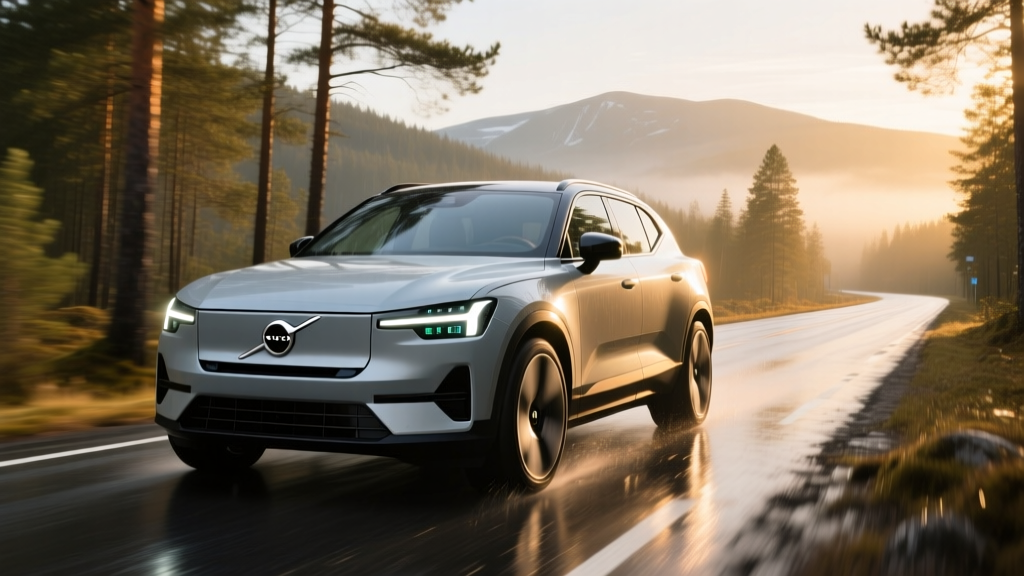
Volvo's 2026 EV lineup spans four distinct models. The EX30 is the entry-level compact crossover starting near $36,345 with up to 265 miles of EPA range. The XC40 Recharge (also sold as the EX40) offers around 293 miles EPA and starts near $54,795. The C40 Recharge (EX40 coupe variant) mirrors those specs in a sleeker body. The flagship EX90 is a three-row luxury SUV with up to 310 miles EPA and a starting MSRP around $79,995. All use NMC (nickel-manganese-cobalt) battery chemistry and CCS or NACS connectors depending on model year. If you want the most range per dollar, the EX30 leads; if you need three rows, only the EX90 qualifies. None currently earn the full $7,500 federal §30D tax credit due to battery-sourcing rules, though point-of-sale lease credits may apply.
The 2026 Electric Volvo Lineup at a Glance
Volvo has committed to full electrification, and by the 2026 model year its battery-electric portfolio is its broadest yet. Here is how the four core models stack up on the specs that matter most to buyers:
| Spec | EX30 (Single Motor Extended) | XC40 Recharge (EX40) | C40 Recharge (EX40 Coupe) | EX90 (Twin Motor) |
|---|---|---|---|---|
| EPA Range | 265 mi | 293 mi | 293 mi | 310 mi |
| Battery (usable, kWh) | 69 kWh (NMC) | 82 kWh (NMC) | 82 kWh (NMC) | 111 kWh (NMC) |
| Peak DC Fast Charge | 153 kW | 200 kW | 200 kW | 250 kW |
| 10–80% DC Charge Time | ~26 min | ~28 min | ~28 min | ~30 min |
| Level 2 AC Rate | 11 kW | 11 kW | 11 kW | 11 kW |
| 0–60 mph | 7.4 sec | 4.5 sec (Twin) | 4.5 sec (Twin) | 4.7 sec |
| Horsepower | 272 hp | 402 hp (Twin) | 402 hp (Twin) | 496 hp |
| Starting MSRP | $36,345 | $54,795 | $55,395 | $79,995 |
| Battery Warranty | 8 yr / 100,000 mi | 8 yr / 100,000 mi | 8 yr / 100,000 mi | 8 yr / 100,000 mi |
Sources: fueleconomy.gov, Volvo Cars USA spec sheets. All figures are 2026 model-year EPA estimates or manufacturer-published data. Real-world results vary.
Real-World Range Reality Check
EPA numbers are tested under controlled conditions. In practice, expect 15–25% range reduction at sustained highway speeds above 70 mph, and 20–30% loss in freezing temperatures (below 32°F). The EX90's 111 kWh battery gives it a larger buffer in cold weather, but its heavy curb weight (~6,400 lb) also means higher energy consumption per mile. The EX30, at roughly 3,900 lb, is the most efficient of the group but has the smallest absolute battery, so cold-weather drops hit harder in raw miles.
Electric Volvo vs. Gas Volvo: Real Cost Comparison
The most common question from Volvo shoppers is whether going electric actually saves money. The answer depends on your local electricity rate, annual mileage, and how long you keep the car. Below is a five-year cost comparison using national averages:
| Cost Factor (5 Years / 75,000 mi) | XC40 Recharge (EV) | Volvo XC40 B5 (Gas AWD) |
|---|---|---|
| Purchase Price (MSRP) | $54,795 | $42,550 |
| Federal Tax Credit (§30D) | $0 (sourcing rules)* | $0 |
| Fuel / Energy Cost | $4,875 (at $0.16/kWh) | $9,750 (at $3.50/gal, 26 MPG comb.) |
| Maintenance (est.) | $1,800 | $3,200 |
| Insurance (est. avg.) | $9,500 | $7,800 |
| Total 5-Year Cost | $70,970 | $63,300 |
*As of 2026, Volvo's electric models do not meet the §30D critical-minerals and battery-component sourcing requirements for the full purchase credit. However, leasing through a qualifying lessor may allow the dealer to apply the $7,500 commercial EV credit as a lease cap-cost reduction. Always confirm with your dealer and a tax professional. See IRS §30D rules.
The EV costs roughly $7,700 more over five years at these assumptions, primarily due to the higher purchase price and insurance premiums. The gap narrows significantly if you qualify for a lease credit, have access to cheap home electricity (under $0.12/kWh), or drive more than 15,000 miles per year. At $0.10/kWh and 20,000 miles/year, the energy savings alone can reach $8,000+ over five years.
Charging Electric Volvos: What You Need to Know
Understanding the difference between kW (power — how fast energy flows into the car) and kWh (energy — how much the battery holds) is essential. Think of kW as the diameter of a hose and kWh as the size of the bucket.
| Charging Level | Power (kW) | Miles Added per Hour | Best For |
|---|---|---|---|
| Level 1 (120V outlet) | 1.2–1.4 kW | 3–5 mi/hr | Overnight top-ups, PHEVs |
| Level 2 (240V home charger) | 7.2–11 kW | 25–37 mi/hr | Daily home charging |
| DC Fast Charging | 153–250 kW peak | 150–250 mi in 30 min | Road trips |
Home Charging Setup
All 2026 electric Volvos accept 11 kW on Level 2 AC, which means a full charge from empty on the EX30 (69 kWh) takes roughly 7 hours, while the EX90 (111 kWh) takes about 10 hours. You will need a 48-amp hardwired Level 2 charger (or a 40-amp unit on a 50-amp circuit) to hit the full 11 kW rate.
Home install costs typically range from $500 to $2,500 depending on whether your electrical panel needs an upgrade. If you have a 200-amp panel with spare capacity, expect $500–$1,200 for the charger unit and electrician labor. A panel upgrade to 200A can add $1,500–$3,500. Always get a quote from a licensed electrician before purchasing equipment.
DC Fast Charging and the Charge Curve
Volvo publishes peak charge rates, but real-world DC fast charging follows a taper curve. The EX90 peaks at 250 kW only between roughly 10–35% state of charge (SoC), then gradually steps down. By 60% SoC, you may see 120–140 kW; above 80%, speeds drop sharply to protect battery health, often below 50 kW. This is why manufacturers quote 10–80% times rather than 0–100%.
For road trips, plan stops at 150 kW+ chargers (Electrify America, EVgo, or Tesla Superchargers with NACS adapters where supported). Volvo has been transitioning to the NACS connector on newer models, granting access to Tesla's Supercharger network — a significant advantage for long-distance travel. Check your specific model year and trim for connector type (CCS1 vs. NACS).
Tax Credits, Incentives, and the Volvo Lease Loophole
The federal §30D clean vehicle credit offers up to $7,500 for qualifying new EV purchases, but eligibility hinges on three requirements that most electric Volvos currently fail:
- Battery sourcing: A percentage of critical minerals must be extracted or processed in the U.S. or a free-trade-agreement country. Volvo's supply chain has not yet met these thresholds for most models.
- MSRP caps: SUVs must be under $80,000; sedans/wagons under $55,000. The EX90 at $79,995 squeaks under the SUV cap, while the EX30 at $36,345 qualifies on price.
- Buyer income caps: AGI must not exceed $150,000 (single), $225,000 (head of household), or $300,000 (joint).
The lease workaround: Under §45W, the commercial clean vehicle credit can be claimed by the leasing company (the vehicle's legal owner) and passed to the lessee as a cap-cost reduction. Many Volvo dealers advertise "$7,500 lease cash" — this is the mechanism. If you are flexible about ownership, leasing can effectively reduce your monthly payment by the credit amount. Confirm the exact terms with the dealer's finance department.
State and local incentives vary widely and change frequently. Check the DOE's Alternative Fuels Data Center for your jurisdiction, and consult a tax professional for personalized guidance.
Common Misconceptions About Electric Volvos
| Myth | Fact |
|---|---|
| "Electric Volvos get the full $7,500 tax credit." | As of 2026, purchase credit eligibility is limited due to battery-sourcing rules. Lease credits may apply. |
| "The EX90 charges as fast as a Tesla." | The EX90 peaks at 250 kW (comparable to Tesla's V3 Supercharger), but sustained rates and taper curves differ. Expect 10–80% in ~30 minutes, not 15. |
| "Volvo's Pilot Assist is self-driving." | Pilot Assist is an SAE Level 2 driver-assistance system. You must keep your hands on the wheel and eyes on the road at all times. It is not autonomous. |
| "I need to replace the battery after 8 years." | Volvo warranties its batteries for 8 years/100,000 miles with a capacity retention threshold (typically 70%). NMC batteries in modern EVs are projected to retain 80–85% capacity at 150,000 miles based on industry degradation data. Full replacement is rare and covered under warranty if capacity falls below threshold. |
| "EVs cost more to insure." | Generally true: EV insurance premiums run 10–25% higher than equivalent gas models due to higher repair costs and parts pricing. Shop quotes from multiple insurers before purchasing. |
SAE Automation Level: Volvo Pilot Assist
Volvo's Pilot Assist provides adaptive cruise control with lane-centering on highways. This is classified as SAE Level 2 — partial automation. The driver remains fully responsible for vehicle operation. Volvo has discussed Level 3 and Level 4 capabilities for future EX90 variants with LiDAR, but no consumer vehicle sold by Volvo in 2026 operates without driver supervision.
Who Should Buy an Electric Volvo — and Who Shouldn't
Decision Framework
Choose the EX30 if:
- You want the most affordable entry into the Volvo EV lineup
- Your daily commute is under 40 miles round-trip
- You have access to home Level 2 charging
- You do not regularly carry more than four passengers or haul large cargo
Choose the XC40 Recharge (EX40) if:
- You need a compact luxury crossover with strong acceleration (402 hp twin-motor)
- You want ~293 miles EPA range with a proven platform
- You value practical cargo space (including a small frunk) over three-row seating
Choose the C40 Recharge (EX40 Coupe) if:
- You prefer a sportback roofline and don't mind slightly less rear headroom and cargo volume
- Specs and pricing are nearly identical to the XC40 Recharge
Choose the EX90 if:
- You need three rows of seating for family hauling
- You want the longest range (310 mi EPA) and largest battery (111 kWh) in the lineup
- You are willing to pay $80,000+ for a luxury flagship with LiDAR-equipped safety hardware
- You want 250 kW peak DC charging for faster road-trip stops
Consider a Volvo plug-in hybrid (Recharge T8) instead if:
- You cannot install a home charger and public DC fast charging is sparse in your area
- You frequently drive 300+ miles in a single day in cold weather
- You want to reduce emissions without range compromise — the XC60 Recharge T8 PHEV offers ~35 miles electric-only range and 56 MPGe combined, then seamlessly switches to gas
Real-World Ownership: What Volvo EV Owners Report
Based on owner forums, long-term tests, and industry data, here are the practical ownership realities that spec sheets do not capture:
- Software quirks: Volvo's Google Built-in infotainment system (which runs Android Automotive OS) has drawn complaints for occasional lag, Apple CarPlay integration delays on earlier model years, and over-the-air update interruptions. The 2026 models have improved, but expect occasional software friction.
- Charging network reliability: Access to Tesla Superchargers via NACS adapter (on equipped models) is a major plus. Third-party networks like Electrify America have improved uptime but can still present authentication or connector issues at individual stalls.
- Cold-weather preconditioning: Volvo's EV app allows you to precondition the battery and cabin while plugged in. Use this feature — a preconditioned battery charges significantly faster at DC fast chargers in cold weather, and cabin preheating on grid power preserves range.
- Tire wear: EVs are heavier and deliver instant torque, which accelerates tire wear. Budget for tire replacement every 30,000–40,000 miles rather than the 50,000+ miles typical of lighter gas vehicles.
- One-pedal driving: Volvo offers adjustable regenerative braking but does not force aggressive one-pedal driving as some competitors do. You can select between high and low regen, or use the brake pedal traditionally.
Frequently Asked Questions
Do electric Volvos qualify for any federal tax credits in 2026?
For outright purchases, most electric Volvos do not currently meet the §30D battery-sourcing requirements for the $7,500 credit. However, leasing may allow the dealer to apply the commercial EV credit (§45W) as a lease incentive, effectively reducing your monthly payment. Always verify current eligibility on IRS.gov and with your dealer.
How long does it take to charge a Volvo EV at home?
On a 48-amp Level 2 home charger (11 kW), the EX30 charges from empty to full in about 7 hours, the XC40/C40 Recharge in about 8 hours, and the EX90 in about 10 hours. Most owners plug in overnight and wake to a full battery. On a standard 120V outlet (Level 1), expect 3–5 miles of range per hour of charging — suitable only for occasional top-ups or very low-mileage drivers.
Are electric Volvos reliable compared to gas Volvos?
EVs have fewer moving parts — no engine, transmission, or exhaust system — which reduces mechanical failure points. Volvo's EV powertrain warranty covers 8 years/100,000 miles. Early-model-year EVs from any brand tend to have more software-related issues, and Volvo's Android Automotive system has drawn some complaints, but mechanical reliability data for Volvo's EV platforms is generally positive.
What happens if the battery degrades?
Volvo's battery warranty guarantees a minimum capacity retention (typically 70%) over 8 years/100,000 miles. If capacity falls below that threshold, Volvo will repair or replace the battery at no cost. Industry data on NMC batteries suggests most retain 80–85% capacity at 150,000 miles with normal use. Avoid routinely charging to 100% or letting the battery sit at 0% for extended periods to maximize longevity.
Can I tow with an electric Volvo?
The EX90 is rated to tow up to 5,000 pounds. The XC40 Recharge and C40 Recharge are rated for up to 3,500 pounds. The EX30 is rated for approximately 2,000 pounds. Keep in mind that towing reduces range by 30–50% depending on trailer weight and aerodynamics.
Should I wait for Volvo's next-generation models?
Volvo continues to refine its EV lineup. The EX90 began deliveries in late 2024/early 2025, and subsequent model years may bring software improvements, expanded LiDAR features, and potential NACS-native connectors across all models. If you need a vehicle now, the current lineup is competitive. If you can wait, 2027 models may offer updated battery chemistry or faster charging architectures.
For the latest EPA range and efficiency data, consult fueleconomy.gov. For safety ratings, check IIHS and NHTSA. Tax credit rules are subject to change — always verify on IRS.gov before purchasing.