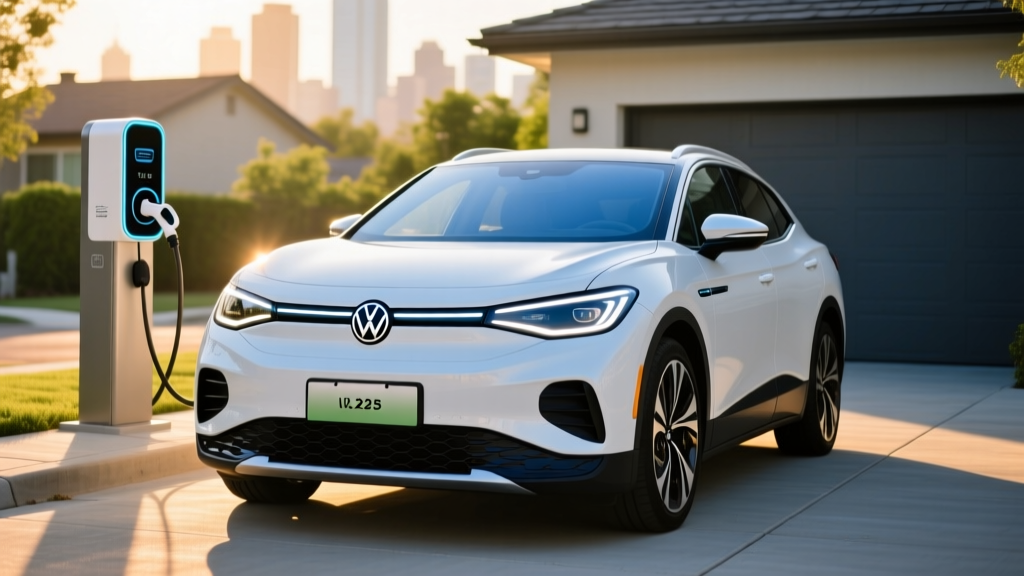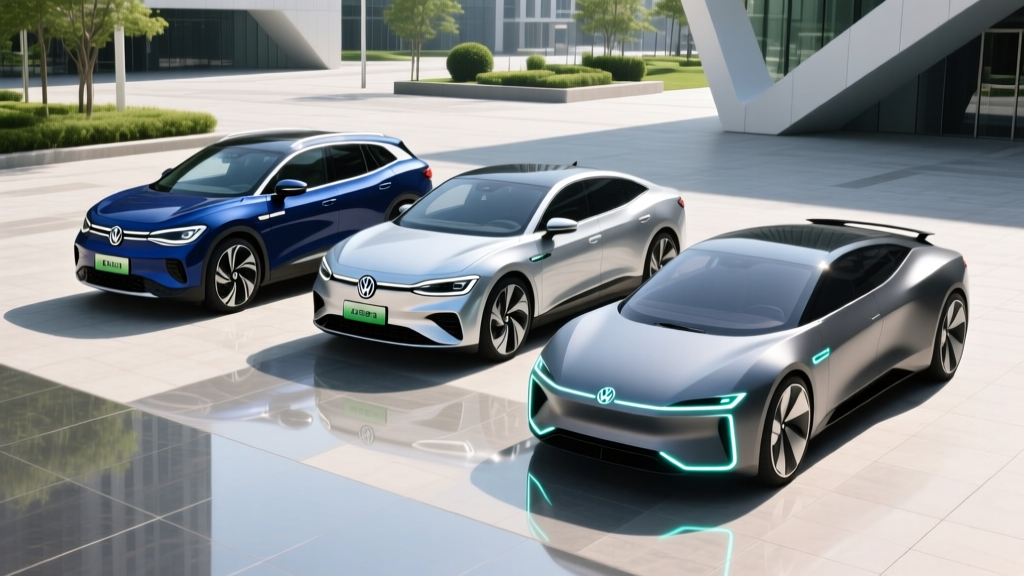
The short answer: Volkswagen's electric lineup centers on the ID.4 compact SUV (EPA range up to 291 miles, starting around $39,735) and the ID.7 sedan (EPA range up to 364 miles, starting near $49,995). Both use an 82 kWh usable NMC battery on higher trims, support up to 175 kW DC fast charging (10-80% in ~28 minutes), and qualify for partial or full §30D federal tax credits depending on battery sourcing, your income, and MSRP caps. The ID.4 is the volume seller and most practical entry point; the ID.7 targets those wanting a Passat-size electric sedan with class-leading efficiency. Neither is the fastest-charging EV in its class, but both offer competitive range, solid build quality, and a growing NACS adapter ecosystem for Tesla Supercharger access.
Volkswagen's Electric Vehicle Lineup in 2026
Volkswagen has committed heavily to electrification through its ID. family. As of the 2026 model year, two models dominate the US market:
- ID.4 (compact SUV): The brand's best-selling EV globally, competing directly with the Tesla Model Y, Hyundai Ioniq 5, and Ford Mustang Mach-E. Available in rear-wheel-drive (201 hp) and all-wheel-drive Pro S (295 hp) configurations.
- ID.7 (midsize sedan): VW's electric flagship sedan, positioned as the spiritual successor to the Passat. Aerodynamic design yields exceptional efficiency — up to 3.0 miles per kWh on the highway.
The ID.Buzz retro electric van rounds out the lineup for those needing three-row passenger space, though its 231-mile EPA range and $59,995 starting price limit its mainstream appeal.
| Spec | 2026 ID.4 Pro S | 2026 ID.4 Pro S AWD | 2026 ID.7 Pro S |
|---|---|---|---|
| EPA Range | 291 mi | 263 mi | 364 mi |
| Real-World Highway | ~240-260 mi | ~220-240 mi | ~300-320 mi |
| Battery (usable) | 82 kWh (NMC) | 82 kWh (NMC) | 82 kWh (NMC) |
| Horsepower | 282 hp | 335 hp | 282 hp |
| 0-60 mph | 7.2 sec | 5.4 sec | 6.5 sec |
| Peak DC Charge Rate | 175 kW | 175 kW | 200 kW |
| 10-80% DC Fast Charge | ~28 min | ~28 min | ~26 min |
| Level 2 (240V/48A) | 11.5 kW | 11.5 kW | 11.5 kW |
| Efficiency (MPGe) | 107 MPGe | 98 MPGe | 124 MPGe |
| Starting MSRP | $39,735 | $43,735 | $49,995 |
| Battery Warranty | 8 yr / 100,000 mi | 8 yr / 100,000 mi | 8 yr / 100,000 mi |
Sources: fueleconomy.gov, Volkswagen USA
Real-world range reality check: The ID.4 Pro S carries a 291-mile EPA sticker, but expect 240-260 miles on sustained highway driving at 70+ mph. In cold weather (below 32°F), that figure can drop to 190-220 miles due to battery chemistry limitations and cabin heating load. The ID.7's superior aerodynamics give it a smaller highway penalty — roughly 10-12% loss vs. the ID.4's 15-18% loss at speed. Always plan road trips around the lower real-world number.
Charging: What Volkswagen EV Owners Need to Know
Charging speed is one area where Volkswagen's ID. models are competent but not class-leading. The ID.4 peaks at 175 kW on a DC fast charger — adequate for road trips but slower than the Hyundai Ioniq 5's 240 kW peak or the Tesla Model Y's ~250 kW capability.
| Charging Level | Power | Miles Added per Hour | Use Case |
|---|---|---|---|
| Level 1 (120V household) | ~1.4 kW | ~4-5 mi/hr | Overnight top-ups, emergencies |
| Level 2 (240V/48A home) | 11.5 kW | ~33-38 mi/hr | Daily home charging (full charge ~8-9 hrs) |
| DC Fast Charge (peak) | 175-200 kW | ~650-750 mi/hr (at peak) | Road trips, 10-80% in 26-28 min |
Critical detail — the charge curve: VW's 175 kW peak only holds between roughly 10-40% state of charge. From 40-60%, the rate tapers to ~120 kW; from 60-80%, it drops further to ~75 kW. That's why the 10-80% time is 28 minutes rather than the ~18 minutes you'd calculate from peak rate alone. The ID.7's slightly higher 200 kW peak and improved thermal management shave a couple minutes off this curve.
NACS adapter access: Volkswagen now ships vehicles with a CCS1 port but includes a NACS adapter (or offers one at low cost) granting access to Tesla's Supercharger network — over 25,000 stations nationwide. This dramatically expands road-trip charging options compared to relying solely on Electrify America, EVgo, or ChargePoint networks.
Electric Volkswagen vs. Gas and Hybrid Alternatives
The most common cross-shop for the ID.4 is the Volkswagen Tiguan (gas) and the Toyota RAV4 Hybrid. Here's how the numbers stack up over five years and 75,000 miles:
| Cost Factor | ID.4 Pro S (EV) | Tiguan SE (Gas) | RAV4 Hybrid XLE |
|---|---|---|---|
| Purchase Price (MSRP) | $39,735 | $31,490 | $33,975 |
| Federal Tax Credit (§30D) | Up to $7,500* | $0 | $0 |
| Effective Purchase Price | ~$32,235 | $31,490 | $33,975 |
| 5-Year Fuel/Energy Cost | ~$3,750** | ~$9,375 | ~$5,625 |
| 5-Year Maintenance | ~$1,200 | ~$3,500 | ~$2,800 |
| 5-Year Insurance (avg) | ~$9,500 | ~$7,200 | ~$7,800 |
| 5-Year Total Cost | ~$46,685 | ~$51,565 | ~$50,200 |
* §30D credit eligibility depends on income caps ($150K single / $300K joint), MSRP caps ($55K SUV / $80K van), battery sourcing requirements, and point-of-sale transfer rules. Consult IRS.gov §30D guidelines and a tax professional.
** Based on national average electricity at $0.17/kWh and gasoline at $3.50/gal. Your local utility rate dramatically affects this figure — at $0.10/kWh (some southern/midwestern utilities), the ID.4's 5-year energy cost drops to ~$2,200.
The ID.4 wins on total cost of ownership primarily through fuel and maintenance savings, but only if you qualify for the federal credit and have access to affordable home charging. Insurance premiums run 20-35% higher than comparable gas vehicles — a cost that erodes savings for low-mileage drivers.
Real-World Ownership: What First-Time EV Buyers Must Know
Owning an electric Volkswagen is fundamentally different from owning a gas car. Here are the practical realities no brochure will emphasize:
Home Charging Is Non-Negotiable for Most Owners
Over 80% of EV charging happens at home. If you can install a Level 2 (240V) charger, daily ownership is effortless — plug in at night, wake up to a full battery every morning. A Level 2 installation typically costs $800-$2,500 depending on your electrical panel's capacity and the run distance to your garage or driveway. If your home has a 100-amp panel, expect a potential $1,500-$3,000 panel upgrade to support a 48-amp charger circuit.
Without home charging, you're dependent on public infrastructure. That means 25-30 minute DC fast-charge stops several times a week, or slower Level 2 sessions at workplaces and shopping centers. This lifestyle works in dense urban areas with robust public charging but becomes a significant friction point in suburban and rural settings.
Cold Weather Range Loss Is Real
Volkswagen's ID. models use liquid-cooled NMC (nickel manganese cobalt) battery packs. In sub-freezing temperatures, expect 20-30% range reduction compared to the EPA sticker. The ID.4 includes a heat pump on most trims (standard on Pro S and above), which reduces the cabin-heating energy penalty compared to resistive heaters — but physics still wins in extreme cold. If you live in Minnesota, North Dakota, or similar climates, plan for a real winter range of 190-210 miles on the ID.4 Pro S.
Pro tip: Always precondition the battery while still plugged in at home before a cold-weather drive or DC fast-charge session. The ID.4's navigation system will automatically precondition the battery when you route to a charger, bringing the cells to optimal temperature for faster charging.
Maintenance Is Minimal but Not Zero
EVs eliminate oil changes, spark plugs, timing belts, and exhaust system repairs. You'll still need:
- Cabin air filter replacement (~$30-50, every 2 years)
- Brake fluid flush (every 2-3 years — regenerative braking saves pad life but fluid degrades)
- Tire rotation and replacement (EVs are heavier and produce instant torque; expect 30,000-40,000 miles from OEM tires vs. 50,000+ on gas cars)
- Windshield washer fluid (yes, still needed)
- 12V auxiliary battery replacement every 4-6 years
Federal Tax Credits and Incentives for Electric Volkswagens
The §30D Clean Vehicle Credit remains the most significant financial incentive for EV buyers, but qualifying requires navigating several requirements:
- Income caps: Adjusted gross income must not exceed $150,000 (single), $225,000 (head of household), or $300,000 (married filing jointly)
- MSRP caps: Vehicle MSRP must not exceed $55,000 for sedans (ID.7) or $80,000 for SUVs/vans (ID.4, ID.Buzz)
- Battery sourcing: Increasing percentages of battery critical minerals and components must be sourced from the US or FTA-partner countries — these thresholds tighten annually
- Point-of-sale transfer: You can transfer the credit to the dealer at purchase, reducing your out-of-pocket cost immediately rather than waiting for tax filing
- One credit per vehicle: The credit applies to the vehicle, not the buyer — a used ID.4 may qualify for a separate used-EV credit (up to $4,000)
As of 2026, the ID.4 Pro S (MSRP $39,735) falls under the SUV MSRP cap and is generally eligible for the full $7,500 credit, assuming battery sourcing requirements are met and your income qualifies. The ID.7 Pro S ($49,995) sits just under the sedan cap. Always verify current eligibility on fueleconomy.gov before purchasing — sourcing rules change, and a model eligible in January may lose partial eligibility by mid-year.
Many states offer additional incentives: California's CVRP, Colorado's state credit, New York's Charge Ready program, and utility-company rebates for home charger installation. These stack with the federal credit but have their own income and residency requirements.
Common Misconceptions About Electric Volkswagens
| Myth | Fact |
|---|---|
| "The battery will need replacing in 5 years" | VW warranties the battery for 8 years/100,000 miles against degradation below 70% capacity. Real-world data from early ID.4 owners shows ~5-8% degradation at 60,000 miles. Full battery replacement costs $12,000-$18,000 but is rarely needed within the warranty period. |
| "EVs are worse in winter" | Range drops 20-30% in extreme cold, but EVs start reliably (no cold-cranking amps), the heat pump provides efficient cabin warmth, and preconditioning while plugged in minimizes the penalty. AWD ID.4 models perform well in snow with instant torque and a low center of gravity. |
| "Charging takes too long" | Home Level 2 charging happens while you sleep — zero active time. Road-trip DC fast charging adds 28 minutes for a 10-80% session. With proper route planning using the VW Car-App or A Better Routeplanner, charging stops align with rest breaks. |
| "The ID.4 charges at 175 kW so it's fast" | 175 kW is the peak rate, sustained only briefly. The average rate over a 10-80% session is closer to 100-110 kW. This is adequate but slower than the Ioniq 5 (avg ~150 kW) or Model Y (avg ~140 kW). Plan 5-10 extra minutes per road-trip stop vs. those competitors. |
| "Electric Volkswagens are unreliable" | Early 2021-2022 ID.4 models had software bugs (infotainment crashes, phantom 12V drain). VW's 2024+ software updates (version 3.2+) resolved most issues. The 2026 models ship with the latest ID.Software 4.0 stack, which is markedly more stable. Check NHTSA for current recall status. |
Decision Framework: Should You Buy an Electric Volkswagen?
Choose the ID.4 if:
- You want a practical, compact electric SUV with 250+ real-world miles of range
- You can install Level 2 home charging and your commute is under 80 miles round-trip
- You qualify for the §30D federal tax credit (bringing effective price near $32,000)
- You value VW's build quality, ride comfort, and dealer network over maximum charging speed
- You need AWD (available on Pro S AWD at $43,735)
Choose the ID.7 if:
- You want a sedan with exceptional efficiency (124 MPGe combined) and 300+ real-world highway miles
- You prioritize aerodynamic efficiency and lower energy costs over SUV cargo space
- You frequently take highway road trips and want to minimize charging stops
- You're cross-shopping the Tesla Model 3, Hyundai Ioniq 6, or BMW i4
Look elsewhere if:
- You lack home charging access and your area has sparse public DC fast chargers — consider a PHEV like the Toyota RAV4 Prime instead
- Fastest possible road-trip charging is your top priority — the Hyundai Ioniq 5 or Tesla Model Y charge significantly faster
- You need three rows of seating on a budget — the ID.Buzz starts at $59,995; consider the Kia EV9 or a gas/hybrid three-row SUV
- You drive 200+ miles daily in extreme cold — range limitations will require mid-day fast charging
Frequently Asked Questions
How long does it take to charge a Volkswagen ID.4 at home?
On a Level 2 charger (240V/48A delivering 11.5 kW), a full 0-100% charge takes approximately 8.5 hours for the 82 kWh battery. Most owners charge from 20-80% overnight, which takes about 4.5 hours. On a standard 120V household outlet (Level 1), a full charge takes roughly 60 hours — only practical for emergency top-ups or very low-mileage drivers.
Is the Volkswagen ID.4 eligible for the $7,500 federal tax credit?
The ID.4 Pro S ($39,735 MSRP) generally qualifies for the full $7,500 §30D credit, subject to your income, battery sourcing compliance, and the MSRP cap for SUVs ($80,000). The credit can be transferred to the dealer at point of sale, reducing your purchase price immediately. Always verify current eligibility on IRS.gov as battery sourcing thresholds change annually.
What is the real-world range of the VW ID.4?
The EPA rates the ID.4 Pro S (RWD) at 291 miles. In real-world mixed driving at moderate temperatures, expect 255-275 miles. Sustained highway driving at 70-80 mph reduces this to 240-260 miles. In sub-freezing temperatures, plan for 190-220 miles. The AWD variant sacrifices roughly 28 miles across all conditions due to the second motor's weight and drag.
How does VW's charging network compare to Tesla's?
Volkswagen does not operate its own charging network. ID.4 owners use Electrify America (which VW helped fund), EVgo, ChargePoint, and — critically — Tesla Superchargers via a NACS adapter. Tesla's network has superior reliability (99%+ uptime) and broader coverage. Electrify America's reliability has improved but still lags behind Tesla at roughly 90-93% uptime per independent surveys.
What does a Volkswagen EV battery replacement cost?
A full traction battery replacement for the ID.4 or ID.7 runs $12,000-$18,000 at current pricing. However, VW warranties the battery for 8 years or 100,000 miles against degradation below 70% of original capacity. Real-world degradation data from 2021-2023 ID.4 owners shows approximately 5-8% capacity loss at 60,000 miles — well within warranty thresholds. Most EV batteries outlast the vehicle itself.
Should I buy the ID.4 or the Hyundai Ioniq 5?
The Ioniq 5 charges faster (240 kW peak, 10-80% in ~18 minutes vs. the ID.4's 175 kW and ~28 minutes) and offers slightly more cargo space. The ID.4 counters with a more traditional driving feel, softer ride quality, and broader dealer service network. If road-trip charging speed is your priority, choose the Ioniq 5. If ride comfort and mainstream service accessibility matter more, the ID.4 is the better fit. Both are strong choices in the $35,000-$45,000 segment after tax credits.