The Quick Answer: Do Electric Vehicles That Don't Require a License Exist?
Yes — but with major caveats. The electric vehicles that don't require a standard driver's license fall into three narrow categories: Neighborhood Electric Vehicles (NEVs) / Low-Speed Vehicles (LSVs) limited to 25 mph on roads with speed limits of 35 mph or less, electric bicycles and e-scooters (which aren't cars), and off-road electric utility vehicles. None of these are highway-capable, full-size electric cars.
If you're looking for a Tesla, Rivian, or Hyundai Ioniq that you can legally drive without any license — that doesn't exist in the United States. Every highway-capable EV sold in the U.S. requires a valid driver's license. Period.
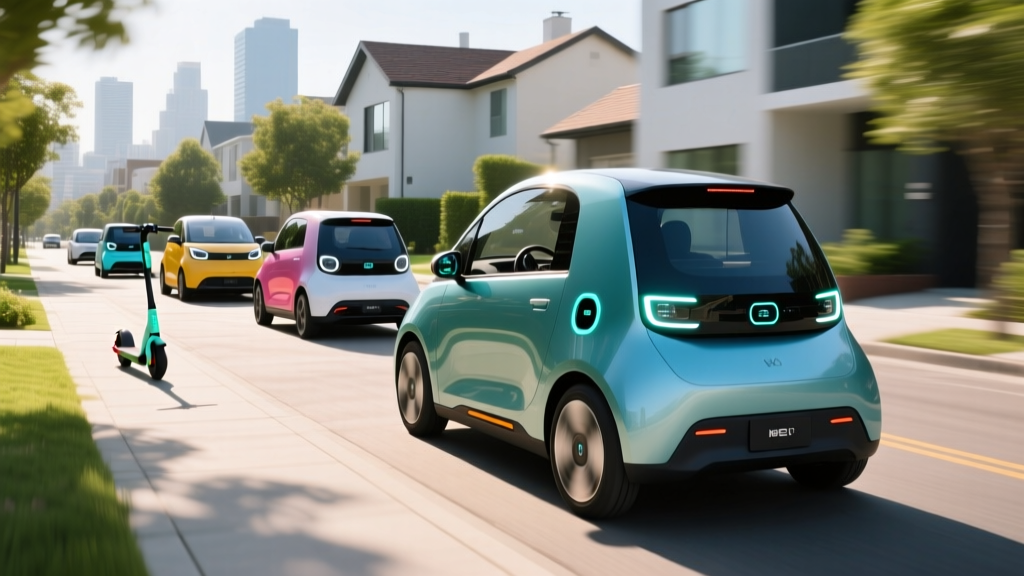
What does exist are federally regulated LSVs like the GEM e2/e4/e6, Arcimoto FUV, and Aptera (classified as an autocycle in most states). These serve specific use cases — campus commuting, retirement communities, resort transport, and short urban errands — but they're fundamentally different from the EVs reviewed on this site.
What Qualifies as a Low-Speed Vehicle (LSV)?
The U.S. National Highway Traffic Safety Administration (NHTSA) defines a Low-Speed Vehicle under Federal Motor Vehicle Safety Standard (FMVSS) No. 500. To qualify as an LSV, a four-wheeled electric vehicle must:
- Have a top speed greater than 20 mph but not greater than 25 mph
- Be equipped with headlamps, turn signals, stop lamps, tail lamps, reflex reflectors, parking brakes, windshields (glazed), VIN numbers, and seat belts
- Have a gross vehicle weight rating (GVWR) under 3,000 lbs
These vehicles are street-legal on roads with posted speed limits of 35 mph or less, though individual states can authorize them on higher-speed roads. They are not required to meet the same crash-test standards as full-size passenger vehicles — no airbag mandates, no crumple-zone testing, no electronic stability control requirements.
LSV vs. Full-Size EV: A Reality Check
To understand the gulf between an LSV and a highway-capable EV, consider this comparison:
| Specification | Typical LSV (e.g., GEM e4) | Full-Size EV (e.g., 2026 Hyundai Ioniq 5) |
|---|---|---|
| Top Speed | 25 mph | 115+ mph (electronically limited) |
| EPA Range | ~30-60 miles | 318 miles (Long Range AWD) |
| Battery Capacity | ~8-14 kWh (lead-acid or Li-ion) | 84 kWh usable (NMC) |
| Charging | 120V Level 1 only (~6-8 hrs full) | Up to 240 kW DC fast charge (10-80% in ~18 min) |
| Crash Safety | FMVSS 500 (minimal) | IIHS Top Safety Pick+, 5-star NHTSA |
| Highway Legal | No (25 mph max, ≤35 mph roads) | Yes (all roads) |
| Climate Control | Basic heater, no A/C on most models | Heat pump HVAC, heated/cooled seats |
| Base MSRP | $12,000-$18,000 | $42,600 |
Popular Electric Vehicles That Don't Require a Standard License
Here's a breakdown of the most common vehicles people reference when searching for license-free electric transportation, along with the actual legal reality in most states.
1. Neighborhood Electric Vehicles (NEVs) / LSVs
License required in most states: Surprisingly, most states do require a valid driver's license to operate an LSV on public roads. A handful of states have exceptions for certain age groups or restricted-use scenarios, but this is the exception, not the rule.
Key models (2026):
- Polaris GEM e2/e4/e6: The most established NEV brand. The e4 seats four, offers ~60 miles of range on its lithium-ion battery pack, and starts around $14,000. Top speed: 25 mph. Charging is via standard 120V outlet — expect 6-8 hours for a full charge from empty.
- Arcimoto FUV (Fun Utility Vehicle): A three-wheeled, tandem-seat LSV from Oregon. ~65 miles of range, 75 mph top speed in its unrestricted form (which does require a license and motorcycle endorsement in many states). The LSV-limited version tops out at 25 mph. Base price: ~$17,900.
- Aptera (announced/preliminary): A solar-equipped, three-wheeled autocycle with claimed 250-1,000 mile range depending on battery configuration. Classified as an autocycle — most states require a standard driver's license (not a motorcycle endorsement). Not yet in production as of early 2026; pricing expected from ~$25,900.
2. Electric Bicycles (E-Bikes)
License required: No, in most states. Federal law (Consumer Product Safety Commission) defines three classes of e-bikes, and none require a driver's license in the majority of U.S. states. However, some states (e.g., Alabama, Alaska, Massachusetts) do impose license or registration requirements for certain e-bike classes.
- Class 1: Pedal-assist only, up to 20 mph. No throttle.
- Class 2: Throttle-assisted, up to 20 mph.
- Class 3: Pedal-assist only, up to 28 mph. Some states require a helmet and minimum age of 16.
E-bikes cost $1,000-$5,000, have ranges of 20-60 miles per charge, and charge on a standard 120V outlet in 3-6 hours. Battery capacities range from 0.4-0.8 kWh — a fraction of even an LSV.
3. Electric Scooters and Mopeds
License required: Varies heavily by state and top speed. Electric scooters under 20 mph often don't require a license. Electric mopeds between 20-30 mph may require a standard license or a moped-specific permit. Anything above 30 mph is typically classified as a motorcycle.
Real Costs of Owning an LSV vs. a Full-Size EV
If you're considering an LSV as a runabout for errands or campus commuting, here's what ownership actually costs compared to a mainstream EV and a comparable gas car.
| Cost Factor (5-Year) | LSV (GEM e4) | EV (2026 Chevy Equinox EV 2LT) | Gas Car (2026 Honda Civic LX) |
|---|---|---|---|
| Purchase Price | $14,000 | $33,400 | $25,000 |
| Federal Tax Credit (§30D) | $0 (not eligible) | Up to $7,500* | $0 |
| Net Purchase | $14,000 | ~$25,900* | $25,000 |
| Fuel/Energy (5 yrs, 6,000 mi/yr) | $450 (electricity) | $2,700 (electricity) | $5,400 (gasoline at $3.50/gal, 30 MPG) |
| Maintenance (5 yrs) | $500 | $1,500 | $3,200 |
| Insurance (5 yrs avg) | $2,500 | $7,500 | $6,000 |
| 5-Year Total Cost | ~$17,450 | ~$37,600 | ~$39,600 |
* §30D credit eligibility depends on MSRP caps, buyer income limits, battery sourcing requirements, and point-of-sale transfer. Verify current rules at IRS.gov. The Equinox EV qualifies for the full $7,500 for eligible buyers in 2026.
Common Misconceptions About License-Free Electric Vehicles
There's a persistent belief — fueled by misleading social media posts and outdated information — that you can buy a full-size EV and drive it without a license. Let's address the myths directly.
| Myth | Fact |
|---|---|
| "Tesla has a car you can drive without a license." | False. Every Tesla requires a valid driver's license. Even FSD (Supervised) is a Level 2 driver-assist system — the driver must be licensed, attentive, and in the driver's seat. |
| "NEVs are legal on all roads without a license." | False. NEVs/LSVs are restricted to roads with speed limits of 35 mph or less, and most states require a standard driver's license to operate them. |
| "I can import a Chinese micro-EV and drive it without a license." | Importing non-FMVSS-compliant vehicles for road use is illegal in most cases. Even if you physically import one, registering and insuring it for public roads is nearly impossible. |
| "E-bikes are the same as electric cars — no license needed." | E-bikes aren't cars. They're classified under the CPSC, not NHTSA, and have different speed, weight, and road-use rules. They're excellent transportation — just not equivalent to a car. |
| "Autonomous vehicles like Waymo don't need a licensed driver." | Waymo robotaxis (Level 4) operate without a human driver, but you're a passenger, not the operator. You can't buy a Waymo, and the company holds the operating license — not you. |
Real-World Ownership Considerations for LSVs
If an LSV or NEV actually fits your use case, here's what daily ownership looks like in practice.
Where LSVs Make Sense
- Retirement communities and gated neighborhoods (The Villages, FL; Sun City, AZ) — short trips on low-speed private roads
- College campuses with dedicated low-speed paths
- Resort towns and islands (Key West, FL; Mackinac Island, MI; Catalina Island, CA)
- Last-mile errands in dense urban areas with 25 mph zones
Where LSVs Fall Apart
- Cold weather: Most LSVs lack proper climate control. Range drops 20-40% in freezing temperatures — a 60-mile LSV might deliver only 35-45 miles at 30°F.
- Rain and wind: Many NEVs have soft enclosures or optional hard doors that rattle, leak, and provide minimal insulation compared to a car.
- Safety in mixed traffic: Sharing a 35 mph road in a 2,000-lb LSV alongside 4,500-lb SUVs is inherently risky. LSVs lack airbags, crumple zones, and stability control.
- Charging infrastructure: LSVs charge exclusively on 120V Level 1. You'll need access to a standard outlet wherever you park — there are no DC fast chargers for LSVs.
- Insurance availability: Not all insurers cover LSVs. You may need a specialty policy, and coverage limits are often lower than standard auto insurance.
Decision Framework: Should You Get an LSV, E-Bike, or Full EV?
Answer these questions to find your path:
- Do you need to travel on roads with speed limits above 35 mph?
- YES → You need a highway-capable vehicle. An LSV won't work. Choose a full EV or PHEV.
- NO → Continue to question 2.
- Do you need to carry more than 2 people or significant cargo?
- YES → Look at a 4-seat LSV (GEM e4/e6) or consider a compact EV like the Chevy Equinox EV if your routes allow it.
- NO → An e-bike or electric scooter may be more practical and affordable.
- Do you have covered parking with access to a 120V outlet?
- YES → LSV charging is straightforward. Expect 6-8 hours for a full charge.
- NO → Charging an LSV becomes very difficult. Consider an e-bike (removable battery) or a full EV with public DC fast-charging access.
- Does your state require a license for LSVs?
- YES (most states) → You still need a valid driver's license. An LSV won't solve a license problem.
- NO (rare) → Verify with your state DMV. Some states have exceptions for seniors or restricted-use permits.
- Is your budget under $15,000?
- YES → An LSV or high-quality e-bike fits. A full EV is out of reach at this price point (even used).
- NO → A used full-size EV (e.g., 2022-2023 Nissan Leaf, Chevy Bolt EV) offers far more capability, safety, and range for $15,000-$25,000.
What First-Time EV Buyers Should Know (If You're Graduating from an LSV)
If you've been using an LSV and are ready to step up to a full-size electric vehicle, here are the critical differences to prepare for:
Licensing and Registration
A full-size EV requires the same licensing, registration, and insurance as any conventional car. You'll need a valid state driver's license, vehicle registration, and minimum liability insurance. The good news: the DMV process is identical to registering a gas car.
Charging Infrastructure
Unlike an LSV's simple 120V plug, a full EV benefits enormously from Level 2 home charging (240V, 7-11.5 kW). A Level 2 home charger installation typically costs $800-$2,500 including equipment and electrician labor, depending on your panel capacity and wiring distance. If your home has a 200-amp electrical panel, installation is usually straightforward. Older homes with 100-amp panels may need a $1,500-$3,000 panel upgrade.
Home Charging Access Reality Check
Not everyone can charge at home. If you live in an apartment, condo, or street-parking situation, your options are:
- Workplace charging (increasingly common at offices and campuses)
- Public Level 2 chargers (ChargePoint, EVgo, Electrify America — slower but adequate for overnight or workday top-ups)
- DC fast charging networks (150-350 kW stations for quick 10-80% charges in 18-35 minutes)
Relying exclusively on public charging adds cost and time compared to home charging. Budget $0.15-$0.40/kWh at public stations versus $0.10-$0.16/kWh at home (varies by utility and state).
Frequently Asked Questions
Can I drive a Tesla without a driver's license?
No. Every Tesla model requires a valid driver's license. Tesla's Autopilot and Full Self-Driving (Supervised) are SAE Level 2 driver-assist systems — they assist with steering and acceleration but require a licensed, attentive driver at all times. Tesla is not a Level 4 autonomous vehicle. The only Level 4 robotaxis currently operating in the U.S. are Waymo (Phoenix, San Francisco, Los Angeles) and Zoox (Las Vegas, Foster City) — and you ride in those as a passenger, not a driver.
What states allow LSVs without a driver's license?
Very few. Most states require a standard driver's license to operate an LSV on public roads. Some states have limited exceptions — for example, certain states allow individuals with suspended licenses or minors (14-16 years old) to operate LSVs under specific conditions. Always verify with your state's DMV or department of transportation before purchasing an LSV with the assumption that no license is needed.
Are LSVs eligible for the federal EV tax credit?
No. The IRS §30D Clean Vehicle Credit applies to new qualified plug-in electric drive motor vehicles — which are defined as four-wheeled vehicles with a gross vehicle weight rating under 14,000 lbs that are primarily for use on public streets, roads, and highways and meet full FMVSS standards. LSVs, which are regulated under the separate and less stringent FMVSS 500, do not qualify for the $7,500 federal tax credit. They also don't qualify for most state EV rebates.
How far can an LSV travel on a single charge?
Most current-model LSVs offer 30-60 miles of range under ideal conditions (flat terrain, moderate temperature, single occupant). Real-world range with passengers, hills, and cold weather typically drops to 20-45 miles. For comparison, a 2026 Chevy Bolt EV offers 259 miles of EPA range starting at ~$28,000 — before the $7,500 tax credit brings the effective price to ~$20,500 for eligible buyers.
Is an e-bike a practical alternative to an LSV?
For single-person commuting under 20 miles, an e-bike is often more practical than an LSV. A quality Class 2 e-bike costs $1,500-$3,000, requires no license or registration in most states, can be stored indoors, charges its 0.5 kWh battery in 3-4 hours on a standard outlet, and navigates bike lanes and paths that LSVs can't access. The trade-off: no weather protection, limited cargo capacity, and exposure to traffic.
Can I import a small electric car from China or Europe that doesn't need a license?
Importing a vehicle that doesn't meet U.S. FMVSS standards for on-road use is effectively prohibited for most buyers. The NHTSA restricts importation to vehicles that comply with all applicable safety standards or qualify for specific exemptions (show/display, racing, or vehicles over 25 years old). Small Chinese micro-EVs like the Wuling Hongguang Mini EV cannot be legally registered for road use in most U.S. states. Attempting to circumvent these rules can result in seizure, fines, and the vehicle being barred from registration.
Bottom Line: License-Free EVs Are Niche, Not a Loophole
The electric vehicles that don't require a license — LSVs, NEVs, and e-bikes — serve legitimate but narrow use cases. They're practical for short, low-speed trips in controlled environments: retirement communities, campuses, resort towns, and dense urban neighborhoods with low speed limits.
They are not a workaround for avoiding driver's licensing, a substitute for a real car, or a path to highway-capable electric transportation. If your daily driving involves roads above 35 mph, highway merging, cold-weather commuting, or carrying a family, you need a full-size EV — and that requires a standard driver's license.
The good news: the barrier to EV ownership isn't licensing. It's cost, charging access, and information. The 2026 EV market offers models from ~$28,000 (before credits) with 250+ miles of range, DC fast charging, and full safety equipment. If an LSV doesn't fit your life, the jump to a real EV is more accessible than ever — license included.