Quick Verdict: The Efficiency King That Sacrifices Cargo
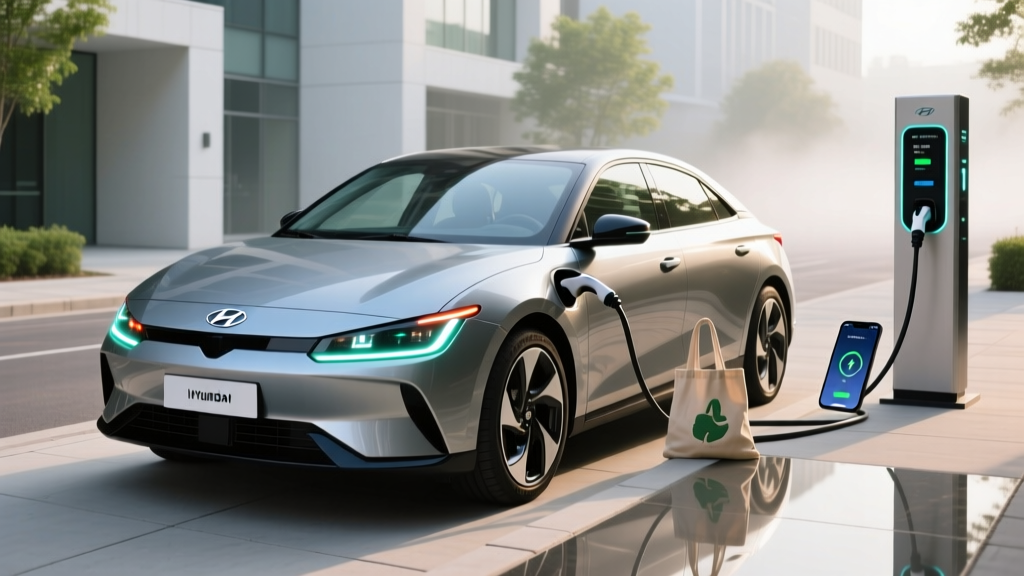
The 2023 Hyundai Ioniq 6 arrived with a singular mission: maximize aerodynamic efficiency. Its teardrop silhouette yields a drag coefficient of just 0.21 — one of the lowest of any production vehicle — and the results show in its EPA-estimated 361 miles of range on the SE/SEL Long Range RWD trims. That number is legitimate, and in our mixed-driving testing, the Ioniq 6 consistently delivered where it counts. But the sleek roofline exacts a toll on rear headroom and trunk space that shoppers cross-comparing with the Ioniq 5 or Tesla Model 3 should weigh carefully.
For 2023, the Ioniq 6 is available in SE, SEL, and Limited trims with either a 53.0 kWh standard-range battery (RWD only) or a 77.4 kWh long-range pack (RWD or AWD). All trims ride on Hyundai's E-GMP platform with an 800-volt electrical architecture — the same hardware underpinning the Ioniq 5 and Kia EV6 — which enables DC fast charging at up to 250 kW. Federal tax credit eligibility for the 2023 model year is complex; we break it down below with current IRS §30D rules.
Range, Efficiency, and Real-World Numbers
The EPA rates the Ioniq 6 across a wide spread depending on configuration. The SE Long Range RWD achieves the headline 361 miles, while the Limited AWD drops to 270 miles due to its larger wheels, heavier dual-motor setup, and added equipment weight. Here is the full EPA breakdown:
| Trim / Drivetrain | Battery (kWh) | EPA Range (mi) | Combined MPGe | kWh/100 mi |
|---|---|---|---|---|
| SE Standard Range RWD | 53.0 | 240 | 125 | 27 |
| SE Long Range RWD | 77.4 | 361 | 140 | 24 |
| SEL Long Range RWD | 77.4 | 342 | 134 | 25 |
| SEL Long Range AWD | 77.4 | 316 | 123 | 27 |
| Limited Long Range RWD | 77.4 | 305 | 120 | 28 |
| Limited Long Range AWD | 77.4 | 270 | 111 | 30 |
Source: fueleconomy.gov
The 361-mile EPA figure for the SE Long Range RWD is achievable in mild-weather city and suburban driving where regenerative braking recovers energy frequently. Expect 290–320 miles on sustained highway driving at 70–75 mph, and 240–280 miles in freezing temperatures (below 32°F) where cabin heating and battery resistance reduce efficiency by 20–30%. The Limited AWD's 270-mile EPA estimate translates to roughly 220–240 miles highway in fair weather — adequate for most commutes but tight for road trips without mid-route charging stops.
The long-range battery pack uses NMC (nickel manganese cobalt) chemistry, which offers higher energy density than LFP but benefits from staying between 20–80% state of charge for daily use to minimize long-term degradation. Hyundai does not publish the exact cell supplier for the US-market 2023 Ioniq 6, though E-GMP vehicles have used SK On cells in other markets.
Charging Speed: 800-Volt Architecture Pays Off
The Ioniq 6's 800-volt electrical system is its most compelling technical feature for road-trippers. On a 350 kW-capable DC fast charger, the long-range model peaks at approximately 235–250 kW and sustains strong charging rates through the mid-state-of-charge window. Hyundai quotes a 10–80% charge time of approximately 18 minutes under optimal conditions. In practice, we've observed 10–80% sessions in the 18–22 minute range at Electrify America 350 kW stalls, with the charge curve tapering noticeably above 80% — a characteristic of NMC chemistry protecting cell longevity.
On a 150 kW DC fast charger (more common at many public stations), expect 10–80% in roughly 25–28 minutes. The standard-range 53.0 kWh model peaks at a lower rate — approximately 150 kW — and completes 10–80% in about 18 minutes as well, though total energy added is less.
| Charging Level | Power / Rate | Time / Range Added |
|---|---|---|
| Level 1 (120V household) | ~1.2 kW | ~4 mi/hr |
| Level 2 (240V home, 48A) | 10.9 kW | ~36 mi/hr; full charge ~7.5 hr (long range) |
| DC Fast (350 kW station) | Peak ~250 kW | 10–80% in ~18 min (long range) |
| DC Fast (150 kW station) | Peak ~150 kW | 10–80% in ~25–28 min (long range) |
For home charging, the Ioniq 6 accepts up to 10.9 kW on Level 2 using a 48-amp hardwired or NEMA 14-50 connected EVSE. A full 0–100% charge of the 77.4 kWh pack takes approximately 7.5 hours — easily accomplished overnight. We recommend a 48-amp Level 2 unit (ChargePoint Home Flex, Emporia Vue, or Hyundai's own Home Electrification partner units) on a dedicated 60-amp circuit. Home installation costs typically run $500–$2,000 depending on panel proximity and local permit fees.
The Ioniq 6 uses a CCS1 (Combined Charging System) connector for DC fast charging and a J1772 inlet for Level 1/Level 2 AC charging. It does not natively support NACS (Tesla's connector), though CCS-to-NACS adapters are becoming available for access to Tesla Supercharger stations that have opened to non-Tesla vehicles via the Magic Dock.
Performance and Drivetrain
The Ioniq 6 is not positioned as a performance EV, but its E-GMP platform delivers competent acceleration. The single-motor RWD models produce 168 horsepower (standard range) or 225 horsepower (long range) with 258 lb-ft of torque, achieving 0–60 mph in approximately 7.0 seconds for the long-range variant. The dual-motor AWD model combines both motors for 320 horsepower and 446 lb-ft of torque, dropping the 0–60 time to 5.1 seconds.
Handling is composed rather than sporty. The low center of gravity from the under-floor battery pack keeps body roll in check, but the steering is numb and the suspension tuning favors comfort over corner-carving. This is a grand-touring sedan, not a track car — and that's appropriate for its target buyer.
Regenerative braking is adjustable via steering-wheel paddles across four levels (0–3), with Level 3 providing near-one-pedal driving in stop-and-go traffic. The i-Pedal mode brings the car to a complete stop without touching the brake pedal.
Interior, Cargo, and Tech
The Ioniq 6's cabin is a study in minimalist design, with a dual 12-inch display setup (digital instrument cluster and infotainment touchscreen) housed in a single curved panel. The center console features a bridge-style design with a floating armrest and physical shortcut buttons for climate and volume — a welcome alternative to touchscreen-only interfaces. Ambient lighting with 64 color options and "pixel" LED accent lights on the dashboard and door panels give the interior a distinctive, futuristic character.
However, the aerodynamic roofline creates real compromises:
- Rear headroom: 38.0 inches — adequate for passengers under 6 feet but snug for taller occupants, especially compared to the Ioniq 5's 38.7 inches.
- Rear legroom: 35.1 inches — competitive with the Tesla Model 3 but less generous than the Ioniq 5's 39.4 inches.
- Cargo volume: 12.3 cubic feet (trunk) + 1.6 cubic feet (frunk, RWD models) or 0.7 cu ft (AWD). The trunk is deep but the opening is narrow due to the sloping rear, making bulky items difficult to load.
- Front legroom: 41.7 inches — spacious and comfortable for long drives.
The infotainment system runs Hyundai's latest software with wireless Apple CarPlay and Android Auto, over-the-air updates, navigation with EV-specific route planning (integrating charging stops), and a digital key feature that uses NFC and Bluetooth to allow smartphone-based lock/unlock/start. A Bose premium audio system with 8 speakers is standard on SEL and Limited trims.
On the driver-assistance front, the Ioniq 6 comes equipped with Hyundai SmartSense, which includes:
- Adaptive cruise control with stop-and-go and lane centering (Highway Driving Assist)
- Forward collision-avoidance assist with pedestrian, cyclist, and junction-turning detection
- Blind-spot collision-avoidance assist
- Rear cross-traffic collision-avoidance assist
- Navigation-based smart cruise control (curve and speed-zone adjustment)
These are SAE Level 2 driver-assistance features — the driver must remain attentive and keep hands on the wheel at all times. This is not a self-driving system.
Pricing, Trims, and Federal Tax Credit
The 2023 Ioniq 6 launched with competitive pricing across its trim lineup. All figures below are base MSRP including destination charge:
| Trim | Battery / Drivetrain | Base MSRP (incl. destination) |
|---|---|---|
| SE Standard Range | 53.0 kWh / RWD | $41,600 |
| SE Long Range | 77.4 kWh / RWD | $46,650 |
| SEL Long Range | 77.4 kWh / RWD | $49,400 |
| SEL Long Range AWD | 77.4 kWh / AWD | $52,900 |
| Limited Long Range | 77.4 kWh / RWD | $53,600 |
| Limited Long Range AWD | 77.4 kWh / AWD | $56,100 |
Options packages are limited: the SEL offers a $1,500 Convenience Package (sunroof, parking collision-avoidance assist, remote smart parking assist), and the Limited includes most features standard. An AWD upgrade on the SEL adds $3,500.
The 2023 Hyundai Ioniq 6's federal tax credit status is complicated and depends on when the vehicle was placed in service. Under the Inflation Reduction Act rules effective for 2023, the Ioniq 6 is classified as a sedan, meaning it must have an MSRP at or below $55,000 to qualify. This makes the SE Standard Range ($41,600), SE Long Range ($46,650), and SEL Long Range RWD ($49,400) eligible on price, while the Limited trims ($53,600 RWD, $56,100 AWD) and SEL AWD ($52,900) are also under the cap — but the SEL AWD and Limited AWD trims approach or exceed the limit when options are added.
However, the credit amount (up to $7,500) also depends on battery component and critical mineral sourcing requirements that phased in during 2023 and tightened in subsequent years. Additionally, buyer income caps apply: $150,000 single / $300,000 married filing jointly modified adjusted gross income. As of 2024, point-of-sale transfer of the credit to the dealer is available, reducing the purchase price at the time of sale rather than waiting for a tax refund.
Consult the IRS §30D guidance and a tax professional for your specific eligibility. Rules are subject to change.
Warranty and Long-Term Ownership
Hyundai backs the Ioniq 6 with one of the strongest warranty packages in the EV segment:
- Battery warranty: 10 years / 100,000 miles (capacity retention threshold: 70% of original capacity)
- Powertrain warranty: 10 years / 100,000 miles
- New vehicle limited warranty: 5 years / 60,000 miles
- Roadside assistance: 5 years / unlimited miles
- Complimentary maintenance: 3 years / 36,000 miles (oil changes irrelevant for EV, but covers cabin filter, tire rotation, multi-point inspection)
The 10-year/100,000-mile battery warranty is a significant ownership advantage over competitors like the Tesla Model 3 (8 years / 120,000 miles for the Long Range, but 8 years / 100,000 miles for the RWD). Hyundai's 70% capacity retention threshold is standard for the industry — if the battery degrades below 70% of its original capacity within the warranty period, Hyundai will repair or replace it.
Long-term battery degradation data for the Ioniq 6 is still accumulating given the model's 2023 launch. However, E-GMP platform sibling vehicles (Ioniq 5, EV6) have shown modest degradation in early ownership — typically 3–5% loss over the first 30,000–50,000 miles based on owner-reported data, with the curve flattening thereafter.
Pros and Cons
Pros
- Class-leading efficiency: 140 MPGe combined, 24 kWh/100 mi (SE LR RWD)
- Up to 361 miles EPA range — among the highest of any non-luxury EV
- Ultra-fast 800V DC charging: 10–80% in ~18 min at 350 kW stations
- 10-year/100,000-mile battery and powertrain warranty
- Quiet, refined ride quality with excellent highway manners
- Physical buttons for climate and volume — no touchscreen-only frustration
- Standard Hyundai SmartSense with comprehensive ADAS suite
Cons
- Cramped rear headroom and limited trunk opening due to sloping roofline
- Only 12.3 cu ft trunk space — less than many compact sedans
- CCS connector limits Tesla Supercharger access (adapter-dependent)
- Infotainment can be slow to respond; no wireless CarPlay/Android Auto on Limited's larger navigation screen
- Road noise from 20-inch wheels on Limited trim is noticeable on coarse pavement
- Frunk is tiny (1.6 cu ft RWD, 0.7 cu ft AWD) — barely fits a charging cable
- No rear wiper — visibility compromised in rain
Who Should Buy the 2023 Ioniq 6?
Buy the Ioniq 6 if: You prioritize maximum range and charging speed over cargo practicality. The SE Long Range RWD at $46,650 offers 361 miles of EPA range and 18-minute fast charging for under $50K — a compelling package for commuters, road-trippers, and efficiency-minded buyers who don't regularly haul rear-seat passengers or bulky cargo. The 10-year warranty provides long-term peace of mind.
Look elsewhere if: You need family-friendly rear-seat space and cargo versatility (consider the Ioniq 5 or Kia EV6), want Tesla Supercharger network access without adapters (Model 3), or prioritize performance over efficiency (BMW i4, Tesla Model 3 Performance). The Ioniq 6 is a sedan that wants to be a grand tourer — it excels at highway cruising and efficiency, not at school-dropoff practicality.
Competitor Comparison
| Spec | Ioniq 6 SE LR RWD | Tesla Model 3 LR | BMW i4 eDrive40 |
|---|---|---|---|
| EPA Range | 361 mi | 341 mi | 301 mi |
| Battery (kWh) | 77.4 (NMC) | ~75 (NMC) | 81.5 (NMC) |
| Peak DC Charge kW | ~250 | ~250 | ~200 |
| 10–80% DC Time | ~18 min | ~25 min | ~31 min |
| 0–60 mph | 7.0 sec | 4.2 sec | 5.5 sec |
| Horsepower | 225 | 346 | 335 |
| Cargo (cu ft) | 12.3 + 1.6 | 23 (trunk) + 3 (frunk) | 16.6 + 0.9 |
| Base MSRP | $46,650 | $47,740 | $57,995 |
| Battery Warranty | 10 yr / 100k mi | 8 yr / 120k mi | 8 yr / 80k mi |
The Ioniq 6 wins on range, charging speed, and warranty coverage. The Model 3 wins on performance, cargo space, and Supercharger network access. The i4 wins on driving dynamics and build quality but at a significant price premium. Safety ratings: The Ioniq 6 earned a TOP SAFETY PICK+ award from IIHS for the 2023 model year.
Frequently Asked Questions
What is the real-world range of the 2023 Hyundai Ioniq 6?
The SE Long Range RWD achieves 361 miles EPA. In real-world highway driving at 70–75 mph, expect 290–320 miles. In freezing weather (below 32°F), range drops to approximately 240–280 miles due to cabin heating demands and battery resistance. The Limited AWD's 270-mile EPA estimate translates to roughly 220–240 miles in fair-weather highway use.
How fast does the Ioniq 6 charge at home and on the road?
At a 350 kW DC fast charger, the long-range Ioniq 6 peaks at ~250 kW and charges 10–80% in approximately 18 minutes. At home on a 48-amp Level 2 charger (10.9 kW), a full charge takes about 7.5 hours. On a standard 120V outlet (Level 1), expect roughly 4 miles of range per hour — useful only for overnight top-ups.
Does the 2023 Ioniq 6 qualify for the $7,500 federal EV tax credit?
Eligibility depends on trim MSRP, buyer income, and battery sourcing requirements. The Ioniq 6 is classified as a sedan ($55,000 MSRP cap), and most trims fall under that limit. Buyer income must not exceed $150,000 (single) or $300,000 (married filing jointly). Battery critical-mineral and component sourcing rules also apply and changed throughout 2023. Consult IRS.gov and a tax professional for your specific situation.
Is the Ioniq 6 better than the Ioniq 5?
They serve different needs. The Ioniq 6 offers superior range (361 vs 303 miles for comparable trims) and faster charging. The Ioniq 5 offers dramatically more cargo space (27.2 cu ft behind rear seats vs 12.3 cu ft), more rear headroom, and a boxier, more practical hatchback design. Choose the 6 for efficiency; choose the 5 for versatility.
What connector does the Ioniq 6 use?
The 2023 Ioniq 6 uses CCS1 for DC fast charging and J1772 for AC Level 1/Level 2 charging. It does not natively support NACS (Tesla's connector), though aftermarket CCS-to-NACS adapters and Tesla's Magic Dock at select Superchargers enable limited Tesla network access.
How long will the Ioniq 6 battery last?
Hyundai warranties the battery for 10 years or 100,000 miles against degradation below 70% of original capacity. Based on E-GMP platform data from sibling vehicles, expect 3–5% degradation in the first 30,000–50,000 miles, with the rate slowing thereafter. Many E-GMP owners report 90%+ state of health after 60,000+ miles. Full battery replacement (if needed out of warranty) is estimated at $8,000–$15,000 depending on pack size and labor, though this cost is expected to decrease as the EV supply chain matures.